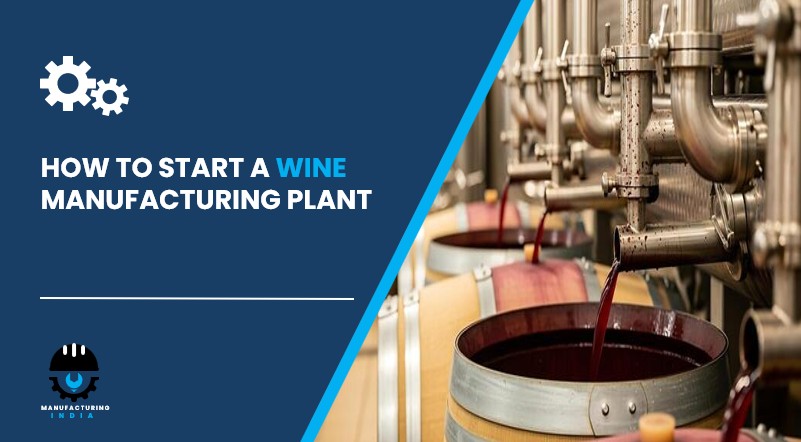
Setting up a wine manufacturing plant in India presents a compelling investment case backed by rapidly expanding domestic alcohol consumption, a flourishing hospitality and tourism sector, and a decisive shift in urban consumer preferences toward premium, origin-specific, and curated beverage experiences. Wine demand is being propelled by growth across the alcoholic beverages industry, the foodservice and HoReCa segment, and organized retail and e-commerce alcohol distribution channels all of which are expanding at pace in India’s fast-evolving consumer economy. As the country’s urban population grows and dining culture matures, wine has transitioned from an occasional luxury to a mainstream lifestyle product consumed for social, dining, and recreational purposes.
India’s structural advantages make it an exceptionally strategic location for establishing a wine manufacturing unit. The country’s expanding vineyard base concentrated in Maharashtra and Karnataka provides proximity to the primary raw material: grapes. India’s Make in India initiative incentivizes domestic manufacturing across food and beverage categories, reducing reliance on imports and creating favourable policy conditions for new entrants. The country’s growing hospitality infrastructure, rising organized retail penetration, and the emergence of internet alcohol sales are collectively widening distribution access. With urbanisation accelerating and a younger demographic driving premiumisation trends, the timing for establishing a wine production facility in India is strategically sound.
India’s wine manufacturing opportunity is underpinned by strong policy support, cost-competitive production, and surging demand from the hospitality, retail, and export sectors with gross margins of 50–60% and net margins of 20–30% making the investment financially compelling and break-even viable at scale.
What is Wine?
Wine is the result of regulated fermentation processes involving yeast and grapes. Its taste, aroma, colour, and mouthfeel are determined by its constituent’s water, ethanol, organic acids, sugars, phenolic compounds, and aromatic compounds. The type of grape, terroir, fermentation method, and aging process all influence the final product profile. The main types of wine available in the market include red, white, rosé, sparkling, dessert, and fortified wines, as well as low-alcohol and organic alternatives.
Modern wine production supports both artisanal wine-making and large-scale commercial operations, while ensuring consistency, safety, and regulatory compliance. The production process grape harvesting and sorting, crushing and pressing, fermentation and temperature control, clarification and stabilization, ageing, filtration, bottling, labelling, and storage is well-suited to manual, semi-automated, and fully automated systems. End-use industries served include the alcoholic beverages industry, hospitality and tourism sector, foodservice and HoReCa segment, retail and e-commerce alcohol distribution, and the export-oriented beverage trade.
Cost of Setting Up a Wine Manufacturing Plant in India
The cost of establishing a wine manufacturing plant depends on several variables including production capacity, technology selection, plant location, degree of automation, and adherence to regulatory and environmental compliance standards.
1. Capital Expenditure (CapEx)
Land and Site Development represents a substantial portion of the overall capital investment, covering land acquisition costs, boundary development, registration charges, and infrastructure preparation. Investors should consider locating the facility within a Special Economic Zone (SEZ) or a notified industrial estate in wine-growing states such as Maharashtra or Karnataka both of which offer logistical proximity to grape-growing regions and access to established supply chains.
Civil Works and Construction encompass the construction of the production shed, fermentation hall, aging cellar, quality control laboratory, raw material storage, finished goods warehouse, and administrative block. Adequate space planning should account for future capacity expansion to avoid costly structural modifications later.
Machinery and Equipment accounts for the largest single component of CapEx. Key machinery required includes:
- Grape crushers and presses
- Fermentation tanks
- Temperature control systems
- Filtration units
- Ageing barrels or tanks
- Bottling and corking machines
- Labelling systems
- Storage facilities
- Quality testing laboratories
Other Capital Costs include the installation of an Effluent Treatment Plant (ETP), pre-operative expenses, trial run costs, plant commissioning charges, and import duties applicable to specialised equipment not available domestically.
Request a Sample Report for In-Depth Market Insights: https://www.imarcgroup.com/wine-manufacturing-plant-project-report/requestsample
2. Operational Expenditure (OpEx)
Raw Material Cost is the dominant driver of operating expenditure, accounting for approximately 50–60% of total OpEx. Core raw materials required include grapes, yeast, sugar, oak barrels (for aging), bottles, and corks and labels. Establishing long-term supply contracts with reliable local grape growers and packaging suppliers is essential to stabilise input costs and secure consistent production quality across harvests.
Utility Cost comprising electricity, water, and steam represents 10–15% of total operating expenses and must be carefully planned, particularly given the energy demands of temperature-controlled fermentation and cold stabilisation processes.
Other Operating Costs include transportation and distribution charges, primary and secondary packaging costs, employee salaries and wages, routine maintenance, depreciation on equipment and civil assets, and applicable state and central taxes. By the fifth year of operations, the total operational cost is expected to increase substantially due to factors such as inflation, market fluctuations, and potential rises in the cost of key materials including grapes and packaging inputs.
3. Plant Capacity
The proposed manufacturing facility is designed with an annual production capacity ranging between 1 and 5 million litres, enabling economies of scale while maintaining operational flexibility. Capacity can be customised based on investor requirements and market demand projections. As with most process manufacturing investments, profitability improves meaningfully with higher capacity utilisation, making phased scale-up a preferred strategy for new entrants.
4. Profit Margins and Financial Projections
The wine manufacturing plant offers healthy profitability under normal operating conditions. Gross profit margins typically range between 50–60%, supported by stable demand and value-added product positioning. Net profit margins range between 20–30%, reflecting the significant value addition inherent in fermented and aged beverage production. Financial projections covering NPV, IRR, payback period, gross margin, and net margin have been developed based on realistic assumptions related to capital investment, operating costs, capacity utilisation, pricing trends, and demand outlook, providing a comprehensive view of the investment’s long-term financial viability.
Why Set Up a Wine Manufacturing Plant in India?
Alcoholic Beverages Demand is Rising Sharply. India’s total alcohol consumption crossed 440 million standard 9-litre cases in the first half of 2025 alone up 7% leading all major global markets for the third consecutive year. Wine’s share within this expanding market is growing as urban consumers increasingly prefer high-quality, origin-specific drinking experiences over mass-market spirits.
Growth of the Hospitality and Tourism Industry. The global and domestic expansion of hotels, restaurants, wine bars, and tourism directly supports wine demand. India’s HoReCa sector is a primary off-take channel for packaged wines, where consistent taste profiles, predictable inventory management, and standardised serving quality are critical all attributes that a well-run wine manufacturing plant can reliably deliver.
Premiumisation and Product Differentiation Opportunities. Producers can create premium-aged, organic, low-alcohol, or region-specific wines to satisfy evolving consumer tastes. Indian manufacturers including Sula Vineyards and Grover Zampa Vineyards are already exploiting this trend with Sula launching a Muscat Blanc low-ABV wine in August 2025 targeting the sober-curious generation, and Grover Zampa releasing its limited-edition Essence De Cabernet Sauvignon in January 2025 to celebrate Indian terroir from the Nandi Hills.
Policy and Regulatory Tailwinds. India’s Make in India initiative actively supports domestic manufacturing in the food and beverage sector, reducing import dependence and making locally produced wine more commercially competitive. State governments in Maharashtra and Karnataka offer investment facilitation support for agro-processing and beverage manufacturing units, further strengthening the investment case.
Cost-Competitive Manufacturing Environment. India offers inherent cost advantages in land acquisition, construction, and labour costs relative to established wine-producing nations. Proximity to domestic grape-growing regions minimises raw material transportation costs, while an expanding local supply chain for packaging bottles, corks, and labels reduces import dependency and lead times.
Active Industry Investment and Innovation. The Indian wine industry is witnessing active investment and product innovation, with established players expanding into the low-ABV and NoLo beverage market. This signals broad-based confidence in the sector’s growth trajectory and creates room for new entrants to establish differentiated positions.
Wine Manufacturing Process Step by Step
The wine manufacturing process uses regulated fermentation as the primary production method. Below are the key stages involved:
- Grape Harvesting and Sorting: Grapes are harvested at optimal ripeness and sorted to remove damaged or unripe fruit, ensuring consistent raw material quality entering the process.
- Crushing and Pressing: Sorted grapes are crushed to extract juice. For white and rosé wines, pressing separates juice from skins early; for red wines, skins remain in contact with juice during fermentation.
- Fermentation and Temperature Control: Yeast is introduced to the grape juice in fermentation tanks, converting sugars into ethanol and carbon dioxide. Temperature control systems maintain optimal fermentation conditions.
- Clarification and Stabilisation: The fermented liquid is clarified to remove solids and stabilised to prevent unwanted chemical reactions before aging or bottling.
- Ageing: Wine is aged in oak barrels or tanks to develop complexity, flavour, and aromatic character. Aging duration varies by wine type and quality tier.
- Filtration: Aged wine passes through filtration units to achieve clarity and remove any remaining particulates before packaging.
- Bottling and Corking: Filtered wine is filled into bottles using automated bottling and corking machines, maintaining hygiene and consistency at industrial volumes.
- Labelling and Storage: Bottles are labelled using labelling systems and stored in finished goods facilities before dispatch to end-use industries including alcoholic beverages distributors, HoReCa operators, and retail and export channels.
Key Applications
Wine manufactured at commercial scale serves a broad range of industries and consumption occasions:
- Alcoholic Beverages Industry: Wine is manufactured and bottled in commercial facilities where alcohol level, taste consistency, and quality criteria are closely monitored for mass-market and premium distribution.
- Foodservice and HoReCa Sector: Restaurants, hotels, and pubs source packaged wines for menu pairing, benefiting from predictable taste profiles and easier inventory planning.
- Retail and Export Business: Packaged wines are distributed through organised retail outlets, duty-free shops, and international trade channels, supporting both domestic and export revenue streams.
- Household and Leisure Consumption: Consumers access a wide variety of wines offering reliable quality and flavour without requiring specialised storage or handling expertise.
Leading Wine Manufacturers
The global wine industry is served by several multinational companies with extensive production capacities and diverse application portfolios. Key players operating across the alcoholic beverages, hospitality, foodservice, retail, and export sectors include:
- E. & J. Gallo Winery
- Constellation Brands, Inc.
- The Wine Group
- Treasury Wine Estates
- Concha Y Toro
Timeline to Start the Plant
Establishing a wine manufacturing plant in India typically follows these eight phases:
- Feasibility study and project report preparation
- Land acquisition and site development
- Regulatory approvals and environmental clearances
- Factory licence and fire safety compliance
- Machinery procurement and installation
- Raw material supplier agreements and supply chain setup
- Trial production and quality testing
- Commercial production launch
Licences and Regulatory Requirements
Starting a wine manufacturing unit in India requires several approvals:
- Business registration (Proprietorship, LLP, or Pvt Ltd)
- Factory Licence under the Factories Act
- Environmental Clearance from State Pollution Control Board
- GST Registration
- Fire Safety NOC
- Hazardous and chemical compliance under applicable state excise and food safety regulations
- Effluent Treatment Plant (ETP) operational clearance
- Occupational Health and Safety compliance
Key Challenges to Consider
- High Capital Requirements: Establishing a wine manufacturing plant with appropriate fermentation, aging, bottling, and storage infrastructure demands substantial upfront investment, making detailed CapEx planning and phased financing essential.
- Raw Material Price Volatility: Grapes which account for 50–60% of total operating expenses are subject to seasonal and climate-related yield variations, directly impacting input costs and production planning.
- Regulatory Compliance: India’s state-level excise framework for alcoholic beverages varies significantly across jurisdictions, adding regulatory complexity for producers seeking multi-state distribution.
- Technology and Innovation Pressure: Consumer trends toward low-alcohol, organic, and region-specific wines require producers to continuously invest in product innovation and process adaptation to remain competitive.
- Competition: Established global players including E. & J. Gallo Winery, Constellation Brands, Treasury Wine Estates, and domestic producers create a competitive landscape that new entrants must navigate with differentiated product strategies.
- Skilled Manpower: Wine production requires trained oenologists, fermentation technicians, quality control specialists, and experienced cellar staff a talent category that remains relatively specialised in India.
Frequently Asked Questions
1. How much does it cost to set up a wine manufacturing plant in India? The total cost depends on plant capacity, technology, location, and automation level. Capital investment covers land acquisition, civil construction, machinery including fermentation tanks, bottling machines, and filtration units, as well as utilities and pre-operative expenses. A detailed breakdown is available in the IMARC Group project report.
2. Is wine manufacturing profitable in India in 2026? Yes. Gross profit margins typically range between 50–60% and net profit margins between 20–30%, supported by India’s growing domestic alcohol consumption and premiumisation trends across urban markets.
3. What machinery is required for a wine manufacturing plant in India? Essential equipment includes grape crushers and presses, fermentation tanks, temperature control systems, filtration units, ageing barrels or tanks, bottling and corking machines, labelling systems, storage facilities, and quality testing laboratories.
4. What licences and approvals are required to start a wine manufacturing plant in India? Key requirements include business registration, a Factory Licence, Environmental Clearance, GST Registration, Fire Safety NOC, ETP operational clearance, state excise licensing, and Occupational Health and Safety compliance.
5. What raw materials are needed for wine manufacturing? Core raw materials include grapes, yeast, sugar, oak barrels for aging, bottles, and corks and labels. Grapes represent the largest single input cost, accounting for 50–60% of total operating expenditure.
6. What are the environmental compliance requirements for a wine manufacturing plant in India? Producers must install an Effluent Treatment Plant to manage process wastewater, obtain clearance from the State Pollution Control Board, and comply with emission standards applicable to food and beverage manufacturing under Indian environmental law.
7. What is the best location to set up a wine manufacturing plant in India? Maharashtra and Karnataka are the primary wine-producing states in India, offering proximity to grape-growing regions, established supply chains, and state-level investment facilitation for agro-processing and beverage manufacturing units.
8. What is the break-even period for this type of plant in India? Break-even timelines depend on plant capacity, pricing strategy, utilisation rate, and cost management. Detailed payback period analysis, NPV, and IRR projections are covered in the IMARC Group feasibility report.
9. What government incentives are available for wine manufacturers in India? Manufacturers can benefit from the Make in India initiative, state industrial promotion policies, SEZ incentives, and agro-processing cluster schemes. Specific incentives vary by state and should be confirmed with the relevant investment promotion authority.
Key Takeaways for Investors
India’s wine manufacturing sector offers a multi-layered investment opportunity anchored in demand from the alcoholic beverages industry, hospitality and tourism sector, foodservice and HoReCa segment, and a rapidly maturing retail and export distribution ecosystem. The financial profile is compelling across plant capacities, with gross margins of 50–60% and net margins of 20–30% confirming strong project-level viability for investors who plan and execute efficiently. The global wine market was valued at USD 532.68 billion in 2025 and is projected to reach USD 814.40 billion by 2034 at a CAGR of 4.8% signalling sustained long-term growth that India-based producers can tap through both domestic distribution and export channels. With India already leading all major global markets in alcohol consumption growth for three consecutive years, the demand sustainability case for wine manufacturing investment in India is robust and forward-looking.
About the Author