Setting up an aluminum alloy wheel manufacturing plant in India presents a compelling investment case as the country rapidly emerges as one of the most strategically important destinations for automotive component manufacturing. Driven by surging demand from passenger vehicle, two-wheeler, commercial vehicle, and electric vehicle manufacturers, aluminum alloy wheels have become an indispensable and stylish component of modern automotive design. The combination of India’s expanding vehicle production base, growing middle class, rising consumer preference for lightweight and fuel-efficient vehicles, and strong government support for domestic automotive manufacturing creates a highly favorable environment for establishing a commercially viable aluminum alloy wheel production facility.
“Aluminum alloy wheels have become an integral component of modern vehicles — offering a winning combination of strength, lightness, and aesthetics — and the market is thriving due to the drive for lightweight materials, customization trends, manufacturing innovations, and the rapid rise of electric vehicles across India and the globe.”
What is an Aluminum Alloy Wheel?
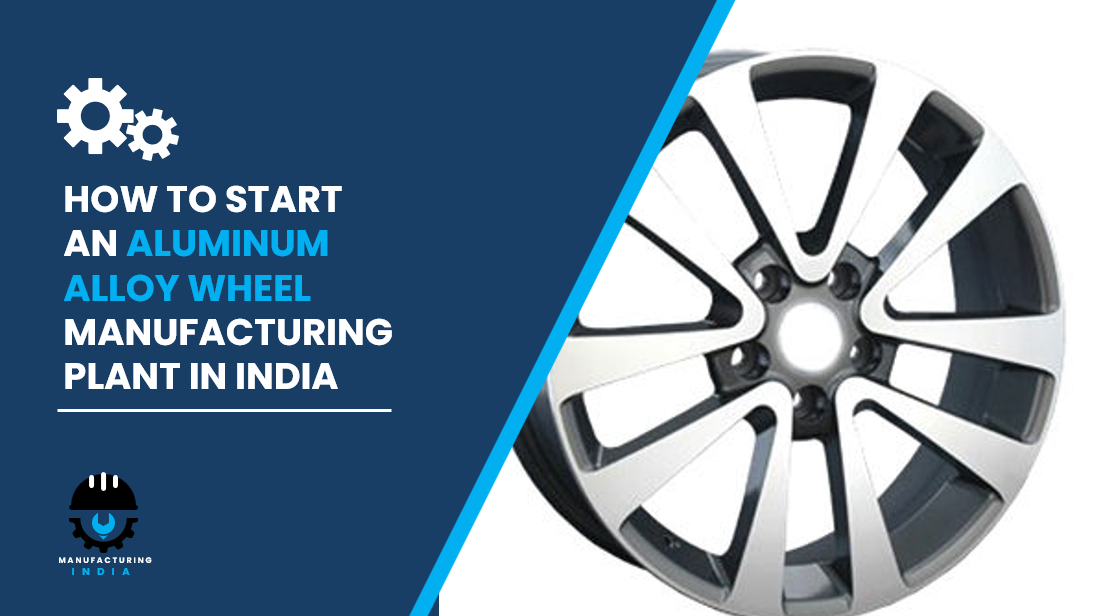
An aluminum alloy wheel, commonly referred to as an alloy wheel, is a vehicle rim manufactured from a blend of aluminum and other metals, engineered to offer a winning combination of strength, lightness, and aesthetics. These wheels are forged or cast to enhance a vehicle’s appearance while also contributing to improved performance and fuel efficiency. Aluminum alloy wheels are known for their durability, resistance to corrosion, and capability to dissipate heat efficiently, making them an ideal choice for numerous vehicles, from sports cars to everyday commuters.
Aluminum alloy wheels offer numerous advantages in automotive design and performance. They are significantly lighter than traditional steel wheels, reducing unsprung weight and improving fuel efficiency. Their enhanced heat dissipation properties aid in braking performance, minimizing the risk of brake fading. They are corrosion-resistant, ensuring longevity and a sleek appearance, while their malleability allows for intricate designs and customization that enhance aesthetics. These wheels are pivotal in enhancing handling and ride comfort due to reduced rotational mass, and they find applications across a wide range of vehicles — from sports cars to trucks — making them a popular choice among automotive enthusiasts and manufacturers alike.
Cost of Setting Up an Aluminum Alloy Wheel Manufacturing Plant in India
The aluminum alloy wheel manufacturing plant cost in India depends on several parameters including production capacity, casting technology used, plant location, level of automation, and regulatory compliance. Here is a structured breakdown of all major cost components:
1. Capital Expenditure (CapEx)
The total capital investment in an aluminum alloy wheel manufacturing plant typically covers the following:
Land and Site Development This includes land acquisition, boundary development, land registration charges, and basic site preparation. Cost varies significantly depending on whether the land is in an industrial estate, Special Economic Zone (SEZ), or a privately purchased plot, as well as proximity to automotive OEM clusters and supply chain hubs.
Civil Works and Construction Building costs cover the main casting and machining shed, melt shop, heat treatment area, finishing and painting zone, quality control laboratory, tool room, administrative block, and worker amenities. Construction specifications depend on plant scale and local compliance norms.
Machinery and Equipment This is the single largest component of CapEx. Key machinery required for an aluminum alloy wheel plant includes:
- Aluminum Melting Furnaces
- Low Pressure Die Casting (LPDC) Machines
- Heat Treatment Furnaces
- CNC Machining Centers
- Balancing Machines
- Painting and Powder Coating Lines
- Leak Testing Equipment
- Conveyors and Material Handling Systems
Other Capital Costs These include pre-operative expenses, commissioning charges, import duties (if machinery is sourced internationally), utilities installation, fire safety systems, and Effluent Treatment Plant (ETP) setup.
2. Operational Expenditure (OpEx)
Once the plant is commissioned, the ongoing cost structure is dominated by a few key components:
Raw Material Cost (Aluminum Alloy Ingots) Aluminum alloy ingots are the primary raw material and account for the majority of operating expenses. Additional materials include alloying elements, fluxes, degassing agents, die release agents, primer, paint, and clear coat for surface finishing.
Utility Cost Utilities include electricity (consumed heavily by melting furnaces, heat treatment ovens, CNC machining centers, and painting lines), natural gas or LPG for furnace operations, compressed air, and industrial water for cooling systems.
Other Operating Costs The remaining budget covers transportation, secondary packaging, salaries and wages, tooling and die maintenance, depreciation, taxes, and miscellaneous overhead.
Request a Sample Report for In-Depth Market Insights: https://www.imarcgroup.com/aluminum-alloy-wheel-manufacturing-plant-project-report/requestsample
3. Plant Capacity
The proposed manufacturing facility is designed with a production capacity that enables economies of scale while maintaining operational flexibility to serve multiple end-use vehicle segments including passenger cars, two-wheelers, SUVs, light commercial vehicles, and electric vehicles. The total capacity depends on the number of casting machines, CNC centers, and painting lines installed.
Smaller pilot operations focused on the aftermarket or a single OEM program can begin at lower volumes, but profitability improves significantly with higher capacity utilization, consistent OEM off-take agreements, and product mix diversification across wheel sizes and vehicle categories.
4. Profit Margins and Financial Projections
The project demonstrates healthy profitability potential under normal operating conditions. Financial projections must account for capital investment, operating costs, capacity utilization rates, pricing trends, and demand outlook. A thorough analysis should also include sensitivity analysis, Net Present Value (NPV), Internal Rate of Return (IRR), and Payback Period to assess the project’s full financial viability and long-term sustainability.
Why Set Up an Aluminum Alloy Wheel Manufacturing Plant in India?
India presents a uniquely favorable environment for establishing an aluminum alloy wheel manufacturing plant:
Surging Domestic Demand
India is one of the world’s largest and fastest-growing automotive markets. The shift from steel to alloy wheels as a standard OEM fitment across entry-level, mid-range, and premium vehicle platforms is creating large and sustained domestic demand for locally manufactured aluminum alloy wheels.
Electric Vehicle Growth Driving Lightweight Component Demand
The increasing focus on electric vehicles has led to a higher demand for lightweight materials, making aluminum alloy wheels a preferred choice in the EV market. India’s accelerating EV adoption is creating a structural uplift in demand as EV manufacturers prioritize reducing unsprung weight to maximize driving range and improve efficiency.
Customization and Personalization Trends
The growing trend towards customizing and personalizing vehicles has led to an escalated demand for aluminum alloy wheels. India’s fast-expanding aftermarket for stylish wheel designs, larger diameter fitments, diamond-cut finishes, and two-tone aesthetics is creating an additional and growing revenue stream beyond OEM supply.
Advancements in Manufacturing Technology
Advancements in manufacturing technologies have made aluminum alloy wheels more cost-effective and readily available, further boosting their popularity. Modern low pressure die casting, automated CNC machining, and advanced painting line technologies enable Indian manufacturers to achieve global quality standards at competitive production costs.
Cost-Competitive Manufacturing Base
India offers competitive land costs, a large pool of trained automotive manufacturing labor, and a well-established metals and raw material supply chain, making it one of the most cost-effective locations for alloy wheel production in Asia. This cost advantage enables Indian manufacturers to supply both domestic OEMs and international export markets competitively.
Manufacturing Process Overview
The aluminum alloy wheel manufacturing process involves a series of precisely controlled unit operations:
- Aluminum Melting and Alloying — aluminum alloy ingots are charged into melting furnaces, brought to casting temperature, degassed, flux-treated, and tested for chemical composition before casting
- Casting — molten aluminum is introduced into permanent steel dies using low pressure die casting (LPDC) or gravity die casting, filling the wheel-shaped cavity to form a raw casting with precisely controlled fill rate and die temperature
- Solidification and Cooling — the casting solidifies in the die under controlled cooling conditions before ejection; the cooling rate critically affects microstructure and mechanical properties of the finished wheel
- Heat Treatment — castings undergo solution treatment at elevated temperature followed by quenching and artificial aging to achieve the required tensile strength, yield strength, and hardness specifications
- X-Ray and Dimensional Inspection — heat-treated wheels are inspected for internal defects and dimensional conformance before proceeding to machining
- CNC Machining — accepted wheels are precision-machined to final dimensions on CNC machining centers for hub bore, bolt circle diameter, valve hole, and face profiling to achieve the required surface finish
- Balancing and Leak Testing — machined wheels are dynamically balanced and pressure-tested to confirm air-tight integrity before surface finishing
- Surface Finishing and Painting — wheels are shot-blasted, primed, base-coated, and clear-coated or powder-coated through automated paint lines; diamond-cut finishing is applied for multi-finish designs
- Final Inspection and Packaging — finished wheels undergo final dimensional, visual, and balance checks before being packaged with protective materials and dispatched to OEM or aftermarket customers
Key Applications of Aluminum Alloy Wheels
Aluminum alloy wheels manufactured in India serve a wide variety of end-use vehicle segments:
- Passenger Cars and SUVs: The largest application segment, where alloy wheels are increasingly standard OEM equipment across entry-level and premium platforms due to weight, fuel efficiency, handling, and aesthetic advantages over steel wheels
- Two-Wheelers: Premium and mid-range motorcycles and scooters are transitioning to cast alloy wheels for improved strength, tubeless tire compatibility, and modern styling preferences
- Electric Vehicles: EVs across all categories prioritize aluminum alloy wheels to minimize unsprung weight, directly extending driving range and improving the efficiency of regenerative braking systems
- Sports Cars and Performance Vehicles: High-performance alloy wheels with ultra-low weight and maximum structural strength are essential for sports and performance vehicles where weight reduction directly improves acceleration and handling
- Commercial Vehicles and Trucks: Light commercial vehicles and trucks are adopting alloy wheels to reduce overall vehicle weight, improve payload efficiency, and lower operating fuel costs
- Automotive Aftermarket: The fast-growing aftermarket supplies replacement and upgrade alloy wheels in a wide range of sizes, finishes, and custom designs for vehicle personalization and refurbishment
Global Market Outlook
The global aluminum alloy wheel market is witnessing sustained growth driven by the pursuit of lightweight materials for automotive components to improve fuel efficiency and reduce emissions, growing vehicle customization trends, advancements in manufacturing technologies, and the rapid rise of electric vehicles. The market is expanding across both OEM and aftermarket channels in key automotive regions including Asia Pacific, Europe, and North America. India’s domestic market is growing particularly fast, supported by rising vehicle production volumes, stricter fuel efficiency norms, and an expanding base of consumers upgrading to alloy-equipped vehicles.
Leading global players in this industry include:
- Maxion Wheels
- Enkei International, Inc.
- Accuride Corporation
- CITIC Dicastal Co., Ltd.
- Borbet GmbH
- Ronal Group
- Superior Industries International
- Wheels India Limited
Timeline to Start an Aluminum Alloy Wheel Manufacturing Plant
Setting up an aluminum alloy wheel manufacturing plant from ideation to commissioning typically requires 18 to 24 months. This covers:
- Feasibility study and detailed project report preparation
- Land acquisition and site development
- Regulatory approvals and environmental clearances
- Factory license and fire safety compliance
- Machinery procurement, die tooling fabrication, and plant installation
- Trial production runs, dimensional validation, and OEM supplier qualification
- Commercial production launch and volume ramp-up
Licenses and Regulatory Requirements
Starting an aluminum alloy wheel manufacturing unit in India requires several approvals, including:
- Business registration (Proprietorship, LLP, or Private Limited Company)
- Factory License under the Factories Act, 1948
- Environmental Clearance from the State Pollution Control Board (SPCB)
- Consent to Establish and Consent to Operate under Air and Water Acts
- GST Registration
- Fire Safety NOC from local fire authority
- BIS Certification and Automotive Industry Standard (AIS) compliance for OEM-supplied wheels
- IATF 16949 Quality Management System certification for automotive supply chain qualification
- MSME/Udyam Registration for government incentives and schemes
- Import Export Code (IEC) for businesses targeting export markets
Key Challenges to Consider
Before investing, entrepreneurs should be aware of the common challenges in this business:
- High Capital Requirements: Initial CapEx for casting machines, heat treatment furnaces, CNC machining centers, and painting lines is significant, especially for mid to large-scale plants. Die and tooling costs add a further substantial investment when multiple wheel designs and sizes must be tooled for different OEM platforms.
- Raw Material Price Volatility: Aluminum alloy ingot prices are linked to global LME aluminum prices and can fluctuate significantly, directly impacting operating margins. Effective procurement strategies and long-term supply contracts are essential to stabilize input costs.
- OEM Qualification and Quality Standards: Supplying automotive OEMs requires IATF 16949 certification, rigorous dimensional and structural testing, and formal supplier qualification processes that can take considerable time and investment, delaying revenue generation from the largest customer segment.
- Regulatory Compliance: Aluminum casting operations generate furnace emissions, dross waste, and wastewater from machining and painting lines. Meeting State Pollution Control Board standards requires continuous investment in emissions control, effluent treatment, and hazardous waste management systems.
- Skilled Manpower: Operating casting machines, CNC machining centers, X-ray inspection systems, and paint lines requires highly trained technical staff. Access to skilled automotive manufacturing personnel can be challenging outside established automotive clusters.
Frequently Asked Questions
The following questions are answered in the report:
- How has the aluminum alloy wheel market performed so far and how will it perform in the coming years?
- What is the market segmentation of the global aluminum alloy wheel market?
- What is the regional breakup of the global aluminum alloy wheel market?
- What are the price trends of various feedstocks in the aluminum alloy wheel industry?
- What is the structure of the aluminum alloy wheel industry and who are the key players?
- What are the various unit operations involved in an aluminum alloy wheel manufacturing plant?
- What is the total size of land required for setting up an aluminum alloy wheel manufacturing plant?
- What are the machinery requirements for setting up an aluminum alloy wheel manufacturing plant?
- What are the capital costs for setting up an aluminum alloy wheel manufacturing plant?
- What are the operating costs for setting up an aluminum alloy wheel manufacturing plant?
- What are the profit projections for setting up an aluminum alloy wheel manufacturing plant?
- What are the key regulatory procedures and requirements for setting up an aluminum alloy wheel manufacturing plant?
- What are the key certifications required for setting up an aluminum alloy wheel manufacturing plant?
Key Takeaways for Investors
The aluminum alloy wheel manufacturing industry in India represents a strong and strategically timed investment opportunity backed by accelerating domestic vehicle production, a structural shift from steel to alloy wheels across all vehicle categories, and the rapid rise of electric vehicles. The market is thriving due to the drive for lightweight materials, customization trends, manufacturing innovations, and EV adoption — making aluminum alloy wheels a prominent and growing choice for modern automobiles. A well-planned aluminum alloy wheel manufacturing plant cost in India remains competitive and financially viable across plant capacities, with profitability improving substantially through OEM qualification, capacity utilization, and aftermarket channel development. Investors who establish quality-certified, technically capable production facilities are well-positioned to capture meaningful market share as India’s automotive industry continues its strong growth trajectory.
About the Author