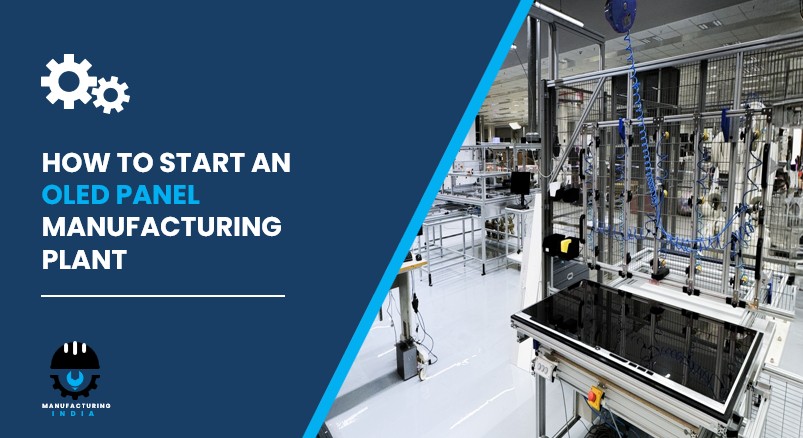
Setting up an OLED panel manufacturing plant presents a compelling investment case for those targeting India’s fast-growing consumer electronics, automotive, healthcare, and signage industries. OLED (Organic Light Emitting Diode) panels prized for their self-emissive pixel technology, superior contrast ratios, and lightweight form factor are the preferred display choice for smartphones, smart TVs, automotive dashboards, and medical devices, all sectors recording consistent growth within India’s expanding economy.
India’s urbanisation momentum, infrastructure pipeline, and make in India initiative provide a compelling foundation for an OLED panel manufacturing plant in India. Industrial clusters in Gujarat, Maharashtra, Tamil Nadu, and Uttar Pradesh deliver skilled labour, competitive land costs, logistics connectivity, and reliable utilities. These structural advantages, combined with surging domestic display demand, make India one of the most cost-competitive global locations for high-technology panel production.
Establishing this manufacturing facility in India benefits from strong Make in India policy support, cost-competitive fundamentals, and robust demand from consumer electronics, automotive, and healthcare sectors. With gross profit margins of 40–50% and net margins of 20–30%, and a global OLED panel market forecast to grow from USD 52.84 Billion in 2025 to USD 116.49 Billion by 2034 at a CAGR of 9.2%, break-even viability is firmly within reach for well-structured investments.
What is an OLED Panel?
OLED panels are a display technology that uses organic compounds to emit light when an electric current is applied. Unlike traditional LED screens requiring backlighting, OLED panels are self-emissive each pixel generates its own light producing deeper blacks, higher contrast ratios, and a more vibrant colour spectrum. These panels are thin, flexible, and can be manufactured on transparent or bendable substrates, delivering superior colour accuracy, energy efficiency, and lightweight construction.
The OLED panel manufacturing process involves material preparation, substrate preparation, deposition of organic layers, encapsulation, testing and quality control, and packaging. End-use industries include consumer electronics, automotive, healthcare, and signage and displays. Applications span smartphones, TVs and monitors, automotive dashboards, navigation systems, in-car displays, diagnostic screens, portable medical devices, digital billboards, and decorative lighting.
Cost of Setting Up an OLED Panel Manufacturing Plant in India
The cost of establishing this manufacturing facility depends on plant capacity, technology level, automation degree, geographic location, and regulatory compliance. A thorough CapEx and OpEx analysis are essential for any credible feasibility study.
1. Capital Expenditure (CapEx)
Land and Site Development costs cover land registration, boundary development, and site preparation. Investors may explore SEZ or industrial estate options in Gujarat or Maharashtra for land cost concessions and faster regulatory clearances.
Civil Works and Construction expenditure covers cleanroom construction — essential for organic layer deposition — along with production sheds, laboratory facilities, raw material storage, and administrative infrastructure.
Machinery and Equipment represent the largest capital expenditure component. Key machinery required includes:
- Vacuum deposition systems
- OLED encapsulation systems
- Film process equipment
- Packaging machines
Other Capital Costs include ETP installation, pre-operative expenses, commissioning charges, and import duties on specialised equipment.
Request a Sample Report for In-Depth Market Insights: https://www.imarcgroup.com/oled-panel-manufacturing-plant-project-report/requestsample
2. Operational Expenditure (OpEx)
Raw Material Cost is the dominant expense driver. Core inputs organic materials, glass substrate, and encapsulation materials account for 55–65% of total OpEx. Long-term supplier contracts are essential to mitigate price volatility and ensure supply continuity.
Utility Cost accounts for 20–25% of OpEx. Electricity, water, and steam are required to maintain cleanroom environments and run vacuum deposition and encapsulation systems at consistent throughput.
Other Operating Costs cover transportation, packaging, salaries, maintenance, depreciation, and taxes. By the fifth year, total costs are projected to increase substantially due to inflation, raw material price shifts, and global economic factors.
3. Plant Capacity
The proposed facility is designed with an annual production capacity of 1–5 million square metres, enabling economies of scale with operational flexibility. Capacity can be customised to investor requirements, and profitability improves progressively with higher utilisation rates.
4. Profit Margins and Financial Projections
This investment demonstrates strong profitability potential. Gross profit margins range between 40–50%, with net margins projected at 20–30%. Key metrics NPV, IRR, payback period, gross margin, and net margin are modelled across a five-year horizon with sensitivity analyses providing a comprehensive view of the OLED panel plant’s long-term financial viability.
Why Set Up an OLED Panel Plant in India?
Growing Consumer Electronics Demand. India’s consumer electronics market is expanding rapidly, with OLED displays increasingly preferred for smartphones, TVs, and wearables. In 2025, Chinese smart consumer electronics manufacturers registered a 48% rise in profits with 102% growth in unmanned aerial device manufacturing and 88.8% in intelligent in-car appliance manufacturing reflecting global momentum in high-performance display demand.
Automotive Sector Digitisation. The automotive sector is witnessing rising use of advanced in-car displays in infotainment systems, dashboards, and lighting. As Indian OEMs invest in connected and electric vehicle platforms, local panel sourcing represents a critical and growing supply chain opportunity.
Healthcare Display Growth. OLED panels serve diagnostic displays and portable medical devices with the high contrast and image clarity essential for accurate clinical readings. India’s expanding healthcare infrastructure sustains robust institutional demand across hospitals, diagnostic centres, and device manufacturers.
Policy and Regulatory Tailwinds. Make in India and PLI schemes for electronics manufacturing provide direct financial incentives for domestic producers, reducing investment risk, shortening payback periods, and improving long-term IRR.
Active Industry Investment. In February 2026, Panasonic unveiled affordable OLED TVs the Z85C and Z86C powered by LG Display’s OLED SE panel across 55 and 65-inch variants. In December 2025, LG Display launched the world’s first 27-inch 4K OLED panel with a 240Hz refresh rate and DFR technology, confirming continued global innovation confidence in next-generation display technology.
Cost-Competitive Manufacturing. India offers significant advantages in land, labour, and supply chain costs relative to South Korea, Japan, and China, enhancing the competitive positioning of domestic production for both the Indian market and regional export destinations.
Manufacturing Process Step by Step
The OLED panel manufacturing process uses material preparation, substrate preparation, deposition of organic layers, encapsulation, testing and quality control, and packaging as the core production methodology.
- Material Preparation: Organic compounds and input materials are verified and prepared, with quality checks conducted before entering the production line.
- Substrate Preparation: Glass substrates are cleaned and treated to receive the organic layer stack, ensuring adhesion quality and panel uniformity.
- Deposition of Organic Layers: Using vacuum deposition systems, organic materials are deposited onto the substrate in precise thin-film layers the central technical step in production.
- Encapsulation: Encapsulation systems seal organic layers against moisture and oxygen, safeguarding panel longevity and performance reliability.
- Testing and Quality Control: Each panel undergoes performance testing verifying contrast ratio, colour accuracy, and brightness uniformity.
- Packaging: Finished panels are packaged and dispatched to consumer electronics manufacturers, automotive OEMs, healthcare device producers, and signage operators.
Key Applications
The technology serves a diverse range of industries, delivering premium display performance across commercial and industrial settings:
- Consumer Electronics: Deployed in smartphones, TVs, and smartwatches for vibrant colour, high contrast, and lower power consumption compared to traditional displays.
- Automotive: Integrated into car interiors for dashboards, infotainment systems, and navigation displays.
- Healthcare: Used in diagnostic screens and portable medical devices, offering clarity and high contrast for accurate image readings.
- Signage: Applied in digital billboards for retail and public displays, delivering high-quality, eye-catching visuals.
- Lighting: Utilised as energy-efficient and flexible solutions in commercial and residential applications.
Leading Manufacturers
The global display panel industry is served by a concentrated group of multinational companies with extensive production capacities and diverse application portfolios. Key players in the OLED panel market include:
- LG Display Co., Ltd
- Sony Corporation
- Pioneer Corporation
- Raystar Optronics Inc.
- Samsung Display Co. Ltd
Timeline to Start the Plant
- Feasibility study and project report preparation
- Land acquisition and site development
- Regulatory approvals and environmental clearances
- Factory licence and fire safety compliance
- Machinery procurement and installation
- Raw material supplier agreements and supply chain setup
- Trial production and quality testing
- Commercial production launch
Licences and Regulatory Requirements
Starting this manufacturing unit in India requires several approvals:
- Business registration (Proprietorship, LLP, or Pvt Ltd)
- Factory Licence under the Factories Act
- Environmental Clearance from State Pollution Control Board
- GST Registration
- Fire Safety NOC
- Hazardous/Chemical compliance (applicable for organic materials and encapsulation chemicals)
- Effluent Treatment Plant (ETP) operational clearance
- Occupational Health and Safety compliance
Key Challenges to Consider
High Capital Requirements. Cleanroom construction, vacuum deposition systems, and precision encapsulation equipment demand substantial upfront investment, making rigorous financial planning and secured funding critical.
Raw Material Price Volatility. Organic materials, glass substrate, and encapsulation materials are subject to global price fluctuations, requiring proactive procurement and long-term supplier contracts.
Regulatory Compliance. Handling organic and encapsulation chemicals requires strict adherence to environmental, safety, and effluent treatment regulations, adding complexity to ongoing plant management.
Technology and Innovation Pressure. The sector’s rapid advancement evidenced by LG Display’s December 2025 launch of the world’s first 27-inch 4K display panel with a 240Hz refresh rate demands continuous technology reinvestment to remain competitive.
Competition from Global Players. Established manufacturers including LG Display Co., Ltd, Samsung Display Co. Ltd, and Sony Corporation set a high standard for production efficiency and product quality.
Skilled Manpower. Operating cleanrooms and vacuum deposition systems requires trained engineers and technicians, making talent acquisition a sustained operational priority.
Frequently Asked Questions
1. How much does it cost to set up an OLED panel manufacturing plant in India?
Setup costs depend on plant capacity, technology level, automation degree, location, and compliance requirements, covering land, civil works, machinery, and raw materials.
2. Is OLED panel manufacturing profitable in India in 2026?
Yes. Gross margins of 40–50% and net margins of 20–30% place this among the most financially attractive advanced manufacturing investments in India’s electronics sector.
3. What machinery is required for an OLED panel plant in India?
Key equipment includes vacuum deposition systems, OLED encapsulation systems, film process equipment, and packaging machines.
4. What licences are required to start this type of plant in India?
Business registration, Factory Licence, Environmental Clearance, GST Registration, Fire Safety NOC, ETP clearance, and Occupational Health and Safety compliance.
5. What raw materials are needed for production?
The primary inputs are organic materials, glass substrate, and encapsulation materials.
6. What are the environmental compliance requirements?
Operators must obtain Environmental Clearance from the State Pollution Control Board, maintain a fully operational ETP, and comply with chemical and hazardous materials handling regulations.
7. What is the best location to set up this plant in India?
Gujarat, Maharashtra, Tamil Nadu, and Uttar Pradesh offer strong industrial ecosystems with electronics clusters, reliable utilities, and skilled labour.
8. What is the break-even period?
Break-even depends on capacity utilisation, raw material costs, and capital investment. Detailed NPV, IRR, and payback period modelling is recommended for project-specific projections.
9. What government incentives are available for manufacturers in India?
Make in India, PLI schemes for electronics, SEZ benefits, and state-level policies offer capital subsidies, power tariff incentives, and land cost concessions.
Key Takeaways for Investors
This investment opportunity in India is underpinned by strong demand from consumer electronics, automotive, healthcare, and signage sectors. The facility delivers gross profit margins of 40–50% and net margins of 20–30% across production capacities of 1–5 million square metres annually.
About the Author