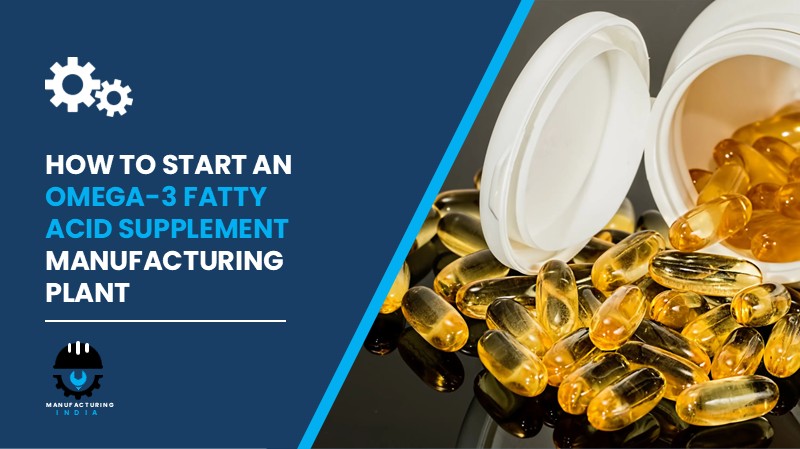
Setting up an omega-3 fatty acid supplement manufacturing plant in India presents a compelling investment case driven by surging consumer demand across cardiovascular health, cognitive wellness, and preventive healthcare segments. Omega-3 fatty acid supplements – encompassing EPA (eicosapentaenoic acid), DHA (docosahexaenoic acid), and ALA (alpha-linolenic acid) – are recognized globally for their critical roles in reducing triglyceride levels, supporting healthy cholesterol profiles, aiding brain development, and managing inflammatory conditions such as rheumatoid arthritis. As India’s healthcare and nutraceutical industries accelerate, the facility presents an increasingly robust business opportunity for domestic and international investors.
India offers a strategically compelling environment for omega-3 supplement production. The country’s expanding urban middle class, growing health consciousness, and rising awareness of preventive nutrition are creating sustained retail demand for supplements in capsule, liquid, and enriched food product formats. The Make in India initiative, combined with well-developed pharmaceutical manufacturing infrastructure in states such as Gujarat, Maharashtra, and Uttar Pradesh, ensures that investors benefit from cost-competitive land, skilled manpower, and established supply chains. Furthermore, the government’s active support for nutraceutical manufacturing through policy frameworks and healthcare endorsements reinforces the long-term viability of this investment.
An omega-3 fatty acid supplement manufacturing plant in India combines policy support, cost-competitive production, and growing demand from cardiovascular, cognitive, and anti-inflammatory health segments. With scalable capacity options and favourable margins across multiple product formats – capsules, liquids, and enriched foods – this investment offers a viable, future-proof opportunity in one of the world’s fastest-growing nutraceutical markets.
What is an Omega-3 Fatty Acid Supplement?
Omega-3 fatty acid supplements encompass a group of essential fats that cannot be synthesised by the human body and must be obtained through diet or supplementation. They specifically include three primary fatty acids: EPA (eicosapentaenoic acid), DHA (docosahexaenoic acid), and ALA (alpha-linolenic acid). These elements are predominantly found in fish oils and certain plant-based oils, making both marine-sourced and plant-derived raw material streams viable for production.
These supplements are widely recognised for their role in supporting cardiovascular health, reducing inflammation, and aiding brain development. They are associated with lowering the risk of heart disease, reducing triglyceride levels, and supporting healthy cholesterol profiles. They also contribute to cognitive function, memory, and mood regulation. Clinically, omega-3 supplements are employed in managing rheumatoid arthritis due to their anti-inflammatory properties and are used as supportive therapy for conditions including depression, asthma, and certain skin disorders.
The product is commercially available in multiple formats including capsules, liquids, and enriched food products, catering to diverse consumer preferences. This versatility in product form broadens the addressable market significantly and allows a manufacturing facility to serve multiple retail and institutional channels simultaneously. End-use industries served include healthcare and pharmaceuticals, dietary supplements and nutraceuticals, food and beverages, and personal care.
Cost of Setting Up an Omega-3 Fatty Acid Supplement Manufacturing Plant in India
The total cost of establishing an omega-3 fatty acid supplement manufacturing plant in India depends on a range of interdependent variables including installed capacity, chosen technology and automation level, plant location, product format mix, and the extent of regulatory compliance infrastructure required. A sound financial model must account for both capital and operational expenditure comprehensively.
1. Capital Expenditure (CapEx)
The capital expenditure covers all one-time investments required to build and commission the plant before commercial production begins.
Land and Site Development: forms the foundational CapEx item. Investors may consider setting up within designated pharmaceutical Special Economic Zones (SEZs) or MIDC/GIDC industrial estates to benefit from land cost advantages, pre-developed utilities, and streamlined regulatory clearances. Site preparation, boundary development, and drainage infrastructure add to this cost.
Civil Works and Construction: encompasses construction of the main production shed, quality control laboratory, raw material and finished goods warehouses, effluent treatment facility, and administrative block. GMP-compliant construction standards – mandatory for pharmaceutical and nutraceutical facilities – increase civil costs but are non-negotiable for regulatory approvals.
Machinery and Equipment: constitutes the largest single CapEx component. Key machinery required includes:
- Fish oil extraction and refining equipment
- Molecular distillation units (for concentration and purification)
- Encapsulation machines (softgel encapsulation lines)
- Liquid filling and sealing machinery
- Blending and homogenisation tanks
- Filtration systems
- Quality testing and analytical laboratory instruments
- Packaging and labelling lines
- Effluent treatment plant (ETP) equipment
Other Capital Costs: include pre-operative expenses (feasibility studies, legal fees, project management), import duties on specialised machinery, commissioning charges, and working capital margin funding for the initial production cycle.
Request a Sample Report for In-Depth Market Insights: https://www.imarcgroup.com/omega-3-fatty-acid-supplement-manufacturing-plant-project-report/requestsample
2. Operational Expenditure (OpEx)
Raw Material Cost: represents the dominant recurring expense. Key raw materials for omega-3 fatty acid supplement manufacturing include fish oil (as the primary marine-sourced feedstock), plant-based oils (for ALA-rich and vegan product lines), gelatin or vegetable capsule shells, antioxidants (such as vitamin E/tocopherols for oxidation control), and packaging materials including blister packs, bottles, and secondary cartons. Establishing long-term supply contracts with certified raw material suppliers helps buffer against feedstock price volatility and ensures consistent purity standards.
Utility Cost: covers electricity (significant for molecular distillation and refrigeration systems), water (for process and cooling use), and steam for heating operations. Energy efficiency investments made at the CapEx stage directly reduce long-term utility spend.
Other Operating Costs: include outbound transportation and logistics, GMP-compliant packaging, employee salaries across production, QC, regulatory, and sales functions, plant maintenance, depreciation on machinery and civil assets, and applicable GST and corporate taxes. A standard five-year cost projection should factor in annual increases in raw material prices, utility tariffs, and wage inflation to ensure financial model robustness.
3. Plant Capacity
The omega-3 fatty acid supplement manufacturing plant project report covers capacity planning customisable to specific investor requirements. Capacity can be configured for small-scale domestic supply or scaled to serve export markets, institutional healthcare buyers, and private-label contract manufacturing clients. Profitability improves progressively with higher capacity utilisation as fixed costs are distributed across a larger production volume, improving unit economics on both CapEx recovery and gross margins.
4. Profit Margins and Financial Projections
A detailed financial analysis for an omega-3 fatty acid supplement plant covers capital investments, operating cost projections, income and expenditure forecasts, taxation, and depreciation schedules. Key financial metrics evaluated include Net Present Value (NPV), Internal Rate of Return (IRR), payback period, gross margin, and net profit margin. The project report provides liquidity analysis, profitability analysis, uncertainty analysis, and sensitivity analysis across capacity and pricing scenarios. Investors should model financial projections across a five-to-seven-year horizon to accurately capture revenue ramp-up, break-even timelines, and long-term return potential.
Why Set Up an Omega-3 Fatty Acid Supplement Plant in India?
Rising Health Awareness and Preventive Healthcare Demand: The increasing awareness and understanding of the critical role omega-3 plays in overall health and well-being is one of the primary demand drivers in the Indian market. Growing consumer interest in heart health, cognitive function, and anti-inflammatory nutrition is translating into sustained retail demand across capsule, liquid, and functional food formats.
Emerging Consumer Trends in Personalised and Preventive Nutrition: Consumer trends towards personalised and preventive healthcare are creating a favourable outlook for supplement market expansion. Indian consumers are increasingly prioritising evidence-backed health supplements, and omega-3 products, with their well-documented clinical benefits, are positioned strongly within this trend.
Plant-Based and Vegan Product Variants Broadening Market Reach: The advent of plant-based omega-3 variants catering to vegan and vegetarian preferences has broadened the consumer base significantly. India’s large vegetarian population makes ALA-rich plant-based omega-3 supplements – alongside algae-derived DHA options – a particularly strategic product category for domestic manufacturers.
Policy and Regulatory Tailwinds: Public and private initiatives such as educational campaigns about the multiple benefits of omega-3 fatty acids for heart and cognitive health, along with healthcare endorsements, have reinforced product demand. The Make in India initiative and government support for pharmaceutical and nutraceutical manufacturing provide additional regulatory and financial incentives.
Cost-Competitive Manufacturing Advantages: India offers lower land acquisition costs, a large pool of trained pharmaceutical and nutraceutical production workers, and an established domestic supply chain for packaging and ancillary materials. These structural advantages reduce both CapEx and OpEx compared to establishing equivalent facilities in Western markets.
Technological Advancements Creating Quality Differentiation: Significant technological advancements in product development and extraction processes now offer higher potency and purity levels, enabling Indian manufacturers to compete on quality benchmarks alongside global players. Investment in advanced molecular distillation and encapsulation technology positions Indian plants to serve export markets effectively.
Manufacturing Process – Step by Step
The omega-3 fatty acid supplement manufacturing process utilises a multi-stage extraction, purification, and formulation workflow as the primary production method.
- Raw Material Sourcing and Intake: Fish oil or plant-based oil is procured from certified suppliers and received at the plant for quality inspection and storage.
- Oil Extraction and Refining: Crude fish oil undergoes degumming, neutralisation, bleaching, and deodorisation to remove impurities and reduce odour.
- Concentration and Purification via Molecular Distillation: Molecular distillation units separate and concentrate EPA and DHA fractions to achieve target potency and purity specifications.
- Antioxidant Addition: Tocopherols or other approved antioxidants are blended into the refined oil to prevent oxidation and extend shelf life.
- Encapsulation: Softgel encapsulation machines fill and seal the omega-3 oil into gelatin or vegetable capsule shells in precise dosage volumes.
- Quality Control and Testing: Finished capsules and liquid formats undergo analytical testing including potency verification, peroxide value testing, and microbiological checks.
- Packaging and Labelling: Products are packed into blister packs, bottles, or pouches with GMP-compliant labelling and batch coding.
- Dispatch to End-Use Industries: Finished products are dispatched to pharmaceutical distributors, nutraceutical retailers, healthcare institutions, and export channels.
Key Applications
Omega-3 fatty acid supplements serve a wide range of end-use industries and consumer health categories.
- Cardiovascular Health: Supplements used to lower triglyceride levels, reduce risk of heart disease, and support healthy cholesterol profiles.
- Brain and Cognitive Health: Products supporting cognitive function, memory enhancement, and mood regulation.
- Rheumatoid Arthritis Management: Anti-inflammatory applications for joint health and symptom management.
- Mental Health Support: Supportive therapy for depression and mood disorders.
- Respiratory Health: Supplementation used in managing asthma.
- Dermatology and Skin Health: Applications for certain skin disorders requiring lipid-based nutritional support.
- Food and Beverages: Enriched food products incorporating omega-3 to serve health-conscious consumers.
Leading Manufacturers
The global omega-3 fatty acid supplement market is served by a competitive landscape of pharmaceutical companies, nutraceutical producers, and specialised supplement manufacturers. The IMARC Group project report covers the competitive landscape and key players operating in the global omega-3 fatty acid supplement industry. Specific company names and market structure details are provided within the full project report, including segment-wise and region-wise breakup of the global market.
Timeline to Start the Plant
- Feasibility study and project report preparation
- Land acquisition and site development
- Regulatory approvals and environmental clearances
- Factory licence and fire safety compliance
- Machinery procurement and installation
- Raw material supplier agreements and supply chain setup
- Trial production and quality testing
- Commercial production launch
Licences and Regulatory Requirements
Starting an omega-3 fatty acid supplement manufacturing unit in India requires several approvals:
- Business registration (Proprietorship, LLP, or Private Limited Company)
- Factory Licence under the Factories Act
- Environmental Clearance from the State Pollution Control Board
- GST Registration
- Fire Safety NOC
- Drug manufacturing licence under CDSCO/State FDA (for pharmaceutical-grade supplements)
- Hazardous chemical handling compliance (for solvents used in extraction processes)
- Effluent Treatment Plant (ETP) operational clearance
- Occupational Health and Safety compliance under applicable labour laws
- GMP certification for nutraceutical and pharmaceutical-grade production
Key Challenges to Consider
High Capital Requirements: Establishing a GMP-compliant omega-3 fatty acid supplement manufacturing plant involves substantial upfront investment in molecular distillation equipment, encapsulation lines, quality control laboratories, and ETP infrastructure, requiring well-structured project funding.
Raw Material Price Volatility: Fish oil – the primary feedstock – is subject to global supply fluctuations driven by marine catch volumes, fishing regulations, and competing industrial demand. Plant-based oil prices are similarly sensitive to agricultural cycles. Long-term supplier contracts and strategic inventory management are essential risk mitigation measures.
Regulatory Compliance: Operating within India’s pharmaceutical and nutraceutical regulatory framework – covering CDSCO approvals, GMP compliance, state pollution control requirements, and food safety regulations – demands ongoing investment in quality systems, documentation, and regulatory affairs expertise.
Technology and Innovation Pressure: Significant technological advancements in product development and extraction processes that offer higher potency and purity levels mean that manufacturers must invest in continual process upgrades to remain competitive and meet evolving quality standards.
Competition: The global omega-3 supplement market is served by established multinational and domestic players. New entrants must differentiate on quality benchmarks, pricing, product innovation, and distribution reach to build sustainable market share.
Skilled Manpower: Operating molecular distillation units, encapsulation machinery, and GMP-grade analytical laboratories requires a trained workforce with expertise in pharmaceutical or nutraceutical manufacturing – a resource that requires targeted recruitment and ongoing training investment.
Frequently Asked Questions
How much does it cost to set up an omega-3 fatty acid supplement manufacturing plant in India?
The total setup cost varies based on installed capacity, technology selection, plant location, automation level, and regulatory infrastructure. The IMARC Group project report provides detailed CapEx and OpEx breakdowns customisable to your specific plant configuration.
Is omega-3 fatty acid supplement manufacturing profitable in India in 2026?
Yes, the sector offers strong profitability potential driven by growing domestic demand, export opportunities, and improving margins at higher capacity utilisation. Detailed NPV, IRR, and margin projections are available in the full project report.
What machinery is required for an omega-3 fatty acid supplement plant in India?
Key machinery includes fish oil extraction and refining equipment, molecular distillation units, softgel encapsulation machines, liquid filling lines, blending tanks, filtration systems, analytical laboratory instruments, and packaging lines.
What licences and approvals are required to start an omega-3 fatty acid supplement plant in India?
Required approvals include business registration, factory licence, environmental clearance, GST registration, fire safety NOC, drug/nutraceutical manufacturing licence, and GMP certification.
What raw materials are needed for omega-3 fatty acid supplement manufacturing?
Primary raw materials include fish oil, plant-based oils, EPA and DHA concentrates, gelatin or vegetable capsule shells, antioxidants, and packaging materials.
What government incentives are available for manufacturers in India?
Manufacturers may benefit from the Make in India initiative, PLI schemes for pharmaceuticals and nutraceuticals, SEZ fiscal benefits, state-level industrial incentives, and MSME support schemes depending on plant scale and location.
Key Takeaways for Investors
An omega-3 fatty acid supplement manufacturing plant in India offers a strategically sound investment opportunity, underpinned by robust demand across cardiovascular health, cognitive wellness, anti-inflammatory therapy, and preventive nutrition sectors. The investment is financially viable across multiple plant capacity configurations, with profitability improving progressively at higher utilisation rates and with product diversification across capsule, liquid, and enriched food formats. The global omega-3 fatty acid supplement market is supported by strong structural growth drivers including public health awareness campaigns, healthcare endorsements, and the rising adoption of personalised preventive nutrition, particularly among India’s expanding urban consumer base. Demand sustainability is further reinforced by the emergence of plant-based vegan product variants broadening the consumer base and by significant ongoing technological advancements offering higher potency and purity – trends that collectively position India as a competitive and forward-looking production hub for both domestic supply and export markets.
About the Author