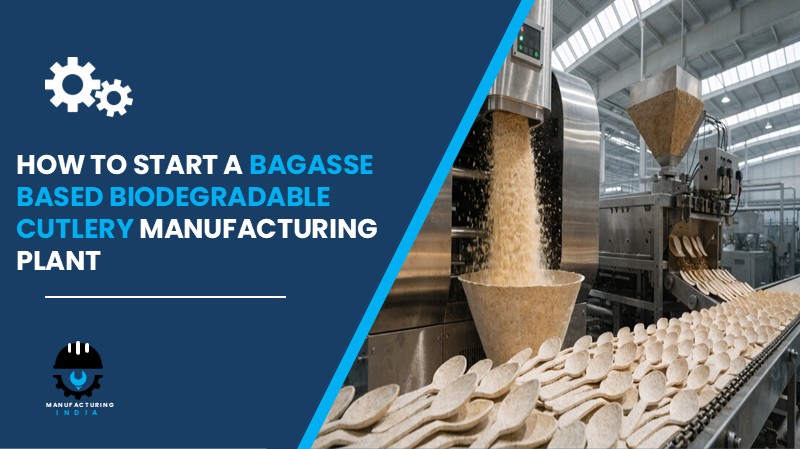
Setting up a bagasse based biodegradable cutlery manufacturing plant in india presents a compelling investment opportunity as global demand for eco-friendly, sustainable alternatives to single-use plastic products continues to surge. Driven by increasing environmental concerns, stringent government regulations against plastic waste, and growing consumer preference for sustainable packaging solutions, bagasse-based cutlery has emerged as an indispensable component of the global green economy.
“With rising environmental awareness, supportive policy frameworks, and expanding applications across foodservice, event management, retail, and hospitality sectors, bagasse based biodegradable cutlery manufacturing offers one of the most financially attractive opportunities with gross margins of 35-45% and strong market growth projections.”
What is Bagasse Based Biodegradable Cutlery?
Bagasse based biodegradable cutlery is produced from bagasse, a fibrous material left over after extracting juice from sugarcane. This agricultural waste material is processed to create plates, bowls, forks, spoons, and other types of cutlery as eco-friendly, compostable alternatives to plastic products. Bagasse cutlery is robust, durable, and capable of carrying both hot and cold food items.
These products are 100% biodegradable and compostable, decomposing into natural components when disposed of in suitable environments, making them a perfect alternative to plastic waste. Moreover, bagasse cutlery is chemical-free, providing a safe, sustainable, and non-toxic option for food contact applications across various industries.
Request for a Sample Report: https://www.imarcgroup.com/bagasse-based-biodegradable-cutlery-manufacturing-plant-project-report/requestsample
Market Overview and Growth Potential
The global bagasse based biodegradable cutlery market demonstrates strong growth trajectory, valued at USD 158.47 Million in 2025. According to IMARC Group’s comprehensive market analysis, the market is expected to reach USD 311.53 Million by 2034, exhibiting a robust CAGR of 7.8% from 2026 to 2034.
This sustained expansion is driven by multiple factors including rising environmental awareness, government regulations banning single-use plastics, increasing demand from foodservice and event management sectors, growing consumer preference for sustainable products, and expanding applications in hospitality and retail industries. The market is witnessing robust demand as businesses and consumers seek eco-friendly alternatives that support sustainability goals while maintaining functionality and cost-effectiveness.
Cost of Setting Up a Bagasse Based Biodegradable Cutlery Manufacturing Plant
The bagasse based biodegradable cutlery manufacturing plant cost depends on several parameters including production capacity, technology used, plant location, level of automation, and regulatory compliance. Here is a structured breakdown of all major cost components:
1. Capital Expenditure (CapEx)
The total capital investment in a bagasse based biodegradable cutlery manufacturing plant typically covers the following:
Land and Site Development – This includes land acquisition, boundary development, land registration charges, and basic site preparation. The site must offer easy access to key raw materials such as bagasse pulp from sugar mills, water supply, and proximity to target markets to minimize distribution costs.
Civil Works and Construction – Building costs cover the main manufacturing shed, utility area, raw material storage, drying facilities, quality control laboratory, finished goods warehouse, administrative block, and worker amenities. The layout should be optimized to enhance workflow efficiency, ensure workplace safety, and minimize material handling complexities.
Machinery and Equipment – This is the single largest component of CapEx. Key machinery required for a bagasse cutlery plant includes:
- Shredders and Grinders (for bagasse preparation)
- Pulping Machines (to create bagasse pulp slurry)
- Molding and Forming Machines (high-pressure hydraulic presses)
- Drying Ovens (for moisture removal and hardening)
- Trimming and Finishing Equipment
- Quality Control and Testing Systems
- Packaging Machines (automated counting, stacking, and wrapping systems)
- Material Handling Conveyors and Storage Systems
Machinery costs represent a significant share of overall capital expenditure, reflecting the specialized equipment required for processing fibrous materials and maintaining product quality standards.
Other Capital Costs – These include pre-operative expenses, commissioning charges, regulatory compliance certifications, effluent treatment plant setup, utilities installation, fire safety systems, and initial working capital requirements.
2. Operational Expenditure (OpEx)
Once the plant is commissioned, the ongoing cost structure is dominated by a few key components:
Raw Material Cost (Bagasse Pulp): 35-45% of Total OpEx
Bagasse pulp (sourced from sugar mills) is the primary raw material and accounts for the largest portion of operating expenses. Additional materials may include water, food-grade binders or additives (optional, for enhanced strength), and processing chemicals depending on the product specifications.
Utility Cost: 25-30% of Total OpEx
Utilities include electricity (consumed by molding machines, drying ovens, and processing equipment), water (used in pulping process and cooling systems), and steam (for drying operations). Energy-efficient equipment and process optimization can significantly reduce utility costs.
Other Operating Costs – The remaining budget covers packaging materials, transportation and logistics, salaries and wages, equipment maintenance, depreciation, taxes, quality control testing, and miscellaneous overhead expenses.
3. Plant Capacity
The proposed manufacturing facility is designed with an annual production capacity of 300 Metric Tons, enabling economies of scale while maintaining operational flexibility. This capacity range allows the plant to serve multiple end-use segments including foodservice, event management, retail, hospitality, and food packaging industries.
Smaller pilot setups with limited automation may start at lower capacity, but profitability significantly improves with higher capacity utilization and economies of scale. The modular design allows for future expansion as market demand grows.
4. Profit Margins and Financial Projections
- Gross Profit Margin: 35-45%
- Net Profit Margin: 15-25%
- Expected ROI: Strong return on investment supported by stable demand, value-added positioning, and growing market acceptance
Financial projections must account for capital investment, operating costs, capacity utilization rates, pricing trends, and demand outlook. A thorough analysis should include income and expenditure projections, sensitivity analysis, Net Present Value (NPV), Internal Rate of Return (IRR), and Payback Period to ensure comprehensive financial planning.
Why Set Up a Bagasse Based Biodegradable Cutlery Manufacturing Plant?
Several compelling factors make bagasse based biodegradable cutlery manufacturing an attractive investment opportunity:
Sustainability and Environmental Benefits
The increasing trend towards sustainable consumption patterns has led to surging demand for biodegradable and compostable alternatives to single-use plastics. Bagasse cutlery is an ideal alternative as it is 100% biodegradable, compostable, and made from renewable agricultural waste that would otherwise be burned or discarded.
Government Regulations and Policy Support
Many countries and regions are enforcing strict legislation to ban or limit single-use plastics. Governments worldwide are implementing regulations such as plastic bans, extended producer responsibility schemes, and sustainability mandates. Bagasse based biodegradable cutlery supports governmental efforts to promote sustainable waste management practices and reduce plastic pollution, creating a favorable regulatory environment for manufacturers.
Cost-Effective Manufacturing
Bagasse is a byproduct of the sugarcane industry, making it an abundantly available and cost-effective raw material. The widespread availability of bagasse from sugar mills and the relatively low cost of production contribute to the affordability and competitive pricing of bagasse-based products compared to other biodegradable alternatives.
Versatility and Durability
Bagasse-based cutlery is durable and can withstand both hot and cold temperatures, making it suitable for a wide range of foodservice and catering applications. It maintains strength and integrity when used with liquids, oils, and various food types, unlike some other biodegradable materials that may compromise on performance.
Growing Market Demand Across Multiple Sectors
The demand for bagasse cutlery spans multiple industries including foodservice (restaurants, cafes, quick-service chains), event management (weddings, conferences, outdoor events), retail (supermarkets, eco-stores, online platforms), hospitality (hotels, resorts, catering services), and food packaging. This diversified demand base provides stable revenue opportunities and reduces market concentration risk.
Major Applications and Market Segments
Bagasse based biodegradable cutlery products find extensive applications across diverse market segments:
Foodservice Industry – Widely used in fast food restaurants, cafes, and quick-service restaurants seeking eco-friendly alternatives to plastic cutlery. Applications include disposable plates, bowls, forks, spoons, knives, serving trays, and takeaway containers for dine-in and delivery services.
Event Management – Increasingly used for outdoor events, weddings, corporate conferences, festivals, and parties where large volumes of disposable tableware are required. Bagasse cutlery provides an environmentally responsible solution for event organizers focused on sustainability.
Retail and Consumer Goods – Available in supermarkets, health food stores, eco-friendly retailers, and online platforms as part of the broader consumer shift towards green and sustainable living. Products are marketed to environmentally conscious consumers seeking alternatives to conventional plastics.
Hospitality Industry – Hotels, resorts, and catering companies are adopting bagasse products for room service, outdoor dining, buffets, and green events. The hospitality sector’s growing focus on sustainability certifications and eco-friendly operations drives demand.
Food Packaging Industry – The food packaging industry uses bagasse cutlery as a component of comprehensive sustainable packaging solutions. Bagasse products are combined with eco-friendly food containers, bowls, and packaging materials to create fully compostable packaging systems that minimize plastic waste.
Manufacturing Process Overview
The bagasse based biodegradable cutlery manufacturing process involves several precision-controlled stages:
- Bagasse Collection and Preparation – Raw bagasse is sourced from sugar mills, cleaned, and prepared for processing. The fibrous material is sorted and any impurities are removed.
- Pulping Process – Bagasse is shredded, ground, and mixed with water to create a pulp slurry. This slurry forms the base material for cutlery production. Optional additives may be incorporated to enhance strength or water resistance.
- Molding and Shaping – The pulp slurry is fed into high-pressure hydraulic molding machines where it is compressed into specific shapes (plates, bowls, forks, spoons, etc.) using heated dies. Pressure and temperature are precisely controlled to achieve desired thickness and structural integrity.
- Drying and Hardening – Molded products are transferred to drying ovens where controlled heat removes excess moisture and hardens the material. This step is critical for achieving final strength, dimensional stability, and shelf life.
- Trimming and Finishing – Dried cutlery items undergo trimming to remove excess material and ensure smooth edges. Quality inspection verifies dimensional accuracy, surface finish, and structural integrity.
- Packaging – Finished products are counted, stacked, and packaged in moisture-resistant materials for storage and transport. Packaging is designed to protect products while maintaining eco-friendly credentials.
Leading Bagasse Based Biodegradable Cutlery Manufacturers
The global bagasse based biodegradable cutlery industry is led by established manufacturers with extensive production capabilities and diverse application portfolios. Key industry players include:
- Eco-Products, Inc.
- BioPak Pty Ltd.
- GreenGood USA
- Vegware Ltd.
- Pactiv LLC
- Dart Container Corporation
- Huhtamaki Oyj
These companies serve diverse end-use sectors including foodservice, event management, retail, hospitality, and food packaging, demonstrating the broad market applicability of bagasse based biodegradable cutlery products.
Recent Industry Developments
September 2025: GreenOlive launched 100% biodegradable 4oz coffee cup lids made from sugarcane bagasse. This compostable, plastic-free material utilizes agricultural waste to produce robust and heat-resistant lids certified for both domestic and industrial composting.
August 2024: Researchers examined the feasibility of using sugarcane bagasse as a material to produce biodegradable tableware in India. The study demonstrated that bagasse can be converted into compostable plates and other items that provide a low-carbon and eco-friendly alternative to traditional plastics such as Styrofoam.
Key Success Factors for Plant Setup
Strategic Location Selection – Proximity to sugar mills ensures consistent bagasse supply at competitive prices. Access to transportation infrastructure facilitates raw material procurement and finished goods distribution.
Quality Assurance Systems – Implementing comprehensive quality control throughout production ensures consistent product quality, strength specifications, and compliance with food safety standards. Regular testing of raw materials, in-process checks, and finished product validation are essential.
Technology and Equipment Selection – Investing in modern, efficient machinery optimizes production capacity, reduces energy consumption, and ensures consistent product quality. Automation in molding, drying, and packaging processes enhances productivity and reduces labor costs.
Environmental Compliance – Ensuring compliance with environmental regulations for wastewater treatment, emissions control, and waste management is critical. Implementing sustainable practices enhances brand reputation and meets customer expectations.
Market Development and Distribution – Building strong relationships with foodservice providers, event management companies, retail chains, and hospitality groups ensures steady demand. Effective marketing highlighting environmental benefits and product quality drives customer acquisition and retention.
Conclusion
The bagasse based biodegradable cutlery manufacturing sector presents a strategically positioned investment opportunity at the intersection of sustainability, environmental responsibility, and growing market demand. With favorable profit margins ranging from 35-45% gross profit and 15-25% net profit, strong market drivers including government regulations banning plastics, rising consumer environmental consciousness, expanding foodservice and hospitality sectors, and supportive policy frameworks, establishing a bagasse cutlery manufacturing plant offers significant potential for long-term business success and sustainable returns.
The combination of abundant raw material availability from sugarcane industry byproducts, cost-effective manufacturing processes, versatile product applications across multiple industries, environmental benefits supporting circular economy principles, and robust market growth projections creates an attractive value proposition for serious investors committed to quality manufacturing, operational excellence, and sustainable business practices.
About the Author