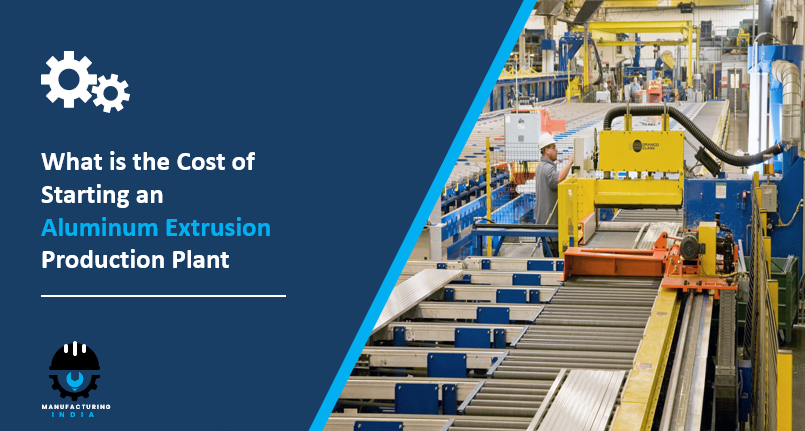
Starting an aluminum extrusion production plant is a significant industrial venture that requires careful planning, substantial investment, and a thorough understanding of the manufacturing process. Aluminum extrusion is a widely used manufacturing process where aluminum alloy is forced through a die to create products with specific cross-sectional profiles. These extruded products are essential across various industries, including construction, automotive, aerospace, electronics, and consumer goods.
Understanding Aluminum Extrusion Manufacturing
Aluminum extrusion is a transformation process where heated aluminum billets are pushed through specially designed dies to create profiles of consistent cross-sections. The process capitalizes on aluminum’s excellent malleability when heated, allowing manufacturers to produce complex shapes ranging from simple tubes and angles to intricate architectural components and precision-engineered parts for specialized applications.
The industry has experienced steady growth due to aluminum’s advantageous properties: lightweight nature, corrosion resistance, recyclability, and excellent strength-to-weight ratio. As industries increasingly prioritize sustainable materials and energy efficiency, demand for aluminum extrusions continues to expand globally.
Market Analysis and Business Planning
Before investing in an aluminum extrusion plant, conducting comprehensive market research is essential. This involves analyzing current market trends, identifying target customer segments, understanding regional demand patterns, and evaluating the competitive landscape. The aluminum extrusion market serves diverse sectors, each with specific requirements for profile types, tolerances, finishes, and certifications.
A detailed business plan should outline your production capacity, target market segments, product range, quality standards, and competitive positioning. Consider whether you’ll focus on standard profiles for construction and general industry or specialize in custom extrusions for niche applications. Understanding your customers’ needs, lead time expectations, and price sensitivity will inform critical decisions about equipment selection and operational strategies.
Land and Infrastructure Requirements
Establishing an aluminum extrusion plant requires substantial land with adequate space for manufacturing operations, raw material storage, finished goods warehousing, office facilities, and future expansion. The location should offer excellent connectivity to transportation networks for receiving raw materials and shipping finished products.
The facility must have robust infrastructure including heavy-duty flooring capable of supporting industrial equipment, adequate ceiling height for material handling systems, proper ventilation to manage heat and fumes, and comprehensive utility connections. Power supply is particularly critical, as extrusion presses and heating systems consume significant electricity. Three-phase industrial power supply with sufficient capacity and backup arrangements is essential for uninterrupted operations.
Manufacturing Equipment and Machinery
The heart of any aluminum extrusion plant is the extrusion press, whose capacity determines your production capabilities. Presses are rated by the force they can apply, typically measured in tons, with common sizes ranging from smaller presses for delicate profiles to massive presses for heavy-duty applications. The press includes the container where billets are heated, the ram that forces material through the die, and the die holder assembly.
Supporting equipment includes billet heating furnaces that bring aluminum to the required working temperature, die heating systems, cooling systems with water baths or air cooling tables, stretchers that straighten extruded profiles and relieve internal stresses, and cutting saws for precise length cutting. Material handling systems including overhead cranes, conveyors, and specialized lifting equipment are necessary for moving heavy billets and finished products.
Additional equipment may include aging ovens for heat treatment to achieve desired mechanical properties, surface treatment systems for anodizing or powder coating, precision cutting and machining centers for secondary operations, and quality control equipment including dimensional measuring instruments and testing apparatus.
Request a Sample Report for In-Depth Market Insights: https://www.imarcgroup.com/aluminum-extrusion-manufacturing-plant-project-report/requestsample
Raw Materials and Consumables
The primary raw material is aluminum billets, typically made from various alloy compositions depending on the intended application. Common alloys include series for general purpose applications, series for architectural use, and specialized alloys for high-strength requirements. Establishing relationships with reliable aluminum suppliers and potentially maintaining strategic inventory levels is crucial for operational continuity.
Extrusion dies, which are precision-engineered tools that shape the aluminum, represent a significant ongoing expense. Dies are manufactured from high-grade tool steel and require periodic maintenance, repair, and replacement. Depending on your product range, you may need an extensive die inventory, and maintaining a die maintenance facility or partnering with die manufacturers is essential.
Other consumables include lubricants for the extrusion process, saw blades, handling materials, cooling water treatment chemicals, and various maintenance supplies for equipment upkeep.
Facility Setup and Civil Works
Constructing an industrial facility involves significant civil engineering work including foundation preparation capable of supporting heavy machinery, industrial flooring with appropriate load-bearing capacity, proper drainage systems, and structural elements designed for manufacturing operations. The building should incorporate adequate natural and artificial lighting, ventilation systems to manage heat and maintain air quality, and climate control in critical areas.
Separate zones should be designated for raw material storage protecting billets from environmental exposure, production areas with proper workflow design, quality control laboratories, finished goods warehousing with organized storage systems, administrative offices, and employee facilities including changing rooms and rest areas.
Utilities and Operational Infrastructure
Power requirements for an aluminum extrusion plant are substantial, encompassing the extrusion press, heating systems, cooling systems, lighting, and auxiliary equipment. A dedicated electrical substation may be necessary depending on the plant’s total power consumption. Backup power generation should be considered for critical operations.
Water supply is essential for cooling systems, with requirements varying based on production capacity. Implementing water recycling systems can significantly reduce consumption and operating costs while supporting environmental sustainability goals.
Compressed air systems power various pneumatic tools and control systems throughout the facility. An adequate compressed air generation and distribution network with proper filtration is necessary for reliable operations.
Workforce and Human Resources
An aluminum extrusion plant requires a skilled workforce including experienced plant managers who understand extrusion operations, production supervisors for shift management, press operators trained in equipment operation and process control, die handlers, quality control personnel, maintenance technicians skilled in mechanical and electrical systems, and administrative staff for business operations.
Investing in comprehensive training programs ensures operators understand process parameters, safety protocols, quality standards, and troubleshooting techniques. Ongoing training keeps staff updated on best practices and technological advancements in the industry.
Quality Control and Testing Facilities
Maintaining consistent product quality requires robust quality control systems. A dedicated quality control laboratory should be equipped with dimensional measuring instruments for verifying profile dimensions and tolerances, hardness testing equipment, surface finish assessment tools, and potentially metallurgical testing capability for alloy verification and mechanical property testing.
Implementing quality management systems aligned with international standards helps ensure consistent product quality, supports customer confidence, and may be required for serving certain market segments, particularly aerospace, automotive, and other regulated industries.
Regulatory Compliance and Certifications
Operating an aluminum extrusion plant requires compliance with various regulations including environmental permits for emissions and waste management, industrial licensing from relevant authorities, fire safety certifications, occupational health and safety compliance, and building code approvals. Understanding and meeting these requirements is essential before commencing operations.
Obtaining industry-specific certifications can provide competitive advantages and access to premium market segments. Common certifications include quality management standards, environmental management systems, and industry-specific qualifications for automotive, aerospace, or construction applications.
Working Capital and Operational Expenses
Beyond capital investments, adequate working capital is necessary to cover operational expenses during the initial period. This includes raw material procurement, utility bills, employee salaries, maintenance and consumables, marketing expenses, and administrative costs. Most businesses require several months of working capital to establish stable operations before achieving positive cash flow.
Technology and Automation
Modern aluminum extrusion plants increasingly incorporate automation and digital technologies to enhance productivity, consistency, and efficiency. Process control systems monitor and adjust extrusion parameters in real-time, material handling automation reduces labor requirements and improves safety, and enterprise resource planning systems integrate business operations from order management through production scheduling to inventory control and financial management.
About the Author