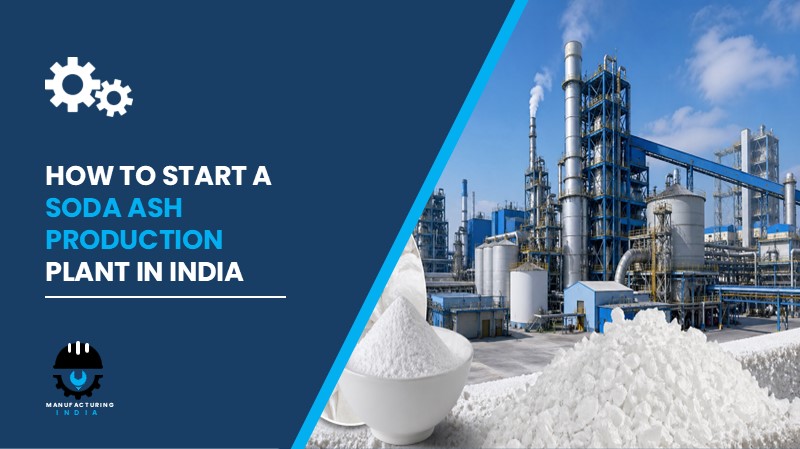
Setting up a soda ash production plant in India presents a compelling investment case driven by surging demand across glass production, chemical production, detergent and soap production, water treatment, and textile and paper industries. Soda ash — chemically known as sodium carbonate — is one of the most versatile inorganic industrial compounds in the world, and its relevance to India’s rapidly expanding construction, automotive, consumer goods, and municipal sectors cannot be overstated. As urbanisation accelerates and infrastructure spending deepens across India, the domestic appetite for soda ash-based inputs continues to climb at a pace that invites serious investor attention.
India’s production ecosystem offers a uniquely favourable environment for establishing a soda ash production facility. The country’s Make in India policy actively incentivises chemical production investment, while industrial hubs in states such as Gujarat — already home to major chemical producers — and Maharashtra offer well-established infrastructure, access to logistics corridors, and proximity to key raw material supply chains. With global soda ash market value recorded at USD 21.60 billion in 2025 and a projected expansion to USD 31.30 billion by 2034 at a CAGR of 4.1%, the window for strategic domestic production is both timely and commercially sound.
Establishing a soda ash production plant in India aligns perfectly with the government’s industrial policy push, India’s cost-competitive production base, and structural demand from glass, detergent, and water treatment sectors. With gross profit margins in the range of 30–40% and a scalable production model, this investment offers strong financial viability and long-term break-even potential for investors entering at the right capacity.
What is Soda Ash?
Soda ash (sodium carbonate) is an inorganic compound with widespread industrial utility across multiple sectors. It is primarily valued for its ability to lower the melting point of silica in glass production, making the production process significantly more energy efficient. Beyond glass, soda ash serves as a critical feedstock in detergent and soap production — acting as a builder that enhances cleaning performance through water softening and stain removal — and in water treatment processes where it adjusts pH levels and removes impurities such as calcium and magnesium ions.
The compound is produced through two primary methods: the Solvay process, which is the dominant industrial route, and the mining and extraction of natural soda ash deposits. Depending on the intended application, soda ash is available in two key product forms — dense soda ash and light soda ash — each suited to specific industrial requirements. The end-use industries served by this compound include glass production, chemical production, detergent and soap production, water treatment, and the textile and paper industries — a breadth of application that anchors its consistent and growing market demand.
Cost of Setting Up a Soda Ash Production Plant in India
The cost of establishing a soda ash production plant depends on a combination of factors: plant capacity, technology selection, geographic location, level of automation, and the scale of regulatory compliance infrastructure required.
1. Capital Expenditure (CapEx)
The capital investment for a soda ash production facility is structured across several core components. Land and site development forms a substantial portion of initial outlay, encompassing land acquisition charges, boundary development, registration fees, and related preparatory work. For Indian investors, locating within a Special Economic Zone (SEZ) or a notified industrial estate can yield significant advantages in terms of land cost, utility access, and regulatory streamlining.
Civil works and construction costs include erection of the production shed, laboratory facility, finished goods storage, raw material warehousing, and administrative block — all of which must be designed to support the operational safety and workflow requirements of chemical production.
The largest component of CapEx is typically machinery and equipment. Key machinery required for a soda ash plant includes:
- Rotary kilns
- Hydraulic presses and mixers
- Carbonation reactors
- Dryers
- Packaging equipment
Other capital costs to be factored in include effluent treatment plant (ETP) installation, pre-operative expenses, commissioning charges, and applicable import duties on specialised equipment procured internationally.
Request a Sample Report for In-Depth Market Insights: https://www.imarcgroup.com/soda-ash-manufacturing-plant-project-report/requestsample
2. Operational Expenditure (OpEx)
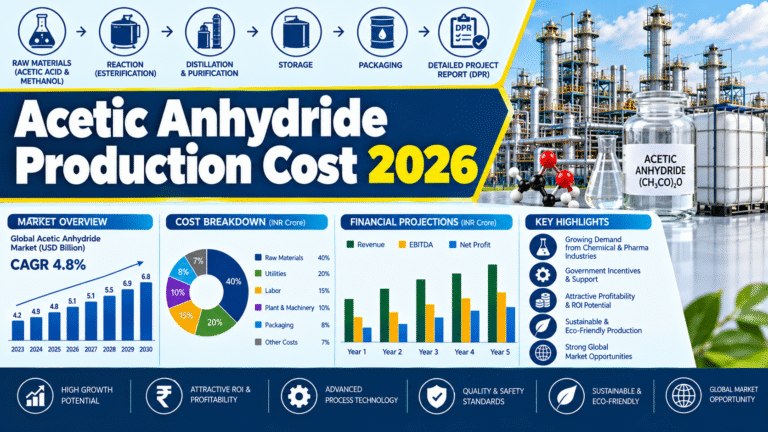
Raw material cost is the dominant driver of ongoing operational expenses for a soda ash production plant, accounting for approximately 40–50% of total OpEx. The primary raw materials required are salt, limestone, ammonia, and coke. Given the price sensitivity of these inputs, investors are advised to establish long-term supply contracts with reliable regional suppliers to stabilise procurement costs and mitigate price volatility.
Utility costs — covering electricity, water, and steam consumption throughout the Solvay process and associated unit operations — represent a further 25–35% of OpEx, making energy management a key lever for margin optimisation.
Additional operating costs include transportation and logistics, packaging materials, salaries and wages for skilled and semi-skilled labour, routine maintenance, depreciation on plant and equipment, and applicable taxes. By the fifth year of operations, total operational costs are projected to increase substantially due to inflation, market fluctuations, and potential rises in key material prices — factors that must be stress-tested in the financial model.
3. Plant Capacity
The proposed facility for a commercially viable soda ash plant is typically designed with an annual output capacity ranging between 100,000 and 500,000 metric tonnes, enabling economies of scale while retaining operational flexibility for investors at different capital commitment levels. Capacity can be customised based on investor requirements, available capital, and projected offtake volumes. Critically, profitability improves meaningfully as capacity utilisation increases — making higher-throughput plant configurations increasingly attractive for investors with access to established offtake channels.
4. Profit Margins and Financial Projections
The soda ash production plant project demonstrates healthy profitability under normal operating conditions. Gross profit margins typically range between 30–40%, supported by stable demand across multiple end-use industries and the value-added nature of the compound’s applications. Net profit margins are projected in the range of 10–20%. Financial projections for the plant — covering NPV, IRR, payback period, and sensitivity analysis — are developed based on assumptions around capital investment, capacity utilisation, pricing trends, and demand outlook, providing investors with a comprehensive view of financial viability and long-term sustainability.
Why Set Up a Soda Ash Plant in India?
Growing Demand from the Glass Industry. The increasing activity in India’s construction and automotive sectors is creating sustained demand for flat glass and container glass, both of which require soda ash as a critical input. As residential, commercial, and infrastructure projects continue to scale, the upstream demand for soda ash in glass production will remain a structural growth driver.
Versatility Across Industrial Applications. Soda ash’s ability to serve glass production, chemical production, detergent production, water purification, and textile and paper processing makes it an indispensable industrial material. This breadth of application ensures that the Indian market for soda ash is not dependent on any single sector, reducing cyclical risk for plant operators.
Energy Efficiency Advantage. The use of soda ash in glass production lowers energy requirements for melting silica, making the production process more cost-effective and environmentally responsible. As Indian producers increasingly prioritise energy efficiency, soda ash becomes a preferred input material, further underpinning demand.
Urbanisation and Emerging Market Growth. India’s expanding urban population is fuelling housing, infrastructure, and consumer goods demand — all of which consume glass and soda ash-based materials. The simultaneous growth of the detergent industry, driven by rising consumer hygiene awareness, adds another layer of structural demand support.
Policy and Regulatory Tailwinds. India’s Make in India initiative actively supports domestic chemical production by encouraging local output, reducing import dependence, and facilitating approvals for industrial investment. Locating within industrial estates or SEZ frameworks further amplifies cost and compliance benefits for plant operators.
Active Industry Investment. In November 2025, Tata Chemicals announced a ₹9.1 billion capital expenditure plan, allocating ₹1.35 billion specifically to soda ash capacity expansion. Separately, in September 2025, GHCL Limited announced plans to double its soda ash production capacity from 1.20 million tonnes to 2.30 million tonnes per year by 2030 through a new greenfield project, with anticipated EBITDA margins of 25–30% — signals that underscore strong industry confidence in the Indian market.
Soda Ash Production Process – Step by Step
The soda ash production process uses the Solvay process as the primary production method, complemented by mining and extraction of natural soda ash deposits where applicable. The process involves the following sequential stages:
- Mining and Extraction: Raw material inputs including salt, limestone, ammonia, and coke are sourced and extracted or procured from reliable suppliers, with proximity to source locations being a key site selection criterion.
- Carbonation: Salt brine is treated with ammonia and carbon dioxide (generated from the calcination of limestone) in carbonation reactors, producing sodium bicarbonate as an intermediate compound.
- Washing and Refining: The sodium bicarbonate intermediate undergoes washing and refining steps to remove impurities and achieve the required purity levels aligned with quality assurance criteria.
- Drying: The refined product is passed through dryers to achieve the correct moisture content for the intended dense or light soda ash form.
- Quality Control and Technical Testing: Analytical instruments are used throughout production to monitor product concentration, purity, and stability, with full documentation maintained for traceability and regulatory compliance.
- Packaging and Dispatch: Finished soda ash is packaged using dedicated packaging equipment and dispatched to end-use industries including glass producers, detergent producers, chemical plants, water treatment facilities, and textile and paper processors.
Key Applications
Soda ash serves a broad range of industries across India’s industrial economy:
- Glass Production: Critical ingredient in flat glass for automotive and architectural purposes, and in container glass production.
- Chemical Production: Used as feedstock for producing sodium bicarbonate, caustic soda, synthetic detergents, and various industrial chemicals.
- Detergent Production: Acts as a builder in household and industrial detergents, enhancing water softening and stain removal performance.
- Water Treatment: Adjusts pH levels in municipal and industrial water treatment systems, aiding the removal of calcium and magnesium ions.
- Textile and Paper Industries: Used in dyeing and printing processes in textiles, and in pulping and bleaching in the paper industry.
Leading Producers
The global soda ash market is served by several large-scale multinational and regional producers with extensive production capacity and diversified application portfolios. Key players operating in this industry include:
- Tata Chemicals Ltd.
- Ciner Group
- Solvay
- DCW Ltd.
- Shandong Haihua Group Co., Ltd.
- Şişecam
- InoChem
Timeline to Start the Plant
Investors planning a soda ash production plant in India should plan for the following project phases:
- Feasibility study and project report preparation
- Land acquisition and site development
- Regulatory approvals and environmental clearances
- Factory licence and fire safety compliance
- Machinery procurement and installation
- Raw material supplier agreements and supply chain setup
- Trial production and quality testing
- Commercial production launch
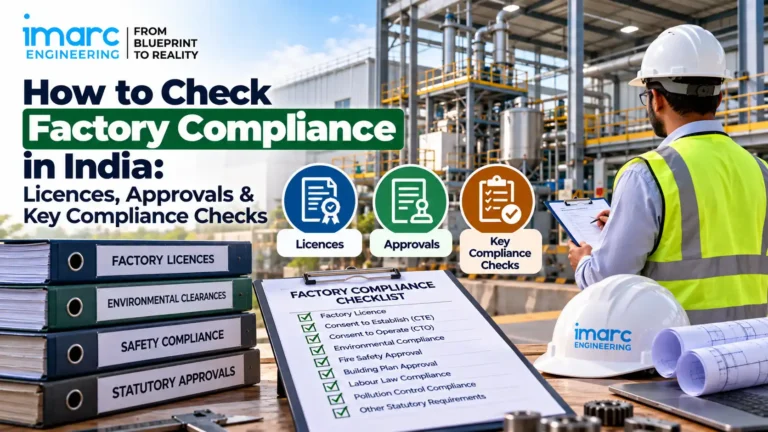
Licences and Regulatory Requirements
Starting a soda ash production unit in India requires several approvals:
- Business registration (Proprietorship, LLP, or Pvt Ltd)
- Factory Licence under the Factories Act
- Environmental Clearance from State Pollution Control Board
- GST Registration
- Fire Safety NOC
- Hazardous/Chemical compliance (applicable given ammonia and coke usage in the Solvay process)
- Effluent Treatment Plant (ETP) operational clearance
- Occupational Health and Safety compliance
Key Challenges to Consider
High Capital Requirements. Establishing a soda ash plant at commercially viable scale — between 100,000 and 500,000 MT per annum — demands significant upfront capital investment across land, civil works, and specialised machinery including carbonation reactors, rotary kilns, and dryers.
Raw Material Price Volatility. Salt, limestone, ammonia, and coke are the primary raw materials, and their prices are subject to global commodity fluctuations. With raw materials accounting for 40–50% of OpEx, price volatility can materially impact margins if procurement contracts are not managed proactively.
Regulatory Compliance. Chemical production in India requires navigation of multiple regulatory layers including environmental clearances, effluent treatment approvals, and hazardous chemical compliance — each adding time and cost to the pre-production phase.
Technology and Innovation Pressure. Advancements in soda ash production technology are continuously being adopted by leading players, creating pressure on existing and new facilities to invest in process optimisation and energy efficiency improvements.
Competition from Established Players. The Indian and global market includes formidable producers such as Tata Chemicals Ltd., Solvay, GHCL Limited, and DCW Ltd., requiring new entrants to differentiate on quality, cost efficiency, or customer service.
Skilled Manpower. Operating carbonation reactors, rotary kilns, and quality control systems demands trained chemical engineers and process technicians — a category of skilled labour that requires sustained investment in recruitment and training.
Frequently Asked Questions
1. How much does it cost to set up a soda ash production plant in India?
The setup cost varies depending on plant capacity (100,000–500,000 MT/annum), technology, location, and automation level. Costs cover land, civil works, machinery including rotary kilns and carbonation reactors, utilities, and pre-operative expenses.
2. Is soda ash production profitable in India in 2026?
Yes. Gross profit margins typically range between 30–40% and net margins between 10–20%, supported by stable demand from glass, detergent, and water treatment sectors.
3. What machinery is required for a soda ash plant in India?
Key equipment includes rotary kilns, hydraulic presses and mixers, carbonation reactors, dryers, and packaging equipment.
4. What licences and approvals are required to start a soda ash plant in India?
Required approvals include business registration, Factory Licence, Environmental Clearance, GST Registration, Fire Safety NOC, hazardous chemical compliance, ETP clearance, and OHS compliance.
5. What raw materials are needed for soda ash production?
The primary raw materials are salt, limestone, ammonia, and coke — all critical inputs for the Solvay process.
6. What are the environmental compliance requirements for a soda ash plant in India?
Plants must obtain Environmental Clearance from the State Pollution Control Board, maintain an operational Effluent Treatment Plant, and adhere to emission standards and hazardous material handling regulations.
7. What is the best location to set up a soda ash plant in India?
Ideal locations offer proximity to raw material sources (salt, limestone), robust transportation infrastructure, access to utilities, and compliance with local zoning regulations. Industrial estates in Gujarat and Maharashtra are well-suited options.
8. What is the break-even period for this type of plant in India?
Break-even timelines are determined by NPV, IRR, and payback period analysis, which are detailed in the IMARC Group project feasibility report based on capacity utilisation and pricing assumptions.
9. What government incentives are available for producers in India?
Investors can benefit from Make in India incentives, SEZ fiscal benefits, state-level industrial subsidies, and capital subsidy schemes for chemical production units.
Key Takeaways for Investors
A soda ash production plant in India represents a strategically sound and financially attractive investment opportunity, anchored by structural demand from glass production, chemicals, detergents, water treatment, and the textile and paper industries. Financial viability is demonstrated across plant capacities from 100,000 to 500,000 MT per annum, with gross margins of 30–40% and net margins of 10–20% achievable under normal operating conditions. The global soda ash market — valued at USD 21.60 billion in 2025 and projected to reach USD 31.30 billion by 2034 at a CAGR of 4.1% — signals durable and expanding demand for domestic producers. With India’s urbanisation trajectory, policy-backed industrial growth, and active capacity expansion by leading players such as Tata Chemicals and GHCL Limited, investor confidence in this segment is well-founded, and the long-term demand outlook for soda ash production in India remains firmly positive.
About the Author