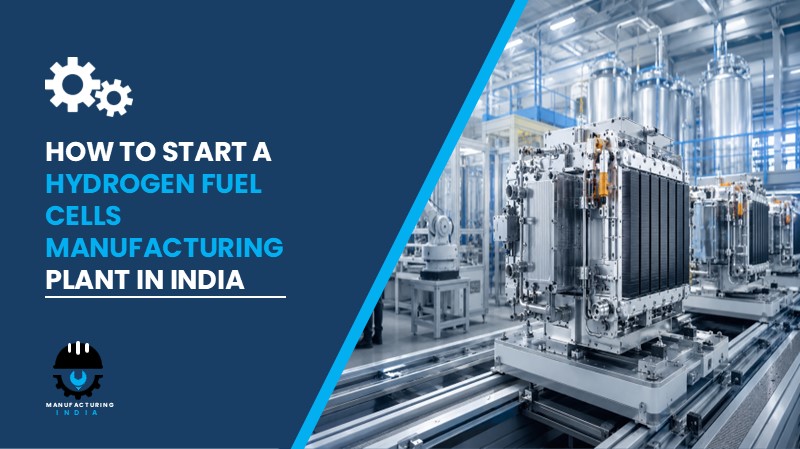
Setting up a hydrogen fuel cells manufacturing plant in India presents a compelling investment case driven by surging demand from the automotive, power generation, and industrial sectors. As the transportation sector accelerates toward zero-emission vehicles and industries seek reliable backup power and decentralised energy generation, the need for domestic production has never been more urgent. The Indian automotive industry is expected to reach USD 300 billion by 2026, according to the IBEF, anchoring robust downstream demand for the technology.
India’s manufacturing advantages make this investment especially strategic. The country’s rapid urbanisation, expanding infrastructure pipeline, and Make in India initiative collectively create a strong foundation for energy technology production. Industrial zones in Gujarat and Maharashtra offer competitive land costs, reliable utilities, and established supply chain ecosystems. The convergence of domestic demand, policy tailwinds, and a globally expanding clean energy market makes India a strategically sound location for this production.
India offers a rare convergence of policy support, cost-competitive manufacturing, and surging demand from automotive and power generation sectors. The facility can achieve gross profit margins of 40–50% and net margins of 15–30%, making it one of the most financially viable clean energy investments available today. With the global market projected to grow at a CAGR of 20.24% through 2034, domestic producers are positioned to capture first-mover advantage in a high-growth, high-margin industry.
What is Hydrogen Fuel Cells?
Hydrogen fuel cells are electrochemical devices that generate electricity by combining hydrogen and oxygen, producing only water and heat as by-products. Each cell consists of an anode, a cathode, and an electrolyte. Hydrogen gas is fed into the anode while oxygen is introduced at the cathode; the electrochemical reaction produces electricity cleanly and efficiently, making the technology a zero-emission, high-efficiency alternative to combustion-based power systems.
The product offers high energy efficiency, zero emissions at point of use, quiet operation, and scalability across a wide range of power outputs. The hydrogen fuel cells manufacturing process involves electrolysis, catalyst preparation, membrane assembly, and fuel cell integration — a multi-stage sequence requiring precision equipment and rigorous quality control. Product forms include stacks, balance-of-plant systems, electrolysis equipment, and power modules. End-use industries include automotive, stationary power generation, and industrial applications such as renewable energy storage and decentralised energy generation.
Cost of Setting Up a Hydrogen Fuel Cells Manufacturing Plant in India
The total investment for this type of plant depends on capacity, technology selection, automation level, location, and regulatory compliance. Investors must plan across both capital expenditure (CapEx) and operational expenditure (OpEx) to build a complete financial picture.
1. Capital Expenditure (CapEx)
Land and Site Development constitutes a substantial part of total capital investment. Sites within Special Economic Zones (SEZs) or established industrial estates in Gujarat or Maharashtra offer cost advantages through pre-developed infrastructure, lower registration charges, and applicable tax incentives. Boundary development and site preparation costs are included within this allocation.
Civil Works and Construction covers the manufacturing shed, cleanroom zones for membrane assembly, quality control laboratory, raw material and finished goods storage, effluent treatment facilities, and the administrative block. Separate areas for production, quality assurance, and future expansion must be planned into the layout.
Machinery and Equipment represents the largest single component of CapEx for the hydrogen fuel cells manufacturing plant. Key machinery required includes:
- Automated coating machines
- Hot presses
- Laser cutting systems
- Stack assembly stations
- Leak testing units
- Conditioning systems
- Quality control testing rigs
Other Capital Costs include effluent treatment plant (ETP) setup, pre-operative expenses, commissioning charges, and applicable import duties on specialised equipment.
Request a Sample Report for In-Depth Market Insights: https://www.imarcgroup.com/hydrogen-fuel-cells-manufacturing-plant-project-report/requestsample
2. Operational Expenditure (OpEx)
Raw Material Cost is the dominant operating expense, accounting for approximately 60–70% of total OpEx. Core raw materials include membrane electrode assemblies (MEA), bipolar plates, gaskets, and catalysts. MEA is the most significant single cost driver and investors should establish long-term supply contracts with reliable, nearby suppliers to reduce inbound logistics costs and mitigate supply chain risk.
Utility Cost covers electricity, water, and steam, collectively representing 5–10% of total OpEx. Consistent power supply is critical given the precision nature of the production, and backup generation capacity should be factored into planning.
Other Operating Costs encompass outbound transportation, packaging, salaries and wages, scheduled maintenance, depreciation, and applicable taxes. By the fifth year of operations, total operational costs are projected to increase substantially due to inflation, market fluctuations, and potential rises in the cost of key materials such as MEA and catalysts.
3. Plant Capacity
The proposed facility is designed with an annual production capacity ranging between 50 and 500 MW of stack capacity, enabling economies of scale while maintaining operational flexibility. Capacity can be customised to investor requirements and target market demand. Profitability improves meaningfully at higher capacity utilisation, as fixed costs are distributed across a larger production output.
4. Profit Margins and Financial Projections
The project demonstrates strong profitability, with gross margins of 40–50% and net margins of 15–30% achievable under normal operating conditions. A full financial analysis — covering NPV, IRR, payback period, income and expenditure projections, and sensitivity analysis — is provided in the IMARC Group feasibility report, built on realistic assumptions around production capacity utilisation and pricing trends.
Why Set Up a Hydrogen Fuel Cells Plant in India?
Growing Demand for Clean Energy. The technology is central to India’s transition to clean and renewable energy. As the country expands renewable capacity and works to reduce greenhouse gas emissions, the product offers a scalable, zero-emission power solution for stationary and mobile applications, creating durable long-term demand for domestic manufacturers.
Automotive Sector Transformation. The Indian automotive industry is undergoing a fundamental shift toward zero-emission vehicles. With the sector projected to reach USD 300 billion by 2026, establishing domestic production capacity ahead of mass vehicle adoption delivers clear first-mover advantages for local OEM supply.
Policy and Infrastructure Push. Governments worldwide are investing in hydrogen infrastructure — including fuelling stations, production facilities, and transportation systems — directly stimulating demand. Make in India incentives and clean energy policy support further strengthen the investment case for this sector.
High Investment Potential. The global market was valued at USD 5.23 billion in 2025 and is projected to reach USD 27.48 billion by 2034, reflecting a CAGR of 20.24% from 2026 to 2034. The shift toward green energy solutions combined with government incentives is creating significant investment opportunities in hydrogen fuel cells technology.
Active Industry Investment. In July 2025, Elcogen announced a new factory in Tallinn to expand its solid oxide cell and electrolyser manufacturing capacity. Also in July 2025, Ceres and Doosan Fuel Cell confirmed that mass market production of stacks using Ceres’ technology had commenced at Doosan’s dedicated facility in South Korea, with a combined capacity of 50 MW of electrical power per year.
Localisation and Supply Chain Preference. As governments and industries work toward localisation of hydrogen production and fuelling infrastructure, regional manufacturers with reliable supply chains are well-positioned to capture growing domestic market share in automotive, power, and industrial segments. Companies investing early in local production will benefit from reduced import dependency, lower logistics overheads, and buyer preference for domestically sourced energy components across India’s expanding clean energy ecosystem.
Manufacturing Process – Step by Step
The hydrogen fuel cells manufacturing process uses electrolysis, catalyst preparation, membrane assembly, and fuel cell integration as its primary production methods. This multi-stage operation involves several unit operations, material handling steps, and quality verification checkpoints.
- Catalyst Preparation: Catalytic materials are processed and applied to electrodes to enable efficient electrochemical reaction between hydrogen and oxygen.
- MEA Processing: The membrane electrode assembly is built using automated coating machines that apply catalyst layers to the membrane substrate with high precision.
- Hot Pressing: Assembled MEA layers are bonded under controlled heat and pressure using hot presses to achieve required structural and electrochemical properties.
- Bipolar Plate and Gasket Integration: Components are precision-cut using laser cutting systems and assembled around the MEA to form complete cell units.
- Stack Assembly: Individual cell units are combined into stacks at dedicated stack assembly stations, configured to meet target power output specifications.
- Leak Testing: Assembled stacks are verified for gas-tightness and structural integrity using leak testing units before conditioning.
- Conditioning and Quality Control: Stacks pass through conditioning systems to stabilise performance; final verification is conducted using quality control testing rigs.
- Packaging and Dispatch: Finished products are packaged and dispatched to automotive OEMs, stationary power operators, and industrial energy users.
Key Applications
The production serves a broad range of industries, making the product resilient to sector-specific demand cycles.
- Automotive: The technology is used in fuel cell vehicles as the primary power source for zero-emission transport with long range and rapid refuelling.
- Power Generation: Stationary systems provide backup power and decentralised energy generation for commercial and residential settings.
- Renewable Energy Storage: The technology stores surplus renewable energy as hydrogen and reconverts it to electricity on demand for grid balancing.
- Hydrogen Production Equipment: High-current busbars, grounding solutions, and power interconnects support hydrogen production infrastructure.
- Balance-of-Plant Systems: Grounding straps, flexible connectors, and auxiliary power cabling support large-scale installations.
- Power Modules and Integration Systems: Flexible power connectors, shielding, and signal transmission lines are used in modular industrial and grid-scale applications.
Leading Manufacturers
The global market is served by a concentrated group of multinational corporations with extensive production capacities across automotive, power generation, and industrial sectors. Key players include:
- Plug Power
- Ballard Power Systems
- FuelCell Energy
- Hydrogenics (a subsidiary of Cummins)
- Panasonic Corporation
Timeline to Start the Plant
Establishing this type of plant in India follows a structured timeline, typically spanning 18 to 30 months from project inception to commercial launch:
- Feasibility study and project report preparation
- Land acquisition and site development
- Regulatory approvals and environmental clearances
- Factory licence and fire safety compliance
- Machinery procurement and installation
- Raw material supplier agreements and supply chain setup
- Trial production and quality testing
- Commercial production launch
Licences and Regulatory Requirements
Starting a hydrogen fuel cells manufacturing unit in India requires several approvals:
- Business registration (Proprietorship, LLP, or Pvt Ltd)
- Factory Licence under the Factories Act
- Environmental Clearance from State Pollution Control Board
- GST Registration
- Fire Safety NOC
- Hazardous/Chemical compliance (relevant given on-site hydrogen gas handling and catalyst storage)
- Effluent Treatment Plant (ETP) operational clearance
- Occupational Health and Safety compliance
Key Challenges to Consider
High Capital Requirements. Establishing the facility involves significant upfront investment across land, civil construction, and precision machinery including automated coating machines, hot presses, and laser cutting systems. Appropriate phasing of capital deployment is critical to project viability.
Raw Material Price Volatility. MEA, bipolar plates, gaskets, and catalysts are subject to global supply chain fluctuations. Since MEA accounts for 60–70% of total OpEx, pricing volatility in this input represents a material financial risk best managed through long-term supplier agreements.
Regulatory Compliance. Hydrogen handling introduces specific safety, environmental, and chemical storage compliance requirements. Navigating factory licensing, pollution control board clearances, and ETP approvals requires dedicated regulatory expertise.
Technology and Innovation Pressure. The sector advances rapidly in membrane performance and manufacturing automation. Investors must select equipment with credible upgrade paths and monitor developments from technology leaders including Elcogen, Ceres, and Doosan.
Competition. The global market is dominated by Plug Power, Ballard Power Systems, FuelCell Energy, Hydrogenics (a subsidiary of Cummins), and Panasonic Corporation. Indian entrants must differentiate through cost competitiveness and responsiveness to domestic market requirements.
Skilled Manpower. The production process requires engineers and technicians proficient in electrochemical systems, precision assembly, and quality control instrumentation — a specialised talent pool that requires active investment to build and retain. Locating the facility near engineering colleges and technical institutes in major manufacturing states can support targeted hiring and apprenticeship pipelines.
Frequently Asked Questions
1. How much does it cost to set up a hydrogen fuel cells manufacturing plant in India?
The total setup cost depends on plant capacity (50–500 MW stack capacity), technology selection, automation level, and location. Detailed CapEx and OpEx figures are available in the IMARC Group feasibility report, customisable by location and capacity.
2. Is hydrogen fuel cells manufacturing profitable in India in 2026?
Yes. The project achieves gross profit margins of 40–50% and net profit margins of 15–30% under normal operating conditions, supported by stable demand from automotive, power generation, and industrial sectors.
3. What machinery is required for a hydrogen fuel cells plant in India?
Essential equipment includes automated coating machines, hot presses, laser cutting systems, stack assembly stations, leak testing units, conditioning systems, and quality control testing rigs.
4. What licences and approvals are required to start a hydrogen fuel cells plant in India?
Required approvals include business registration, Factory Licence, Environmental Clearance from the State Pollution Control Board, GST Registration, Fire Safety NOC, hazardous chemical compliance, ETP operational clearance, and Occupational Health and Safety compliance.
5. What raw materials are needed for hydrogen fuel cells manufacturing?
Core raw materials are membrane electrode assemblies (MEA), bipolar plates, gaskets, and catalysts. MEA accounts for approximately 60–70% of total operating costs.
6. What are the environmental compliance requirements for a hydrogen fuel cells plant in India?
The unit must obtain Environmental Clearance from the State Pollution Control Board, operate a certified ETP, comply with hazardous substance handling regulations, and maintain emissions within prescribed standards.
7. What is the best location to set up a hydrogen fuel cells plant in India?
SEZs and industrial estates in Gujarat, Maharashtra, or Uttar Pradesh are strong candidates, given their infrastructure, utility availability, skilled labour pools, and proximity to automotive and industrial end-use clusters.
8. What is the break-even period for this type of plant in India?
The payback period depends on capacity utilisation, pricing realisation, and financing structure. A detailed analysis covering NPV, IRR, and sensitivity scenarios is included in the IMARC Group feasibility report.
9. What government incentives are available for manufacturers in India?
Applicable incentives include Production Linked Incentive (PLI) schemes for clean energy manufacturing, Make in India programme benefits, SEZ tax exemptions, and state-level industrial promotion subsidies.
Key Takeaways for Investors
This investment opportunity represents a strategically timed entry into one of the world’s fastest-growing clean energy segments, with robust demand from the automotive, power generation, and industrial sectors providing strong long-term revenue visibility. The investment is financially viable across capacities from 50 to 500 MW of stack output, with gross margins of 40–50% and net margins of 15–30% achievable under normal operating conditions. The global market was valued at USD 5.23 billion in 2025 and is projected by IMARC Group to reach USD 27.48 billion by 2034 at a CAGR of 20.24%, confirming the depth of the structural demand shift underway. With India’s automotive sector targeting USD 300 billion and governments worldwide accelerating hydrogen infrastructure investment, the demand sustainability for this production is both proven and expanding.
About the Author