Setting up a recycled steel manufacturing plant in India presents a compelling investment case for entrepreneurs, industrial groups, and infrastructure-focused investors. The demand for recycled steel is being powered by India’s construction boom, rapid automotive sector expansion, and large-scale infrastructure development across roads, bridges, and rail networks. Unlike primary steel, which depends on iron ore and blast furnace technology, recycled steel is produced by reprocessing scrap metal – including industrial scrap, end-of-life vehicles, construction debris, and obsolete machinery – through electric arc furnace (EAF) technology. This makes the product both cost-efficient and aligned with India’s growing emphasis on sustainable, low-carbon industrial production.
India’s urbanisation trajectory, smart city missions, and the national Make in India initiative create a structurally favourable environment for setting up this type of facility. Manufacturing states such as Maharashtra, Gujarat, and Odisha offer advantages including land availability, established industrial estates, proximity to scrap aggregators, and reliable power infrastructure. With the global recycled steel market valued at USD 309.10 Billion in 2025 and projected to reach USD 447.62 Billion by 2034 at a CAGR of 4.2%, the window for entering this sector at scale is commercially well-timed.
A recycled steel manufacturing plant in India combines policy tailwinds, a cost-competitive scrap supply base, and strong demand from construction, automotive, and infrastructure sectors. With gross profit margins of 15-25% and net margins of 5-12%, this investment offers robust financial viability across plant capacities ranging from 200,000 to 1 Million MT per annum.
What is Recycled Steel?
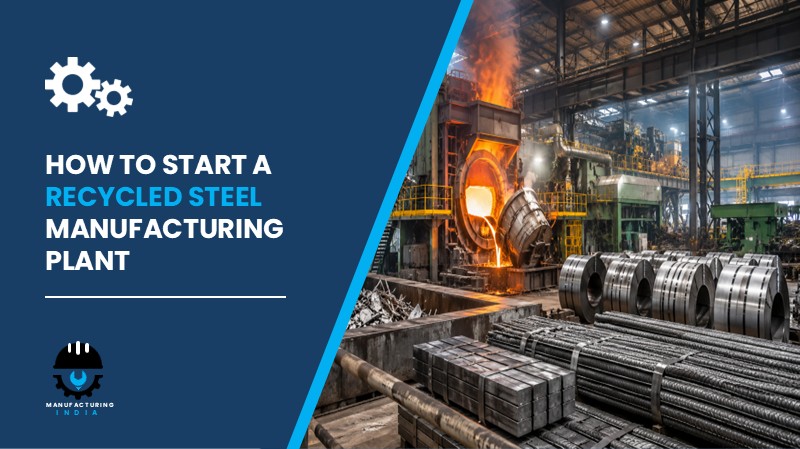
Recycled steel refers to steel produced by reprocessing scrap metal – including industrial scrap, end-of-life vehicles, construction debris, and obsolete machinery – through melting and refining processes. Unlike primary steel manufactured from iron ore in blast furnaces, recycled steel is commonly produced using electric arc furnaces (EAF) that melt scrap using high-power electricity. This process significantly reduces energy consumption and carbon emissions while preserving the inherent metallurgical properties of steel.
Recycled steel retains comparable strength, durability, and formability to virgin steel, making it suitable for a wide range of structural and industrial applications. The primary production method is the electric arc furnace (EAF) route, which offers flexibility in handling diverse scrap grades and produces lower emissions than conventional steelmaking. The product serves three dominant end-use industries: construction, automotive, and infrastructure development. Key applications include reinforcement bars, structural sections, steel sheets and coils, automotive parts, industrial components, chassis components, body structures, bridges, rail structures, and industrial frameworks.
Cost of Setting Up a Recycled Steel Manufacturing Plant in India
The cost of establishing a recycled steel manufacturing plant in India depends on several variables: production capacity, technology selection, geographic location, level of automation, and regulatory compliance obligations. A structured cost analysis covering both capital expenditure and operational expenditure is essential before committing to this investment.
1. Capital Expenditure (CapEx)
Capital investment for a recycled steel plant covers four primary components. Land and site development costs include charges for land registration, boundary development, and related site preparation expenses, forming a substantial part of the total investment. Industrial estates and special economic zones (SEZs) in Maharashtra and Gujarat can offer concessional land rates and infrastructure support, reducing this upfront burden.
Civil works and construction costs cover the main production shed, laboratory facilities, raw material and finished goods storage areas, and the administrative block. These must be designed to accommodate heavy machinery, high-temperature processes, and safe material flow.
Machinery and equipment represent the largest single component of CapEx for this type of facility. Key machinery required includes:
- Shredders
- Magnetic separators
- Eddy current separators
- Shear balers
- Melting furnaces (Electric Arc Furnace)
- Ladle refining stations
- Continuous casting machines
- Rolling mills
- Finished product bundlers
Other capital costs include effluent treatment plant (ETP) installation, pre-operative expenses, commissioning charges, and applicable import duties on specialised equipment not manufactured domestically.
Request a Sample Report for In-Depth Market Insights: https://www.imarcgroup.com/recycled-steel-manufacturing-plant-project-report
2. Operational Expenditure (OpEx)
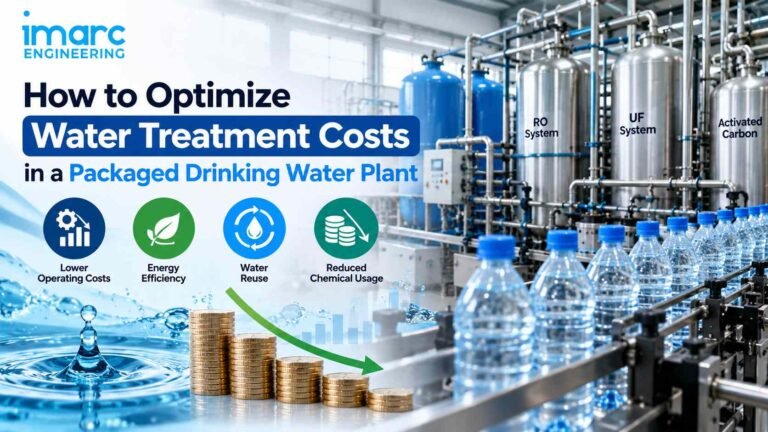
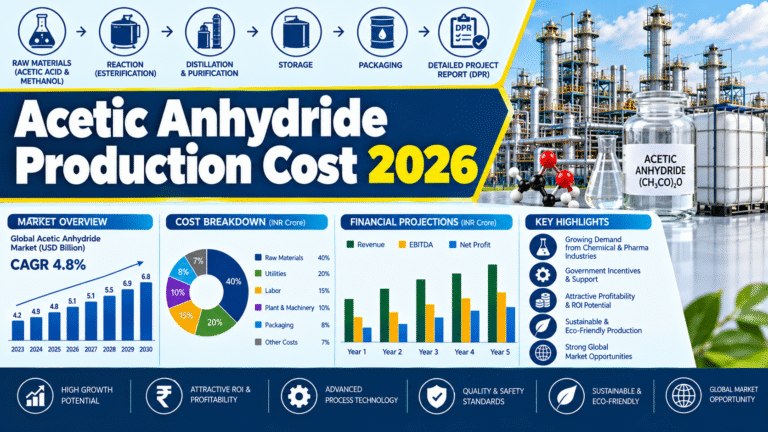
The operating cost structure of a recycled steel manufacturing plant is primarily driven by raw material consumption. Raw material cost – covering steel scrap, alloying elements, and fluxes – accounts for approximately 85-90% of total operating expenses. Given this concentration, negotiating long-term supplier contracts for steel scrap and alloying elements is a critical risk-mitigation strategy for investors.
Utility costs, comprising electricity, water, and steam, account for a further 5-10% of OpEx. EAF-based steelmaking is electricity-intensive, so proximity to reliable, cost-effective power infrastructure – or captive power arrangements – is an important operational consideration. Other operating costs include transportation, packaging, salaries and wages, maintenance, depreciation, and taxes. By the fifth year of operations, total operational costs are expected to increase substantially due to inflation, market fluctuations, and potential rises in the cost of key materials, as well as supply chain disruptions and shifts in the global economy.
3. Plant Capacity
The proposed manufacturing facility is designed with an annual production capacity ranging between 200,000 and 1 Million MT, enabling economies of scale while maintaining operational flexibility. Capacity can be customised per investor requirements, with modular expansions possible as market demand grows. Profitability improves meaningfully with higher capacity utilisation, as fixed costs – including land, civil works, and machinery – are spread across a larger production volume.
4. Profit Margins and Financial Projections
The financial projections for this investment demonstrate healthy profitability potential under normal operating conditions. Gross profit margins typically range between 15-25%, supported by stable demand from construction, automotive, and infrastructure sectors. Net profit margins range between 5-12%. A comprehensive financial analysis covering NPV (net present value), IRR (internal rate of return), payback period, and five-year income and expenditure projections is available in the full project report. Investors should conduct a detailed feasibility study accounting for capacity utilisation ramp-up timelines, scrap price cycles, and product pricing trends before finalising their financial model.
Why Set Up a Recycled Steel Plant in India?
Sustainable and Low-Carbon Production: Recycled steel significantly lowers greenhouse gas emissions and energy consumption compared to primary steelmaking. This aligns with India’s decarbonisation commitments and growing ESG requirements among institutional investors and export-market buyers.
Strong Demand from Infrastructure Growth: Urbanisation, smart city projects, and transportation infrastructure expansion are driving consistent demand for structural steel products across India. Reinforcement bars, structural beams, and bridge components sourced from recycled feedstock are seeing growing procurement volumes from public and private infrastructure developers.
Cost Efficiency and Resource Optimisation: Scrap-based production reduces dependency on iron ore imports and minimises raw material price volatility, enhancing supply chain resilience. With raw materials constituting 85-90% of OpEx, a well-structured scrap procurement network significantly improves margin stability.
Policy and Regulatory Tailwinds: Governments are promoting scrap recycling, green steel initiatives, and carbon reduction frameworks. India’s Make in India initiative, production-linked incentive (PLI) structures, and state-level industrial promotion schemes offer additional support for setting up this type of manufacturing unit.
Active Industry Investment: In February 2025, JSW Group announced a Rs 1 lakh crore investment over the next seven to eight years for a 25 million tonne steel plant in Maharashtra’s Gadchiroli district – announced at the ‘Advantage Vidarbha’ conclave – aiming to be the world’s largest and most environmentally friendly steel facility. This signals strong institutional confidence in India’s steel manufacturing ecosystem.
Local Supply Chain Preference: Construction companies, automotive OEMs, and infrastructure contractors across India are increasingly sourcing steel locally to reduce logistics costs, meet domestic content requirements, and align with sustainability mandates. A domestic recycled steel facility is well-positioned to serve this preference.
Manufacturing Process – Step by Step
The recycled steel manufacturing process uses the electric arc furnace (EAF) route as the primary production method, enabling flexible, low-emission steelmaking from diverse scrap grades.
- Scrap Collection and Sorting: Steel scrap – including industrial scrap, end-of-life vehicles, and construction debris – is collected, inspected, and sorted by grade and composition to ensure consistent feedstock quality.
- Shredding: Sorted scrap is fed into shredders to reduce material size, improving furnace charging efficiency and melting uniformity.
- Magnetic Separation and Eddy Current Separation: Magnetic separators remove ferrous fractions; eddy current separators isolate non-ferrous metals, ensuring feedstock purity before melting.
- Shear Baling: Large scrap pieces are processed through shear balers to produce manageable, furnace-ready bales.
- Melting in Electric Arc Furnace: Prepared scrap is charged into the electric arc furnace, where high-power electricity melts the material into liquid steel.
- Ladle Refining: Molten steel is transferred to ladle refining stations where alloying elements and fluxes are added to achieve target chemistry and remove impurities.
- Continuous Casting: Refined liquid steel is cast into billets, blooms, or slabs using continuous casting machines.
- Rolling: Cast semi-finished products pass through rolling mills to produce finished forms – reinforcement bars, structural sections, sheets, and coils.
- Finished Product Bundling and Dispatch: Final products are bundled, quality-checked, and dispatched to construction, automotive, and infrastructure end-use industries.
Key Applications
Recycled steel serves a broad range of industries and product categories, all of which represent active and growing demand segments in India:
- Construction: Reinforcement bars (rebars), structural beams, and columns for residential, commercial, and industrial building projects.
- Automotive: Chassis components and body structures for passenger vehicles, commercial vehicles, and two-wheelers.
- Infrastructure: Bridges, rail structures, and industrial frameworks for national highway, metro rail, and port development projects.
Leading Manufacturers
The global recycled steel industry is served by several multinational companies with extensive production capacities and diverse application portfolios. Key players in this space include:
- Nucor Corporation
- ArcelorMittal
- Tata Steel
- Steel Dynamics Inc.
- Commercial Metals Company
All of these manufacturers serve end-use sectors including construction, automotive, and infrastructure development, and represent the competitive benchmark for any new entrant.
Timeline to Start the Plant
- Feasibility study and project report preparation
- Land acquisition and site development
- Regulatory approvals and environmental clearances
- Factory licence and fire safety compliance
- Machinery procurement and installation
- Raw material supplier agreements and supply chain setup
- Trial production and quality testing
- Commercial production launch
Licences and Regulatory Requirements
Starting a recycled steel manufacturing unit in India requires several approvals:
- Business registration (Proprietorship, LLP, or Private Limited Company)
- Factory Licence under the Factories Act
- Environmental Clearance from the State Pollution Control Board
- GST Registration
- Fire Safety NOC
- Hazardous and chemical material compliance (applicable given scrap processing and flux use)
- Effluent Treatment Plant (ETP) operational clearance
- Occupational Health and Safety compliance
Key Challenges to Consider
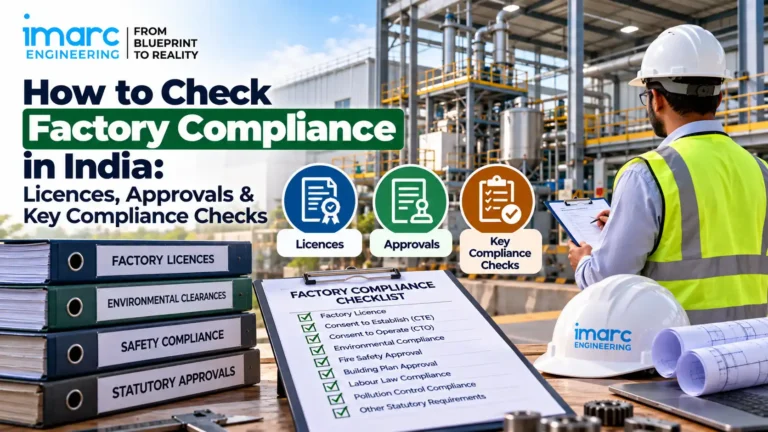
High Capital Requirements: Setting up an EAF-based recycled steel manufacturing plant involves significant upfront investment in land, civil works, and specialised machinery including melting furnaces, rolling mills, and continuous casting machines, requiring careful financial planning and funding strategy.
Raw Material Price Volatility: Steel scrap, alloying elements, and fluxes – which account for 85-90% of total operating expenses – are subject to global price fluctuations driven by trade policies, export restrictions, and demand cycles. Long-term supplier contracts are essential to manage this exposure.
Regulatory Compliance: Environmental clearances, effluent treatment obligations, and emission standards for EAF operations require ongoing investment in monitoring systems and compliance infrastructure, adding to operational overhead.
Technology and Innovation Pressure: Electric arc furnace technology is evolving rapidly, with new efficiency benchmarks and emissions standards emerging from leading markets. Staying current with technology upgrades is a continuous capital and operational consideration.
Competition from Established Players: Global players such as Nucor Corporation, ArcelorMittal, Tata Steel, Steel Dynamics Inc., and Commercial Metals Company set high benchmarks for quality, scale, and pricing. New entrants must position on niche product segments, regional supply advantages, or cost efficiency.
Skilled Manpower: Operating EAF-based steelmaking equipment – including ladle refining stations, continuous casting machines, and rolling mills – requires technically trained metallurgical and process engineers, which can be challenging to recruit and retain in smaller industrial centres.
Key Takeaways for Investors
A recycled steel manufacturing plant in India represents a high-potential investment opportunity driven by structural demand from construction, automotive, and infrastructure development sectors. The project delivers financial viability across a capacity range of 200,000 to 1 Million MT per annum, with gross margins of 15-25% and net margins of 5-12% providing a solid return profile across plant scales. With the global recycled steel market valued at USD 309.10 Billion in 2025 and projected to grow to USD 447.62 Billion by 2034 at a CAGR of 4.2%, the long-term demand trajectory is firmly supportive. As circular economy principles, carbon pricing mechanisms, and green steel mandates gain traction in India and globally, recycled steel is positioned to remain an indispensable, structurally resilient product for decades ahead.
About the Author