Fish Feed Manufacturing Plant in India
Setting up a fish feed manufacturing plant in India presents a compelling investment case, driven by the country’s rapidly expanding aquaculture sector and surging domestic demand for farmed seafood. Fish feed serves as an essential input for the commercial cultivation of species including tilapia, carp, catfish, salmon, shrimp, and marine finfish segments that collectively underpin India’s position as one of the world’s leading aquaculture producers. As wild-capture fisheries plateau and intensified fish farming operations require precision-formulated compound feeds, this production segment has become mission-critical to India’s agri-food and animal nutrition industries.
India’s strategic advantages for this investment are considerable. A vast coastline, an extensive inland water network, cost-competitive land and labour, and proximity to key agricultural raw material sources position the country as an ideal manufacturing base. States such as Andhra Pradesh the largest fish-feed-consuming state in India along with Gujarat, West Bengal, and Odisha offer mature aquaculture ecosystems and well-developed supply chains. The Government’s Make in India initiative and its sustained push to grow the fisheries sector provide a supportive policy environment that further strengthens the long-term viability of establishing this type of plant domestically.
India’s fish feed manufacturing opportunity is backed by strong policy support, cost-competitive operations, and robust demand from commercial aquaculture. A well-structured feasibility study can help investors achieve attractive margins and a viable break-even timeline across a range of plant capacities.
What is Fish Feed?
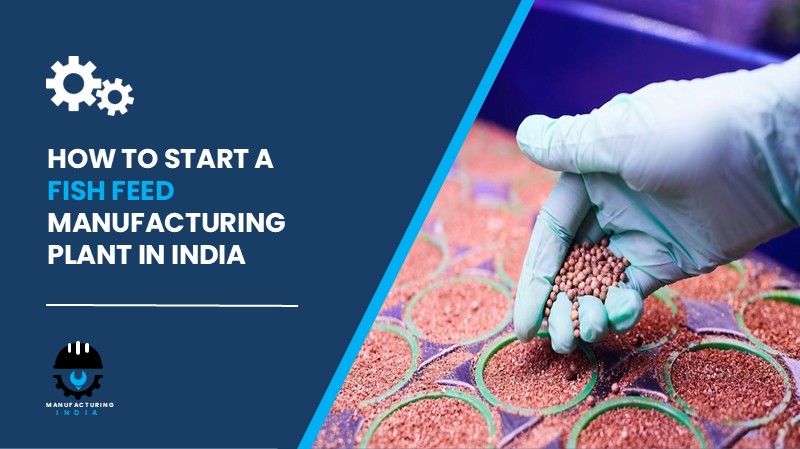
Fish feed is a nutritionally complete, precision-formulated compound feed manufactured in pelleted or extruded formats, designed to meet the specific energy, protein, lipid, vitamin, and mineral requirements of target fish and crustacean species at each stage of growth. It is an essential component in aquaculture, formulated to provide balanced nutrition that supports optimal growth, immune function, and feed conversion ratios across farmed species.
Modern fish feed incorporates multiple protein sources including fishmeal, soybean meal, plant-based concentrates, fish oils, vitamins, minerals, and functional additives such as probiotics, prebiotics, and immunostimulants. Products span formats including extruded floating pellets, sinking pellets, crumbles, starter feeds for larvae and fry, and broodstock diets. End-use industries served include commercial freshwater and marine aquaculture, the ornamental fish trade, research and educational institutions, and sustainable protein production operations.
Cost of Setting Up a Fish Feed Manufacturing Plant in India
Total investment for a fish feed manufacturing plant depends on plant capacity, technology selection, automation level, geographic location, and regulatory compliance. Investors must evaluate both capital expenditure and recurring operating costs before projecting returns. The facility can produce pelleted and extruded feeds across a range of species-specific formulations.
1. Capital Expenditure (CapEx)
Land and Site Development: The site must offer easy access to key raw materials — fishmeal, soybean meal, wheat flour, vitamins, and binders — and proximity to target aquaculture markets to minimise distribution costs. Industrial estates and Special Economic Zones (SEZs) in Andhra Pradesh, Gujarat, and West Bengal provide cost advantages and streamlined approvals.
Civil Works and Construction: Civil expenditure covers the main production shed, raw material storage warehouses, liquid ingredient tanks, quality control laboratory, finished feed warehouse, bagging section, utility block, and administrative offices. Space for future capacity expansion should be incorporated into the layout design.
Machinery and Equipment: Key machinery required includes:
- Bulk ingredient receiving, storage silos, and conveying systems for fishmeal, soybean meal, grain, and oil management
- Ingredient weighing and batching systems for precise multi-component formula preparation
- Hammer mills and roller mills for grinding ingredients to target particle size distributions
- High-shear mixers for thorough blending of dry and liquid ingredients including fish oil and premix additions
- Twin-screw or single-screw extruders for producing floating or sinking pellets with precise density and water stability
- Post-extrusion oil and liquid coating systems for applying fish oil, attractants, and specialty lipids
- Cooling, drying, and sieving systems for achieving final moisture content and uniform pellet size classification
- Quality control laboratory equipment for proximate analysis, pellet durability, and water stability testing
- Packaging and weighing systems for finished feed bagging and dispatch
Other Capital Costs: This category includes effluent treatment plant (ETP) construction, pre-operative expenses, equipment installation and commissioning, feed manufacturing licences, HACCP and GMP certification, initial working capital, and contingency provisions. Import duties on specialised extrusion equipment sourced internationally must also be factored in.
Request a Sample Report for In-Depth Market Insights: https://www.imarcgroup.com/fish-feed-manufacturing-plant-project-report/requestsample
2. Operational Expenditure (OpEx)
Raw Material Cost: Raw materials represent 70–80% of total operating expenditure. Primary inputs include fishmeal, soybean meal, wheat flour, fish oil, vitamin and mineral premixes, binders, and functional additives. Long-term contracts with reliable domestic suppliers help stabilise pricing and ensure consistent production quality. By the fifth year, total operational costs are expected to increase substantially due to inflation and market fluctuations in key input costs.
Utility Cost: Electricity, water, and steam account for approximately 5–10% of total OpEx. Extruders, dryers, coolers, and grinding mills are energy-intensive, making proximity to reliable power infrastructure a critical site selection criterion.
Other Operating Costs: Ongoing expenses include transportation, packaging materials, salaries, machinery maintenance and spare parts, depreciation, quality control testing, and applicable taxes.
3. Plant Capacity
Production capacity can be customised based on investor requirements, from semi-automatic small-scale setups to fully automated high-volume lines. Profitability improves with higher capacity utilisation, as plants operating near rated capacity benefit from lower per-unit fixed costs and stronger gross margins.
4. Profit Margins and Financial Projections
The full project report covers Net Present Value (NPV), Internal Rate of Return (IRR), payback period, gross and net margin calculations, profit and loss accounts, and sensitivity analysis. Since fish feed typically represents 50–70% of total farm operating costs in aquaculture, demand is robust and largely inelastic to moderate price changes providing revenue stability for a well-operated facility.
Why Set Up a Fish Feed Plant in India?
Rapidly Expanding Aquaculture Industry: India is among the world’s foremost aquaculture producers, with commercial farming of carp, tilapia, shrimp, catfish, and other species creating sustained demand for precision-formulated feeds. The intensification of fish and shrimp farming operations across the country is driving long-term volume growth in feed consumption.
Rising Seafood Consumption: Increasing consumer awareness of seafood’s nutritional benefits, combined with the rising affluence of India’s middle class, is driving higher per-capita fish consumption and expanded aquaculture investment — directly increasing the requirement for compound feed at scale.
Sustainable Protein Production: Growing concerns around overfishing are accelerating innovation in feed formulations incorporating probiotics, prebiotics, insect proteins, and plant-based alternatives. Domestic production positions investors to serve this sustainability-driven transition.
Active Industry Investment and Global Validation: In March 2022, Cargill opened its first feed factory in Vijayawada, acquired from Mulpuri Foods & Feeds. In November 2021, Nutreco announced a joint venture with the Mumbai-based West Coast Group. In February 2024, Skretting launched a new production facility in Surat, India with three production lines and approximately 50,000 metric tons per annum capacity. These investments by global leaders confirm India’s strategic importance as an aquafeed production hub.
Cost-Competitive Manufacturing: India’s advantages in land, construction, and supply chain costs, combined with direct access to shrimp and fish farming clusters in Andhra Pradesh and coastal states, make domestic production both competitively priced and logistically efficient.
Local Supply Chain Preference: Indian aquaculture operators particularly shrimp and fish farmers in Andhra Pradesh, West Bengal, and Gujarat increasingly prefer locally sourced feeds over imported product, due to faster delivery, better alignment with local species requirements, and reduced foreign exchange exposure.
Manufacturing Process – Step by Step
The fish feed manufacturing process uses extrusion-based pelleting as the primary production method, combining precision nutrition formulation with high-temperature, high-pressure processing to deliver water-stable, nutritionally complete feeds. Thoroughly understanding this fish feed manufacturing process is essential before finalising equipment specifications and capital requirements.
- Raw Material Receipt and Storage: Bulk ingredients fishmeal, soybean meal, wheat flour, fish oil, vitamin and mineral premixes, and binders are received, quality-inspected, and stored in dedicated silos and liquid tanks
- Ingredient Weighing and Batching: Automated systems prepare precise multi-component formulas to meet target nutrient specifications for each species and growth stage
- Grinding: Hammer mills and roller mills reduce ingredients to target particle sizes that optimise pellet quality, binding, and digestibility
- Mixing: High-shear mixers blend dry and liquid ingredients including fish oil and premix additions into a homogeneous mass before extrusion
- Extrusion: Twin-screw or single-screw extruders process the blended mass under high temperature and pressure to produce floating or sinking pellets with precise density and water stability
- Coating: Post-extrusion systems apply fish oil, attractants, and specialty lipids to pellet surfaces to improve palatability and nutritional value
- Drying, Cooling, and Sieving: Dryers, coolers, and sieving machines achieve the required moisture content, pellet hardness, and uniform size classification
- Quality Testing: Laboratory equipment conducts proximate analysis, pellet durability, and water stability tests to species-specific quality assurance criteria
- Packaging and Dispatch: Finished feed is weighed, bagged, and dispatched to commercial aquaculture farms, research institutions, and other end-use customers
Key Applications
Fish feed produced at this facility serves industries across the aquaculture value chain:
- Commercial Freshwater Aquaculture: Feeds for carp, tilapia, catfish, and pangasius farmed in ponds and tank systems
- Marine and Brackish Aquaculture: Nutritionally formulated feeds for shrimp and marine finfish in coastal and estuarine operations
- Salmon and Trout Farming: High-energy diets engineered for optimal growth performance and feed conversion efficiency
- Ornamental Fish Industry: Specialty feeds enhancing the coloration, health, and development of aquarium species
- Research and Educational Institutions: Precision trial diets for aquaculture nutrition studies and breeding programmes
- Sustainable Protein Production: Functional feeds incorporating probiotics, prebiotics, and alternative protein sources for responsible farming operations
Leading Manufacturers
The global fish feed and aquafeed market is served by multinational corporations and regional specialists competing on nutritional innovation, sustainability credentials, and geographic reach. Key players in the global fish feed market include:
- Cargill, Inc.
- Nutreco N.V.
- BioMar Group
- Aller Aqua Group
- Alltech, Inc.
- Archer Daniels Midland Company
- Ridley Corporation Limited
- Charoen Pokphand Foods PCL
- Skretting (a Nutreco company)
- Avanti Feeds Limited
- The Waterbase Limited
- Tongwei Co. Ltd.
Timeline to Start the Plant
- Feasibility study and project report preparation
- Land acquisition and site development
- Regulatory approvals and environmental clearances
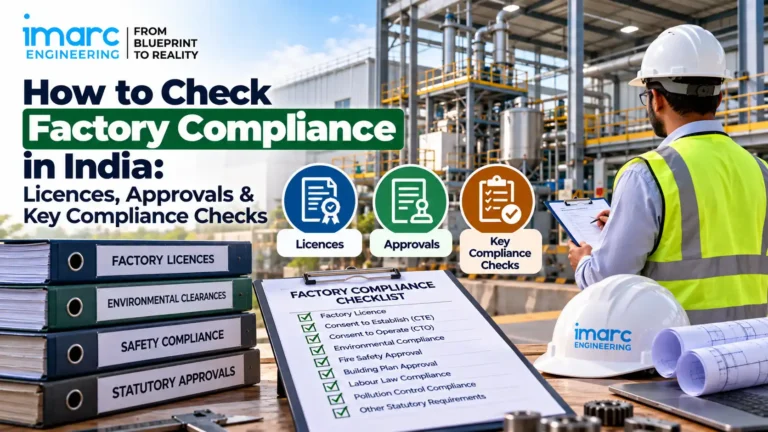
- Factory licence and fire safety compliance
- Machinery procurement and installation
- Raw material supplier agreements and supply chain setup
- Trial production and quality testing
- Commercial production launch
Licences and Regulatory Requirements
Starting a fish feed manufacturing unit in India requires several approvals:
- Business registration (Proprietorship, LLP, or Pvt Ltd)
- Factory Licence under the Factories Act
- Environmental Clearance from State Pollution Control Board
- GST Registration
- Fire Safety NOC
- Feed quality certification applicable to animal feed manufacturing
- Effluent Treatment Plant (ETP) operational clearance
- Occupational Health and Safety compliance
Key Challenges to Consider
High Capital Requirements: A fully equipped extrusion-based fish feed production line requires substantial investment in civil works, machinery, and pre-operative costs, making careful project financing essential.
Raw Material Price Volatility: Primary inputs fishmeal, soybean meal, wheat flour, fish oil, and mineral premixes are subject to global commodity price swings. Since these represent 70–80% of OpEx, price volatility directly compresses margins.
Regulatory Compliance: Environmental clearance, ETP operation, factory licensing, and feed safety standards add time and cost to project setup, particularly in coastal and ecologically sensitive zones.
Technology and Innovation Pressure: Rapid innovation in sustainable ingredient sourcing insect meal, algae-based proteins, precision feeding systems demands periodic technology upgrades to remain competitive.
Competition from Established Players: Global leaders including Cargill, Nutreco, BioMar Group, Skretting, and Charoen Pokphand Foods, alongside established Indian producers Avanti Feeds Limited and The Waterbase Limited, maintain strong market positions that new entrants must strategically navigate through regional focus or species specialisation.
Skilled Manpower: Operating extruder systems, quality labs, and automated batching lines requires technically trained personnel in feed formulation and quality assurance an investment in workforce training that must be planned for upfront.
Frequently Asked Questions
1. How much does it cost to set up a fish feed manufacturing plant in India? Total costs depend on capacity, technology, and location, spanning land, machinery, civil works, ETP, and pre-operative expenses. The IMARC Group project report provides capacity-specific CapEx and OpEx breakdowns.
2. Is fish feed manufacturing profitable in India in 2026? Yes. The investment shows strong return potential given robust demand from India’s growing aquaculture sector, with fish feed representing 50–70% of total farm operating costs and generating largely inelastic demand.
3. What machinery is required for a fish feed manufacturing plant in India? Key equipment includes storage silos, weighing and batching systems, hammer mills, high-shear mixers, extruders, post-extrusion coating systems, dryers, coolers, sieving machines, and quality control laboratory instruments.
4. What licences and approvals are required to start a fish feed plant in India? Required approvals include business registration, Factory Licence, Environmental Clearance, GST Registration, Fire Safety NOC, ETP clearance, and relevant feed quality certification.
5. What raw materials are needed for fish feed manufacturing? Core raw materials include fishmeal, soybean meal, wheat flour, fish oil, vitamin and mineral premixes, binders, probiotics, prebiotics, and immunostimulants.
6. What are the environmental compliance requirements for a fish feed plant in India? The facility must obtain State Pollution Control Board clearance, operate a functional ETP, and comply with waste disposal and applicable air emission standards from drying and grinding operations.
7. What is the best location to set up a fish feed plant in India? Andhra Pradesh is the largest fish feed-consuming state, offering proximity to major shrimp and fish farming clusters. West Bengal, Odisha, Gujarat, and Kerala are also strategically sound manufacturing locations.
8. What is the break-even period for this type of plant in India? The IMARC Group project report provides detailed payback period, NPV, and IRR analysis by capacity. Higher capacity utilisation materially shortens the break-even timeline.
9. What government incentives are available for manufacturers in India? Investors can explore benefits under Make in India, the Pradhan Mantri Matsya Sampada Yojana (PMMSY), state-level industrial promotion schemes, SEZ incentives, and food processing subsidy programmes.
Key Takeaways for Investors
The fish feed manufacturing plant in India represents a well-supported investment at the intersection of commercial aquaculture expansion, rising seafood consumption, and sustainable protein production sectors showing consistent, long-term demand growth. The project economics are viable across multiple capacity configurations, with raw material procurement and capacity utilisation serving as the primary return levers. India’s aquaculture sector is growing rapidly, with Andhra Pradesh anchoring a large and deepening consumption base, while validated global investments from Cargill, Nutreco, and Skretting confirm the market’s strategic credibility. With the right feasibility study, site selection, and supply chain structure, this production facility can deliver a competitive return on capital backed by inelastic, recurring demand from India’s expanding network of commercial fish farms.
About the Author