Cement Bricks Manufacturing Plant in India
Setting up a cement bricks manufacturing plant in India presents a compelling investment case driven by the country’s explosive growth in construction, civil engineering, infrastructure development, landscaping, and architectural design. Cement bricks are a foundational input for residential housing, commercial complexes, and large-scale public infrastructure, all of which are expanding at an unprecedented pace. The convergence of urbanisation pressures, government-backed housing missions, and the rising preference for durable, eco-efficient building materials makes this sector particularly attractive for first-time and experienced investors alike.
India’s structural advantages competitive land and labour costs, a rapidly expanding urban population, and the central government’s Make in India initiative create a favourable ecosystem for domestic cement bricks production. Key manufacturing states with established logistics, raw material access, and industrial estate infrastructure offer further locational advantages for new entrants. Proximity to aggregates and cement suppliers in states with active quarrying activity can dramatically reduce input costs and shorten supply chains, making India a strategically sound location for this type of production at both small and large scales.
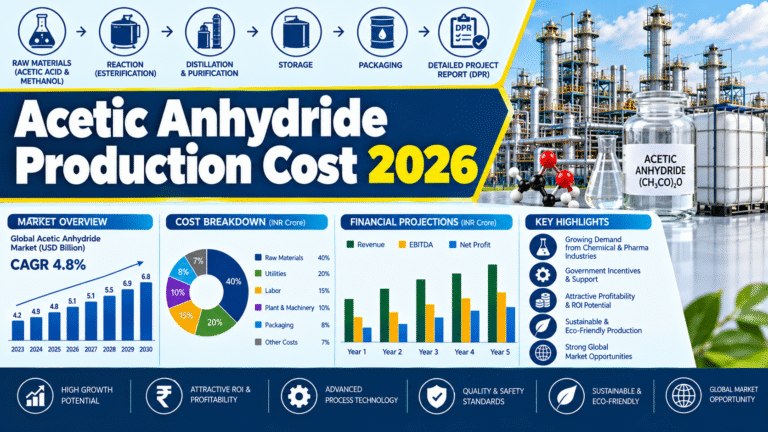
The global cement bricks market was valued at USD 182.88 Billion in 2025 and is projected to reach USD 262.56 Billion by 2034, growing at a CAGR of 4.1%. India’s policy support, cost-competitive manufacturing environment, strong demand from construction and infrastructure sectors, and viable break-even timelines make this an investment worth serious evaluation.
What are Cement Bricks?
Cement bricks are manufactured construction units made primarily from cement and aggregates, shaped through a controlled moulding process and cured to achieve the required structural integrity. They are engineered for strength, durability, dimensional consistency, and resistance to weathering properties that make them superior to traditional clay-fired bricks in many construction applications. Cement bricks are widely valued for their eco-efficient profile, as their production does not require kiln-firing and results in a lower thermal footprint compared to conventional fired alternatives.
The primary production method for cement bricks is a hydraulic or mechanical block-making process, which compresses a semi-dry mix of cement and aggregates into uniform brick shapes, followed by controlled curing. The end-use industries served by cement bricks span construction, civil engineering, infrastructure development, landscaping, and architectural design covering everything from boundary walls and residential structures to commercial facades and pavement applications.
Cost of Setting Up a Cement Bricks Manufacturing Plant in India
The total investment required for a cement bricks manufacturing plant depends on multiple variables: plant capacity, level of automation, technology selection, plant location, and adherence to regulatory compliance requirements. A well-structured financial plan covers both capital expenditure (CapEx) and operational expenditure (OpEx) from day one.
1. Capital Expenditure (CapEx)
Land and site development form a substantial part of the overall capital investment. Costs related to land registration, boundary development, and site preparation must be accounted for in the early project phase. Investors should explore options in Special Economic Zones (SEZs) or state-notified industrial estates, where land cost relief, infrastructure support, and single-window clearance can meaningfully reduce upfront outlays.
Civil works encompass the construction of the production shed, raw material storage areas, quality control laboratory, finished goods warehouse, and administrative block. These structures must be designed to accommodate the specific workflow of cement bricks production, with designated zones for each operational stage.
Machinery costs account for the largest portion of total capital expenditure in a cement bricks plant. Key machinery required includes:
- Aggregate bins
- Batching plants
- Industrial mixers
- Hydraulic or mechanical block-making machines
- Curing racks or chambers
- Automated pallet stackers
- Packaging stations
All machinery must be high-quality, corrosion-resistant, and tailored for cement bricks production, complying with industry standards for safety, efficiency, and reliability. The scale of production and the level of automation directly determine the total machinery investment.
Other capital costs include effluent treatment plant (ETP) installation where required by local regulations, pre-operative expenses, commissioning charges, and import duties on specialised machinery components if sourced internationally.
Request a Sample Report for In-Depth Market Insights: https://www.imarcgroup.com/cement-bricks-manufacturing-plant-project-report/requestsample
2. Operational Expenditure (OpEx)
Raw material costs represent the largest ongoing expense in a cement bricks manufacturing operation. The primary raw materials are cement and aggregates. Establishing long-term contracts with reliable suppliers is a critical risk-management strategy, as it helps mitigate price volatility and ensures consistent supply quality throughout the production cycle.
Utility costs including electricity for the block-making machines and batching plant, water for the mixing and curing stages, and steam if required by the curing system — form another significant recurring line item. Optimising utility consumption through efficient equipment scheduling and process monitoring can yield meaningful savings over time.
Other ongoing operating costs include transportation and outbound logistics, packaging materials, staff salaries, routine equipment maintenance, depreciation of fixed assets, taxes, and quality control expenses. Per IMARC Group’s project report framework, the total operating cost in the first year of production is projected to be significant, and by the fifth year of operations, the total operational cost is expected to increase substantially due to inflation, market fluctuations, potential rises in key raw material prices, supply chain disruptions, and shifts in the global economy.
3. Plant Capacity
A cement bricks manufacturing plant can be designed across a wide range of output capacities, making the model accessible to both SME-scale and large industrial investors. Capacity can be customised per investor requirements, IMARC Group’s detailed project report specifically allows for capacity customisation. Profitability improves with higher capacity utilisation, as fixed costs are spread across a larger output base, reducing per-unit cost and improving gross margins.
4. Profit Margins and Financial Projections
The financial projections for a cement bricks plant are developed based on assumptions around capital investment, operating costs, production capacity utilisation, pricing trends, and demand outlook. Key financial metrics covered in a detailed project report include Net Present Value (NPV), Internal Rate of Return (IRR), payback period, gross margin, and net margin analysis. The project demonstrates healthy profitability potential under stable demand conditions. Investors should model sensitivity analysis scenarios to understand how raw material price fluctuations and capacity utilisation rates affect projected returns.
Why Set Up a Cement Bricks Plant in India?
Rapid Urbanisation and Housing Demand. India’s urban population is expanding at a pace that demands millions of new residential units annually. The rising demand for affordable housing is one of the primary demand drivers for cement bricks, as identified in IMARC Group’s market analysis. Cement bricks offer the combination of cost efficiency and structural reliability that affordable housing developers require at scale.
Infrastructure Development Activity. Large-scale infrastructure projects roads, bridges, flyovers, metro rail systems, and public facilities are driving consistent, high-volume demand for durable construction materials. Cement bricks are a core input across civil engineering and infrastructure sectors, providing a long-term demand floor beyond the residential cycle.
Preference for Durable and Eco-Efficient Construction Materials. The construction sector’s growing preference for eco-efficient materials with a lower carbon footprint is a structural market tailwind. Cement bricks, which do not require kiln-firing, align well with this trend and are increasingly preferred by developers seeking greener building solutions without sacrificing structural performance.
Policy and Regulatory Tailwinds. India’s Make in India initiative encourages domestic production of construction materials, offering incentives for domestic manufacturers. Housing mission schemes and infrastructure push programmes at both central and state government levels sustain long-term demand pipelines for cement bricks producers across the country.
Cost-Competitive Manufacturing Environment. India offers globally competitive land acquisition costs, lower labour rates, and an expanding domestic supply chain for key raw materials like cement and aggregates. These advantages structurally reduce the cost of production and improve plant-level margins relative to many other geographies, making India an attractive manufacturing base.
Strong Industry Investment and Key Player Presence. The cement bricks sector features participation by major players including UltraTech Cement Ltd. and Ambuja Cements Ltd., both of which validate the commercial viability of the market. Their presence indicates a mature and competitive ecosystem where new entrants can benchmark operations and supply chain strategies.
Manufacturing Process Step by Step
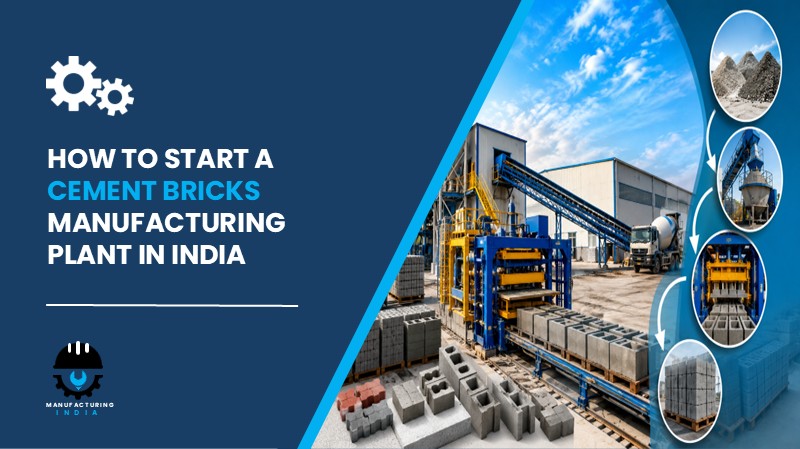
The cement bricks manufacturing process uses a hydraulic or mechanical block-making operation as the primary production method. This is a multi-step process involving several unit operations, material handling, and quality checks.
- Raw Material Procurement and Storage: Cement and aggregates are procured from reliable suppliers and stored in designated bins and covered storage areas to protect quality and prevent contamination.
- Aggregate Batching: Aggregate bins feed the required proportions of coarse and fine aggregates into the batching plant, ensuring precise mix ratios for consistent brick quality.
- Cement and Mix Blending: Industrial mixers combine cement, aggregates, and controlled quantities of water to produce a homogeneous, semi-dry concrete mix with the correct workability for compression moulding.
- Block Making Hydraulic or Mechanical Pressing: The prepared mix is fed into hydraulic or mechanical block-making machines, which compress the material under high pressure into uniform brick shapes using steel moulds.
- Curing: Freshly formed bricks are transferred to curing racks or chambers, where controlled humidity and temperature conditions allow the cement to hydrate fully and achieve the required compressive strength over the designated curing period.
- Quality Control Inspection: Cured bricks undergo dimensional checks, compressive strength testing, and visual inspection to ensure compliance with applicable standards before dispatch.
- Automated Palletising and Packaging: Automated pallet stackers organise finished bricks into palletised loads at the packaging stations, readying them for transport to construction sites, distributors, and end-use industries.
- Dispatch to End-Use Sectors: Finished cement bricks are dispatched to serve construction, civil engineering, infrastructure, landscaping, and architectural design applications.
Key Applications
Cement bricks serve a broad range of industries, each depending on the material’s compressive strength, dimensional accuracy, and eco-efficient production profile.
- Construction: Used as the primary walling unit in residential buildings, boundary walls, and structural masonry across housing projects of all scales.
- Civil Engineering: Applied in retaining structures, culverts, drainage works, and civil infrastructure components requiring reliable load-bearing performance.
- Infrastructure Development: Used in road-side structures, utility infrastructure, public buildings, and government-funded projects at national and state levels.
- Landscaping: Deployed in paving, garden walls, decorative boundary installations, and outdoor structures requiring weather-resistant, durable units.
- Architectural Design: Used by designers and architects seeking dimensionally consistent, aesthetically adaptable masonry units for both interior and exterior applications.
Leading Manufacturers
The global cement bricks market includes several established industry players with significant production capacities and diverse application portfolios. Key players in the cement bricks industry include:
- UltraTech Cement Ltd.
- Ambuja Cements Ltd.
These companies serve end-use sectors encompassing construction, civil engineering, landscaping, infrastructure development, and architectural design.
Timeline to Start the Plant
- Feasibility study and project report preparation
- Land acquisition and site development
- Regulatory approvals and environmental clearances
- Factory licence and fire safety compliance
- Machinery procurement and installation
- Raw material supplier agreements and supply chain setup
- Trial production and quality testing
- Commercial production launch
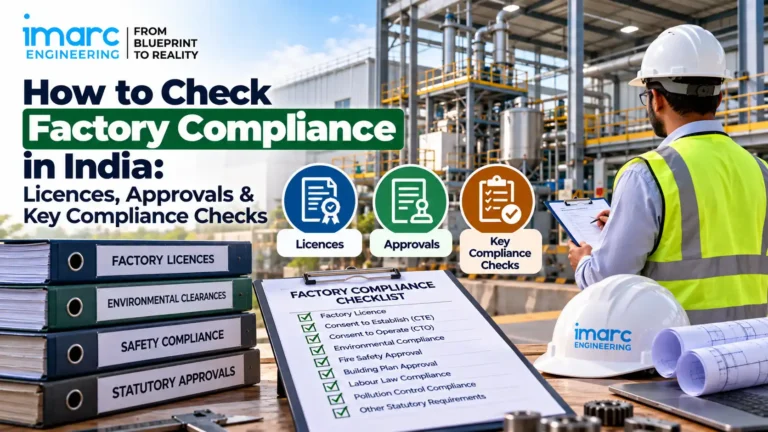
Licences and Regulatory Requirements
Starting a cement bricks manufacturing unit in India requires several approvals:
- Business registration (Proprietorship, LLP, or Pvt Ltd)
- Factory Licence under the Factories Act
- Environmental Clearance from State Pollution Control Board
- GST Registration
- Fire Safety NOC
- Effluent Treatment Plant (ETP) operational clearance
- Occupational Health and Safety compliance
Key Challenges to Consider
High Capital Requirements. Establishing a cement bricks plant involves significant upfront investment in land, civil construction, and machinery particularly the hydraulic or mechanical block-making machines and batching plant, which constitute the largest CapEx components.
Raw Material Price Volatility. The two primary inputs cement and aggregates — are commodity-linked materials subject to price fluctuations driven by energy costs, logistics disruptions, and supply-demand dynamics. Long-term supplier contracts are essential to manage this risk.
Regulatory Compliance. Cement bricks production in India requires navigating environmental clearances, factory licences, ETP compliance, and pollution control board approvals. Delays in obtaining these can extend the pre-production timeline and affect overall project costs.
Competition from Established Players. The presence of large, well-capitalised players such as UltraTech Cement Ltd. and Ambuja Cements Ltd. creates a competitive pricing environment that new entrants must account for in their business plans, particularly on volume-sensitive construction contracts.
Technology and Innovation Pressure. The shift toward eco-efficient and durable materials in construction is driving ongoing product and process development. Investors must select machinery and process configurations that allow for product quality improvements and compliance with evolving standards.
Skilled Manpower. Recruiting and retaining trained operators for hydraulic block-making machines, batching systems, and quality control functions is a persistent challenge. Structured training programmes and competitive salary structures are necessary to maintain operational efficiency.
Learn the Full Cost Breakdown for Setting Up a Plant in India: https://www.imarcgroup.com/insight/how-to-set-up-a-manufacturing-plant-in-india
Frequently Asked Questions
1. How much does it cost to set up a cement bricks manufacturing plant in India? The total setup cost depends on plant capacity, automation level, location, and regulatory compliance requirements. A detailed project report covering CapEx and OpEx specific to your target capacity is the recommended starting point for accurate cost estimation.
2. Is cement bricks manufacturing profitable in India in 2026? Yes. The global cement bricks market was valued at USD 182.88 Billion in 2025 and is projected to reach USD 262.56 Billion by 2034 at a CAGR of 4.1%, driven by urbanisation, affordable housing demand, and infrastructure growth. India’s cost-competitive production environment supports healthy margins.
3. What machinery is required for a cement bricks plant in India? Key machinery includes aggregate bins, batching plants, industrial mixers, hydraulic or mechanical block-making machines, curing racks or chambers, automated pallet stackers, and packaging stations.
4. What licences and approvals are required to start a cement bricks plant in India? Required approvals include business registration, Factory Licence under the Factories Act, Environmental Clearance from the State Pollution Control Board, GST Registration, Fire Safety NOC, ETP clearance, and Occupational Health and Safety compliance.
5. What raw materials are needed for cement bricks manufacturing? The primary raw materials for cement bricks production are cement and aggregates. Reliable, long-term supplier relationships are essential to maintain consistent production quality and manage input cost volatility.
6. What are the environmental compliance requirements for a cement bricks plant in India? Operators must secure Environmental Clearance from the relevant State Pollution Control Board, maintain a functional Effluent Treatment Plant, and comply with applicable pollution control regulations and occupational health standards.
7. What is the best location to set up a cement bricks plant in India? The ideal location offers proximity to cement and aggregate suppliers to minimise raw material logistics costs, access to reliable utilities, and proximity to target construction markets. Industrial estates and SEZs in construction-active states offer additional infrastructure and regulatory advantages.
8. What is the break-even period for this type of plant in India? Break-even timelines vary based on capacity, production efficiency, and market pricing. A detailed feasibility study covering NPV, IRR, and payback period analysis as provided in IMARC Group’s project report is essential for determining plant-specific break-even projections.
9. What government incentives are available for manufacturers in India? Indian manufacturers can access benefits under the Make in India initiative, state-level industrial promotion schemes, capital subsidy programmes available through MSME development agencies, and GST input tax credits on capital goods and raw material procurement.
Key Takeaways for Investors
The cement bricks manufacturing sector in India presents a well-rounded investment opportunity underpinned by sustained demand from construction, civil engineering, infrastructure development, landscaping, and architectural design sectors. The financial model is viable across a range of plant capacities, with profitability improving as capacity utilisation increases and fixed costs are distributed over higher output volumes. The global cement bricks market, valued at USD 182.88 Billion in 2025 and forecast to reach USD 262.56 Billion by 2034 at a CAGR of 4.1%, signals enduring demand growth that extends well beyond short-term construction cycles. India’s urban growth trajectory, policy support for domestic manufacturing, and cost-competitive production environment collectively position a well-planned cement bricks plant as a strategically sound and financially viable long-term industrial investment.
About the Author