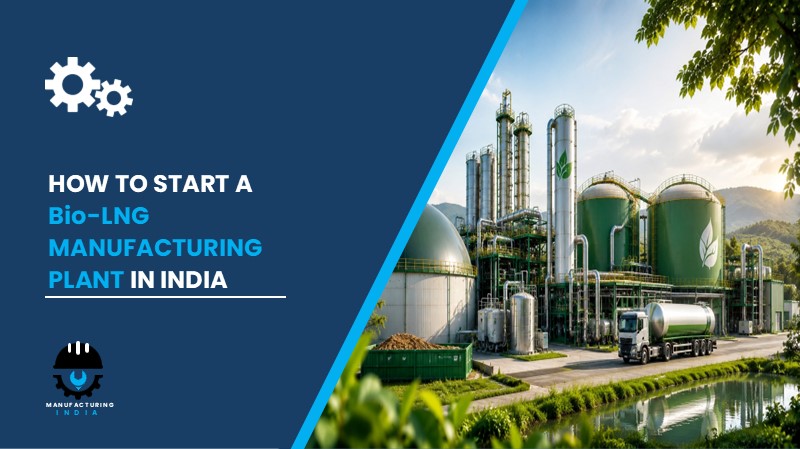
Setting up a bio-LNG manufacturing plant in India presents a compelling investment case, driven by strong demand from transportation, power generation, industrial manufacturing, oil & gas, municipal utilities, and agriculture sectors. Bio-LNG (bio-liquefied natural gas) is a renewable biofuel made by processing organic waste like agricultural residues, food waste, and manure, and it is chemically identical to conventional fossil-based LNG, meaning it can utilize existing LNG engines and refueling networks without modifications. By replacing diesel and fossil LNG, it drastically reduces greenhouse gas emissions and particulate matter.
India’s push toward decarbonization, waste-to-energy adoption, and energy security is strengthening demand for bio-LNG. The Government of India targets reducing the country’s carbon footprint by 30-35% by 2030, and initiatives such as SATAT are accelerating compressed and liquefied biogas adoption, creating a strategically sound opening for regional producers with efficient feedstock sourcing.
This investment benefits from strong policy support under initiatives like SATAT, cost-competitive feedstock economics, and steady demand from transportation, industrial, and power generation sectors. With gross margins of 25–35% and net margins of 10–18%, it offers a credible path to break-even viability.
What is Bio-LNG?
Bio-LNG is a renewable biofuel produced by processing organic waste such as agricultural residues, food waste, and manure. Through a biological digestion process, microorganisms break down this waste to produce biogas, which is purified into biomethane and cooled to cryogenic temperatures (-160°C) to liquefy it. This liquefaction reduces its volume by 600 times, creating a dense, transportable energy source that also supports a circular economy.
The bio-LNG manufacturing process uses digestion, biogas purification, CO₂ removal, liquefaction, cryogenic storage, and packaging/dispatch as the core production stages. End-use industries served include transportation, power generation, industrial manufacturing, oil & gas, municipal utilities, and agriculture.
Cost of Setting Up a Bio-LNG Manufacturing Plant in India
Cost depends on capacity, technology, location, automation, and regulatory compliance, and this bio-LNG manufacturing plant investment requires careful planning across each cost component.
1. Capital Expenditure (CapEx)
Total capital investment for the bio-LNG manufacturing plant depends on capacity, technology, and location, covering land acquisition, site preparation, and necessary infrastructure. Land and site development – including registration, boundary development, and related charges – forms a substantial part of the investment, and investors can evaluate industrial estates or designated zones offering robust infrastructure, transportation, and utilities, while ensuring compliance with local zoning and environmental regulations.
Equipment costs represent a significant portion of capital expenditure, with scale of manufacturing and automation level determining the total machinery cost.
Key machinery required includes:
- Feedstock handling systems
- Anaerobic digesters
- Biogas purification units
- CO₂ removal systems
- Gas compressors
- Cryogenic liquefaction units
- Insulated storage tanks
- Dispensing/loading systems
- Packaging or distribution facilities
Other capital costs cover construction and utility setup (electricity, water, steam), ensuring a solid foundation for safe and efficient plant operations.
Request a Sample Report for In-Depth Market Insights: https://www.imarcgroup.com/bio-lng-manufacturing-plant-project-report/requestsample
2. Operational Expenditure (OpEx)
Raw material cost is a major component of operating expenses. Organic waste feedstock — food waste, animal manure, agricultural residues, and sewage sludge — accounts for approximately 20–30% of total OpEx, making long-term supplier contracts essential to mitigate price volatility.
Utility cost is the largest OpEx component, accounting for approximately 35–45% of total operating expenses. Other operating costs include transportation, packaging, salaries and wages, depreciation, taxes, and maintenance.
By the fifth year, total operational cost is expected to rise substantially due to inflation, market fluctuations, rising raw material costs, supply chain disruptions, and shifts in the global economy.
3. Plant Capacity
The proposed facility is designed with an annual manufacturing capacity ranging between 10,000–50,000 MT, enabling economies of scale while maintaining flexibility. Capacity can be customized based on investor requirements, and profitability generally improves with higher capacity utilisation.
4. Profit Margins and Financial Projections
Financial projections cover ROI, profitability, and long-term sustainability, based on capital investment, operating costs, capacity utilization, and demand outlook. Gross profit margins typically range between 25–35%, while net profit margins range between 10–18%. Payback period, liquidity, and net present value (NPV) figures form part of the full financial analysis.
Why Set Up a Bio-LNG Plant in India?
Critical Renewable Fuel for Decarbonization. Bio-LNG serves as a sustainable, low-carbon alternative to conventional LNG, offering high energy density for long-haul transport, shipping, industrial heating, and off-grid energy applications.
Megatrend Alignment. Growing demand for renewable transportation fuels, circular economy initiatives, waste-to-energy projects, and decarbonization across heavy-duty mobility and industrial sectors is driving sustained demand for bio-LNG.
Policy and Regulatory Tailwinds. Government support through renewable energy policies, carbon reduction targets, biofuel blending initiatives, and incentives for compressed and liquefied biogas projects — including India’s SATAT initiative — is accelerating adoption, with the Government of India targeting a 30-35% reduction in carbon footprint by 2030.
Moderate but Justifiable Entry Barriers. Bio-LNG production requires significant investment in biogas digestion and upgrading, liquefaction technology, and cryogenic storage, alongside stringent quality and safety standards, creating entry barriers that favor experienced producers.
Active Industry Investment. In April 2026, GasHubUnited Utility Private Limited signed a non-binding Memorandum of Understanding with SCAN Inter Public Company Limited, a Thailand-based bio-LNG producer, to establish a secure upstream supply chain for Bio-LNG into Singapore.
Localization and Secure Energy Supply Chains. Energy distributors, fleet operators, and industrial consumers are increasingly seeking locally produced renewable fuels to reduce dependence on imported fossil fuels.
Manufacturing Process – Step by Step
The bio-LNG manufacturing process uses biological digestion and cryogenic liquefaction as the primary method.
- Feedstock handling: Organic waste feedstock (food waste, animal manure, agricultural residues, sewage sludge) is received and processed using feedstock handling systems.
- Anaerobic digestion: Microorganisms break down organic waste in anaerobic digesters to produce raw biogas.
- Biogas purification: Biogas purification units refine the raw biogas into biomethane.
- CO₂ removal: CO₂ removal systems strip out carbon dioxide to raise methane purity.
- Compression: Gas compressors prepare the purified biomethane for liquefaction.
- Liquefaction: Cryogenic liquefaction units cool the biomethane to -160°C, reducing its volume by 600 times.
- Storage: The liquefied bio-LNG is held in insulated storage tanks.
- Dispensing and dispatch: Dispensing/loading systems and packaging or distribution facilities prepare bio-LNG for end-use industries such as transportation, power generation, and industrial manufacturing.
Key Applications
- Transportation: Renewable fuel for heavy-duty trucks, buses, long-haul freight vehicles, and marine transport.
- Industrial: Clean fuel for boilers, furnaces, kilns, and process heating across manufacturing industries.
- Power Generation: Fuel for gas engines, captive power plants, and combined heat and power (CHP) systems.
- City Gas Distribution (CGD): Injection into natural gas grids and supply to commercial, industrial, and residential consumers as a low-carbon natural gas substitute.
Leading Manufacturers
Leading manufacturers in the global bio-LNG industry include:
- Air Liquide
- AXEGAZ T&T
- BoxLNG Pvt. Ltd.
- DBG Group B.V.
- EnviTec Biogas AG
Timeline to Start the Plant
- Feasibility study and project report preparation
- Land acquisition and site development
- Regulatory approvals and environmental clearances
- Factory licence and fire safety compliance
- Machinery procurement and installation
- Raw material supplier agreements and supply chain setup
- Trial production and quality testing
- Commercial production launch
Licences and Regulatory Requirements
Starting a bio-LNG manufacturing unit in India requires several approvals:
- Business registration (Proprietorship, LLP, or Pvt Ltd)
- Factory Licence under the Factories Act
- Environmental Clearance from State Pollution Control Board
- GST Registration
- Fire Safety NOC
- Hazardous/chemical compliance for gas handling and cryogenic storage
- Effluent Treatment Plant (ETP) operational clearance
- Occupational Health and Safety compliance
Key Challenges to Consider
High Capital Requirements. Equipment costs, including anaerobic digesters, biogas purification units, and cryogenic liquefaction units, account for the largest share of capital expenditure.
Raw Material Price Volatility. Organic waste feedstock (food waste, animal manure, agricultural residues, sewage sludge) makes up 20–30% of OpEx, so reliable long-term supplier contracts are essential.
Regulatory Compliance. Safety protocols, monitoring systems, and effluent treatment requirements must be implemented throughout production to minimize environmental impact.
Technology and Process Efficiency Pressure. Methane recovery, liquefaction efficiency, and feedstock utilization directly affect production costs and project economics.
Competition from Established Players. Global producers such as Air Liquide, AXEGAZ T&T, BoxLNG Pvt. Ltd., DBG Group B.V., and EnviTec Biogas AG set a high bar for new entrants.
Skilled Manpower. Operating anaerobic digesters, biogas purification units, and cryogenic liquefaction systems requires trained, well-supervised personnel.
Frequently Asked Questions
1. How much does it cost to set up this facility in India?
Cost depends on capacity, technology, location, automation, and regulatory compliance, covering land, civil works, equipment, and other capital costs.
2. Is bio-LNG manufacturing profitable in India in 2026?
Gross margins of 25–35% and net margins of 10–18% indicate healthy profitability potential under normal operating conditions.
3. What machinery is required for a bio-LNG plant in India?
Feedstock handling systems, anaerobic digesters, biogas purification units, CO₂ removal systems, gas compressors, cryogenic liquefaction units, insulated storage tanks, dispensing/loading systems, and packaging or distribution facilities.
4. What licences and approvals are required to start the unit in India?
Business registration, a Factory Licence, Environmental Clearance, GST Registration, Fire Safety NOC, hazardous/chemical compliance, ETP clearance, and occupational health and safety compliance.
5. What raw materials are needed for bio-LNG manufacturing?
Organic waste feedstock, including food waste, animal manure, agricultural residues, and sewage sludge.
6. What are the environmental compliance requirements for a bio-LNG plant in India?
Environmental Clearance from the State Pollution Control Board, an operational ETP, and safety/monitoring systems.
7. What is the best location to set up a bio-LNG plant in India?
Easy access to organic waste feedstock, proximity to target markets, and robust transportation and utility infrastructure.
8. What is the break-even period for this type of plant in India?
It depends on capacity utilisation, pricing trends, and cost structure, detailed through payback period and NPV analysis in the full financial projections.
9. What government incentives are available for manufacturers in India?
Initiatives such as SATAT, along with renewable energy policies and biofuel blending incentives, support India’s target of reducing its carbon footprint by 30-35% by 2030.
Key Takeaways for Investors
This opportunity taps into steady, diversified demand from transportation, power generation, industrial manufacturing, oil & gas, municipal utilities, and agriculture sectors, underpinned by policy support under initiatives like SATAT. The project shows healthy financial viability across its proposed 10,000–50,000 MT annual capacity range, with gross margins of 25–35% and net margins of 10–18%. With the global bio-LNG market valued at USD 2.87 Billion in 2025 and projected to reach USD 53.82 Billion by 2034 at a CAGR of 38.5%, and India’s decarbonization targets continuing to drive adoption, demand fundamentals for domestically produced bio-LNG appear well-positioned for long-term investor interest.
About the Author