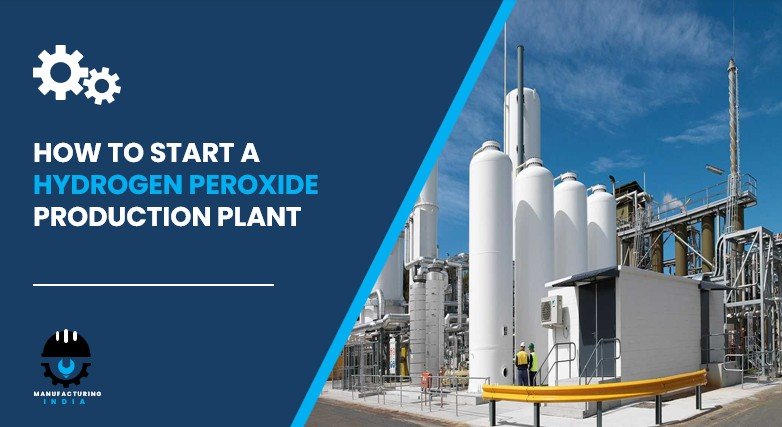
Setting up a hydrogen peroxide production plant in India represents a highly attractive investment proposition underpinned by robust and structurally growing demand from the pulp and paper bleaching industry, the textile processing sector, the electronics and semiconductor manufacturing industry, and the water and wastewater treatment sector. As environmental regulations increasingly favour chlorine-free oxidising agents over conventional chlorine-based chemicals, and as demand for ultra-high-purity electronic-grade hydrogen peroxide accelerates alongside global semiconductor capacity expansion, hydrogen peroxide available across technical, industrial, food, and electronic grades occupies an increasingly important position across a wide range of industrial applications. This growth trajectory, combined with well-established anthraquinone autoxidation process technology and strong downstream demand across chemical manufacturing, healthcare, and sanitation applications, creates a highly favourable manufacturing environment for new entrants with efficient production, purification, and stabilisation systems.
What is Hydrogen Peroxide?
Hydrogen peroxide (H2O2) is a pale blue liquid in its concentrated form, appearing colourless in dilute aqueous solution, and is recognised as one of the most powerful and versatile oxidising agents used across industry. Composed of two hydrogen atoms and two oxygen atoms, it decomposes naturally into water and oxygen, leaving no persistent chemical residue, which underpins its position as an environmentally preferred alternative to chlorine-based oxidants and bleaching agents.
Hydrogen peroxide is manufactured and sold across several concentration grades typically 35%, 50%, 60%, and 70% w/w depending on the end-use application, alongside specialised food-grade and ultra-high-purity electronic-grade variants. Beyond its established role as a bleaching agent in pulp, paper, and textile processing, hydrogen peroxide is used extensively as a cleaning and etching agent in semiconductor and electronics manufacturing, a disinfectant and sanitising agent in healthcare and household applications, an oxidant in water and wastewater treatment, and a key intermediate in chemical synthesis routes such as the hydrogen peroxide to propylene oxide (HPPO) process.
The global hydrogen peroxide market was valued at approximately USD 3.62 Billion in 2025 and is expected to reach USD 4.94 Billion by 2034, exhibiting a CAGR of 3.5% from 2026 to 2034, supported by tightening environmental regulations, expanding electronics manufacturing capacity, and growing wastewater treatment infrastructure investment.
Cost of Setting Up a Hydrogen Peroxide Production Plant
The total capital investment required to establish a hydrogen peroxide production plant is shaped by several key parameters: annual production capacity (typically ranging from 50,000 to 100,000 MT per annum), the concentration grades produced (technical and industrial grades versus higher-value food and electronic grades requiring additional purification infrastructure), the level of automation across hydrogenation, oxidation, extraction, and concentration sections, facility specification, and applicable regulatory and process-safety compliance requirements given the strong oxidising and hazardous nature of the product. Below is a structured breakdown of the major cost components.
1. Capital Expenditure (CapEx)
Total capital investment in a hydrogen peroxide production plant covers the following major heads:
Land and Site Development
This encompasses land acquisition or lease, site preparation, boundary development, and utilities connectivity. Site selection should prioritise proximity to hydrogen and process chemical supply infrastructure, reliable access to power and process water of suitable quality, strong road and rail logistics for inbound raw materials and outbound finished product distribution in specialised corrosion-resistant tankers, and a trained workforce experienced in hazardous chemical manufacturing. Compliance with industrial zoning regulations, fire and explosion safety norms applicable to strong oxidiser handling, and effluent and emission compliance frameworks must be assessed from project initiation, given the classification of concentrated hydrogen peroxide as a hazardous oxidising substance.
Civil Works and Construction
Building costs cover the main processing facility including the hydrogenation and oxidation reactor sections, extraction and separation area, purification and concentration section, working solution regeneration unit, product storage tank farm constructed with compatible passivated materials, automated packaging and dispatch infrastructure, quality control laboratory, administrative block, and utility infrastructure including compressed air and nitrogen blanketing systems, cooling water systems, steam generation, and effluent treatment plant. Construction must comply with applicable factory act requirements, fire and explosion-proofing norms for oxidiser handling areas, and hazardous chemical storage infrastructure guidelines.
Machinery and Equipment
Machinery represents the single largest CapEx component. Key equipment required for a hydrogen peroxide production plant includes:
- Hydrogenation Reactor Systems: Fixed-bed or fluidised-bed catalytic hydrogenation reactors using palladium-based catalysts to hydrogenate the anthraquinone working solution under controlled temperature and pressure conditions
- Catalyst Filtration Systems: Filtration units to separate and recover the palladium catalyst from the hydrogenated working solution prior to oxidation, preserving catalyst life and process economics
- Oxidation Towers: Air or oxygen sparged oxidation columns where the hydrogenated working solution reacts with oxygen to regenerate the anthraquinone carrier and form hydrogen peroxide within the organic working solution
- Extraction Systems: Countercurrent water extraction columns to transfer hydrogen peroxide from the organic working solution into an aqueous phase, yielding crude aqueous hydrogen peroxide solution
- Working Solution Regeneration Unit: Solvent recovery, drying, and regeneration systems to recondition the anthraquinone-solvent working solution for continuous recycling through the hydrogenation-oxidation loop
- Purification and Concentration Systems: Solvent extraction, ion exchange, and multi-stage vacuum distillation systems to remove trace organics and metal impurities and concentrate crude hydrogen peroxide to commercial grades of 35%, 50%, 60%, or 70%
- Stabiliser Dosing Systems: Precision dosing equipment for stannate, phosphonate, or other approved stabilisers that inhibit spontaneous decomposition of hydrogen peroxide during storage and transport
- Storage Tanks: Passivated aluminium, high-purity aluminium alloy, or specially lined stainless-steel storage tanks designed to prevent catalytic decomposition, along with temperature-controlled storage for higher-concentration grades
- Nitrogen and Compressed Air Systems: Inert gas blanketing systems for reactors and storage tanks to manage flammability and decomposition risk throughout the production and storage process
- Effluent Treatment Plant: Wastewater treatment systems to manage process effluent, including residual organics from the working solution circuit, prior to discharge in compliance with environmental regulations
- Quality Control Laboratory Equipment: Equipment for assay concentration, stability, acidity, and heavy metal impurity testing to verify compliance with technical, food-grade, or electronic-grade quality standards
- Automated Packaging Lines: Filling and capping lines for drums, IBC totes, and isotainers, along with bulk tanker loading facilities designed for safe handling of a strong oxidising liquid
- Material Handling and Warehousing: Corrosion-resistant piping, pumps, and warehousing infrastructure with segregated storage protocols appropriate for oxidising hazardous materials
Other Capital Costs
These include pre-operative expenses, commissioning charges, import duties on specialised reactor and purification equipment, staff training and competency development in hazardous chemical handling, initial raw material and consumable inventory for production commissioning, regulatory compliance setup including hazardous chemical licensing, and ISO 9001 / ISO 14001 / ISO 45001 quality, environmental, and occupational safety management system establishment costs.
Request a Sample Report for In-Depth Market Insights: https://www.imarcgroup.com/hydrogen-peroxide-manufacturing-plant-project-report/requestsample
2. Operational Expenditure (OpEx)
Raw materials principally hydrogen gas, the anthraquinone-based working solution carrier, process solvents, and palladium catalyst replenishment constitute the dominant operating cost, typically representing 60-70% of total OpEx. Utility costs, driven primarily by compressed air and nitrogen supply, cooling water, steam generation, and electricity consumption of the hydrogenation, oxidation, and concentration sections, account for 15-20% of OpEx. Labour, maintenance, quality control, packaging, transportation, catalyst regeneration, depreciation, taxes, and overhead costs constitute the remainder of the operating cost base.
3. Plant Capacity
The proposed hydrogen peroxide production facility is designed with an annual production capacity ranging between 50,000-100,000 MT, enabling economies of scale while maintaining operational flexibility. This capacity range supports a diversified product portfolio across standard technical and industrial grades (35% and 50% concentration), higher-concentration 60% and 70% grades for specialised industrial applications, and, where additional purification infrastructure is installed, food-grade and electronic-grade hydrogen peroxide serving semiconductor and high-purity chemical customers.
4. Profit Margins and Financial Projections
The project demonstrates healthy profitability potential under normal operating conditions. Financial projections encompass capital investment, operating costs, capacity utilisation ramp-up schedule, product mix between standard and high-purity grades, and forward demand outlook underpinned by tightening environmental regulation and semiconductor sector growth. A comprehensive feasibility analysis includes sensitivity analysis, Net Present Value (NPV), Internal Rate of Return (IRR), and Payback Period calculations. Gross profit margins for hydrogen peroxide production typically range from 25-35%, supported by stable industrial demand and efficient working solution recycling economics. Net profit margins of 10-15% are achievable with disciplined cost management, optimal capacity utilisation, and effective catalyst and working solution recovery.
Why Set Up a Hydrogen Peroxide Production Plant?
Environmental Regulations Accelerating Chlorine Replacement
Chlorine-based bleaching agents generate organochlorine compounds as by-products compounds classified as persistent organic pollutants under multiple international frameworks driving pulp, paper, and textile processors to transition toward chlorine-free bleaching using hydrogen peroxide. This regulatory tailwind is structurally reshaping demand patterns in favour of hydrogen peroxide across mature and emerging bleaching markets alike.
Rapid Growth in Electronics-Grade Hydrogen Peroxide Demand
Ultra-trace metal impurity specification electronic-grade hydrogen peroxide is increasingly critical for semiconductor wafer cleaning, printed circuit board etching, and display panel cleaning. Though representing a niche volume relative to industrial grades, electronics-grade hydrogen peroxide commands very high per-unit pricing and requires specialised production and packaging infrastructure, offering processors a meaningful margin-accretive growth avenue tied to global semiconductor capacity expansion.
Expanding Pulp, Paper, and Textile Bleaching Demand
Continued global demand for bleached pulp, paper products, and processed textiles sustains a large and stable base-load market for industrial-grade hydrogen peroxide. Its favourable environmental profile relative to chlorine-based alternatives and consistent bleaching performance make it the preferred oxidising agent across these established, high-volume end-use industries.
Growing Water and Wastewater Treatment Applications
Expanding municipal and industrial wastewater treatment infrastructure, particularly across developing regions, is creating new demand for hydrogen peroxide as an oxidant for odour control, disinfection, and advanced oxidation processes used to break down persistent organic contaminants, providing processors with a structurally growing and geographically diversified demand base.
Healthcare and Sanitation Chemical Demand
Hydrogen peroxide’s well-established role as a disinfectant, antiseptic, and sanitising agent across healthcare, food processing hygiene, and household cleaning applications provides a stable, non-cyclical demand base that complements the more industrial and cyclical bleaching and electronics segments of the market.
Favourable Investment Climate and Capacity Expansion Momentum
Continued large-scale investment by established global players in expanding hydrogen peroxide and electronic-grade capacity, including recent facility expansions and joint ventures targeting semiconductor, solar, and food packaging end-markets, reflects strong industry confidence in long-term category growth and provides new entrants with validated evidence of sustained demand across both traditional and high-purity segments.
Manufacturing Process Overview
Over 95% of global hydrogen peroxide is produced using the anthraquinone autoxidation (AO) process, a closed-loop cyclic process in which an anthraquinone derivative acts as a reusable carrier molecule. The key process stages are:
- Working Solution Preparation: An anthraquinone derivative, typically 2-ethylanthraquinone, is dissolved in a carefully selected mixture of organic solvents to form the working solution that circulates continuously through the production loop.
- Hydrogenation: The working solution is hydrogenated in the presence of a palladium catalyst under controlled temperature and pressure, converting the anthraquinone to its corresponding anthrahydroquinone form.
- Catalyst Filtration: The hydrogenated working solution is filtered to remove and recover the palladium catalyst before proceeding to oxidation, protecting catalyst activity and preventing contamination of the product stream.
- Oxidation: The filtered solution is contacted with air or oxygen in oxidation towers, where the anthrahydroquinone is oxidised back to anthraquinone, simultaneously generating hydrogen peroxide within the organic working solution.
- Extraction: Hydrogen peroxide is extracted from the organic working solution into purified water using countercurrent extraction columns, producing a crude aqueous hydrogen peroxide solution while the regenerated anthraquinone-bearing working solution is recycled back to the hydrogenation stage.
- Working Solution Regeneration: A slipstream of the working solution undergoes purification and regeneration to remove degradation by-products and restore anthraquinone concentration, sustaining process efficiency over extended operating cycles.
- Purification: Crude hydrogen peroxide solution is purified through solvent washing and ion exchange treatment to remove residual organics and trace metal impurities that could otherwise catalyse unwanted decomposition.
- Concentration: Purified hydrogen peroxide is concentrated through multi-stage vacuum distillation to reach target commercial concentrations of 35%, 50%, 60%, or 70%, with higher concentrations requiring additional distillation stages and stringent contamination control.
- Stabilisation: Approved stabilisers are dosed into the concentrated product to inhibit trace-metal-catalysed decomposition, extending shelf life and ensuring product stability throughout storage and transport.
- Quality Control: Finished hydrogen peroxide is tested for assay concentration, stability, acidity, and heavy metal content to verify compliance with technical, food-grade, or electronic-grade quality specifications prior to release.
- Packaging and Dispatch: Hydrogen peroxide is packed in corrosion-resistant drums, IBC totes, or dispatched via bulk isotainers and tankers, with strict segregation and labelling protocols reflecting its classification as a hazardous oxidising material.
Key Applications of Hydrogen Peroxide
The hydrogen peroxide market serves several major end-use segments across industrial, environmental, and healthcare sectors:
- Pulp and Paper Industry: Pulp and Paper Industry: Hydrogen peroxide is widely used as a chlorine-free bleaching agent for chemical and mechanical pulp, supporting the industry’s shift away from chlorine-based bleaching chemistry.
- Textile Industry: Textile Industry: The compound serves as a bleaching agent for cotton and other natural and synthetic fibres, valued for its effectiveness and reduced environmental impact relative to chlorine-based alternatives.
- Electronics and Semiconductor Manufacturing: Electronics and Semiconductor Manufacturing: Ultra-high-purity electronic-grade hydrogen peroxide is a critical cleaning and etching agent for semiconductor wafers, printed circuit boards, and display panels.
- Water and Wastewater Treatment: Water and Wastewater Treatment: Hydrogen peroxide is used as an oxidant for disinfection, odour control, and advanced oxidation processes targeting persistent organic contaminants in municipal and industrial effluent.
- Healthcare and Sanitation: Healthcare and Sanitation: Widely recognised for its antiseptic and disinfectant properties, hydrogen peroxide is used in wound care, surface disinfection, and hygiene products across healthcare and household settings.
- Chemical Synthesis: Chemical Synthesis: Hydrogen peroxide is a key intermediate in chemical manufacturing routes such as the hydrogen peroxide to propylene oxide (HPPO) process, and in the production of other peroxide-based specialty chemicals.
Global Hydrogen Peroxide Market Outlook
The global hydrogen peroxide market was valued at approximately USD 3.62 Billion in 2025. According to IMARC Group estimates, the market is expected to reach USD 4.94 Billion by 2034, exhibiting a CAGR of 3.5% from 2026 to 2034. The hydrogen peroxide market benefits from multiple structural demand drivers:
- Tightening environmental regulations encouraging pulp, paper, and textile processors to replace chlorine-based bleaching chemistry with chlorine-free hydrogen peroxide
- Rapid expansion of global semiconductor and electronics manufacturing capacity, driving strong growth in demand for ultra-high-purity electronic-grade hydrogen peroxide
- Continued investment in municipal and industrial wastewater treatment infrastructure, particularly across developing regions, supporting demand for hydrogen peroxide as an oxidant
- Sustained healthcare, sanitation, and hygiene product demand leveraging the antiseptic and disinfectant properties of hydrogen peroxide
- Growing adoption of hydrogen peroxide as a feedstock in chemical synthesis routes such as the HPPO process for propylene oxide production
- Asia-Pacific emerging as a dominant regional market, supported by strong industrial growth, expanding electronics manufacturing, and favourable regulatory frameworks
- Continued large-scale capacity expansions and joint ventures by established global players targeting semiconductor, solar, and food packaging end-markets, reflecting confidence in long-term category growth
Major players in the global hydrogen peroxide industry include Solvay, Evonik Industries, Arkema, Nouryon, Mitsubishi Gas Chemical Company, and Kemira, serving end-use sectors including the pulp and paper industry, the textile industry, the electronics and semiconductor industry, the water and wastewater treatment sector, and the healthcare and sanitation industry.
Latest Industry Developments
- September 2025: Solvay commissioned a major expansion at its Zhenjiang facility, doubling annual output of high-purity electronic-grade hydrogen peroxide. The move supports rising semiconductor demand, where ultra-clean H2O2 is vital for chip cleaning and etching, and strengthens Solvay’s global electronic chemicals footprint serving semiconductors, displays, photovoltaics, and advanced microelectronics manufacturing.
- January 2025: Evonik and Fuhua Tongda Chemicals formed a new joint venture, Evonik Fuhua New Materials (Sichuan) Co., Ltd., to manufacture and market specialty hydrogen peroxide in China. Backed by Evonik’s peroxide technology and Fuhua’s local infrastructure, the venture will supply high-purity H2O2 for solar, semiconductor, and food packaging applications, with commercial deliveries expected in 2026.
Licenses and Regulatory Requirements
Establishing a hydrogen peroxide production unit requires a range of approvals and certifications, which may vary by country and jurisdiction, including:
- Business registration and company incorporation under applicable company law
- Factory License under applicable state Factories Act provisions for manufacturing operations
- Compliance under the Manufacture, Storage and Import of Hazardous Chemicals Rules given the classification of concentrated hydrogen peroxide as a strong oxidising and hazardous substance
- Explosive and hazardous chemical storage licenses from the Petroleum and Explosives Safety Organisation (PESO) or the equivalent national authority
- Pollution Control Board Clearances Consent to Establish (CTE) and Consent to Operate (CTO) for manufacturing operations involving effluent generation
- Environmental Impact Assessment (EIA) clearance for chemical manufacturing facilities above applicable capacity thresholds
- FSSAI (Food Safety and Standards Authority of India) License, where food-grade hydrogen peroxide is manufactured for food-contact applications
- ISO 9001:2015 Quality Management System Certification for quality management infrastructure compliance
- ISO 14001 Environmental Management System Certification for environmental compliance infrastructure
- ISO 45001 Occupational Health and Safety Management System Certification for manufacturing worker safety in hazardous chemical handling areas
- Weights and Measures (Legal Metrology) registration for packaged commodity labelling and net quantity declaration
- Export-Import Code (IEC) for international market access
- Trademark and Brand Registration for proprietary branded product launch
Key Challenges to Consider
Hazardous Material Handling and Process Safety
Concentrated hydrogen peroxide is a powerful oxidiser that presents fire, explosion, and decomposition hazards requiring flameproof equipment, inert gas blanketing, passivated storage materials, and rigorous safety protocols compliant with hazardous chemical handling regulations. Any lapse in stability control or contamination management can trigger uncontrolled exothermic decomposition, making continuous investment in process safety systems and audit compliance a non-negotiable operational requirement.
Feedstock and Working Solution Cost Volatility
The anthraquinone-based working solution, process solvents, and palladium catalyst represent a significant share of operating costs, and their availability and pricing can be subject to global supply chain fluctuations. Efficient working solution regeneration and catalyst recovery are critical to controlling costs, as losses in the recycling loop directly erode process economics.
Storage and Transportation Complexity
Hydrogen peroxide requires temperature-controlled, contamination-free storage in passivated containers, with concentration-dependent stability considerations that complicate logistics relative to more stable industrial chemicals. Transportation in specialised corrosion-resistant tankers and containers, along with strict segregation protocols, adds meaningful complexity and cost to distribution operations.
Competition from Alternative Oxidising and Bleaching Agents
Hydrogen peroxide competes with sodium hypochlorite, chlorine dioxide, ozone, and peracetic acid across various bleaching, disinfection, and oxidation applications. Shifts in relative pricing or regulatory treatment of these alternative agents can affect hydrogen peroxide demand and pricing in price-sensitive industrial segments.
Capital Intensity of Electronic-Grade Purification Infrastructure
While standard technical and industrial grade production can be established at moderate capital investment, producing ultra-high-purity electronic-grade hydrogen peroxide requires substantial incremental investment in specialised purification, trace-metal control, and cleanroom-compatible packaging infrastructure. New entrants must carefully evaluate the phasing of investment between standard-grade operations and higher-value electronic-grade capacity based on available capital and target markets.
Environmental Compliance and Effluent Management
Hydrogen peroxide manufacturing generates process effluent containing residual organics from the working solution circuit that must be treated to meet discharge standards. Maintaining consistent compliance with evolving environmental regulations requires ongoing investment in effluent treatment infrastructure and monitoring systems.
Frequently Asked Questions (FAQs)
1. How much does it cost to set up a hydrogen peroxide production plant?
The total investment depends on plant capacity (50,000-100,000 MT per annum), the concentration grades produced (standard technical and industrial grades versus higher-value food and electronic grades), automation level, facility specification, location, and target market certifications. Costs cover land, civil construction (reactor sections, extraction and concentration areas, storage tank farm, quality laboratory, utilities), machinery (hydrogenation reactors, oxidation towers, extraction and concentration systems, stabiliser dosing equipment, packaging lines), quality certifications, working capital, and regulatory compliance. A comprehensive feasibility study from IMARC Group provides detailed, capacity-specific cost estimates covering all CapEx and OpEx components.
2. Is hydrogen peroxide production a profitable business in 2026?
Yes. Sustained demand from the pulp and paper, textile, electronics, and water treatment sectors combined with gross margins of 25-35% and net profit margins of 10-15% make hydrogen peroxide production financially attractive. Growing demand for higher-value electronic-grade hydrogen peroxide offers meaningful margin enhancement opportunities above what standard industrial grades alone would generate.
3. What machinery and equipment are required for a hydrogen peroxide production plant?
Key equipment includes hydrogenation reactors with palladium catalyst systems, catalyst filtration units, oxidation towers, extraction columns, working solution regeneration systems, purification and multi-stage vacuum concentration systems, stabiliser dosing equipment, passivated storage tanks, nitrogen and compressed air systems, effluent treatment plant, quality control laboratory equipment, and automated packaging lines for drums, IBC totes, and bulk tanker dispatch.
4. What licenses and approvals are required?
Required approvals include company registration, Factory License, compliance under the Manufacture, Storage and Import of Hazardous Chemicals Rules, PESO or equivalent hazardous chemical storage licensing, Pollution Control Board clearances, Environmental Impact Assessment clearance, and ISO 9001 / ISO 14001 / ISO 45001 management system certification. Hazardous chemical handling compliance is a mandatory legal prerequisite given hydrogen peroxide’s classification as a strong oxidising substance.
5. How long does it take to commission a hydrogen peroxide production plant?
Typically, 12-24 months from project initiation to commercial production launch, depending on project scale, facility construction timeline, equipment procurement lead times for reactor and purification systems, regulatory approvals, and hazardous chemical licensing and safety certification timelines, which should be initiated early in the project to avoid delays to commercial launch.
6. What are the key raw materials for hydrogen peroxide production?
The primary inputs are hydrogen gas, an anthraquinone derivative such as 2-ethylanthraquinone that serves as a recyclable working solution carrier, organic solvents for the working solution mixture, and palladium catalyst for the hydrogenation stage. Other key inputs include stabilisers to prevent decomposition and packaging materials including drums, IBC totes, and isotainers for finished product.
7. What is the break-even period for a hydrogen peroxide production plant?
The break-even period generally depends on capacity utilisation ramp-up trajectory, the product mix between standard and electronic grades, working solution and catalyst recovery efficiency, and offtake arrangements with industrial customers. Securing long-term supply agreements with pulp and paper, textile, or electronics manufacturers significantly improves revenue predictability and supports faster break-even achievement.
8. What are the main grades of hydrogen peroxide and their applications?
The principal commercial grades are 35%, 50%, 60%, and 70% concentration technical and industrial grades used in bleaching, water treatment, and chemical synthesis applications, alongside food-grade hydrogen peroxide for food-contact sanitation and ultra-high-purity electronic-grade hydrogen peroxide for semiconductor and display manufacturing, which commands premium pricing due to its stringent trace-metal impurity specifications.
9. What government incentives are available for hydrogen peroxide processors?
Processors may benefit from chemical sector industrial investment incentives, state-level capital subsidies for specialty and industrial chemical manufacturing units, infrastructure support under chemical and petrochemical industrial parks, and export promotion benefits for hydrogen peroxide and downstream peroxide-based specialty chemical exports.
10. How does hydrogen peroxide production compare to other industrial chemical manufacturing in terms of setup?
Compared to many industrial chemical processes, hydrogen peroxide production via the anthraquinone autoxidation process involves a distinctive closed-loop working solution recycling system and requires specialised process-safety infrastructure given the product’s strong oxidising properties. While the core reaction technology is well-established and broadly standardised across licensors globally, processors targeting electronic-grade output require materially higher investment in trace-metal control and purification infrastructure relative to standard industrial-grade production.
Key Takeaways for Investors
The hydrogen peroxide production industry represents a structurally resilient and financially attractive investment opportunity positioned at the intersection of tightening environmental regulation, rapid semiconductor sector expansion, and growing water treatment infrastructure investment. Stable demand from pulp and paper, textile, healthcare, and sanitation channels provides resilience against single-segment demand volatility, while rapidly growing electronics-grade demand offers meaningful margin enhancement beyond standard industrial grade sales alone. The well-established anthraquinone autoxidation process provides processors with proven, scalable production technology, while continued large-scale capacity expansions and joint ventures by established global players reflect strong confidence in the long-term growth and profitability of the category. The scalable nature of the value chain from standard industrial-grade operations to specialised electronic-grade production allows investors to phase capital deployment according to risk appetite and target market positioning.
About the Author