A dry yeast manufacturing plant setup in India presents a compelling investment case for the Indian market, driven by strong demand from baking and confectionery, food and beverage, brewing and fermentation, animal feed, and bioethanol and industrial biotechnology sectors. As a fundamental leavening and fermentation ingredient, dry yeast underpins commercial baking, packaged foods, and processed food production, making it a critical input for India’s expanding food economy.
India’s food processing sector reached Rs. 30,49,800 crore (USD 354.5 Billion) in 2024 and is expected to grow to Rs. 45,84,415 crore (USD 535 Billion) by the end of FY26, according to IBEF. This growth, along with expanding urbanization, growing commercial bakeries, and rising consumption of packaged and convenience foods, is fuelling sustained demand for reliable, locally produced fermentation ingredients and supporting government initiatives around domestic food-ingredient production.
With gross margins of 26-34% and net margins of 10-16%, backed by steady demand from India’s growing food processing sector and an established fermentation-based process, this investment offers a cost-competitive and financially viable opportunity for entrepreneurs targeting the bakery, brewing, and animal feed segments.
What is Dry Yeast?
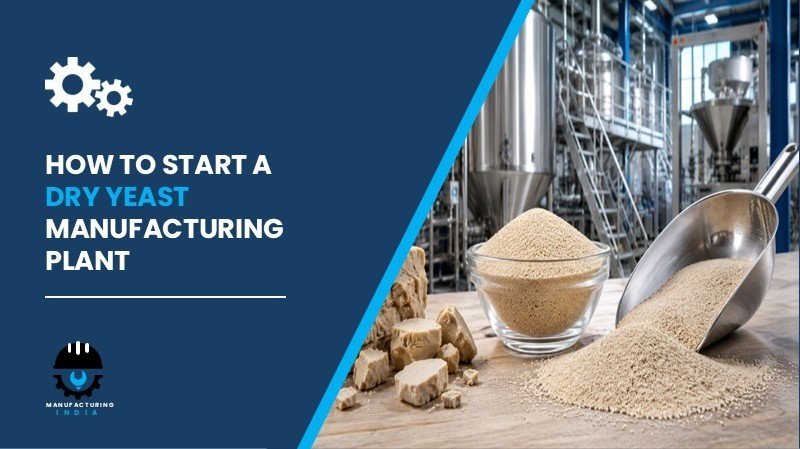
Dry yeast is a dehydrated form of the single-celled fungus Saccharomyces cerevisiae, commonly used as a leavening agent in baking. Sold as tiny yeast granules, it consists of living yeast cells placed in a dormant state through moisture removal. When mixed with warm liquid and a food source like sugar, the cells rehydrate and ferment sugars, producing carbon dioxide gas that causes dough to rise, giving bread and pizza a light, airy texture. It is highly shelf-stable and eliminates the need for refrigeration.
The dry yeast manufacturing process is based on fermentation of molasses using diammonium phosphate/ammonia and phosphoric acid, followed by yeast separation, washing, dewatering, drying, and packaging. End-use industries include baking and confectionery, food and beverage, brewing and fermentation, animal feed, and bioethanol and industrial biotechnology, with the product serving as a leavening agent in bread, a fermentation agent in beverages and bioethanol, a nutritional supplement in animal feed, and a source of yeast extracts.
Cost of Setting Up a Dry Yeast Manufacturing Plant in India
Setup cost depends on capacity, technology, location, automation level, and regulatory compliance.
1. Capital Expenditure (CapEx)
Land and site development costs cover acquisition, registration, boundary development, and site preparation, with locations ideally offering easy access to molasses, diammonium phosphate/ammonia, and phosphoric acid, plus proximity to target markets. Civil works cover the production shed, quality control laboratory, raw material and finished goods storage, and administrative space, planned for workflow efficiency and future expansion.
Key machinery required includes:
- Molasses storage tanks
- Nutrient dosing systems
- Fermentation vessels
- Aeration systems
- Centrifuges
- Yeast separators
- Washing units
- Dewatering systems
- Drying equipment
- Packaging machines
Machinery costs account for the largest share of total capital expenditure for a dry yeast manufacturing plant, with the exact figure determined by production scale and automation level. Other capital costs include effluent treatment systems and pre-operative and commissioning expenses ahead of commercial launch.
Request a Sample Report for In-Depth Market Insights: https://www.imarcgroup.com/dry-yeast-manufacturing-plant-project-report/requestsample
2. Operational Expenditure (OpEx)
Raw material cost is the largest operating expense for a dry yeast manufacturing plant, with molasses, diammonium phosphate/ammonia, and phosphoric acid together accounting for approximately 45-55% of OpEx. Long-term contracts with reliable, nearby suppliers help stabilize pricing and ensure consistent supply. Utility costs, covering electricity, water, and steam, account for approximately 18-24% of OpEx. Other operating costs include transportation, packaging, salaries and wages, depreciation, taxes, and repairs and maintenance. By the fifth year, total operating costs are expected to rise substantially due to inflation, market fluctuations, rising raw material costs, and supply chain shifts.
3. Plant Capacity
Capacity typically ranges between 5,000-20,000 MT annually, allowing economies of scale with operational flexibility. It can be customized to investor requirements, and profitability generally improves with higher capacity utilization.
4. Profit Margins and Financial Projections
Financial projections are built on capital investment, operating costs, capacity utilization, pricing trends, and demand outlook, and include ROI, net present value (NPV), internal rate of return (IRR), and payback period. Gross margins for a dry yeast manufacturing plant typically range between 26-34%, while net margins range between 10-16%, reflecting healthy profitability under normal operating conditions.
Why Set Up a Dry Yeast Plant in India?
Crucial Food and Fermentation Ingredient: Dry yeast is fundamental to bread, bakery products, pizza, confectionery, alcoholic beverages, and industrial fermentation, making this an essential contributor to food production in India.
Moderate but Justifiable Entry Barriers: Capital needs are lower than large-scale food processing, though strict quality, controlled fermentation, specialized drying, and food safety requirements favour experienced, quality-focused producers.
Megatrend Alignment: Rapid growth in packaged foods, bakery products, convenience foods, home baking, foodservice, and fermented beverages is driving consistent demand for shelf-stable yeast products.
Policy and Regulatory Tailwinds: Government initiatives supporting food processing, agricultural value addition, packaged food production, cold-chain development, and domestic ingredient production indirectly support demand.
Active Industry Investment: In July 2026, Angel Yeast showcased its yeast protein innovations at the Growth Asia Summit 2026 in Singapore (July 8-10), where its General Manager of Nutrition and Health Technology Center presented on the company’s protein portfolio and R&D progress, signalling continued innovation momentum industry-wide.
Localization and Dependability in Supply Chains: Bakeries, food producers, and distributors increasingly favour local, dependable suppliers to shorten lead times, ensure availability, reduce import dependence, and stabilize input costs.
Dry Yeast Manufacturing Process – Step by Step
This unit uses fermentation of molasses as the primary production method, structured around a defined sequence of operations.
- Molasses Storage and Preparation: Molasses is held in storage tanks before entering fermentation.
- Nutrient Dosing: Diammonium phosphate/ammonia and phosphoric acid are dosed via nutrient dosing systems to support cell growth.
- Fermentation: Molasses ferments in fermentation vessels, with aeration systems maintaining oxygen levels for cell multiplication.
- Yeast Separation: Centrifuges and yeast separators extract yeast biomass from the fermentation broth.
- Washing: Washing units remove residual impurities from the separated yeast.
- Dewatering: Dewatering systems reduce moisture content in the biomass.
- Drying: Drying equipment removes remaining moisture, forming the stable, dormant granular product.
- Packaging and Dispatch: Packaging machines pack the finished product for dispatch to baking, food and beverage, brewing, animal feed, and biotechnology customers.
Key Applications
- Food & Beverage: Used in bread, bakery products, pizza, cakes, and other baked goods as a leavening agent.
- Brewing & Alcoholic Beverages: Used as a fermentation agent in beer, wine, and other fermented beverages.
- Animal Feed: Used as a nutritional supplement in livestock, poultry, and aquaculture feed.
- Food Processing: Used in fermented foods, nutritional products, and yeast-based ingredients.
Leading Manufacturers
Leading manufacturers in the global dry yeast industry include multinational companies with extensive production capacities and diverse application portfolios.
- Lesaffre
- AB Mauri
- Angel Yeast
- Lallemand Inc.
- Red Star Yeast
Timeline to Start the Plant
- Feasibility study and project report preparation
- Land acquisition and site development
- Regulatory approvals and environmental clearances
- Factory licence and fire safety compliance
- Machinery procurement and installation
- Raw material supplier agreements and supply chain setup
- Trial production and quality testing
- Commercial production launch
Licences and Regulatory Requirements
Starting a dry yeast manufacturing unit in India requires several approvals:
- Business registration (Proprietorship, LLP, or Pvt Ltd)
- Factory Licence under the Factories Act
- Environmental Clearance from State Pollution Control Board
- GST Registration
- Fire Safety NOC
- Hazardous/Chemical compliance for handling ammonia and phosphoric acid
- Effluent Treatment Plant (ETP) operational clearance
- Occupational Health and Safety compliance
Key Challenges to Consider
High Capital Requirements: Machinery, land, and civil works together demand significant upfront investment for a dry yeast manufacturing plant.
Raw Material Price Volatility: Molasses, diammonium phosphate/ammonia, and phosphoric acid make up 45-55% of operating costs, so price swings directly affect profitability.
Regulatory Compliance: Food safety, environmental clearances, and effluent treatment requirements demand ongoing compliance investment.
Technology or Innovation Pressure: Advances in fermentation technology, strain optimization, and sustainable processes are continuously reshaping the dry yeast manufacturing process and its cost benchmarks.
Competition: Established players such as Lesaffre, AB Mauri, Angel Yeast, Lallemand Inc., and Red Star Yeast hold significant market presence, requiring new entrants to compete on quality and cost.
Skilled Manpower: Controlled fermentation, specialized drying, and microbial consistency requirements make skilled technical staff essential.
Frequently Asked Questions
1. How much does it cost to set up a dry yeast manufacturing plant in India?
Cost depends on capacity, technology, location, and automation level, with machinery forming the largest share of capital expenditure.
2. Is dry yeast manufacturing profitable in India in 2026?
Yes, gross margins typically range between 26-34% and net margins between 10-16% under normal operating conditions.
3. What machinery is required for a dry yeast plant in India?
Key machinery includes molasses storage tanks, nutrient dosing systems, fermentation vessels, aeration systems, centrifuges, yeast separators, washing units, dewatering systems, drying equipment, and packaging machines.
4. What licences and approvals are required to start a dry yeast plant in India?
Requirements include business registration, Factory Licence, Environmental Clearance, GST Registration, Fire Safety NOC, chemical handling compliance, ETP clearance, and occupational health and safety compliance.
5. What raw materials are needed for dry yeast manufacturing?
The primary raw materials are molasses, diammonium phosphate/ammonia, and phosphoric acid, accounting for 45-55% of operating expenses.
6. What are the environmental compliance requirements for a dry yeast plant in India?
Requirements include Environmental Clearance from the State Pollution Control Board and an operational Effluent Treatment Plant.
7. What is the best location to set up a dry yeast plant in India?
Ideal sites offer easy access to molasses, diammonium phosphate/ammonia, and phosphoric acid, proximity to markets, strong infrastructure, and zoning compliance.
8. What is the break-even period for this type of plant in India?
Break-even is determined through financial analysis covering capital investment, operating costs, income projections, and NPV, specific to chosen capacity.
9. What government incentives are available for manufacturers in India?
Government initiatives supporting food processing, value addition, and domestic ingredient production indirectly benefit manufacturers in India.
Key Takeaways for Investors
This type of plant taps into consistent demand from India’s baking, food and beverage, brewing, animal feed, and bioethanol and biotechnology sectors. Financial viability holds across the 5,000-20,000 MT capacity range, with gross margins of 26-34% and net margins of 10-16% supporting healthy returns. With India’s food processing sector valued at Rs. 30,49,800 crore (USD 354.5 Billion) in 2024 and projected to reach Rs. 45,84,415 crore (USD 535 Billion) by FY26-end, demand for locally produced fermentation ingredients is set to remain strong as commercial baking and processed food industries continue to expand.
About the Author