Setting up an almond butter manufacturing plant in India represents a highly attractive investment proposition underpinned by rising health awareness, growing demand for plant-based protein sources, expanding adoption of clean-label foods, and increasing consumption of nut-based spreads across households and foodservice outlets. As urbanisation accelerates, disposable incomes rise, and organised retail and e-commerce channels penetrate deeper into consumer markets, almond butter available in natural, unsweetened, flavoured, organic, and fortified forms is transitioning from a niche specialty product into a mainstream pantry staple. This growth trajectory, combined with strong compatibility with vegan and ketogenic diets and expanding use across bakery, confectionery, and foodservice applications, creates a highly favourable manufacturing environment for new entrants with efficient processing and quality systems.
What is Almond Butter?
Almond butter is a smooth or crunchy paste made by grinding roasted or raw almonds into a semi-solid spread, typically without the use of artificial additives. As a product derived from a nutrient-dense nut, it is prized for its high content of healthy unsaturated fats, dietary fibre, protein, vitamins, and minerals. Almond butter is a highly versatile product available in natural, unsweetened, flavoured, organic, and fortified variants, and is widely accepted by health-conscious consumers owing to its clean-label positioning, gluten-free profile, and compatibility with vegan and ketogenic diets. Its long shelf life, ease of packaging, and broad culinary applicability support strong performance across both retail and industrial distribution channels.
The global almond butter market was valued at approximately USD 1.54 Billion in 2025 and is expected to reach USD 2.78 Billion by 2034, exhibiting a CAGR of 6.8% from 2026 to 2034, supported by rising health awareness, expanding plant-based diet adoption, and growing consumption of nut-based spreads.
Cost of Setting Up an Almond Butter Manufacturing Plant
The total capital investment required to establish an almond butter manufacturing plant is shaped by several key parameters: annual production capacity (typically ranging from 2,000 to 5,000 MT per annum), the processing route adopted (roasted versus raw/blanched almond processing, single-stage versus multi-stage grinding), the level of automation across roasting, grinding, and packaging sections, facility specification, raw material sourcing strategy, and applicable regulatory and food safety compliance requirements. Below is a structured breakdown of the major cost components.
1. Capital Expenditure (CapEx)
Total capital investment in an almond butter manufacturing plant covers the following major heads:
Land and Site Development
This encompasses land acquisition or lease, site preparation, boundary development, and utilities connectivity. Site selection should prioritise proximity to almond sourcing regions or import logistics hubs to ensure a steady, cost-effective supply of raw almonds, along with proximity to target retail and foodservice markets to minimise distribution costs. Access to reliable power, water, and steam infrastructure for roasting and processing operations, strong road and logistics connectivity for inbound almonds and outbound finished product, and a trained workforce for plant operations and quality control are critical site selection criteria. Compliance with industrial zoning regulations, food safety manufacturing standards, and effluent and waste management frameworks must be assessed from project initiation.
Civil Works and Construction
Building costs cover the main processing facility including the almond reception and storage section, roasting and blanching house, grinding and homogenisation area, filling and packaging line, quality control laboratory, administrative block, and utility infrastructure including boiler or thermal fluid heater, power backup, cooling systems, and effluent treatment facilities. Construction must comply with applicable factory act requirements, food safety manufacturing standards, and FSSAI infrastructure guidelines.
Machinery and Equipment
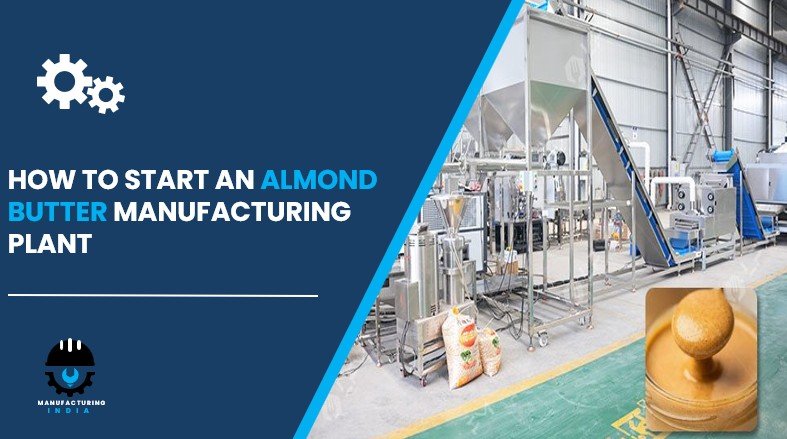
Machinery represents the single largest CapEx component. Key equipment required for an almond butter manufacturing plant includes:
- Almond Cleaning and Grading Systems: Intake hoppers, destoners, magnetic separators, and grading equipment to remove foreign matter, shell fragments, and undersized or damaged kernels from incoming almonds
- Roasting and Blanching Equipment: Continuous or batch roasters for dry roasting almonds to develop flavour and facilitate skin removal, along with blanching systems for producing skin-free almond butter variants
- Cooling and Conveying Systems: Cooling conveyors and bucket elevators to bring roasted almonds to processing temperature before grinding
- Grinding and Colloid Milling Systems: Stone grinders or colloid mills that reduce roasted almonds into a smooth or crunchy paste through single- or multi-stage grinding, with texture control for natural, crunchy, and creamy variants
- Homogenisation and Mixing Systems: Homogenisers and jacketed mixing vessels for blending in oils, salt, sweeteners, or stabilisers where required, and ensuring a uniform, stable emulsion
- Deaeration and Holding Tanks: Vacuum deaeration systems and temperature-controlled holding tanks to remove entrapped air and maintain product consistency prior to filling
- Automated Filling and Packaging Lines: Filling, capping, labelling, and cartoning lines for retail jars, pouches, and tubs, along with bulk filling facilities for foodservice and industrial customers
- Quality Control Laboratory Equipment: Equipment for moisture content, peroxide value, aflatoxin, particle size, and microbiological testing to verify compliance with food safety and quality standards
- Material Handling and Warehousing: Conveyors, storage silos for raw almonds, and finished goods warehousing with FIFO stock management
Other Capital Costs
These include pre-operative expenses, commissioning charges, import duties on specialised roasting and grinding equipment, staff training and competency development, initial raw material and consumable inventory for production commissioning, regulatory compliance setup including FSSAI licensing, BIS certification where applicable, and ISO 22000 / HACCP food safety management system establishment costs.
Request a Sample Report for In-Depth Market Insights: https://www.imarcgroup.com/almond-butter-manufacturing-plant-project-report/requestsample
2. Operational Expenditure (OpEx)
Raw materials, principally almonds procured from growers, processors, or import channels, along with optional oils, salt, sweeteners, and packaging consumables, constitute the dominant operating cost, typically representing 85–90% of total OpEx. Utility costs, driven primarily by roasting energy, grinding equipment power consumption, and refrigeration or cooling operations, account for 5–8% of OpEx. Labour, maintenance, quality control, packaging, transportation, depreciation, taxes, and overhead costs constitute the remainder of the operating cost base.
3. Plant Capacity
The proposed almond butter manufacturing facility is designed with an annual production capacity ranging between 2,000–5,000 MT, enabling economies of scale while maintaining operational flexibility. This capacity range supports a diversified product portfolio of natural, crunchy, smooth, flavoured, and organic almond butter, serving household retail, foodservice, and industrial ingredient customers.
4. Profit Margins and Financial Projections
The project demonstrates healthy profitability potential under normal operating conditions. Financial projections encompass capital investment, operating costs, capacity utilisation ramp-up schedule, product mix between natural, flavoured, and organic variants, and forward demand outlook underpinned by rising health-conscious consumption and plant-based diet adoption. A comprehensive feasibility analysis includes sensitivity analysis, Net Present Value (NPV), Internal Rate of Return (IRR), and Payback Period calculations. Gross profit margins for almond butter manufacturing typically range from 25–35%, supported by stable demand, premium positioning, and efficient raw material utilisation. Net profit margins of 10–15% are achievable with disciplined cost management, optimal capacity utilisation, and effective product mix optimisation.
Why Set Up an Almond Butter Manufacturing Plant?
Rising Health and Wellness Awareness
Increasing consumer focus on protein intake, heart health, and balanced nutrition is driving sustained demand for almond butter, which is widely recognised for its healthy fat profile, dietary fibre, and micronutrient content. As health-conscious consumers increasingly replace conventional spreads with nut-based alternatives, almond butter is transitioning from a niche specialty product toward a mainstream household and foodservice staple, supporting steady volume growth across retail and institutional channels.
Clean-Label and Natural Product Demand
Almond butter production aligns closely with the clean-label trend, favouring minimally processed formulations with recognisable, natural ingredients. Growing consumer scrutiny of ingredient lists and preference for products free from artificial additives, preservatives, and hydrogenated oils positions almond butter favourably relative to conventional processed spreads.
Premium Pricing and Margin Potential
Almond butter commands premium pricing relative to conventional spreads owing to its health positioning, specialty food status, and the relatively higher cost of its primary raw material. This pricing power, combined with gross margins of 25–35%, supports attractive project economics for processors with efficient operations and strong brand positioning.
Expanding Vegan and Plant-Based Diet Adoption
Growing global acceptance of dairy-free and plant-based dietary patterns is expanding the addressable market for almond butter as a protein-rich, plant-based alternative to conventional dairy and legume-based spreads, supporting sustained category volume growth.
Growing Foodservice and HoReCa Demand
The premium appeal of almond butter makes it a favoured ingredient among restaurants and cafés for smoothies, breakfast menus, and specialty recipes. Expanding use in bakery and confectionery formulations, including cookies, cakes, and energy bar fillings, is creating consistent industrial demand for functional, nutrition-forward ingredients.
Scalable and Phased Production Model
The almond butter processing value chain, spanning roasting, grinding, and packaging, allows processors to begin operations at a moderate scale and expand capacity as volumes grow. This phased investment approach allows new entrants to manage capital deployment while building operational expertise and brand recognition.
Urbanisation and Rising Disposable Incomes
Rising urban lifestyles, increasing reliance on convenient and health-oriented packaged foods, and growing penetration of organised retail and e-commerce channels are supporting higher consumption of branded nut spreads, including almond butter, in city-based households and foodservice channels, providing a structural demand tailwind for processors with strong retail and digital distribution.
Manufacturing Process Overview
The almond butter manufacturing operation transforms raw almonds into a finished spreadable product through a sequence of cleaning, roasting, grinding, and packaging operations. The key process stages are:
- Raw Material Reception and Cleaning: Incoming almonds are screened, destoned, and cleaned to remove shell fragments, foreign matter, and damaged kernels prior to processing.
- Grading and Sorting: Almonds are graded by size and quality to ensure uniform roasting and consistent finished product texture.
- Roasting or Blanching: Almonds are dry-roasted to develop flavour and facilitate skin removal, or blanched for skin-free variants, depending on the target product profile.
- Cooling: Roasted almonds are cooled on conveyors to bring them to the optimal temperature for grinding and prevent premature oil separation.
- Grinding and Paste Formation: Cooled almonds are ground using stone grinders or colloid mills, in single or multiple passes, to achieve the desired smooth or crunchy texture.
- Homogenisation and Mixing: The almond paste is homogenised and blended with optional oils, salt, sweeteners, or stabilisers to achieve a uniform, stable consistency and consumer-preferred mouthfeel.
- Deaeration: The product is passed through a vacuum deaeration system to remove entrapped air, improving shelf stability and fill accuracy.
- Quality Control: Finished almond butter is tested for moisture content, peroxide value, particle size, microbiological quality, and other parameters to verify compliance with food safety and quality standards before release for packaging.
- Filling and Packaging: Almond butter is filled into retail jars, pouches, or tubs for household and institutional sale, or dispatched in bulk containers to foodservice and industrial customers.
- Storage and Dispatch: Packaged product is stored under controlled conditions and dispatched to distribution and retail channels.
Key Applications of Almond Butter
The almond butter market serves several major end-use segments across food processing, foodservice, and retail sectors:
- Food and Beverage Industry: Almond butter is a major ingredient in spreads, sauces, snacks, and ready-to-eat formulations, contributing nutritional value and flavour.
- Bakery and Confectionery Industry: It serves as a functional ingredient in cookies, cakes, and fillings for energy bars, improving overall texture and nutritional profile.
- Foodservice and HoReCa Sector: The premium appeal of almond butter makes it a favourite among restaurants and cafés for smoothies, breakfast menus, and specialty recipes.
- Sports Nutrition Products: Its high protein and healthy fat content supports its use in energy bars, recovery shakes, and functional nutrition formulations.
- Household and Retail Segment: Consumers are incorporating more almond butter into their daily dietary staples for breakfast spreads and health-focused meal preparations.
Global Almond Butter Market Outlook
The global almond butter market was valued at approximately USD 1.54 Billion in 2025. According to IMARC Group estimates, the market is expected to reach USD 2.78 Billion by 2034, exhibiting a CAGR of 6.8% from 2026 to 2034. Consumer preferences are increasingly shifting toward nut-based spreads as awareness of heart health, protein intake, and clean-label nutrition grows. For instance, a 2024 study by Wonderful Pistachios found that urban Indian consumers are driven by strong nutrition-driven food choices, with nearly nine in ten consumers seeking protein-rich foods and a majority purchasing nuts recently, trends that directly support rising demand for almond butter. The almond butter market benefits from multiple structural demand drivers:
- Rising health awareness and growing consumer preference for protein-rich, plant-based spreads with clean-label positioning across urban populations globally
- Continued urbanisation and rising disposable incomes, supporting higher consumption of branded, packaged nut spreads in city-based households and foodservice channels
- Expanding organised retail and e-commerce penetration, improving product accessibility and driving trial among health-conscious consumers
- Growing foodservice industry demand, with almond butter increasingly used in smoothies, breakfast bowls, and specialty menu items
- Expanding vegan and plant-based diet adoption, broadening the addressable consumer base for dairy-free, nut-based spreads
- Continued product innovation across flavoured, organic, and fortified almond butter variants, supporting premiumisation and category expansion
- Increasing use of almond butter as a functional ingredient in bakery, confectionery, and sports nutrition formulations
Leading manufacturers in the global almond butter industry include Hormel Foods Corporation, BARNEY BUTTER, Nutty Novelties, 8th Avenue Food & Provisions, and Hallstar, serving end-use sectors including the food and beverage industry, foodservice, health-focused retail, and household consumption.
Latest Industry Developments
- October 2025: Hormel Foods Corporation and Forward Consumer Partners signed a definitive agreement forming a strategic partnership enabling JUSTIN’S to operate independently, with 51% owned by Forward and 49% by Hormel Foods, expanding almond butter leadership alongside nut butters and USDA-certified organic chocolate treats.
- April 2025: The Almond Board of California expanded its Almond Butter and Chocolate Masterclass with the Culinary Institute of America (CIA), spotlighting almond butter in chocolate applications through globally inspired recipes developed by CIA chefs.
Licenses and Regulatory Requirements
Establishing an almond butter manufacturing unit requires a range of approvals and certifications, which may vary by country and jurisdiction, including:
- Business registration and company incorporation under applicable company law
- Factory License under applicable state Factories Act provisions for manufacturing operations
- FSSAI (Food Safety and Standards Authority of India) License for manufacturing and sale of food products
- BIS (Bureau of Indian Standards) certification, where applicable, for processed nut-based food products
- AGMARK certification, where applicable, for grading and quality assurance of nut products
- Pollution Control Board Clearances — Consent to Establish (CTE) and Consent to Operate (CTO) for manufacturing operations
- ISO 22000 / HACCP Food Safety Management System Certification for food safety infrastructure compliance
- ISO 9001:2015 Quality Management System Certification for quality management infrastructure compliance
- Weights and Measures (Legal Metrology) registration for packaged commodity labelling and net quantity declaration
- Export-Import Code (IEC) for international market access
- Trademark and Brand Registration for proprietary branded product launch
- Occupational Health and Safety management compliance (ISO 45001 / Factories Act provisions) for manufacturing worker safety
Key Challenges to Consider
Raw Material Price Volatility
Almonds, which account for 85–90% of total operating costs, are subject to price volatility driven by weather conditions, water availability in key growing regions, and global demand-supply cycles. Securing long-term supply arrangements with growers or processors and maintaining flexible sourcing strategies are critical operational priorities to manage cost exposure.
Nut Allergen Management and Cross-Contamination Control
As a tree nut product, almond butter manufacturing requires stringent allergen management protocols to prevent cross-contamination with other allergens, particularly where facilities process multiple nut or seed-based products. Dedicated processing lines, rigorous cleaning validation, and clear allergen labelling are essential to maintaining consumer safety and regulatory compliance.
Product Shelf-Life and Oil Separation Stability
Natural almond butter is prone to oil separation over its shelf life due to the absence of stabilisers, which can affect consumer perception and shelf presentation. Effective homogenisation, appropriate packaging formats, and, where formulated, the use of food-grade stabilisers are important considerations in maintaining product consistency and shelf appeal.
Competitive Pressure from Established and Private-Label Brands
The almond butter category includes both established branded players and a growing number of private-label and artisanal entrants, creating pricing and shelf-space competition. New entrants must differentiate through product quality, flavour innovation, and brand positioning to secure sustainable retail and foodservice distribution.
Quality Certification and Food Safety Compliance Maintenance
Maintaining FSSAI licensing, applicable certifications, and food safety management system certifications requires ongoing investment in quality laboratory infrastructure, process monitoring, and surveillance audit preparedness. Producing almond butter that consistently meets moisture, microbiological, and aflatoxin specifications across all production batches requires disciplined process control and incoming raw material quality management.
Capital Intensity of Automated High-Throughput Lines
While small-batch almond butter production can be established at relatively moderate capital investment, fully automated roasting, grinding, and packaging lines capable of consistent high-volume throughput represent a substantial incremental capital commitment. New entrants must carefully evaluate the phasing of investment between semi-automated and fully automated operations based on available capital, target markets, and long-term strategic positioning.
Frequently Asked Questions (FAQs)
1. How much does it cost to set up an almond butter manufacturing plant?
The total investment depends on plant capacity (2,000–5,000 MT per annum), the processing route adopted (roasted versus raw/blanched processing, single- versus multi-stage grinding), automation level, facility specification, location, and target market certifications. Costs cover land, civil construction (roasting and blanching house, grinding and homogenisation area, storage, quality laboratory, utilities), machinery (roasters, grinders, homogenisers, packaging lines), quality certifications, working capital, and regulatory compliance. A comprehensive feasibility study from IMARC Group provides detailed, capacity-specific cost estimates covering all CapEx and OpEx components.
2. Is almond butter manufacturing a profitable business in 2026?
Yes. Sustained demand from health-conscious consumers, growing plant-based diet adoption, and expanding foodservice and bakery applications, combined with gross margins of 25–35% and net profit margins of 10–15%, make almond butter manufacturing financially attractive. Premium pricing potential and product mix diversification across natural, flavoured, and organic variants offer meaningful margin enhancement opportunities.
3. What machinery and equipment are required for an almond butter manufacturing plant?
Key equipment includes almond cleaning and grading systems, roasting and blanching equipment, cooling conveyors, stone grinders or colloid mills, homogenisers and mixing vessels, vacuum deaeration systems, quality control laboratory equipment, and automated filling and packaging lines for retail and bulk dispatch.
4. What licenses and approvals are required?
Required approvals include company registration, Factory License, FSSAI License for food manufacturing, BIS certification where applicable, Pollution Control Board clearances, and ISO 22000/HACCP food safety management system certification. FSSAI licensing is a mandatory legal prerequisite for manufacturing and selling food products in India.
5. How long does it take to commission an almond butter manufacturing plant?
Typically, 8–14 months from project initiation to commercial production launch, depending on project scale, facility construction timeline, equipment procurement lead times, regulatory approvals, and FSSAI licensing and food safety certification timelines, which should be initiated early in the project to avoid delays to commercial launch.
6. What are the key raw materials for almond butter manufacturing?
The primary raw material is almonds, sourced from growers, processors, or import channels. Other key inputs may include oils, salt, and natural sweeteners for flavoured variants, along with packaging materials including retail jars, pouches, and bulk containers for finished product.
7. What is the break-even period for an almond butter manufacturing plant?
The break-even period generally depends on capacity utilisation ramp-up trajectory, product mix between natural, flavoured, and organic variants, raw material price stability, and offtake arrangements. Securing long-term almond supply agreements and stable distribution partnerships significantly improves revenue predictability and supports faster break-even achievement.
8. What are the main forms of almond butter and their applications?
The principal forms are natural (smooth or crunchy) almond butter, unsweetened and flavoured variants, organic almond butter, and fortified formulations. These forms serve household retail, foodservice, bakery and confectionery, and sports nutrition applications, with premium and organic variants typically commanding higher retail price points.
9. What government incentives are available for almond butter processors?
Processors may benefit from food processing sector incentive schemes, state-level industrial investment incentives and capital subsidies for agro-processing units, infrastructure support under food parks and mega food park schemes, and export promotion benefits for processed food exports.
10. How does almond butter manufacturing compare to other nut butter processing in terms of setup?
Compared to other nut butter processing such as peanut or cashew butter, almond butter manufacturing follows a broadly similar roasting-grinding-packaging technology pathway but relies on a comparatively higher-cost raw material, making raw material sourcing strategy and price risk management particularly important to overall project economics. Processors with experience in nut or seed butter processing can generally adapt existing technical capabilities to almond butter with targeted investment in roasting and texture-control equipment.
Key Takeaways for Investors
The almond butter manufacturing industry represents a structurally attractive and financially rewarding investment opportunity positioned at the intersection of rising global health consciousness, expanding plant-based diet adoption, and the premiumisation of everyday food staples. Stable and growing demand from household retail, foodservice, bakery and confectionery, and sports nutrition channels provides resilience against single-segment demand volatility, while premium pricing potential supports healthy gross margins of 25–35% and net margins of 10–15%. The scalable nature of the value chain, from moderate-capacity semi-automated operations to fully integrated high-throughput lines, allows investors to phase capital deployment according to risk appetite and target market positioning, while continued product innovation across organic, flavoured, and fortified variants reflects strong confidence in the long-term growth and profitability of the category.
About the Author