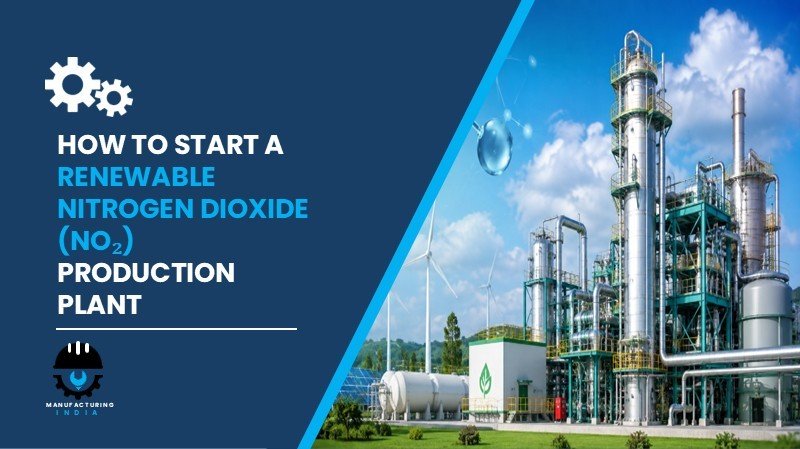
A renewable nitrogen dioxide production plant setup in India presents a compelling investment case for entrepreneurs targeting the low-carbon nitrogen-chemical value chain. Demand is anchored by nitric acid production, the fertilizer industry, chemical manufacturing, pharmaceuticals, dyes and pigments, and specialty chemicals. As producers look to reduce the carbon intensity of conventional nitrogen-chemical manufacturing, a renewable nitrogen dioxide production plant is positioned as a critical enabler of cleaner nitric-acid and downstream chemical value chains.
India’s infrastructure growth, urbanisation, and the Make in India initiative strengthen the case for domestic chemical capacity, with clusters in Gujarat and Maharashtra offering logistics access and a skilled workforce. The National Green Hydrogen Mission – targeting at least 5 million metric tonnes per annum of green hydrogen by 2030 – is building the renewable feedstock base this facility can draw on.
This opportunity is underpinned by policy support for low-carbon nitrogen chemistry, cost-competitive conditions in India, steady demand from nitric acid and fertilizer manufacturers, gross margins of 25-32%, and a viable break-even path for well-capitalised entrants.
What is Renewable Nitrogen Dioxide (NO₂)?
Renewable nitrogen dioxide refers to nitrogen dioxide generated through processes powered by renewable energy or using renewable or low-carbon feedstocks rather than conventional fossil-fuel-intensive routes. It is a reddish-brown reactive gas and an important intermediate in nitrogen chemistry. Nitrogen and oxygen are converted into nitrogen oxides using technologies such as plasma-assisted conversion, electrochemical processes, or renewable-electricity-driven oxidation, after which the gas can participate in the production of nitric acid and other nitrogen-containing chemicals.
This route is relevant to decarbonising nitrogen-chemical manufacturing, since conventional nitrogen-oxide production is often associated with significant energy consumption and emissions. A renewable nitrogen dioxide production plant typically integrates renewable electricity, an air or nitrogen feed, reaction systems, gas separation, oxidation, and downstream absorption equipment. End-use industries served include nitric acid, fertilizers, specialty chemicals, pharmaceuticals, dyes, and sustainable chemical manufacturing.
Cost of Setting Up a Renewable Nitrogen Dioxide Production Plant in India
Cost depends on plant capacity, technology selection, location, automation level, and regulatory compliance.
1. Capital Expenditure (CapEx)
Capital costs begin with land and site development, weighing industrial estates against Special Economic Zone (SEZ) plots, both of which can reduce approval timelines. Civil works cover the production shed, testing laboratory, storage areas, and the administrative block, designed around process flow and safety needs.
Key machinery required includes:
- Air compressors
- Air purification units
- Nitrogen separation equipment
- Renewable-electricity supply and power-conditioning systems
- Plasma or electrochemical reactors
- Gas cooling systems
- Heat exchangers
- Oxidation reactors
- Gas scrubbers
- NOx separation and purification units
- Absorption towers
- Storage vessels
- Pumps
- Compressors
- Gas analyzers
- Process-control systems
Other capital costs include the ETP, pre-operative expenses, commissioning, and import duties on specialised equipment. Machinery costs form the largest share of CapEx, with land and site development a substantial secondary component.
Request a Sample Report for In-Depth Market Insights: https://www.imarcgroup.com/renewable-nitrogen-dioxide-manufacturing-plant-project-report/requestsample
2. Operational Expenditure (OpEx)
Raw material cost is dominated by ammonia (increasingly sourced as renewable or green ammonia) and air/oxygen, together accounting for approximately 45-55% of OpEx. Long-term supplier contracts are advised, given raw material price volatility is a significant cost risk.
Utility cost – electricity, water, and steam – represents approximately 20-28% of OpEx, reflecting the energy-intensive reaction systems. Other operating costs include transportation, packaging, salaries, maintenance, depreciation, and taxes. By year five, total operational cost is expected to rise substantially due to inflation and material cost increases.
3. Plant Capacity
The proposed facility is designed with an annual capacity ranging between 200-600 MT, offering economies of scale with operational flexibility. Capacity can be customised to investor requirements, and profitability generally improves with higher capacity utilisation.
4. Profit Margins and Financial Projections
Financial projections are built around capital investment, operating costs, capacity utilisation, pricing, and demand outlook, informing ROI, NPV, IRR, and payback period. Gross margins typically range 25-32%, supported by stable demand, while net margins range 8-14%.
Why Set Up a Renewable Nitrogen Dioxide Plant in India?
Low-Carbon Chemical Production Momentum: Renewable electricity can reduce dependence on fossil-fuel-based energy in nitrogen-oxide production, aligning the facility with India’s broader chemical and fertilizer decarbonisation direction.
Nitric Acid Value Chain Integration: The gas has an established role as an intermediate for nitric acid production, connecting this facility with the large nitrogen-chemical value chain.
Policy and Regulatory Tailwinds: The National Green Hydrogen Mission targets at least 5 million metric tonnes per annum of green hydrogen production by 2030, growing the renewable feedstock base for green ammonia and low-carbon nitric acid.
Cost-Competitive Manufacturing: India’s industrial land availability, workforce access, and established chemical supply chains support cost-competitive setup and operation relative to many other markets.
Active Technology Development: Plasma, electrochemical, and other electrically driven nitrogen-oxide production technologies create opportunities for alternative, lower-emission routes that this plant can adopt.
Local Supply Chain Preference: Fertilizer and chemical manufacturers evaluating lower-emission pathways increasingly prefer output from a locally based renewable nitrogen dioxide production plant over imported alternatives.
Manufacturing Process – Step by Step
The renewable nitrogen dioxide production process uses renewable electricity generation, air/nitrogen preparation, nitrogen-oxide formation, gas cooling, oxidation, separation, purification, and downstream processing as the primary production method.
- Renewable Electricity Generation: Renewable power drives the electrochemical or plasma-based reaction systems.
- Air/Nitrogen Preparation: Air is compressed and purified, and nitrogen is separated using nitrogen separation equipment.
- Nitrogen-Oxide Formation: Plasma or electrochemical reactors convert nitrogen and oxygen into nitrogen oxides.
- Gas Cooling: Gas cooling systems and heat exchangers bring reaction gases to the required temperature.
- Oxidation: Oxidation reactors convert the nitrogen oxides toward the target product stream.
- Separation and Purification: Gas scrubbers and NOx separation and purification units remove impurities.
- Absorption and Downstream Processing: Absorption towers, storage vessels, pumps, compressors, gas analyzers, and process-control systems prepare and monitor the finished product.
- Dispatch: The finished product is packaged and dispatched to nitric acid, fertilizer, chemical, pharmaceutical, dye, and specialty chemical end users.
Key Applications
This gas serves a range of nitrogen-chemical and industrial applications:
- Nitric Acid Production: The gas is an important intermediate in nitric acid manufacturing through absorption in water.
- Fertilizer Industry: Nitric acid produced from nitrogen oxides is used in nitrate-based fertilizers.
- Chemical Manufacturing: Used as an oxidizing and nitrating intermediate in selected processes.
- Pharmaceuticals: Relevant to the synthesis of selected pharmaceutical intermediates.
- Dyes & Pigments: Nitrogen-containing intermediates from nitric-acid chemistry are used in select dye and pigment routes.
- Specialty Chemicals: Supports lower-carbon production of nitrogen-containing specialty chemicals.
Leading Manufacturers
Leading producers in the global renewable nitrogen dioxide industry serve end-use sectors such as commercial agricultural farms and agrochemicals:
- Axcel Gases
- Aditya Air Products
- Linde plc
Timeline to Start the Plant
- Feasibility study and project report preparation
- Land acquisition and site development
- Regulatory approvals and environmental clearances
- Factory licence and fire safety compliance
- Machinery procurement and installation
- Raw material supplier agreements and supply chain setup
- Trial production and quality testing
- Commercial production launch
Licences and Regulatory Requirements
Starting this unit in India requires several approvals:
- Business registration (Proprietorship, LLP, or Pvt Ltd)
- Factory Licence under the Factories Act
- Environmental Clearance from State Pollution Control Board
- GST Registration
- Fire Safety NOC
- Hazardous/Chemical compliance for gas handling and storage
- Effluent Treatment Plant (ETP) operational clearance
- Occupational Health and Safety compliance
Key Challenges to Consider
High Capital Requirements: Machinery for the reaction, oxidation, and gas separation systems represents a significant share of total investment for a renewable nitrogen dioxide production plant.
Raw Material Price Volatility: Ammonia (increasingly renewable/green ammonia-sourced) and air/oxygen prices can fluctuate, affecting the 45-55% OpEx share tied to raw materials.
Regulatory Compliance: Environmental clearances and effluent treatment obligations require sustained compliance investment.
Technology and Innovation Pressure: Plasma and electrochemical nitrogen-oxide production technologies are still developing, requiring investors to track advances in reactor design used in the renewable nitrogen dioxide production process.
Competition: Established players such as Axcel Gases, Aditya Air Products, and Linde plc bring scale and technical expertise new entrants must compete against.
Skilled Manpower: Operating renewable-electricity-driven reactors requires trained technical personnel.
Frequently Asked Questions
1. How much does it cost to set up a renewable nitrogen dioxide production plant in India?
Cost depends on capacity, technology, automation level, and location, driven mainly by machinery and land/site development costs.
2. Is renewable nitrogen dioxide production profitable in India in 2026?
Yes, the plant shows gross margins of 25-32% and net margins of 8-14%, supported by steady demand from nitric acid and fertilizer manufacturers.
3. What machinery is required for a renewable nitrogen dioxide plant in India?
Key machinery includes air compressors, air purification units, nitrogen separation equipment, plasma or electrochemical reactors, gas cooling systems, oxidation reactors, gas scrubbers, absorption towers, and process-control systems.
4. What licences and approvals are required to start a renewable nitrogen dioxide plant in India?
Business registration, a Factory Licence, Environmental Clearance, GST Registration, Fire Safety NOC, hazardous-chemical compliance, ETP clearance, and occupational health and safety compliance.
5. What raw materials are needed for renewable nitrogen dioxide production?
Ammonia (increasingly renewable/green ammonia-sourced) and air/oxygen.
6. What are the environmental compliance requirements for a renewable nitrogen dioxide plant in India?
Environmental Clearance from the State Pollution Control Board, an operational Effluent Treatment Plant, and hazardous-chemical handling compliance.
7. What is the best location to set up a renewable nitrogen dioxide plant in India?
Locations near raw material sources with reliable infrastructure, such as Gujarat and Maharashtra, suit this plant well.
8. What is the break-even period for this type of plant in India?
It depends on capacity utilisation, financing structure, and operating costs, and is assessed within the plant’s financial and sensitivity analysis.
9. What government incentives are available for manufacturers in India?
The National Green Hydrogen Mission expands the renewable feedstock base for green ammonia and low-carbon nitric acid, indirectly benefiting producers of this gas, alongside broader Make in India-linked support.
Key Takeaways for Investors
Setting up a renewable nitrogen dioxide production plant offers a strong investment opportunity linked to nitric acid, fertilizer, chemical, pharmaceutical, dye, and specialty chemical demand across India. The plant shows financial viability across the 200-600 MT capacity range, with gross margins of 25-32% and net margins of 8-14%. With Europe holding around 32.4% of the global market and the National Green Hydrogen Mission expanding the renewable feedstock base, demand for cleaner nitrogen-chemical routes is set to grow through 2026 and beyond.
About the Author