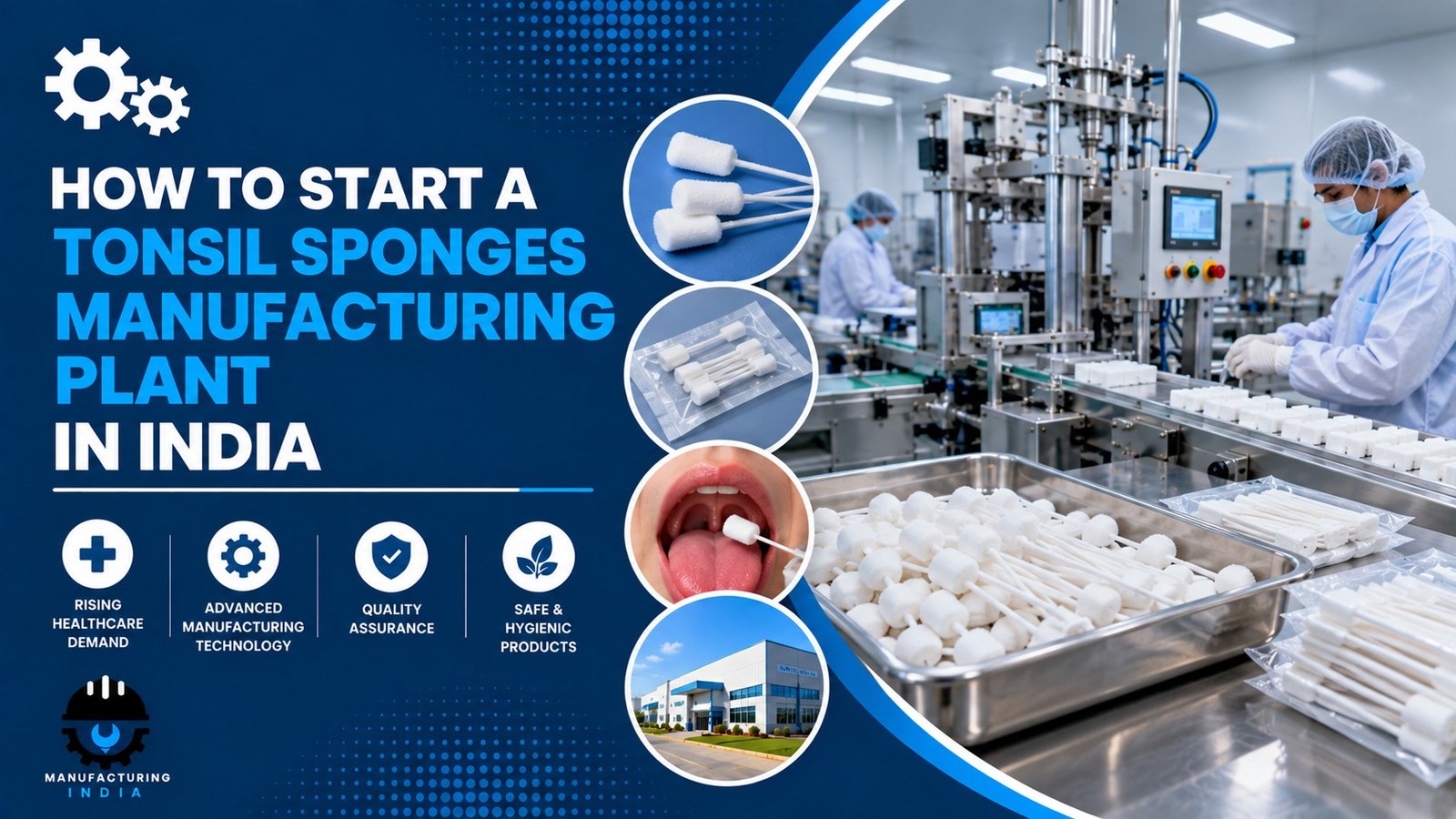
Setting up a tonsil sponges manufacturing plant in India presents a compelling investment case, driven by the expansion of ambulatory surgical centers and outpatient ENT procedures creating steady demand for cost-effective, reliable surgical consumables. Hospitals, surgical centers, ENT clinics, outpatient surgical facilities, specialty clinics, and healthcare institutions all depend on a dependable supply of tonsil sponges for tonsillectomy, adenoidectomy, and other ENT surgical procedures, making this product category essential to India’s broader healthcare economy.
India’s growing healthcare infrastructure, rising government investment in hospitals and public health systems, and increasing emphasis on domestic production of healthcare consumables make the country a strategically sound base for this kind of unit, offering a favourable setting for stable, margin-positive production.
This investment combines healthcare policy support in India with steady demand from hospitals, ENT clinics, and surgical centers. With gross margins typically ranging between 35–45% and net margins between 15–22%, and plant capacities scalable from 20–50 million pieces annually, the case is grounded in cost-competitive production, dependable local supply chains, and healthy break-even viability.
What is Tonsil Sponges?
Tonsil sponges are specialized, highly absorbent surgical materials used primarily during tonsillectomies to manage bleeding and absorb fluids. Typically made of cotton, gauze, or polyurethane foam, these small, compressed sponges expand upon contact with liquids to provide optimal visualization of the surgical site. Cotton tonsil sponges, gauze tonsil sponges, and polyurethane foam tonsil sponges represent the main product variants, each designed with an attached string or a radiopaque marker so surgeons can track and retrieve them easily, preventing retained foreign bodies in the patient’s throat. Sterile packaging and lint-free composition help minimize the risk of infection and post-operative complications.
The tonsil sponges manufacturing process uses cotton/gauze preparation, cutting and folding, X-ray detectable thread incorporation, cord attachment, shaping and sterilization, followed by inspection and packaging as its core production method. The facility serves hospitals, surgical centers, ENT clinics, outpatient surgical facilities, specialty clinics, and healthcare institutions.
Cost of Setting Up a Tonsil Sponges Manufacturing Plant in India
The cost of setting up a tonsil sponges manufacturing plant depends on capacity, technology, location, automation, and regulatory compliance, tied closely to the manufacturing process and machinery required.
1. Capital Expenditure (CapEx)
Capital investment covers land acquisition and site preparation, ideally structured around an industrial estate or SEZ to streamline approvals and utility access. Civil works cover the manufacturing shed, QC lab, storage, and admin block, designed around plant layout optimization principles. Machinery costs account for the largest share of capital expenditure, with automation level determining total equipment cost.
Key machinery required includes:
- Gauze cutting and folding machines
- Fabric slitting machines
- X-ray detectable thread insertion/attachment equipment
- Cord or twill attachment machines
- Sponge forming and shaping machines
- Sterilization systems
- Visual inspection units
- Metal/X-ray detectability testing systems
- Sterile packaging machines
Other capital costs include effluent treatment systems, pre-operative and commissioning expenses, and land registration charges, forming a substantial part of the overall investment.
Request a Sample Report for In-Depth Market Insights: https://www.imarcgroup.com/tonsil-sponges-manufacturing-plant-project-report/requestsample
2. Operational Expenditure (OpEx)
The operating cost structure is driven mainly by raw material consumption. Raw materials — medical-grade woven cotton/gauze, X-ray detectable (barium-loaded) thread, and cotton twill/rayon cord — account for approximately 35–45% of OpEx, making long-term supplier contracts important for mitigating price volatility. Utility costs (electricity, water, steam) represent around 8–12% of OpEx, while other costs include transportation, packaging, salaries, maintenance, depreciation, and taxes. By year five, operational cost is expected to rise due to inflation and supply chain disruptions.
3. Plant Capacity
The proposed facility is designed with an annual production capacity ranging between 20–50 million pieces, enabling economies of scale while maintaining operational flexibility. Capacity can be customized based on investor requirements, and profitability generally improves as capacity utilisation increases.
4. Profit Margins and Financial Projections
Financial projections are developed based on realistic assumptions related to capital investment, operating costs, capacity utilization, pricing trends, and demand outlook, covering liquidity, profitability, payback period, net present value (NPV), and internal rate of return (IRR). Gross profit margins typically range between 35–45%, while net profit margins range between 15–22%, reflecting healthy profitability supported by stable demand and value-added applications.
Why Set Up a Tonsil Sponges Plant in India?
Crucial Surgical & Healthcare Component: Tonsil sponges are essential consumables in tonsillectomy, adenoidectomy, and other ENT procedures for absorbing blood and maintaining a clear surgical field.
Megatrend Alignment: Growing ENT procedure volumes, rising healthcare expenditure, and expanding hospitals and ambulatory surgical centres are driving consistent demand.
Policy Tailwinds: Government investment in hospitals and public healthcare infrastructure, plus initiatives supporting domestic production of healthcare consumables, is strengthening demand for locally manufactured product.
Cost-Competitive Manufacturing: Moderate capital requirements compared to advanced medical devices make this venture accessible to experienced producers who can meet absorbency, sterility, and quality standards.
Active Healthcare Budget Support: The government of India has allocated Rs. 99,858 crore (USD 11.50 Billion) to healthcare in the Union budget 2025–26, a direct tailwind for surgical consumable manufacturers.
Local Supply Chain Preference: Hospitals and distributors increasingly favour dependable local suppliers to shorten lead times and reduce import dependence, creating opportunities for regional manufacturers.
Manufacturing Process – Step by Step
The tonsil sponges manufacturing process uses cotton/gauze preparation, cutting and folding, X-ray detectable thread incorporation, cord attachment, shaping and sterilization, followed by inspection and packaging as its primary method.
- Cotton/Gauze Preparation: Medical-grade woven cotton or gauze is prepared on gauze cutting and folding machines.
- Cutting and Folding: The prepared cotton/gauze is cut and folded to required dimensions using fabric slitting machines.
- X-ray Detectable Thread Incorporation: X-ray detectable (barium-loaded) thread is inserted using dedicated attachment equipment, enabling in-body detectability.
- Cord Attachment: Cotton twill/rayon cord is attached using cord or twill attachment machines, allowing retrieval.
- Shaping: The sponge is formed on sponge forming and shaping machines for consistent compression and expansion.
- Sterilization: Shaped sponges pass through sterilization systems to ensure a sterile, infection-safe product.
- Inspection: Visual inspection units and metal/X-ray detectability testing systems verify consistency, softness, and detectability.
- Packaging: Finished sponges are packed on sterile packaging machines and dispatched to hospitals, ENT clinics, and healthcare institutions.
Key Applications
Tonsil sponges serve a focused set of healthcare and surgical applications.
- Healthcare: Used in tonsillectomy and other ENT surgical procedures for absorbing blood and fluids.
- Hospitals & Clinics: Applied in surgical procedures, wound management, and postoperative care.
- ENT Surgery: Used in tonsil and throat procedures requiring controlled fluid absorption and tissue protection.
- Dental & Oral Surgery: Used in oral procedures requiring sterile sponges for blood and fluid absorption.
Leading Manufacturers
Leading manufacturers in the global tonsil sponges industry include several multinational companies with extensive manufacturing capacities. Key players include:
- Allcare Inc
- SDP Inc.
- Dukal Corporation
- Bioseal
- DeRoyal
Timeline to Start the Plant
- Feasibility study and project report preparation
- Land acquisition and site development
- Regulatory approvals and environmental clearances
- Factory licence and fire safety compliance
- Machinery procurement and installation
- Raw material supplier agreements and supply chain setup
- Trial production and quality testing
- Commercial production launch
Licences and Regulatory Requirements
Starting a tonsil sponges unit in India requires several approvals:
- Business registration (Proprietorship, LLP, or Pvt Ltd)
- Factory Licence under the Factories Act
- Environmental Clearance from State Pollution Control Board
- GST Registration
- Fire Safety NOC
- Effluent Treatment Plant (ETP) operational clearance
- Occupational Health and Safety compliance
Key Challenges to Consider
High Capital Requirements: Machinery accounts for the largest portion of capital expenditure, and a fully compliant facility with sterilization and testing systems needs significant upfront investment.
Raw Material Price Volatility: Prices of medical-grade woven cotton/gauze, X-ray detectable thread, and cotton twill/rayon cord can fluctuate, making long-term supplier contracts important.
Regulatory Compliance: Meeting stringent requirements for absorbency, softness, sterility, and dimensional consistency demands robust quality assurance systems.
Entry Barriers: Capital requirements are lower than for advanced medical devices, but medical-grade manufacturing standards favour experienced producers.
Competition: Established players such as Allcare Inc, SDP Inc., Dukal Corporation, Bioseal, and DeRoyal set a high bar for quality and supply reliability.
Skilled Manpower: Operating sterilization and detectability testing equipment requires trained personnel and ongoing staff training.
Frequently Asked Questions
1. How much does it cost to set up a tonsil sponges manufacturing plant in India?
Total investment depends on capacity, technology, and location, covering land, civil works, and machinery — the largest cost component.
2. Is tonsil sponges manufacturing profitable in India in 2026?
Yes – gross margins typically run 35–45% and net margins 15–22% under normal operating conditions.
3. What machinery is required for a tonsil sponges plant in India?
Gauze cutting and folding machines, fabric slitting machines, thread insertion equipment, cord attachment machines, sponge forming machines, sterilization systems, inspection units, detectability testing systems, and sterile packaging machines.
4. What licences and approvals are required to start a tonsil sponges plant in India?
Business registration, a Factory Licence, Environmental Clearance, GST Registration, Fire Safety NOC, ETP operational clearance, and Occupational Health and Safety compliance.
5. What raw materials are needed for tonsil sponges manufacturing?
Medical-grade woven cotton/gauze, X-ray detectable (barium-loaded) thread, and cotton twill/rayon cord — together around 35–45% of operating expenses.
6. What are the environmental compliance requirements for a tonsil sponges plant in India?
Environmental Clearance from the State Pollution Control Board and an operational ETP to minimize environmental impact.
7. What is the best location to set up a tonsil sponges plant in India?
A site with easy raw material access, proximity to target markets, and robust transportation, utility, and waste management infrastructure.
8. What is the break-even period for this type of plant in India?
Break-even timing depends on capacity utilisation, pricing, and cost structure, and is assessed alongside payback period, NPV, and IRR.
9. What government incentives are available for manufacturers in India?
The government has allocated Rs. 99,858 crore (USD 11.50 Billion) to healthcare in the Union budget 2025–26, alongside initiatives supporting domestic production of healthcare consumables.
Key Takeaways for Investors
This tonsil sponges manufacturing plant opportunity taps into steady, non-cyclical demand from India’s hospitals, surgical centers, ENT clinics, outpatient surgical facilities, specialty clinics, and healthcare institutions. The project shows sound financial viability across production capacities of 20–50 million pieces annually, with gross margins of 35–45% and net margins of 15–22%. Rising healthcare expenditure and the government’s Rs. 99,858 crore healthcare allocation for 2025–26 point to a supportive demand and policy environment, and as ENT procedure volumes and surgical infrastructure continue to expand, demand for sterile, dependable tonsil sponges manufactured locally is well positioned to remain durable over the long term.
About the Author