Setting up a microgreens plant setup cost in india represents a highly attractive investment proposition underpinned by robust and structurally growing demand from the food and beverage, hospitality, and health and wellness industries. As consumer preference shifts toward nutrient-dense, fresh, and functional foods, and as urban and controlled-environment agriculture gains momentum, microgreens grown from vegetable, herb, or grain seeds occupy an increasingly important position across fresh produce, culinary, retail, and functional food applications. This growth trajectory, combined with rising health consciousness and growing adoption of vertical and indoor farming, creates a highly favourable manufacturing environment for new entrants with efficient seeding, controlled-growth, and post-harvest handling systems.
What are Microgreens?
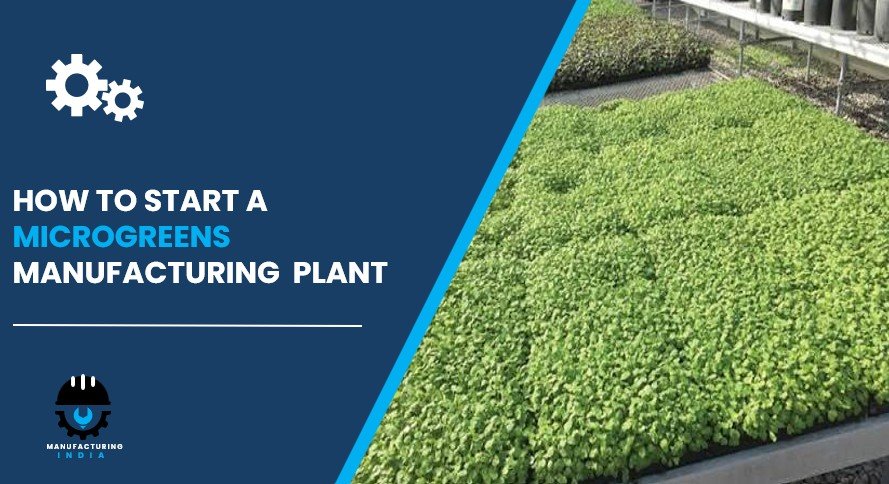
Microgreens are young, tender edible greens harvested at an early growth stage, typically 7-21 days after germination, once the first true leaves emerge. They are grown from vegetable, herb, or grain seeds such as broccoli, radish, kale, arugula, basil, beet, and mustard, and are known for their intense flavours, vibrant colours, and high concentrations of vitamins, minerals, antioxidants, and bioactive compounds. Microgreens are primarily consumed fresh and are widely used in salads, garnishes, smoothies, and functional foods. Their short growth cycle, minimal space requirement, and suitability for indoor and vertical farming make them an attractive crop for sustainable, urban agriculture.
The global microgreens market was valued at approximately USD 1,898.3 Million in 2025 and is expected to reach USD 3,379.5 Million by 2034, exhibiting a CAGR of 6.62% from 2026 to 2034, supported by rising consumer awareness of nutrient-dense foods, increasing demand for fresh and functional foods, and growing adoption of urban and controlled-environment agriculture.
Minimum Cost Required to Set Up a Microgreens Manufacturing Plant:
Industry cost benchmarking for microgreens manufacturing points to a minimum entry investment of roughly USD 0.1-0.3 million for a smaller-scale facility near the lower end of the benchmarked capacity band (around 50-75 tons per annum), reflecting the cost of growing racks, seeding and tray-filling equipment, LED grow lighting, and basic climate control infrastructure required for producing food-grade microgreens. Capital requirements scale from there, running into the USD 0.5-1 million range for mid-sized plants (around 100-150 tons per annum), and exceeding USD 2 million for large-scale, export-oriented facilities at the upper end of the capacity range (200 tons per annum and above), where expanded growing area, automated irrigation and climate control trains, advanced quality control laboratories, and cold-chain or bulk logistics push total investment well above smaller single-line operations of comparable output.
Microgreens Manufacturing Plant Setup Cost
The total capital investment required to establish a microgreens manufacturing plant is shaped by several key parameters: annual production capacity (typically ranging from 50 to 200 tons per annum), the growing method adopted (soil-based, coco peat, or hydroponic mats), the level of automation across seeding, climate control, and harvesting sections, facility specification, target product grade (fresh retail, foodservice, or export grade), and applicable regulatory and safety compliance requirements. Below is a structured breakdown of the major cost components.
1. Capital Expenditure (CapEx)
Total capital investment in a microgreens manufacturing plant covers the following major heads:
Land and Site Development
This encompasses land acquisition or lease, site preparation, boundary development, and utilities connectivity. Site selection should prioritise proximity to key raw material sources such as seed suppliers and growing media producers, to ensure competitive and consistent input supply, which is a key driver of microgreens production economics. Access to a reliable supply of process water and electricity, strong cold-chain logistics for outbound finished product, proximity to urban consumption centres and foodservice or retail offtake clusters, and availability of a trained technical workforce are critical site selection criteria. Compliance with industrial zoning regulations, food safety norms, effluent discharge standards, and environmental clearance frameworks must be assessed from project initiation.
Civil Works and Construction
Building costs cover the main growing facility including the seed receiving and pre-treatment section, growing and germination hall, controlled-environment growing chambers, harvesting and washing area, packaging and cold storage section, quality control laboratory, administrative block, and utility infrastructure including cooling and process water systems, backup power, and effluent treatment. Construction must comply with applicable factory act requirements, food facility safety codes, Good Manufacturing Practice (GMP) design standards, and environmental clearance conditions.
Machinery and Equipment
Machinery represents the single largest CapEx component. Key equipment required for a microgreens manufacturing plant includes:
- Seeding and Tray-Filling Equipment: Automated or semi-automated tray-filling, seed-dosing, and levelling units that prepare growing trays with soil, coco peat, or hydroponic mats ahead of seeding
- LED Grow Lighting Systems: Full-spectrum LED lighting arrays that provide controlled, energy-efficient light cycles for photosynthesis, forming the core production technology of the plant
- Climate Control and Irrigation Systems: Temperature, humidity, and ventilation control units together with misting or drip irrigation systems that maintain optimal growing conditions across the germination and growth stages
- Growing Racks and Vertical Farming Structures: Multi-tier racking and vertical growing frames that maximise usable floor area and enable higher-density production within a fixed facility footprint
- Harvesting and Washing Equipment: Mechanised or manual harvesting stations and washing lines that trim, rinse, and drain microgreens while preserving leaf integrity and shelf life
- Quality Monitoring and Laboratory Equipment: Analytical instrumentation for continuous monitoring of moisture content, microbial load, and pesticide residue to verify compliance with offtake specifications
- Cooling and Cold Storage Systems: Cold rooms, chillers, and refrigerated packing lines that preserve freshness and extend shelf life of the highly perishable finished product
- Packaging and Dispatch Infrastructure: Automated filling, sealing, and labelling lines, clamshell and pouch packaging systems, and cold-chain dispatch facilities for finished microgreens
- Safety and Control Infrastructure: Hygienic, corrosion-resistant electrical and instrumentation systems, sanitation and cleaning-in-place protocols, and a centralised control system for plant-wide monitoring of light, temperature, and humidity
Other Capital Costs
These include pre-operative expenses, commissioning charges, import duties on specialised grow lighting and climate control equipment, staff training and competency development, initial working capital for production commissioning, regulatory compliance setup including food safety licensing, and ISO 9001 / ISO 22000 / GMP quality and safety management system establishment costs.
Request a Sample Report for In-Depth Market Insights: https://www.imarcgroup.com/microgreens-manufacturing-plant-project-report/requestsample
2. Operational Expenditure (OpEx)
Raw materials, principally seeds such as broccoli and radish along with growing media, constitute the dominant operating cost, typically representing 40-50% of total OpEx. Utility costs, driven primarily by LED grow lighting and climate control energy consumption, account for 25-35% of OpEx. Labour, maintenance, quality control, depreciation, taxes, packaging, transportation, and overhead costs constitute the remainder of the operating cost base.
3. Plant Capacity
The proposed microgreens manufacturing facility is designed with an annual production capacity ranging between 50-200 tons, enabling economies of scale while maintaining operational flexibility. This capacity range supports a diversified offtake portfolio spanning food and beverage, hospitality and culinary services, health and wellness, and retail and direct-to-consumer channels, serving domestic institutional customers, export-oriented retail brands, and long-term offtake agreements.
4. Profit Margins and Financial Projections
The project demonstrates healthy profitability potential under normal operating conditions. Financial projections encompass capital investment, operating costs, capacity utilisation ramp-up schedule, raw material sourcing strategy, and forward demand outlook underpinned by rising health and wellness spending and growing use of microgreens in functional foods. A comprehensive feasibility analysis includes sensitivity analysis, Net Present Value (NPV), Internal Rate of Return (IRR), and Payback Period calculations. Gross profit margins for microgreens production typically range from 60-70%, supported by stable demand and value-added applications. Net profit margins of 25-40% are achievable with disciplined cost management, optimal capacity utilisation, and effective raw material procurement.
Why Set Up a Microgreens Manufacturing Plant?
High Nutritional Value
Microgreens contain concentrated levels of vitamins, minerals, and antioxidants, driving strong demand among health-conscious consumers, positioning new manufacturing capacity to capture rising branded and private-label demand.
Short Growth Cycle
Rapid harvesting cycles enable frequent production and quick returns compared to conventional crops, supporting long-term volume growth for new entrants.
Urban and Indoor Farming Compatibility
Microgreens can be grown in controlled environments, making them suitable for urban farming and vertical agriculture, and opening new differentiated production models for manufacturers.
Rising Consumer Awareness and Acceptance
According to an online survey of 150 respondents aged 20-35 published by ResearchGate, 100 respondents were already aware of microgreens and 64.6% expressed a liking of microgreens based on sensory evaluation, reflecting growing consumer trust in microgreens and reinforcing sustained category demand.
Rising Demand for Fresh and Local Produce
Consumers increasingly prefer locally grown, fresh foods, supporting microgreens production close to consumption centres and opening new opportunities in beverages, salad kits, and other fortified food segments.
Latest Industry Developments
- January 2026: 80 Acres Farms announced the expansion of its microgreens into additional grocery stores across the United States, continuing its nationwide growth strategy and deepening partnerships with retail customers. The company’s microgreens are part of a wider product portfolio that includes leafy greens, culinary herbs, salad kits, and dressings, all produced through its network of large-scale indoor vertical farming facilities.
- April 2025: AeroFarms launched Micro Bok Choy, its newest microgreen offering and the first of its kind available in US retail. The new variety features a mild, slightly sweet flavour and is positioned as a versatile ingredient for everyday meals such as sandwiches, stir-fries, smoothies, tacos, and salads, where it can also serve as a lettuce alternative.
Manufacturing Process Overview
The microgreens manufacturing operation transforms seeds into fresh, harvested greens through a sequence of sanitization, seeding, controlled growth, and post-harvest handling operations. The key process stages are:
- Seed Selection and Sanitization: Seeds such as broccoli, radish, kale, and mustard are received, inspected, and sanitised, with quality checks conducted to verify the traceability and germination rate of incoming raw material.
- Growing Medium Preparation: Growing trays are filled and levelled with soil, coco peat, or hydroponic mats, prepared to provide consistent moisture retention and nutrient availability ahead of seeding.
- Seeding and Germination: Sanitised seeds are evenly distributed across the prepared growing medium and placed under controlled temperature and humidity conditions to trigger uniform germination.
- Controlled Growth: Germinated seedlings are grown under regulated LED lighting, temperature, humidity, and irrigation cycles for 7-21 days until the first true leaves emerge and the crop reaches target maturity.
- Harvesting: Mature microgreens are harvested using mechanised or manual cutting methods that minimise damage to leaves and preserve shelf life and visual quality.
- Washing and Drying: Harvested microgreens are gently washed to remove residual growing medium and pathogens, then drained and dried to the moisture level required for packaging.
- Quality Control: Moisture content, microbial load, and pesticide residue are continuously monitored and tested to verify compliance with offtake specifications and applicable food safety standards before release.
- Packaging and Dispatch: Finished microgreens are packaged in clamshells or pouches and dispatched under cold-chain logistics to food and beverage, hospitality, retail, or direct-to-consumer customers.
Key Applications of Microgreens
- Food and Beverage Industry: Used as fresh ingredients in salads, sandwiches, and prepared meals due to their flavour intensity and nutritional value.
- Hospitality and Culinary Services: Restaurants and hotels use microgreens as garnishes and specialty ingredients to enhance the visual appeal and taste profiles of dishes, forming one of the fastest-growing segments of the premium foodservice category.
- Health and Wellness Industry: Health-focused consumers incorporate microgreens into diets for their high nutrient density and antioxidant properties, supporting the growth of health-oriented product lines.
- Retail and Direct-to-Consumer Sales: Microgreens are sold through supermarkets, farmers’ markets, and subscription-based delivery models as fresh produce.
- Functional Food Formulations: Microgreens and microgreen-derived powders are increasingly incorporated into functional food and beverage formulations for their concentrated nutrient and antioxidant profile.
Speak to an Analyst: https://www.imarcgroup.com/request?type=report&id=27959&flag=C
Global Microgreens Market Outlook
The global microgreens market was valued at approximately USD 1,898.3 Million in 2025. According to IMARC Group estimates, the market is expected to reach USD 3,379.5 Million by 2034, exhibiting a CAGR of 6.62% from 2026 to 2034. The microgreens market benefits from multiple structural demand drivers:
- Rising consumer preference for nutrient-dense, fresh, and functional foods and increasing use of microgreens in everyday diets
- Growing consumer awareness and acceptance of microgreens, with 64.6% of surveyed respondents expressing a liking of microgreens based on sensory evaluation according to ResearchGate
- Expansion of urban farming, vertical agriculture, and controlled-environment cultivation, making microgreens more accessible year-round
- Increasing use of microgreens in gourmet cooking and premium food offerings across the hospitality sector
- Short cultivation cycles, efficient space utilisation, and relatively low water requirements encouraging new entrants into microgreens production
- Growing emphasis on sustainable and local food systems supporting demand for locally grown fresh produce
- Continued product innovation by established players, including new microgreen varieties, reflecting confidence in long-term category growth
Leading manufacturers in the global microgreens industry include AeroFarms, Fresh Origins, Gotham Greens, Good Leaf Farms, Living Earth Farms, Farmbox Greens, Chef’s Garden, and Bowery Farming, serving end-use sectors including the food and beverage industry, hospitality and culinary services, health and wellness sector, and retail and direct-to-consumer markets.
Licenses and Regulatory Requirements
Establishing a microgreens manufacturing unit requires a range of approvals and certifications, which may vary by country and jurisdiction, including:
- Business registration and company incorporation under applicable company law
- Factory License under applicable state Factories Act provisions for manufacturing operations
- Food Safety and Standards Authority (or equivalent national food safety authority) licensing for fresh produce and food-grade output
- Environmental Clearance from the applicable State or Central Pollution Control Board for water discharge and waste management from growing and washing operations
- Good Agricultural Practices (GAP) and Good Manufacturing Practice (GMP) certification for controlled-environment cultivation and packaging
- Pollution Control Board Clearances – Consent to Establish (CTE) and Consent to Operate (CTO) for manufacturing operations
- ISO 9001:2015 Quality Management System Certification for quality management infrastructure compliance
- ISO 22000 / HACCP certification for food safety management, where applicable
- Organic certification, depending on cultivation practices and target export markets
- Export-Import Code (IEC) for international market access
- Fire Safety Certification from the applicable authority for processing and storage infrastructure
Key Challenges to Consider
Perishability and Shelf-Life Management
Microgreens are highly perishable and require tightly controlled cold-chain logistics from harvest through delivery, making shelf-life management and rapid distribution critical project development priorities.
Regulatory and Food Safety Compliance
Microgreens intended for retail, foodservice, or export use are subject to food safety requirements across microbial safety and traceability, requiring investment in quality systems and certification, particularly for export-oriented producers.
Competition from Conventional Produce and Alternative Greens
Growing consumer interest in microgreens competes with established leafy greens and sprouts categories, requiring ongoing product innovation, variety diversification, and consumer education.
Seasonal and Input Cost Variability
Seed costs and utility expenses linked to lighting and climate control can fluctuate with market conditions, making long-term supplier contracts and energy efficiency measures important risk mitigation tools.
Capital Intensity and Financing
Microgreens manufacturing requires upfront investment in grow lighting, climate control, and cold-chain infrastructure, along with quality certification systems. New entrants must carefully evaluate financing structures to manage capital deployment while working toward long-term project profitability.
Frequently Asked Questions (FAQs)
How much does it cost to set up a microgreens manufacturing plant?
The total investment depends on plant capacity (50-200 tons per annum), growing method (soil-based, coco peat, or hydroponic), automation level, target product grade, facility specification, and location. Costs cover land, civil construction (growing hall, harvesting and washing section, packaging and cold storage facility, quality laboratory, utilities), machinery (grow lighting, climate control systems, harvesting equipment, packaging lines), regulatory compliance, and working capital. A comprehensive feasibility study from IMARC Group provides detailed, capacity-specific cost estimates covering all CapEx and OpEx components.
Is microgreens manufacturing a profitable business in 2026?
Yes. Sustained demand driven by rising health and wellness trends, growing urban and indoor farming adoption, and increasing use of microgreens in functional foods, combined with gross margins of 60-70% and net profit margins of 25-40%, make microgreens manufacturing financially attractive, particularly for projects that secure reliable seed sourcing and strong retail or foodservice offtake.
What machinery and equipment are required for a microgreens manufacturing plant?
Key equipment includes seeding and tray-filling equipment, LED grow lighting systems, climate control and irrigation systems, growing racks, harvesting and washing equipment, quality monitoring and laboratory equipment, cold storage systems, and packaging and dispatch infrastructure.
What licenses and approvals are required?
Required approvals include company registration, Factory License, food safety authority licensing, Environmental Clearance, GAP/GMP certification, Pollution Control Board clearances, ISO 9001/ISO 22000 certification, and, depending on the target market, organic certification.
How long does it take to commission a microgreens manufacturing plant?
Typically, 6-12 months from project initiation to commercial production launch, depending on project scale, equipment procurement lead times, regulatory approvals, and quality certification timelines, which should be initiated early in the project to avoid delays to commercial launch.
What are the key raw materials for microgreens production?
The primary inputs are seeds such as broccoli and radish, along with growing media such as soil, coco peat, or hydroponic mats, and nutrient solutions, which are important considerations for supply chain and procurement planning.
What is the break-even period for a microgreens manufacturing plant?
The break-even period generally ranges from 2 to 4 years, depending on plant size, capital investment, input costs, and the pace of offtake market development. Securing long-term supply and offtake arrangements significantly improves revenue predictability and supports faster break-even achievement.
Which industries offer the strongest demand for microgreens manufacturing?
Food and beverage, hospitality and culinary services, health and wellness, and retail and direct-to-consumer markets represent the leading demand segments, with the hospitality and wellness industries currently driving the fastest category growth.
What certifications are important for microgreens producers targeting export markets?
Export-oriented producers typically require ISO 9001, ISO 22000/HACCP, GAP/GMP certification, and organic certification where applicable, alongside compliance with the food safety and quality standards of target export markets.
How does microgreens production compare across soil-based, coco peat, and hydroponic methods in terms of setup?
Soil-based microgreens production relies on established growing and harvesting technology with relatively lower capital cost, while coco peat systems require similar processing adapted for a lighter, more consistent growing medium. Hydroponic production instead requires water-based nutrient delivery and irrigation infrastructure, involving higher technology and capital investment but offering cleaner, soil-free, and more consistent year-round output.
Buy Now: https://www.imarcgroup.com/checkout?id=27959&method=2175
Key Takeaways for Investors
The microgreens manufacturing industry represents a structurally resilient and financially attractive investment opportunity positioned at the intersection of rising health and wellness spending, growing urban and indoor farming adoption, and continuously expanding applications across food and beverage, hospitality, and retail. Strong consumer acceptance of microgreens, combined with the growth of vertical and controlled-environment agriculture, provides a favourable investment environment for new entrants across multiple growing strategies.
The scalable nature of the microgreens value chain, from single-variety growing and packaging operations to fully integrated, multi-channel production spanning retail, foodservice, and export applications, allows investors to phase capital deployment according to risk appetite and target market positioning, while continued innovation by established players reflects strong confidence in the long-term growth and profitability of the category.
Contact Us:
IMARC Group
134 N 4th St. Brooklyn, NY 11249, USA
Email: sales@imarcgroup.com
Tel No: (D) +91 120 433 0800
United States: (+1-201-971-6302)
About the Author