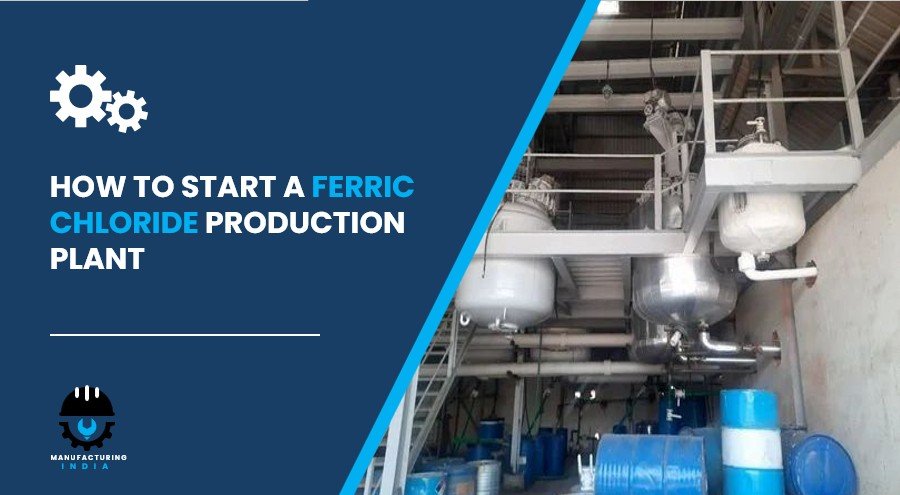
Setting up a ferric chloride production plant setup cost in indias represents a promising investment opportunity underpinned by steady, structurally growing demand from the water and wastewater treatment, electronics, and industrial chemicals sectors. As municipalities and industries expand access to safe drinking water and as electronics manufacturers scale up printed circuit board (PCB) production, ferric chloride’s role as a coagulant, etchant, and industrial reagent continues to broaden. This growth trajectory, combined with tightening environmental regulations on water quality and rising industrialisation across emerging economies, creates a favourable manufacturing environment for new entrants with efficient chlorination, filtration, and concentration systems.
What is Ferric Chloride?
Ferric chloride is a brownish yellow, highly soluble inorganic compound produced by reacting iron with chlorine or hydrochloric acid. It is available in both solid form (flakes or powder) and liquid form, and it plays a central role in industrial water treatment, electronics manufacturing, and chemical processing. As a coagulant, ferric chloride reacts with suspended solids, turbidity, and heavy metals in water, helping treatment plants deliver safe, clean supplies. In electronics manufacturing, it is widely used as an etchant for copper layers during PCB production. Industrial-grade ferric chloride, valued for its consistent concentration, high purity, and ease of handling, supports large-scale municipal and industrial operations, while specialised formulations serve smaller or application-specific needs.
The global ferric chloride market was valued at approximately USD 5.98 Billion in 2025 and is expected to reach USD 8.63 Billion by 2034, exhibiting a CAGR of 4.2% from 2026 to 2034, supported by rising demand for safe drinking water, expanding industrial and municipal wastewater treatment infrastructure, and continued growth in electronics and PCB manufacturing.
Cost Considerations for Setting Up a Ferric Chloride Production Plant:
As with most inorganic chemical manufacturing projects, the total capital investment required for a ferric chloride plant scales closely with annual production capacity, the degree of automation across chlorination, filtration, and concentration sections, the choice between solid and liquid product lines, facility specification, and site location. Capital requirements are shaped primarily by machinery and equipment costs — corrosion-resistant reactors, chlorine handling systems, and filtration and concentration units represent the largest single cost component — followed by land and site development, and civil construction of the processing facility. A detailed, capacity-specific breakdown of land, civil works, machinery, and other capital costs is best obtained through a dedicated feasibility study, since actual figures vary meaningfully with plant scale and location.
Ferric Chloride Production Plant Setup Cost
The total capital investment required to establish a ferric chloride production plant is shaped by several key parameters: annual production capacity (typically ranging from 5,000 to 15,000 tons per annum), product form (solid flakes/powder or liquid solution), the level of automation across chlorination, filtration, and concentration sections, facility specification, target purity grade, and applicable regulatory and safety compliance requirements. Below is a structured breakdown of the major cost components.
1. Capital Expenditure (CapEx)
Total capital investment in a ferric chloride production plant covers the following major heads:
Land and Site Development
This encompasses land acquisition or lease, site preparation, boundary development, and utilities connectivity. Site selection should prioritise proximity to key raw material sources such as iron scrap, hydrochloric acid, and chlorine suppliers, to ensure a competitive and consistent input supply. Access to reliable process water, strong road and logistics connectivity for inbound raw materials and outbound finished product, proximity to industrial and municipal offtake clusters such as water treatment authorities, electronics manufacturers, and chemical processors, and availability of a trained technical workforce are critical site selection criteria. Compliance with industrial zoning regulations, chemical handling and storage norms, effluent discharge standards, and environmental clearance frameworks must be assessed from project initiation.
Civil Works and Construction
Building costs cover the main processing facility, including the raw material receiving and pre-treatment section, chlorination and reaction hall, filtration and purification area, concentration and stabilisation section, packaging line, quality control laboratory, administrative block, and utility infrastructure including cooling and process water systems, chlorine gas handling and scrubbing systems, and effluent treatment plant. Construction must comply with applicable factory act requirements, hazardous chemical handling and storage codes, and environmental clearance conditions.
Machinery and Equipment
Machinery represents the single largest CapEx component. Key equipment required for a ferric chloride production plant includes:
- Raw Material Handling Systems: Iron scrap storage, preparation, and feeding systems, along with chlorine and hydrochloric acid receiving and storage infrastructure
- Reaction Vessels (Reactors): Corrosion-resistant chlorination or acid-dissolution reactors that convert iron scrap or ferrous salts into ferric chloride, forming the core production technology of the plant
- Chlorine Gas Handling Systems and Scrubbers: Systems for safely metering, containing, and neutralising chlorine gas during the reaction process, along with off-gas scrubbing to control emissions
- Filtration and Purification Systems: Multi-stage filtration units that remove undissolved solids and impurities to achieve the purity levels required for water treatment, electronics, and industrial-grade applications
- Concentration and Stabilisation Equipment: Heat exchangers, evaporators, and concentration units that adjust the product to target solid or liquid specifications, along with stabilisation vessels for consistent shelf life
- Quality Monitoring and Laboratory Equipment: Analytical instrumentation for continuous monitoring of concentration, purity, and impurity levels to verify compliance with offtake specifications
- Cooling and Utility Systems: Cooling towers, heat exchangers, and process water circuits to manage heat generated during the exothermic chlorination reaction
- Safety and Control Infrastructure: Corrosion-resistant electrical and instrumentation systems, leak detection and monitoring systems, and a centralised control system for plant-wide monitoring and safety interlocks
- Packaging and Dispatch Infrastructure: Automated filling, sealing, and labelling lines for solid (flake or powder) and liquid product forms, along with bulk storage and dispatch facilities for finished ferric chloride
Other Capital Costs
These include pre-operative expenses, commissioning charges, import duties on specialised chlorination and handling equipment, staff training and competency development, initial working capital for production commissioning, regulatory compliance setup including hazardous chemical handling licensing, and ISO 9001 / quality and safety management system establishment costs.
Request a Sample Report for In-Depth Market Insights: https://www.imarcgroup.com/ferric-chloride-manufacturing-plant-project-report/requestsample
2. Operational Expenditure (OpEx)
Raw materials, principally iron scrap, chlorine, and hydrochloric acid, constitute the dominant operating cost, typically representing 55-65% of total OpEx. Utility costs, driven primarily by energy consumption during the chlorination reaction and concentration process, account for 20-25% of OpEx. Labour, maintenance, quality control, depreciation, taxes, packaging, transportation, and overhead costs constitute the remainder of the operating cost base.
3. Plant Capacity
The proposed ferric chloride production facility is designed with an annual production capacity ranging between 5,000-15,000 tons, enabling economies of scale while maintaining operational flexibility. This capacity range supports a diversified offtake portfolio spanning municipal and industrial water treatment, electronics and PCB manufacturing, chemical and pharmaceutical processing, and industrial sludge management, serving domestic industrial customers, municipal water authorities, and long-term offtake agreements.
4. Profit Margins and Financial Projections
The project demonstrates healthy profitability potential under normal operating conditions. Financial projections encompass capital investment, operating costs, capacity utilisation ramp-up schedule, raw material sourcing strategy, and forward demand outlook underpinned by rising water treatment infrastructure spending and growing electronics manufacturing activity. A comprehensive feasibility analysis includes sensitivity analysis, Net Present Value (NPV), Internal Rate of Return (IRR), and Payback Period calculations. Gross profit margins for ferric chloride production typically range from 30-40%, supported by stable demand and value-added applications. Net profit margins of 15-22% are achievable with disciplined cost management, optimal capacity utilisation, and effective raw material procurement.
Why Set Up a Ferric Chloride Production Plant?
Growing Industrial and Municipal Demand
Increasing wastewater treatment requirements and expanding PCB production are driving stable, structural demand for ferric chloride, positioning new manufacturing capacity to capture rising municipal and industrial offtake.
High Efficiency and Performance
Ferric chloride provides consistent chemical performance, which is crucial for coagulation, turbidity removal, and sludge dewatering in water treatment, as well as for precise copper etching in electronics manufacturing.
Regulatory Compliance
Stricter environmental regulations on water quality and effluent discharge standards are boosting the adoption of ferric chloride across municipal and industrial water treatment sectors worldwide.
Diverse Market Applications
Usage across water treatment, electronics, chemical processing, and industrial sludge management ensures diversified revenue streams and risk mitigation for producers.
Scalable Production Potential
The production technology allows for scalable operations with moderate capital investment, supporting both small and large-scale units and enabling investors to phase capacity according to risk appetite.
Latest Industry Developments
- March 2026: A study published in the Sustainable Horizons Journal outlined a circular-economy approach to recovering ferric chloride from iron-rich oil refinery sludge. The research optimised hydrochloric acid leaching conditions to produce a ferric chloride solution matching commercial quality, demonstrating strong removal efficiencies for metals such as iron, chromium, zinc, copper, and arsenic, and pointing to a sustainable waste-to-resource pathway for the industry.
- July 2024: Kemira expanded ferric chloride production capacity at its Tarragona, Spain facility to manufacture biogas digestion products, responding to rising European biogas demand. The investment, targeted for 2026 operation, reinforces ferric chloride’s role as a key coagulant for phosphorus removal in wastewater treatment and supports customers’ biogas yield and sustainability goals.
Manufacturing Process Overview
The ferric chloride production operation transforms iron-based raw material into a purified coagulant or etchant product through a sequence of dissolution, reaction, filtration, and concentration operations. The key process stages are:
- Raw Material Sourcing and Reception: Iron scrap, hydrochloric acid, and chlorine are received, inspected, and prepared, with quality checks conducted to verify the specification and safety of incoming raw material.
- Dissolution or Chlorination: Iron scrap is dissolved in hydrochloric acid, or reacted directly with chlorine gas, to form ferric chloride through an exothermic chemical reaction that requires careful temperature and safety control.
- Reaction and Formation: The reaction is carried to completion under controlled conditions to maximise conversion of iron into ferric chloride while minimising unreacted material and by-products.
- Filtration and Purification: The reacted mixture undergoes multi-stage filtration to remove undissolved solids and impurities, raising purity to the levels required for water treatment, electronics, or industrial-grade applications.
- Concentration or Stabilisation: The purified ferric chloride solution is concentrated to target strength for liquid product, or further processed into solid flake or powder form, depending on the target end-use application and customer specification.
- Quality Control: Concentration, purity, and impurity levels are continuously monitored and tested to verify compliance with offtake specifications and applicable safety standards before release.
- Packaging and Dispatch: Finished ferric chloride in liquid, flake, or powder form is packaged and dispatched to water treatment, electronics, chemical processing, or industrial customers.
Key Applications of Ferric Chloride
- Water and Wastewater Treatment: Ferric chloride efficiently removes suspended solids, colour, and impurities from water, ensuring safe and potable supplies for municipal and industrial users.
- Electronics and PCB Manufacturing: Acts as an effective etchant for copper layers in printed circuit boards, supporting precise and high-quality electronics production.
- Chemical and Pharmaceutical Industry: Serves as a catalyst and reagent in a range of organic and inorganic chemical synthesis processes.
- Industrial Sludge Management: Facilitates dewatering of sludge, improving disposal efficiency and reducing operational costs for industrial and municipal facilities.
Speak to an Analyst: https://www.imarcgroup.com/request?type=report&id=10039&flag=C
Global Ferric Chloride Market Outlook
The global ferric chloride market was valued at approximately USD 5.98 Billion in 2025. According to IMARC Group estimates, the market is expected to reach USD 8.63 Billion by 2034, exhibiting a CAGR of 4.2% from 2026 to 2034. The ferric chloride market benefits from multiple structural demand drivers:
- Rising global access to safely managed drinking water, with 961 million people gaining access between 2015 and 2024 and global coverage increasing from 68% to 74%, driving sustained demand for water treatment coagulants
- Growing industrialisation and urbanisation, increasing water treatment requirements across both municipal and industrial segments
- Expansion of PCB and electronics production, fuelling demand for high-quality etching chemicals
- Tightening environmental regulations on effluent discharge and water quality, encouraging broader adoption of ferric chloride-based coagulation and sludge management
- Continued preference among municipal and industrial water treatment facilities for ferric chloride’s efficiency in coagulation, turbidity removal, and sludge reduction
- Growing use of ferric chloride as a phosphorus-removal coagulant supporting biogas and wastewater treatment applications
Leading manufacturers in the global ferric chloride industry include BASF, BPS Products Inc., Tessenderlo Group, Khushi Chemicals Pvt. Ltd., Akzo Nobel N.V., Chemical Company of Malaysia Bhd, Jinan Runyuan Chemical Co. Ltd., Kemira, Chemifloc Ltd, KEM ONE, Malay-Sino Chemical Industries Sdn. Bhd, and Sidra Wassercheime GmbH, serving end-use sectors including water treatment, electronics, chemical processing, and industrial catalyst applications.
Licenses and Regulatory Requirements
Establishing a ferric chloride production unit requires a range of approvals and certifications, which may vary by country and jurisdiction, including:
- Business registration and company incorporation under applicable company law
- Factory License under applicable state Factories Act provisions for manufacturing operations
- Environmental Clearance from the applicable State or Central Pollution Control Board for effluent and emission generation from chlorination and processing operations
- Hazardous Chemical Handling and Storage License, given the use of chlorine gas and hydrochloric acid in the production process
- Pollution Control Board Clearances – Consent to Establish (CTE) and Consent to Operate (CTO) for manufacturing operations
- ISO 9001:2015 Quality Management System Certification for quality management infrastructure compliance
- Fire Safety Certification from the applicable authority for processing and storage infrastructure
- Export-Import Code (IEC) for international market access
- Weights and Measures / Legal Metrology certification for packaged product sold by weight or volume
Key Challenges to Consider
Raw Material Availability and Price Volatility
Ferric chloride production depends on a consistent supply of iron scrap, chlorine, and hydrochloric acid, making raw material availability and pricing, which can fluctuate with broader metal and chemical markets, a critical project development priority.
Hazardous Chemical Handling and Safety Compliance
The use of chlorine gas and corrosive acids in the production process is subject to stringent safety, storage, and handling regulations, requiring significant investment in safety systems, leak detection, and staff training.
Regulatory and Environmental Compliance
Ferric chloride production generates effluent and process emissions that are subject to environmental discharge standards, requiring investment in scrubbing, effluent treatment, and monitoring systems, particularly for facilities located near sensitive water bodies.
Competition and Price Sensitivity
As a relatively commoditised industrial chemical, ferric chloride pricing is sensitive to competition from regional producers and alternative coagulants, requiring producers to maintain cost efficiency and consistent product quality.
Capital Intensity and Financing
Ferric chloride manufacturing requires substantial upfront investment in reaction, handling, and safety infrastructure. New entrants must carefully evaluate financing structures to manage capital deployment while working toward long-term project profitability.
Frequently Asked Questions (FAQs)
How much capital is required to set up a ferric chloride production plant?
Capital requirements generally include land acquisition, construction, equipment procurement, installation, pre-operative expenses, and initial working capital. The total investment varies with plant capacity (5,000-15,000 tons per annum), product form (solid or liquid), automation level, and location. A comprehensive feasibility study from IMARC Group provides detailed, capacity-specific cost estimates covering all CapEx and OpEx components.
Is ferric chloride production a profitable business in 2026?
Profitability depends on market demand, production efficiency, pricing strategy, raw material cost management, and operational scale. With gross margins of 30-40% and net profit margins of 15-22%, ferric chloride manufacturing is financially attractive for projects that secure reliable raw material sourcing and strong municipal or industrial offtake, with margins typically improving as capacity utilisation increases.
What machinery and equipment are required for a ferric chloride production plant?
Key equipment includes raw material handling systems, corrosion-resistant reaction vessels, chlorine gas handling systems and scrubbers, filtration and purification systems, concentration and stabilisation equipment, quality monitoring and laboratory equipment, and packaging and dispatch infrastructure.
What raw materials are required for ferric chloride production?
Ferric chloride production requires iron, typically scrap iron or iron filings, along with chlorine gas or hydrochloric acid and water. These materials undergo controlled chemical reactions to form ferric chloride, with reaction conditions carefully managed to ensure product purity.
What licenses and approvals are required?
Required approvals include company registration, Factory License, Environmental Clearance, hazardous chemical handling and storage licensing, Pollution Control Board clearances, ISO 9001 certification, Fire Safety Certification, and, for exporters, an Export-Import Code.
How long does it take to commission a ferric chloride production plant?
Typically, 12-36 months from project initiation to commercial production launch, depending on project scale, equipment procurement lead times, regulatory approvals, and safety certification timelines, which should be initiated early in the project to avoid delays to commercial launch.
What is the break-even period for a ferric chloride production plant?
The break-even period generally ranges from 3 to 6 years, depending on plant size, capital investment, raw material costs, and the pace of offtake market development. Strategic partnerships and consistent product quality can help accelerate the path to break-even.
Which industries offer the strongest demand for ferric chloride?
Municipal and industrial water and wastewater treatment represent the leading demand segment, followed by electronics and PCB manufacturing, chemical and pharmaceutical processing, and industrial sludge management.
Are there government subsidies or incentives available for ferric chloride production?
Governments may offer incentives such as capital subsidies, tax exemptions, reduced utility tariffs, export benefits, or interest subsidies to promote chemical manufacturing under various national or regional industrial policies, depending on jurisdiction.
Buy Now: https://www.imarcgroup.com/checkout?id=10039&method=2175
Key Takeaways for Investors
The ferric chloride production industry represents a structurally resilient investment opportunity positioned at the intersection of expanding global water treatment infrastructure, tightening environmental regulation, and continued growth in electronics manufacturing. Stable, diversified demand across municipal water treatment, PCB etching, chemical processing, and sludge management provides a favourable investment environment for new entrants, while moderate capital intensity relative to other specialty chemicals supports both small and large-scale project entry.
The scalable nature of the ferric chloride value chain, from single-line chlorination and filtration operations to fully integrated, multi-grade production spanning solid and liquid product forms, allows investors to phase capital deployment according to risk appetite and target market positioning, while continued capacity investment by established players reflects confidence in the long-term growth and stability of the category.
Contact Us:
IMARC Group
134 N 4th St. Brooklyn, NY 11249, USA
Email: sales@imarcgroup.com
Tel No: (D) +91 120 433 0800
United States: (+1-201-971-6302)
About the Author