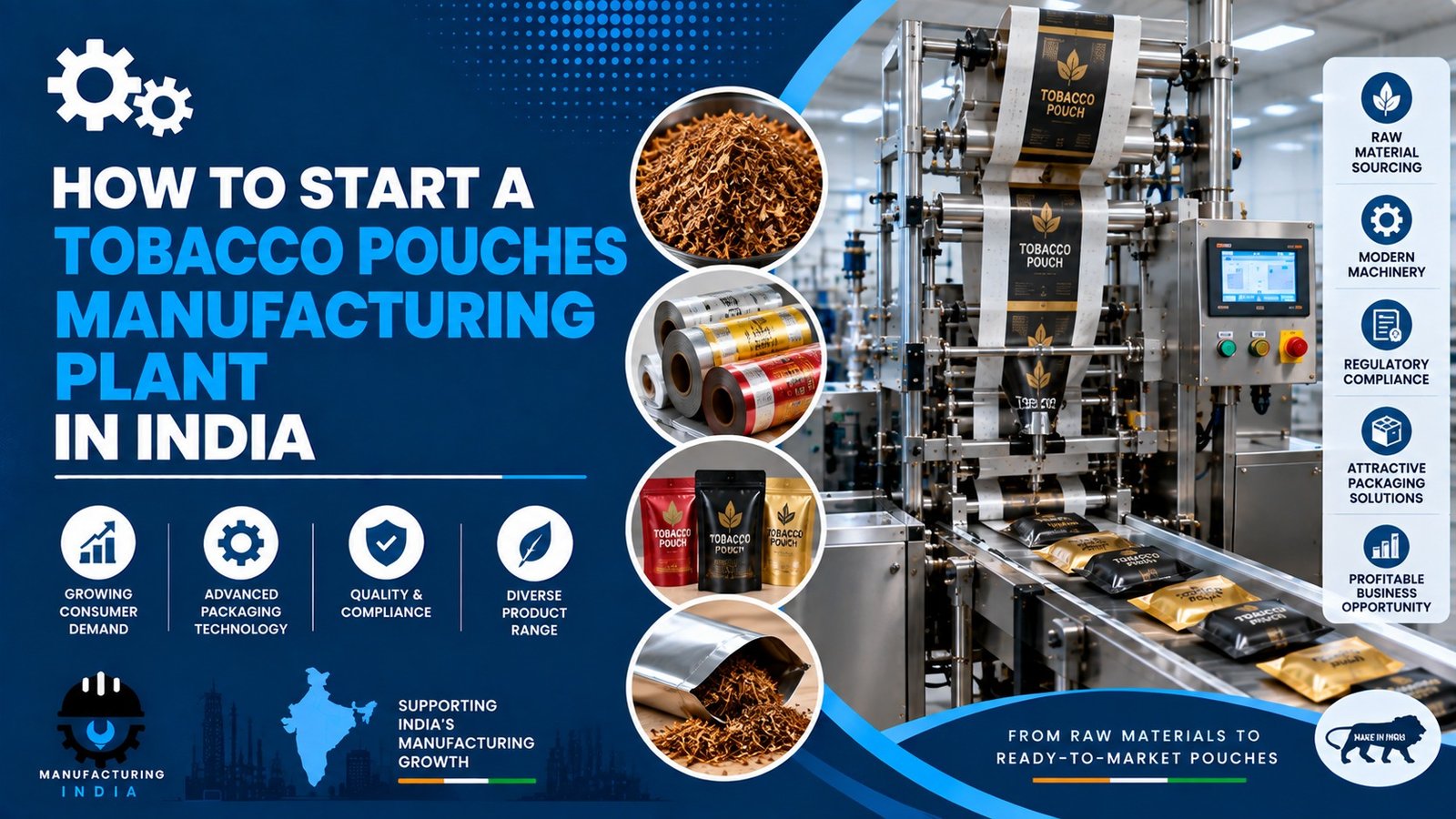
Setting up a tobacco pouches manufacturing plant in India presents a compelling investment case, given rising global demand from the tobacco and nicotine industry, consumer goods companies, convenience retail chains, and specialty oral nicotine product markets. Product innovation – a wider range of flavors, nicotine strengths, and premium packaging – is helping manufacturers attract both existing tobacco users and adult consumers seeking alternatives.
India’s established tobacco-processing infrastructure, packaging capabilities, and distribution networks position the country as a strategically sound base for pouch-based tobacco production, letting producers build a cost-competitive, technologically advanced facility serving domestic and export-oriented demand.
Backed by an established tobacco-processing ecosystem, moderate entry barriers, and healthy gross margins of 22–34%, this investment offers a cost-competitive route into the fast-evolving smokeless and oral nicotine segment, with strong long-term demand from the tobacco and nicotine industry supporting sound break-even viability.
What is Tobacco Pouches?
Tobacco pouches, also known as snus or nicotine pouches, are small, pre-portioned bags containing tobacco or synthetic nicotine designed for oral use. Users place these tea-bag-like pouches between the upper lip and gums, letting nicotine and flavorings absorb through the mouth lining without smoking or spitting. This smokeless method has surged in popularity as an alternative to cigarettes, though it still carries health risks, including nicotine addiction, gum disease, and cardiovascular issues.
The manufacturing process centers on tobacco pasteurization and conditioning, ingredient blending, moisture and pH adjustment, pouch material forming and filling, sealing, and final packaging, delivering controlled flavor and nicotine release without combustion. It serves end-use industries such as tobacco and nicotine products, consumer goods, convenience retail, and specialty oral nicotine product markets.
Cost of Setting Up a Tobacco Pouches Manufacturing Plant in India
The cost of a tobacco pouches manufacturing plant depends on capacity, technology, location, automation, and regulatory compliance.
1. Capital Expenditure (CapEx)
Capital investment covers land acquisition, site preparation, and infrastructure, and can be optimized through industrial estates or SEZ-linked plots offering developed utilities and faster approvals. Civil works cover the manufacturing shed, quality-control laboratory, storage areas, and administrative block.
Machinery represents a significant share of capital expenditure for a tobacco pouches manufacturing plant, since equipment costs scale with automation level and capacity. Key machinery required includes:
- Tobacco pasteurization and conditioning units
- Grinders or milling equipment
- Blending and mixing systems
- Liquid dosing units for nicotine salts and flavoring agents
- pH adjustment systems
- Pouch forming and filling machines
- Heat-sealing equipment
- Weighing and inspection systems
- Automated packaging machines
Other capital costs include effluent treatment systems, pre-operative and commissioning expenses, and applicable import duties on specialized machinery.
Request a Sample Report for In-Depth Market Insights: https://www.imarcgroup.com/tobacco-pouches-manufacturing-plant-project-report/requestsample
2. Operational Expenditure (OpEx)
Raw material cost is the largest OpEx component, at approximately 45–58% of OpEx, comprising pasteurized tobacco or nicotine salt, non-woven cellulose fiber pouch material, fillers, flavoring agents, and pH adjusters. Long-term supplier contracts help stabilize pricing and secure consistent supply.
Utility cost, covering electricity, water, and steam, is approximately 8–12% of OpEx. Other costs include transportation, packaging, salaries, depreciation, and taxes. By the fifth year, operational cost is expected to rise on inflation, market fluctuations, and supply chain disruptions.
3. Plant Capacity
The proposed facility is designed with an annual production capacity of 5–20 crore pouches, enabling economies of scale while maintaining flexibility. Capacity can be customized to investor requirements, and profitability improves with higher capacity utilisation as fixed costs spread across greater output.
4. Profit Margins and Financial Projections
Financial projections cover net present value (NPV), internal rate of return (IRR), payback period, liquidity, and profitability analysis. Under normal conditions, a tobacco pouches manufacturing plant typically shows gross margins of 22–34% and net margins of 7–14%, reflecting healthy profitability supported by stable demand.
Why Set Up a Tobacco Pouches Plant in India?
A Convenient and Evolving Consumption Format: These products offer a compact, portable format for consumers seeking discreet alternatives to traditional tobacco, positioning the category within the evolving smokeless and oral tobacco segment.
Moderate but Justifiable Entry Barriers: The process is less capital-intensive than large-scale cigarette production, yet consistent blending, moisture control, flavour formulation, and hygiene standards favour organized manufacturers with strong quality-control capabilities.
Megatrend Alignment: Growing consumer preference for convenient, discreet, smoke-free tobacco formats supports demand for pouch-based products, while flavours and improved packaging continue to develop the category.
Established Supply and Manufacturing Ecosystem: Availability of tobacco-processing infrastructure, packaging capabilities, and distribution networks supports efficient manufacturing and market access.
Cost-Competitive, Localized Supply Chains: Regional manufacturing helps producers optimize sourcing and reduce transportation lead times, while strong supplier and distribution relationships provide a competitive advantage through consistent quality.
Active Industry Investment: In August 2026, Chemular announced the Safeguard Mark I, a patent-pending child-resistant packaging platform that converts existing nicotine pouch packaging into a compliant solution without redesigning cans or disrupting regulatory submissions under review.
Manufacturing Process – Step by Step
The tobacco pouches manufacturing process uses tobacco pasteurization and conditioning as the primary production method, followed by a series of unit operations, material handling steps, and quality checks.
- Tobacco Pasteurization and Conditioning: Raw tobacco or nicotine salt is pasteurized and conditioned to establish a consistent base material.
- Grinding and Milling: The conditioned material is processed through grinders or milling equipment to achieve the required particle consistency.
- Blending and Mixing: Tobacco or nicotine salt is blended with fillers and flavoring agents using dedicated blending and mixing systems.
- Liquid Dosing: Liquid dosing units add nicotine salts and flavoring agents in precise, controlled quantities.
- pH Adjustment: pH adjustment systems bring the blend to the correct moisture and pH levels for stability and consistency.
- Pouch Forming and Filling: Pouch forming and filling machines shape the non-woven cellulose fiber pouch material and fill it with the prepared blend.
- Heat-Sealing: Heat-sealing equipment seals each pouch securely.
- Weighing and Inspection: Weighing and inspection systems verify weight accuracy and product quality.
- Automated Packaging: Automated packaging machines complete the tobacco pouches manufacturing process, preparing finished pouches for dispatch to tobacco and nicotine product markets, consumer goods retailers, and convenience outlets.
Key Applications
These products serve a focused set of end-use industries centered on oral, smokeless nicotine consumption:
- Consumer Tobacco Products: Oral, portion-controlled pouches designed for convenient consumption.
- Retail & Convenience Stores: Packaged pouches sold through supermarkets, tobacco shops, and convenience outlets.
- Tobacco & Nicotine Industry: Smokeless and oral tobacco product portfolios.
- Travel & On-the-Go Consumption: Compact, portable pouches offering convenient tobacco use without smoking.
Leading Manufacturers
Leading manufacturers in this global industry include several multinational companies with extensive manufacturing capacities and diverse application portfolios. Key players include:
- Philip Morris International Inc.
- British American Tobacco PLC
- Imperial Brands PLC
- Swedish Match AB
- Japan Tobacco Inc.
Timeline to Start the Plant
- Feasibility study and project report preparation
- Land acquisition and site development
- Regulatory approvals and environmental clearances
- Factory licence and fire safety compliance
- Machinery procurement and installation
- Raw material supplier agreements and supply chain setup
- Trial production and quality testing
- Commercial production launch
Licences and Regulatory Requirements
Starting a tobacco pouches manufacturing unit in India requires several approvals:
- Business registration (Proprietorship, LLP, or Pvt Ltd)
- Factory Licence under the Factories Act
- Environmental Clearance from State Pollution Control Board
- GST Registration
- Fire Safety NOC
- Hazardous/Chemical compliance for tobacco and nicotine handling
- Effluent Treatment Plant (ETP) operational clearance
- Occupational Health and Safety compliance
Key Challenges to Consider
High Capital Requirements: Machinery is the largest share of capital expenditure, requiring significant investment before operations begin.
Raw Material Price Volatility: Pasteurized tobacco, nicotine salt, non-woven cellulose fiber pouch material, fillers, flavoring agents, and pH adjusters are subject to price fluctuations.
Regulatory Compliance: Consistent blending, moisture control, flavour formulation, and hygiene standards require sustained quality investment.
Competition from Established Players: Philip Morris International Inc., British American Tobacco PLC, Imperial Brands PLC, Swedish Match AB, and Japan Tobacco Inc. hold extensive capacities.
Packaging and Compliance Innovation Pressure: Developments such as child-resistant packaging platforms show manufacturers must continually adapt systems without disrupting existing infrastructure.
Skilled Manpower: Hygiene-sensitive blending, dosing, and quality control require trained, consistent personnel.
Frequently Asked Questions
1. How much does it cost to set up a tobacco pouches manufacturing plant in India?
Cost depends on capacity, automation level, land and site development, and civil works; a detailed CapEx and OpEx breakdown is covered in the full feasibility report.
2. Is tobacco pouches manufacturing profitable in India in 2026?
The facility demonstrates healthy profitability potential, with gross margins of 22–34% and net margins of 7–14% under normal operating conditions.
3. What machinery is required for a tobacco pouches plant in India?
Key machinery includes pasteurization and conditioning units, grinders or milling equipment, blending and mixing systems, liquid dosing units, pH adjustment systems, pouch forming and filling machines, heat-sealing equipment, weighing and inspection systems, and automated packaging machines.
4. What licences and approvals are required to start a tobacco pouches plant in India?
Requirements include business registration, a Factory Licence, Environmental Clearance, GST Registration, Fire Safety NOC, hazardous/chemical compliance, ETP clearance, and occupational health and safety compliance.
5. What raw materials are needed for tobacco pouches manufacturing? Pasteurized tobacco or nicotine salt, non-woven cellulose fiber pouch material, fillers, flavoring agents, and pH adjusters are the primary raw materials.
6. What are the environmental compliance requirements for a tobacco pouches plant in India?
Plants require Environmental Clearance from the State Pollution Control Board, an operational Effluent Treatment Plant, and adherence to emission and safety monitoring standards.
7. What is the best location to set up a tobacco pouches plant in India?
Sites should offer easy access to raw materials, proximity to target markets, robust transportation and utility infrastructure, and compliance with local zoning and environmental regulations.
8. What is the break-even period for this type of plant in India?
Break-even timing depends on capacity utilisation, pricing, and cost structure, assessed through payback period and net present value analysis in the financial projections.
9. What government incentives are available for manufacturers in India?
Incentives vary by state and are typically tied to industrial estate or SEZ location, land and infrastructure support, and compliance with regulatory frameworks.
Key Takeaways for Investors
A tobacco pouches manufacturing plant offers a compelling opportunity supported by demand from the tobacco and nicotine industry, consumer goods companies, convenience retail, and specialty oral nicotine product markets. Financial projections indicate sound viability across capacities of 5–20 crore pouches annually, with gross margins of 22–34% and net margins of 7–14%. The global market, valued at USD 6.70 Billion in 2025 and projected to reach USD 51.74 Billion by 2034 at a 25.5% CAGR, points to sustained demand for pouch-based nicotine products, positioning a well-planned facility for durable relevance.
About the Author