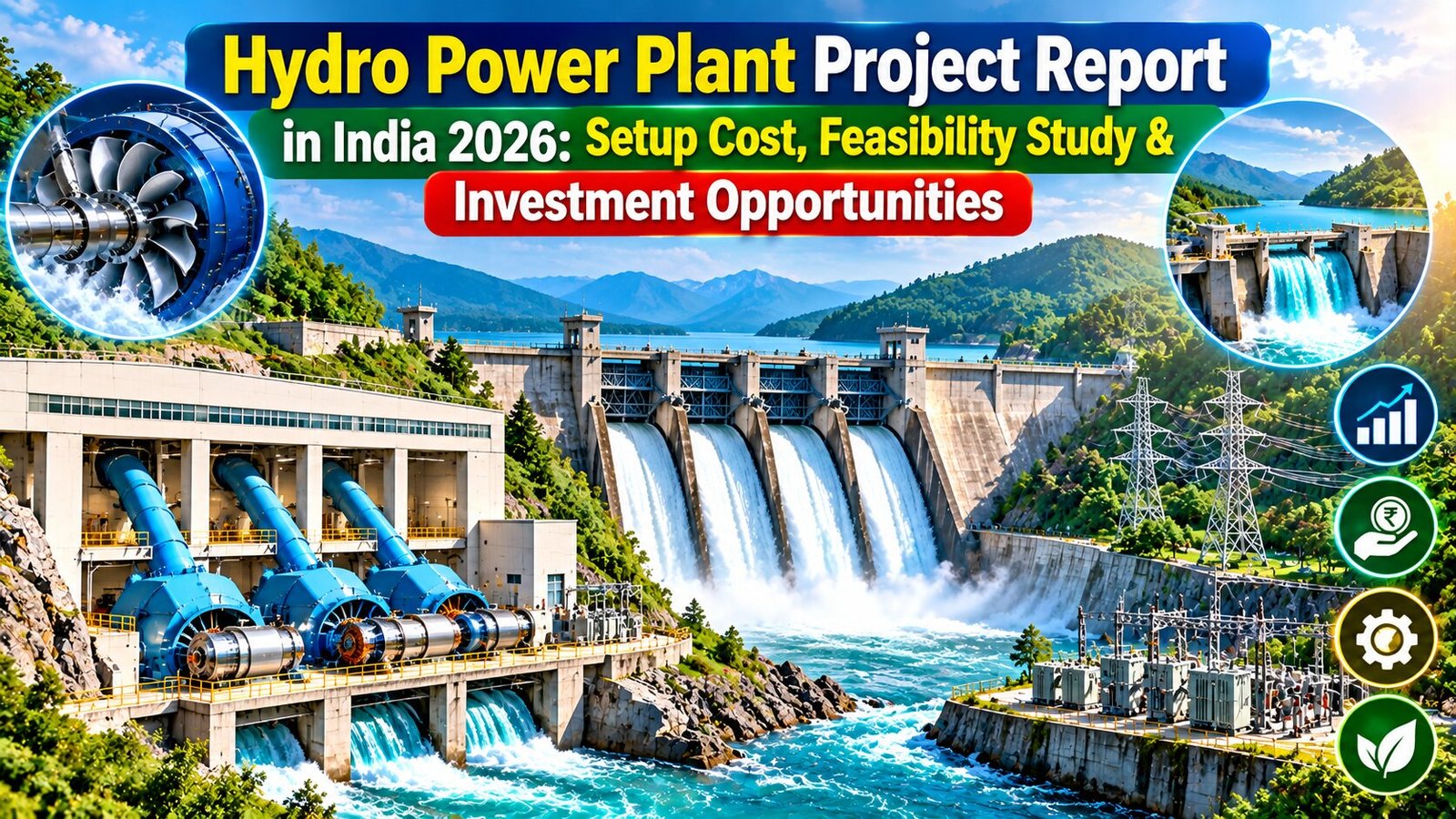
Setting up a hydro power plant in India presents a compelling investment case, given demand from electricity generation, utilities, renewable energy, industrial power supply, grid infrastructure, and energy storage. Rising electricity demand, renewable-energy integration, and grid-balancing requirements are driving development of new hydro projects and modernization of existing plants.
India’s power-generation planning includes significant additions of both conventional and pumped-storage hydropower capacity, positioning the country as a strategically sound location for this development. Per the Ministry of Power, Government of India, 11 pumped-storage projects totalling 15,870 MW were under construction as of July 2026, highlighting the growing role of this technology in grid flexibility.
Backed by a 12–18% IRR on a typical 25-year power purchase agreement, positive project NPV, and India’s own pipeline of 11 pumped-storage projects totalling 15,870 MW under construction, this investment offers a long-duration, policy-supported route into grid-scale renewable generation and energy storage.
What is Hydro Power?
A hydro power plant is a power-generation facility that converts the potential and kinetic energy of flowing or stored water into electricity. Water passes through a hydraulic system toward a turbine, which rotates and drives a generator to produce electrical power. Depending on the site, plants can be run-of-river, storage, or pumped-storage facilities, with components generally including dams or reservoirs, intake structures, penstocks, turbines, generators, transformers, gates, control systems, and transmission equipment. Pumped-storage variants move water between reservoirs, storing and generating electricity as required.
The hydro power manufacturing process uses site assessment, hydraulic design, civil construction, turbine and generator installation, electrical-system integration, control-system installation, testing, commissioning, and grid connection, serving industries such as electricity generation, utilities, renewable energy, industrial power supply, grid infrastructure, and energy storage.
Cost of Setting Up a Hydro Power Plant in India
The cost of a hydro power manufacturing plant depends on capacity, technology, location, automation, and regulatory compliance.
1. Capital Expenditure (CapEx)
Capital investment covers land acquisition, site preparation, and infrastructure, optimized through sites with strong hydrological potential and grid access. Civil works cover the dam or weir, intake structure, penstock or tunnel, and powerhouse.
Machinery is the largest portion of capital expenditure for a hydro power manufacturing plant, since equipment costs scale with capacity and technology. Key machinery required includes:
- Hydraulic turbines
- Generators
- Pump-turbines for pumped storage
- Intake gates
- Trash racks
- Penstocks
- Draft tubes
- Valves
- Cranes and hoists
- Transformers
- Switchgear
- Control and protection systems
- Excitation systems
- Governors
- Cooling systems
- Drainage and dewatering systems
- Compressed-air systems
- Water-treatment systems
- SCADA systems
- Power-quality monitoring equipment
- Electrical transmission equipment
Other capital costs include transmission infrastructure — switchyard, substation, transmission lines — plus pre-operative and commissioning expenses.
Request a Sample Report for In-Depth Market Insights: https://www.imarcgroup.com/hydro-power-plant-project-report/requestsample
2. Operational Expenditure (OpEx)
Infrastructure and civil works cost dominates the operating structure at approximately 75–90% of OpEx: civil works (dam/weir, intake structure, penstock/tunnel, powerhouse), electro-mechanical equipment (turbine, generator, governor, transformer), and transmission infrastructure (switchyard, substation, transmission lines). Long-term supplier contracts help secure consistent equipment delivery.
Operations and maintenance (O&M) cost is comparatively light at approximately 3–6% of OpEx. Other costs include transportation, salaries, depreciation, and taxes, rising over time on inflation, market fluctuations, and supply chain disruptions.
3. Plant Capacity
The proposed hydro power manufacturing plant is designed with an installed capacity of 10 MW to 1,000+ MW, enabling economies of scale while maintaining flexibility. Capacity is customized to investor requirements, and profitability improves with higher utilisation as fixed costs spread across greater output.
4. Profit Margins and Financial Projections
Financial projections cover net present value (NPV), internal rate of return (IRR), payback period, liquidity, and profitability analysis. A hydro power manufacturing plant’s returns are primarily supported by long-term power purchase agreements, with IRR typically ranging 12–18% on a 25-year PPA, and project NPV generally positive above 12% IRR.
Why Set Up a Hydro Power Plant in India?
Growing Electricity Demand: Rising power consumption is creating the need for additional generation capacity and reliable grid infrastructure across India and other growing economies.
Renewable-Energy Integration: Hydropower and pumped storage complement intermittent solar and wind generation, helping stabilize grids.
Long-Term Asset Life: Projects can provide electricity and grid services over several decades when properly maintained, supporting durable returns.
Energy Storage Opportunity: Pumped-storage plants provide large-scale, long-duration energy storage without relying on conventional battery systems.
Modernization Demand: Aging facilities require turbine replacement, generator upgrades, digital controls, and efficiency upgrades.
Diverse Plant Configurations for Different Sites: Run-of-river, storage, and pumped-storage configurations let developers match plant design to local hydrology, widening viable sites across India.
Government Planning and Active Investment: India’s power-generation planning includes significant additions of conventional and pumped-storage hydropower, evidenced by 11 projects totalling 15,870 MW under construction as of July 2026. In May 2026, GE Vernova received an order from Megha Engineering & Infrastructures Limited (MEIL) to equip the 1.35 GW Upper Sileru facility in Andhra Pradesh with nine 150 MW units, completion expected by 2030.
Manufacturing Process – Step by Step
The hydro power manufacturing process uses site assessment and hydraulic design as the starting point, followed by a series of construction, installation, and commissioning stages.
- Site Assessment and Hydraulic Design: Engineers evaluate water head, flow rate, and site conditions to set plant configuration.
- Civil Construction: Dam or weir, intake structure, penstock or tunnel, and powerhouse works are built to specification.
- Turbine and Generator Installation: Hydraulic turbines and generators are installed and aligned within the powerhouse.
- Electrical-System Integration: Transformers, switchgear, and transmission equipment are integrated with the generation units.
- Control-System Installation: SCADA systems, governors, and control and protection systems are installed for automated operation.
- Testing: Equipment and systems undergo testing to confirm performance against design.
- Commissioning: The facility is commissioned in stages, culminating in synchronization with the grid.
- Grid Connection: The plant connects to transmission infrastructure to begin dispatching power.
Key Applications
This facility serves a broad set of end-use industries centered on electricity generation and grid support:
- Grid Power Generation: Supplies electricity to national and regional transmission networks.
- Pumped-Storage Energy Storage: Stores surplus electricity by pumping water to an upper reservoir and generates electricity during periods of high demand.
- Renewable-Energy Integration: Helps balance variable generation from solar and wind power.
- Peak Demand Management: Provides flexible generation during periods of high electricity demand.
- Grid Stability: Supports frequency regulation, system flexibility, and reliable electricity supply.
- Industrial Power Supply: Provides electricity to energy-intensive industries and large industrial facilities.
Leading Manufacturers
Leading producers in this global industry include several multinational companies with extensive production capacities and diverse application portfolios. Key players include:
- Siemens
- ANDRITZ
- China Three Gorges Corporation
- Voith GmbH & Co. KGaA
Timeline to Start the Plant
- Feasibility study and project report preparation
- Land acquisition and site development
- Regulatory approvals and environmental clearances
- Factory licence and fire safety compliance
- Machinery procurement and installation
- Raw material supplier agreements and supply chain setup
- Trial production and quality testing
- Commercial production launch
Licences and Regulatory Requirements
Starting a hydro power manufacturing unit in India requires several approvals:
- Business registration (Proprietorship, LLP, or Pvt Ltd)
- Factory Licence under the Factories Act
- Environmental Clearance from State Pollution Control Board
- GST Registration
- Fire Safety NOC
- Effluent Treatment Plant (ETP) operational clearance
- Occupational Health and Safety compliance
Key Challenges to Consider
High Capital Requirements: Civil works and electro-mechanical equipment together account for 75–90% of OpEx, making upfront capital commitment substantial.
Infrastructure Cost Exposure: Dam, intake, penstock, and powerhouse construction, plus turbine, generator, and transformer costs, are exposed to material and construction-price movements.
Regulatory Compliance: SOPs, documentation protocols, traceability, and regular audits govern each stage, alongside environmental clearances for water-based infrastructure.
Competition from Established Players: Siemens, ANDRITZ, China Three Gorges Corporation, and Voith GmbH & Co. KGaA hold extensive production capacities.
Modernization and Technology Pressure: Focus on variable-speed technology, digital controls, and higher-efficiency turbines requires sustained investment.
Skilled Manpower: Hydraulic design, turbine installation, and control-system work require trained personnel.
Frequently Asked Questions
1. How much does it cost to set up a hydro power manufacturing plant in India?
Cost depends on capacity, site hydrology, civil works scope, and equipment specification; a detailed CapEx and OpEx breakdown is in the full feasibility report.
2. Is hydro power manufacturing profitable in India in 2026?
The facility demonstrates attractive profitability potential, with returns typically in the 12–18% IRR range based on a 25-year power purchase agreement and generally positive NPV above 12% IRR.
3. What machinery is required for a hydro power plant in India?
Key machinery includes hydraulic turbines, generators, pump-turbines for pumped storage, intake gates, trash racks, penstocks, draft tubes, valves, cranes and hoists, transformers, switchgear, control and protection systems, excitation systems, governors, cooling systems, drainage and dewatering systems, compressed-air systems, water-treatment systems, SCADA systems, power-quality monitoring equipment, and electrical transmission equipment.
4. What licences and approvals are required to start a hydro power plant in India?
Requirements include business registration, a Factory Licence, Environmental Clearance, GST Registration, Fire Safety NOC, ETP clearance, and occupational health and safety compliance.
5. What raw materials are needed for hydro power manufacturing?
Instead of consumable raw materials, this project depends on infrastructure and civil works: the dam/weir, intake structure, penstock/tunnel, powerhouse, and electro-mechanical and transmission equipment.
6. What are the environmental compliance requirements for a hydro power plant in India?
Plants require Environmental Clearance from the State Pollution Control Board, an operational Effluent Treatment Plant, and adherence to emission and safety monitoring standards.
7. What is the best location to set up a hydro power plant in India?
Sites should offer strong hydrological potential, proximity to transmission infrastructure, good construction access, and compliance with zoning and environmental regulations.
8. What is the break-even period for this type of plant in India?
Break-even timing depends on capacity utilisation, the PPA structure, and civil and electro-mechanical costs, assessed through payback period and net present value analysis.
9. What government incentives are available for manufacturers in India?
India’s power-generation planning includes significant hydropower and pumped-storage additions, with incentives generally tied to project location, state policy, and long-term power purchase agreements.
Key Takeaways for Investors
A hydro power manufacturing plant offers a compelling opportunity supported by demand from electricity generation, utilities, renewable energy, industrial power supply, grid infrastructure, and energy storage. Financial projections indicate sound viability across installed capacities of 10 MW to 1,000+ MW, with returns typically in the 12–18% IRR range on a 25-year PPA and generally positive NPV. India’s own pipeline of 11 pumped-storage projects totalling 15,870 MW under construction, alongside GE Vernova’s Upper Sileru order in Andhra Pradesh, points to sustained demand for grid-scale hydropower and energy storage capacity.
About the Author