Setting up a garment manufacturing plant in India presents a compelling investment case, driven by strong demand from the retail and fashion, sports and activewear, healthcare and uniforms, corporate and workwear, and luxury and high-end apparel sectors. Garments remain one of the largest manufacturing categories globally, and their role in India’s economy extends well beyond clothing production – the sector supports employment, exports, and downstream industries ranging from textiles to logistics, making a garment manufacturing plant a strategically important investment.
India’s urbanisation trends, expanding infrastructure, and the government’s Make in India initiative have positioned states such as Gujarat and Maharashtra as attractive manufacturing hubs, alongside established textile clusters across the country. Combined with growing global sourcing shifts toward India — as international apparel brands look to diversify away from traditional manufacturing hubs — the country offers a strategically sound base for a new garment manufacturing plant in India.
A garment manufacturing plant in India benefits from strong policy support, cost-competitive production, and consistent demand across retail, activewear, healthcare, and workwear segments. With gross margins typically ranging between 25-35% and net margins of 10-18%, the investment case is reinforced by scalable capacity, evolving global sourcing trends, and a break-even outlook that supports long-term viability.
What is a Garment?
A garment is defined as a broad range of clothing and apparel made from textiles, fibers, and fabrics, designed for covering the body. Garments include shirts, trousers, dresses, outerwear, activewear, and accessories, with raw materials ranging from cotton and polyester to wool, silk, and synthetic materials. The industry also includes specialized clothing such as uniforms, protective clothing, and sportswear, and has evolved to keep pace with fashion trends, textile technology advancements, and sustainable production practices.
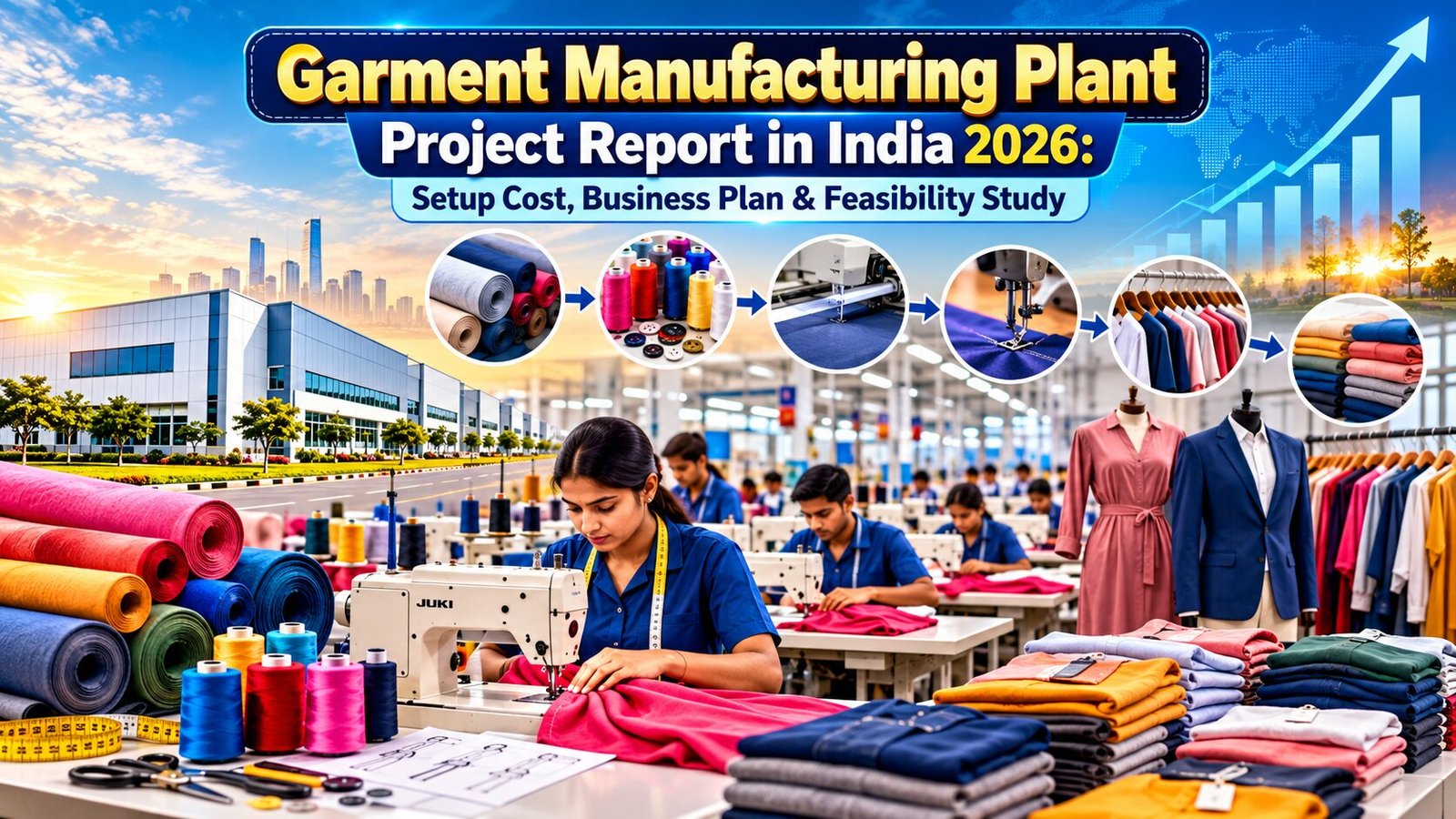
Garments are produced using fabric production, dyeing & printing, cutting & pattern making, sewing & stitching, finishing, and packaging as the core process stages. A garment manufacturing plant primarily serves the retail & fashion, sports & activewear, healthcare & uniforms, corporate & workwear, and luxury & high-end apparel industries.
Cost of Setting Up a Garment Manufacturing Plant in India
The cost of setting up a garment manufacturing plant in India depends on capacity, technology, location, automation, and regulatory compliance.
1. Capital Expenditure (CapEx)
Land and site development form a foundational part of the investment, with options including industrial estates and SEZs that offer supporting infrastructure for a garment manufacturing plant. Costs here typically cover land registration, boundary development, and related site preparation. Civil works and construction costs follow, covering the production shed, quality control lab, raw material and finished goods storage, and the administrative block, all of which need to be planned with future expansion in mind.
Machinery represents the largest share of capital expenditure. Key machinery required includes:
- Spinning machines
- Weaving & knitting machines
- Dyeing & printing machines
- Cutting machines
- Sewing machines
- Embroidery machines
- Pressing & finishing equipment
- Pattern making tables and fabric spreading machines
- Quality inspection devices
Other capital costs include pre-operative expenses, commissioning costs, and installation charges associated with bringing the plant to operational readiness.
Request a Sample Report for In-Depth Market Insights: https://www.imarcgroup.com/garment-manufacturing-plant-project-report/requestsample
2. Operational Expenditure (OpEx)
Raw material cost is the single largest component of OpEx for a garment manufacturing plant, accounting for approximately 60-70% of total operating expenses. Core raw materials include fabric (cotton, polyester, silk, wool, and synthetic materials), thread, buttons, zippers, trims, labels, and chemicals used for dyeing and finishing. Securing long-term supplier contracts helps stabilize pricing and ensures a consistent raw material supply.
Utility costs — covering electricity, water, and steam — account for around 5% of OpEx. Other operating costs include transportation, packaging, salaries and wages, depreciation, taxes, and repairs and maintenance. By the fifth year of operations, total operational costs are projected to increase substantially due to inflation, market fluctuations, supply chain disruptions, and rising consumer demand.
3. Plant Capacity
The proposed garment manufacturing plant is designed around an annual production capacity of 4 million pieces, which enables economies of scale while maintaining operational flexibility. Capacity can be customized to individual investor requirements, and profitability generally improves as capacity utilisation increases.
4. Profit Margins and Financial Projections
Financial projections for a garment manufacturing plant are built on realistic assumptions covering capital investment, operating costs, capacity utilisation, pricing trends, and demand outlook, and typically include liquidity analysis, profitability analysis, payback period, net present value (NPV), and internal rate of return (IRR). Gross profit margins for a garment manufacturing plant generally range between 25-35%, while net profit margins range between 10-18%, supported by stable demand and value-added product segments.
Why Set Up a Garment Plant in India?
Global Demand and Market Expansion: The garment industry is one of the largest manufacturing sectors globally, driven by constant demand for new clothing styles and a growing middle class in emerging markets, including India. The global garment market was valued at USD 2.44 Billion in 2025 and is projected to reach USD 3.43 Billion by 2034, growing at a CAGR of 3.8%.
Rising E-Commerce and Digital Retail: E-commerce accounted for 20.5% of total retail sales globally in 2025, projected to rise to 23.7% by 2030, making clothing more accessible worldwide and fueling demand for garment production capacity.
Policy and Regulatory Tailwinds: India’s Make in India initiative supports domestic manufacturing capabilities, complementing the country’s established textile and apparel production base.
Cost-Competitive Manufacturing: India’s manufacturing capabilities in textiles and apparel, combined with competitive land, labour, and supply chain costs, support the economics of a garment manufacturing plant in India.
Active Industry Investment: In January 2026, EU and UK apparel brands, including Next, Marks & Spencer, and Primark, discussed sourcing and supplier audits with Indian garment manufacturers — a realignment driven by expected tariff cuts under new FTAs, supply chain diversification away from traditional hubs like Bangladesh, and India’s strong manufacturing capabilities in textiles and apparel.
Sustainability and Technological Advancements: Innovations such as sustainable fibers, automated sewing machines, AI-driven design tools, and digital printing for customization are transforming garment manufacturing, positioning new plants to meet evolving consumer and brand requirements.
Manufacturing Process – Step by Step
The garment manufacturing process uses fabric production, dyeing & printing, cutting & pattern making, sewing & stitching, finishing, and packaging as the primary production stages.
- Designing: The garment design is finalized before production begins.
- Pattern Making: Patterns are created to guide fabric cutting.
- Fabric Sourcing: Fabric and other raw materials such as thread, buttons, zippers, and trims are procured.
- Fabric Cutting: Fabric is cut according to the finalized patterns using cutting machines.
- Dyeing & Printing: Fabric undergoes dyeing and printing as required by the design.
- Sewing and Stitching: Cut pieces are assembled using sewing and embroidery machines.
- Finishing and Pressing: Garments are finished using pressing and finishing equipment for a polished output.
- Quality Control: Finished garments undergo quality inspection using dedicated inspection devices.
- Packaging and Dispatch: Garments are packaged and dispatched to retail & fashion, sports & activewear, healthcare & uniforms, corporate & workwear, and luxury & high-end apparel buyers.
Key Applications
A garment manufacturing plant serves a wide range of end-use industries, from everyday retail clothing to specialized protective wear.
- Retail and Fashion Industry: Shirts, trousers, skirts, dresses, jackets, and accessories designed for varied consumer tastes and preferences.
- Sports and Activewear: Yoga pants, tracksuits, T-shirts, and specialized athletic wear for a fast-growing market segment.
- Healthcare and Uniforms: Scrubs, surgical gowns, lab coats, and uniforms for hospitality, aviation, and retail requiring durability and branding.
- Corporate and Workwear: Protective clothing, safety gear, and uniforms designed for factories, construction sites, and laboratories.
- Luxury Fashion and High-End Apparel: Designer garments, couture collections, limited-edition clothing, and exclusive accessories.
Leading Manufacturers
Leading manufacturers in the global garment industry include several multinational companies with extensive production capacities and diverse application portfolios.
- TORAY INDUSTRIES, INC.
- Arvind Limited
- Grasim Industries Limited
- YOUNGOR
- PVH Corp
- Tabb Textile Company Inc.
- Ruby Mills
Timeline to Start the Plant
- Feasibility study and project report preparation
- Land acquisition and site development
- Regulatory approvals and environmental clearances
- Factory licence and fire safety compliance
- Machinery procurement and installation
- Raw material supplier agreements and supply chain setup
- Trial production and quality testing
- Commercial production launch
Licences and Regulatory Requirements
Starting a garment manufacturing unit in India requires several approvals:
- Business registration (Proprietorship, LLP, or Pvt Ltd)
- Factory Licence under the Factories Act
- Environmental Clearance from State Pollution Control Board
- GST Registration
- Fire Safety NOC
- Effluent Treatment Plant (ETP) operational clearance
- Occupational Health and Safety compliance
Key Challenges to Consider
High Capital Requirements: Land acquisition, construction, equipment procurement, installation, and initial working capital together demand significant upfront investment for a garment manufacturing plant.
Raw Material Price Volatility: Fabric, thread, buttons, zippers, and trims are subject to price fluctuations, making long-term supplier contracts important for cost stability.
Regulatory Compliance: Securing environmental clearances, factory licences, and fire safety certifications requires careful planning and coordination across authorities.
Competition: Established players such as TORAY INDUSTRIES, Arvind Limited, Grasim Industries Limited, YOUNGOR, and PVH Corp represent significant competition in the global garment market.
Skilled Manpower: Recruiting and training skilled labour for sewing, pattern making, and quality control is essential to maintaining consistent production quality.
Operational Risk Management: Managing production efficiency, supply chain disruptions, and cost increases over time requires ongoing operational oversight.
Frequently Asked Questions
1. How much does it cost to set up a garment manufacturing plant in India?
Costs depend on capacity, technology, location, and automation level, covering land, civil works, machinery, and other capital costs.
2. Is garment manufacturing profitable in India in 2026?
Profitability depends on market demand, production efficiency, and pricing strategy, with gross margins of 25-35% and net margins of 10-18% typical for the sector.
3. What machinery is required for a garment plant in India?
Key machinery includes spinning machines, weaving & knitting machines, dyeing & printing machines, cutting machines, sewing machines, embroidery machines, and pressing & finishing equipment.
4. What licences and approvals are required to start a garment plant in India?
Requirements include business registration, factory licence, environmental clearance, GST registration, and fire safety NOC.
5. What raw materials are needed for garment manufacturing?
Fabric (cotton, polyester, silk, wool, synthetic materials), thread, buttons, zippers, trims, labels, and dyeing/finishing chemicals.
6. What are the environmental compliance requirements for a garment plant in India?
Plants require Environmental Clearance from the State Pollution Control Board and an operational Effluent Treatment Plant (ETP).
7. What is the best location to set up a garment plant in India?
Locations with strong textile infrastructure, such as Gujarat and Maharashtra, offer supply chain and workforce advantages.
8. What is the break-even period for this type of plant in India?
Break-even typically ranges from 3 to 5 years, depending on investment size, operational efficiency, and sales volume.
9. What government incentives are available for manufacturers in India?
Incentives may include capital subsidies, tax exemptions, reduced utility tariffs, and export benefits under applicable industrial policies.
Key Takeaways for Investors
A garment manufacturing plant in India offers a strong investment opportunity backed by consistent demand across retail & fashion, sports & activewear, healthcare & uniforms, corporate & workwear, and luxury & high-end apparel segments. Financial viability holds across plant capacities, with a 4-million-piece annual capacity model demonstrating gross margins of 25-35% and net margins of 10-18%. With the global garment market projected to grow from USD 2.44 Billion in 2025 to USD 3.43 Billion by 2034, and international brands actively realigning sourcing toward India, demand for domestic garment manufacturing capacity is set to remain sustainable over the long term.
About the Author