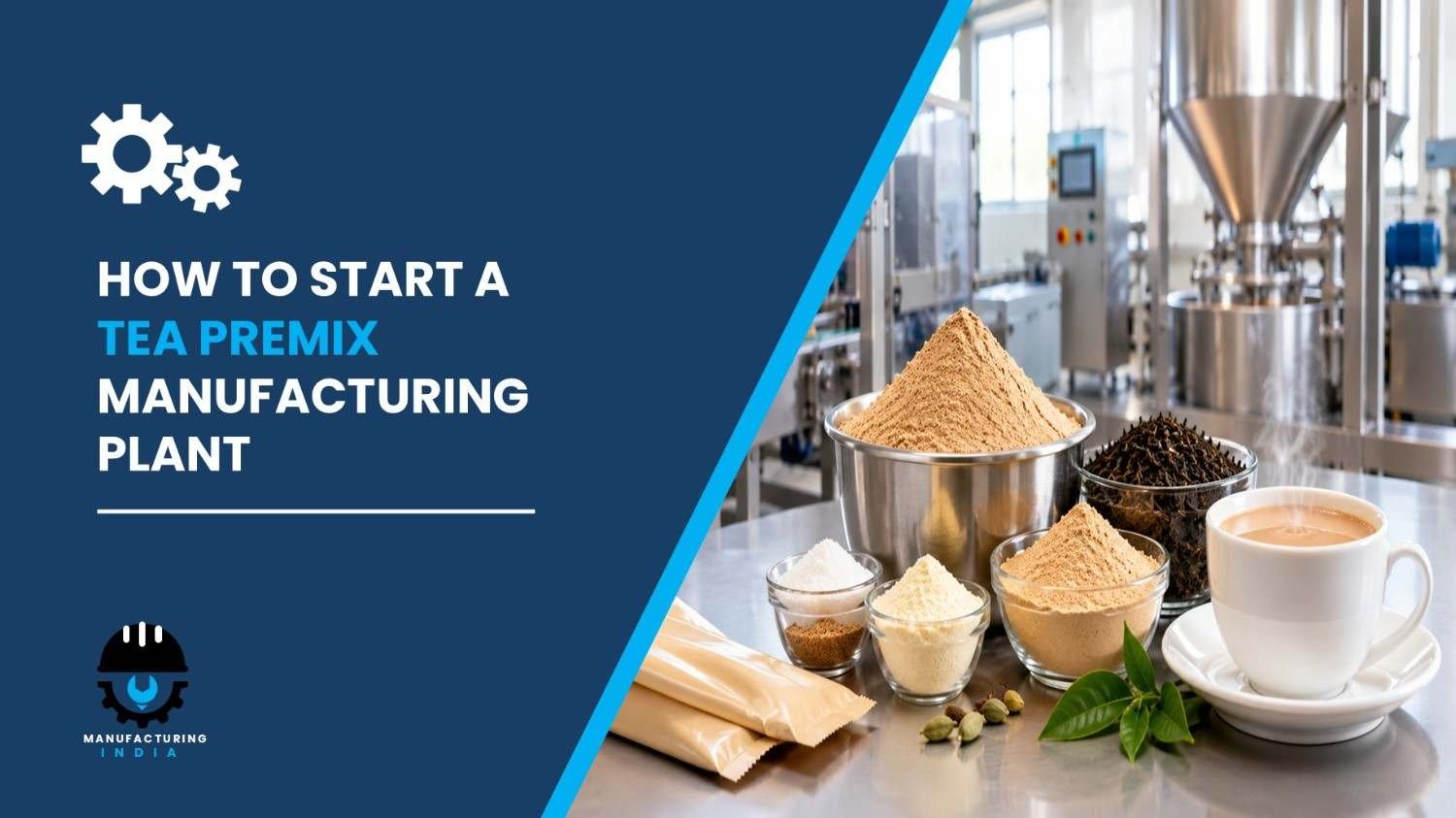
A tea premix manufacturing plant setup in India presents a compelling investment case for entrepreneurs who want to serve the fast-growing instant beverage segment. Demand is driven by households, offices, and the hospitality sector, along with a growing preference for convenient, ready-to-use products among urban consumers. Tea premix is critical to the food and beverage economy because it delivers fast preparation, reliable taste, and a stable shelf life for homes, workplaces, coffee shops, and hotel restaurants.
India offers clear advantages for this type of production. Urbanisation, fast-paced lifestyles, expanding café culture, and the spread of modern retail outlets are lifting tea consumption, and Asia-Pacific, led by India and China, is expected to remain the fastest-growing region. Government programmes aimed at strengthening food processing, cold chain logistics, and retail development provide indirect support, while local procurement of tea leaves, milk powders, and additives helps control cost and quality. Together, these factors make India a strategically sound base for production.
The investment case rests on rising demand for instant beverages across households, hospitality, and retail, indirect policy support for food processing, and local sourcing of key inputs. Gross margins of 30-40% and net margins of 12-20% point to healthy profitability, and a 2,000 metric tons per year facility offers economies of scale, supporting a viable path to break-even.
What is Tea Premix?
Tea premix is an instant powdered or granulated beverage mix that contains tea extracts, milk solids, sugar, flavorings, and stabilizers. Spray drying, blending, and homogenization give the product uniform taste, good solubility, and a stable shelf life. This combination of convenience, fast preparation, and reliable taste makes it suitable for homes, workplaces, coffee shops, and hotel restaurants.
Product innovation is widening the category. Flavored premixes, including herbal blends and low-sugar options, cater to health-conscious consumers, while instant tea powders and flavored milk tea mixes extend the range further. The production route covers extraction, spray drying, blending, homogenization, and packaging. The end-use industries served are food and beverage, hospitality, and retail.
Cost of Setting Up a Tea Premix Manufacturing Plant in India
The overall cost of a tea premix manufacturing plant depends on capacity, technology, location, level of automation, and regulatory compliance. IMARC Group’s report presents the economics through capital investment, operating expenses, and profitability analysis.
1. Capital Expenditure (CapEx)
Land and site development includes land acquisition, land registration, boundary development, site preparation, and related infrastructure, and forms a substantial part of the overall investment. The site should offer easy access to tea dust/powder, milk powder/whitener, and flavors and spices, along with reliable transportation, utilities, waste management, and compliance with local zoning and environmental rules.
Civil works cover separate areas for raw material storage, production, quality control, and finished goods storage, with space reserved for future expansion. Machinery accounts for the largest share of capital expenditure. Key machinery required includes:
- Tea extractors
- Evaporators
- Spray dryers
- Blenders
- Homogenizers
- Packing machines
- Quality control instruments
All equipment should be corrosion-resistant and comply with industry standards for safety, efficiency, and reliability. Other capital costs include effluent treatment systems and monitoring systems that detect leaks or deviations in the process.
Request a Sample Report for In-Depth Market Insights: https://www.imarcgroup.com/tea-premix-manufacturing-plant-project-report/requestsample
2. Operational Expenditure (OpEx)
Raw material cost is the dominant item, at 75-85% of total OpEx. Inputs include tea dust/powder, sugar, milk powder/whitener, and flavors and spices. Long-term contracts with reliable, nearby suppliers help stabilise pricing and secure steady supply.
Utility cost accounts for 5-8% of OpEx and covers electricity, water, and steam. Other operating costs include transportation, packaging, salaries and wages, repairs and maintenance, depreciation, and taxes. By the fifth year, total operating cost is expected to rise substantially due to inflation, market fluctuations, higher material costs, supply chain disruptions, rising consumer demand, and shifts in the global economy.
3. Plant Capacity
The proposed tea premix manufacturing plant is designed for an annual capacity of 2,000 metric tons, which enables economies of scale while preserving operational flexibility. Capacity can be customised to investor requirements, and profitability improves with higher capacity utilisation.
4. Profit Margins and Financial Projections
Under normal operating conditions, gross profit margins typically range between 30% and 40%, while net profit margins range between 12% and 20%. The full report covers NPV, IRR, payback period, liquidity analysis, and sensitivity analysis across a five-year projection.
Why Set Up a Tea Premix Plant in India?
Rising demand for convenience beverages: Tea premix enables instant drink preparation, which meets the needs of urban consumers who prefer ready-to-drink products. Households, offices, and the hospitality sector all contribute to this demand.
Urbanisation and café culture: Urbanisation, fast-paced lifestyles, and expanding café culture drive continuous growth in instant beverages. Asia-Pacific, led by India and China, is expected to be the fastest-growing region, supported by rising tea consumption and modern retail outlets.
Policy and regulatory tailwinds: The market receives indirect support from government programmes that aim to enhance the food processing sector, cold chain logistics, and retail industry development.
Moderate entry barriers: Producers must invest in spray drying and blending equipment, but established players can succeed through brand recognition, product development, and consistent quality.
Active industry investment: In September 2025, Hindustan Unilever’s Brooke Bond Red Label launched pre-mix masala chai sachets, backed by a moving train ad campaign. In May 2025, Continental Coffee, a subsidiary of CCL Products, entered the market with a new lemon premix for individual and family use, available pan-India in 400g pouches and 140g stick packs.
Local supply chain preference: Local procurement of tea leaves, milk powders, and additives delivers cost savings, quality control, and production efficiency.
Tea Premix Manufacturing Process – Step by Step
The tea premix manufacturing process uses extraction, spray drying, blending, and homogenization as the primary production method.
- Raw material handling: Tea dust/powder, sugar, milk powder/whitener, and flavors and spices are received and checked.
- Extraction: Tea extractors draw out the tea extract.
- Evaporation: Evaporators concentrate the extract before drying.
- Spray drying: Spray dryers convert the concentrate into a powder or granules.
- Blending: Blenders combine the base with milk solids, sugar, flavorings, and stabilizers.
- Homogenization: Homogenizers ensure uniform taste and solubility.
- Quality assurance: Analytical instruments monitor concentration, purity, and stability, with documentation for traceability.
- Packaging and dispatch: Packing machines fill the product, which is dispatched to households, food service, and retail.
Key Applications
Tea premix serves instant tea drinks, ready-to-serve beverages, and flavored milk tea mixes across several channels.
- Households: Quick and convenient tea preparation for daily consumption.
- Food service and hospitality: Used in cafes, restaurants, and hotels.
- Retail sector: Packaged premix sold in grocery stores, supermarkets, and e-commerce platforms.
Leading Manufacturers
Leading global tea premix companies have extensive production capacities and diverse application portfolios. Key players include:
- Keurig Green Mountain Inc.
- Ito En Ltd.
- Suntory Beverage & Food Ltd.
- The Republic of Tea Inc.
- Starbucks Corp.
- Ajinomoto General Foods Inc.
- The Coca Cola Company
- Vending Updates India Pvt. Ltd.
- Dunkin Brands Group Inc.
- Monster Beverage Company
- C. B. Shah & Co. (Tweak)
- Wagh Bakri Tea Group
- Girnar Food & Beverages Pvt. Ltd.
Timeline to Start the Plant
- Feasibility study and project report preparation
- Land acquisition and site development
- Regulatory approvals and environmental clearances
- Factory licence and fire safety compliance
- Machinery procurement and installation
- Raw material supplier agreements and supply chain setup
- Trial production and quality testing
- Commercial production launch
Licences and Regulatory Requirements
Starting a tea premix manufacturing unit in India requires several approvals:
- Business registration (Proprietorship, LLP, or Pvt Ltd)
- Factory Licence under the Factories Act
- Environmental Clearance from State Pollution Control Board
- GST Registration
- Fire Safety NOC
- Effluent Treatment Plant (ETP) operational clearance
- Occupational Health and Safety compliance
Key Challenges to Consider
High capital requirements: A tea premix manufacturing plant needs spray drying and blending equipment, along with extractors, evaporators, and homogenizers, which makes machinery the largest capital item.
Raw material price volatility: Tea dust/powder, sugar, and milk powder/whitener make up 75-85% of OpEx, so price swings directly affect margins.
Regulatory compliance: Every tea premix manufacturing plant must meet zoning, environmental, and emission standards, with effluent treatment in place.
Innovation pressure: Consumers increasingly favour flavored, herbal, and low-sugar variants, so product development must keep pace.
Competition: Established players such as Wagh Bakri Tea Group, Girnar Food & Beverages Pvt. Ltd., and C. B. Shah & Co. (Tweak) compete on brand recognition and quality.
Skilled manpower: Operating spray drying and quality control systems requires trained staff, and training helps contain operating costs.
Frequently Asked Questions
1. How much does it cost to set up a tea premix manufacturing plant in India?
The cost depends on capacity, technology, and location. Machinery is the largest capital item, and the IMARC report details CapEx for a 2,000 metric tons per year facility.
2. Is tea premix manufacturing profitable in India in 2026?
Gross margins typically range between 30% and 40%, and net margins between 12% and 20%, under normal operating conditions.
3. What machinery is required for a tea premix plant in India?
Tea extractors, evaporators, spray dryers, blenders, homogenizers, packing machines, and quality control instruments.
4. What licences and approvals are required to start a tea premix plant in India?
Business registration, Factory Licence, Environmental Clearance, GST Registration, Fire Safety NOC, ETP clearance, and Occupational Health and Safety compliance.
5. What raw materials are needed for tea premix manufacturing?
Tea dust/powder, sugar, milk powder/whitener, and flavors and spices.
6. What are the environmental compliance requirements for a tea premix plant in India?
The facility needs effluent treatment systems, compliance with emission standards and local zoning laws, and monitoring systems to detect leaks or deviations.
7. What is the best location to set up a tea premix plant in India?
Choose a site with easy access to raw materials, proximity to target markets, robust infrastructure, and compliance with zoning rules.
8. What is the break-even period for this type of plant in India?
Break-even depends on capacity utilisation, pricing, and costs. The IMARC report includes payback period and break-even analysis.
9. What government incentives are available for manufacturers in India?
The market receives indirect support from government programmes that enhance food processing, cold chain logistics, and retail development.
Key Takeaways for Investors
The tea premix opportunity is anchored in household, hospitality, and retail demand for instant beverages. Financial viability is supported by gross margins of 30-40% and net margins of 12-20% for a 2,000 metric tons per year tea premix manufacturing plant. North America holds over 40% of the market, while Asia-Pacific, led by India and China, is the fastest-growing region. With urbanisation and café culture still expanding, demand for convenient tea should remain durable.
About the Author