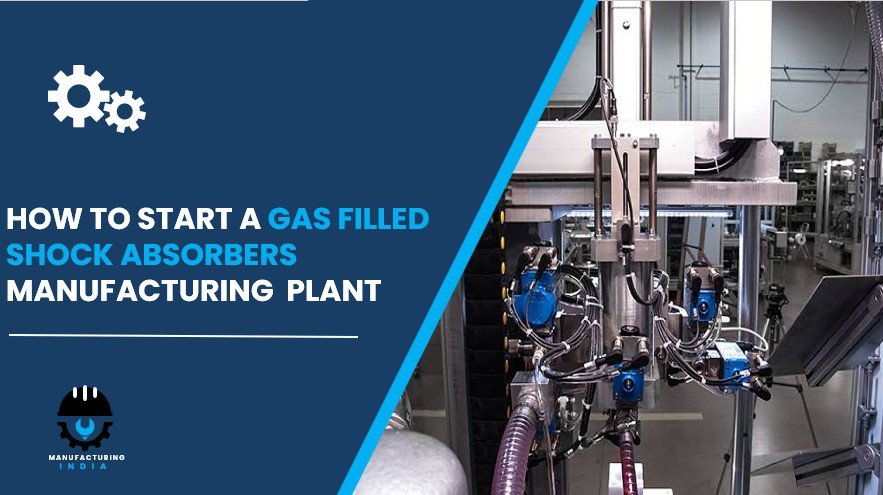
Setting up a gas filled shock absorbers manufacturing plant is driven by the increasing demand from the automotive, construction, and industrial sectors. According to industrial reports, APAC holds the largest share, about 32–35% of the overall market share. This feasibility report covers a comprehensive market overview to micro-level information such as unit operations involved, raw material requirements, utility requirements, infrastructure requirements, machinery and technology requirements, manpower requirements, packaging requirements, and transportation requirements, along with a detailed setup cost covering project economics, capital investments (CapEx), operating expenses (OpEx), income and expenditure projections, and financial analysis.
What is Gas Filled Shock Absorbers?
Gas-filled shock absorbers are a type of damper used primarily in vehicles and machinery to absorb and dampen shocks, vibrations, and impacts, enhancing overall ride quality and control. These shock absorbers are filled with nitrogen gas or other gases, which help maintain consistent damping performance under varying temperatures and load conditions. The gas acts to reduce foam formation, eliminate cavitation, and increase performance durability. Commonly used in automotive suspensions, off-road vehicles, and heavy machinery, gas-filled shock absorbers provide enhanced reliability, longer lifespan, and superior performance compared to conventional hydraulic shock absorbers. For businesses planning to enter this industry, understanding the gas filled shock absorbers plant setup cost in India is essential for evaluating the investment required for land, machinery, utilities, labor, raw materials, and other operational expenses.
Minimum Cost Required to Set Up a Gas Filled Shock Absorbers Manufacturing Plant:
Industry cost benchmarking for gas filled shock absorbers manufacturing indicates a minimum entry investment of approximately USD 8–12 million for a smaller-scale facility with a capacity of around 2 million units/year, covering essential equipment such as CNC lathes and milling machines, tube cutting and forming machinery, welding systems, seal assembly stations, fluid filling units, nitrogen gas charging systems, leak-testing stations, painting lines, and final assembly conveyors. Capital requirements can increase to around USD 15–25 million for mid-sized plants with capacities of approximately 3–4 million units/year, while larger and highly automated facilities can require USD 30–40 million or more for capacities approaching 5 million units/year, particularly where advanced manufacturing automation, high-pressure gas charging, performance-testing systems, quality-control infrastructure, utilities, and environmental systems are incorporated. IMARC’s 2026 report specifies a proposed production capacity of 2–5 million units annually and identifies tube formation, component machining, sub-assembly, hydraulic fluid filling, nitrogen charging, testing, and final assembly as key production stages.
Key Investment Highlights
- Process Used: Tube formation (rolling, welding), component machining, sub-assembly.
- End-use Industries: Automotive, motorsports, heavy-duty transportation, industrial machinery.
- Applications: Used for gas spring components, precision suspension valves, high-pressure accumulator cells, and seal reinforcement within monotube and twin-tube assemblies.
Request Sample: https://www.imarcgroup.com/gas-filled-shock-absorbers-manufacturing-plant-project-report/requestsample
Gas Filled Shock Absorbers Plant Capacity:
The proposed manufacturing facility is designed with an annual production capacity ranging between 2–5 million units, enabling economies of scale while maintaining operational flexibility.
Gas Filled Shock Absorbers Plant Profit Margins:
The project demonstrates healthy profitability potential under normal operating conditions. Gross profit margins typically range between 30–40%, supported by stable demand and value-added applications.
- Gross Profit: 30–40%
- Net Profit: 12–18%
Gas Filled Shock Absorbers Plant Cost Analysis:
The operating cost structure of a gas filled shock absorbers manufacturing plant is primarily driven by raw material consumption, particularly steel tubes, which accounts for approximately 65–75% of total operating expenses (OpEx).
- Raw Materials: 65–75% of OpEx
- Utilities: 10–15% of OpEx
Financial Projection:
The financial projections for the proposed project have been developed based on realistic assumptions related to capital investment, operating costs, production capacity utilization, pricing trends, and demand outlook. These projections provide a comprehensive view of the project’s financial viability, ROI, profitability, and long-term sustainability.
Major Applications:
- Component Assembly (piston rods, seals, and internal valving systems)
- Gas Charging Systems (nitrogen filling units and pressure control equipment)
- Hydraulic Systems (oil filling, damping mechanisms, and fluid circulation components)
- Quality Testing & Finishing (leak testing, pressure testing, and performance validation)
Why Gas Filled Shock Absorbers Manufacturing?
- Critical Automotive & Mobility Component: Gas filled shock absorbers are essential to vehicle safety, ride comfort, and handling performance. They play a vital role across passenger cars, commercial vehicles, two-wheelers, rail coaches, and off-highway equipment, making them a core component in modern mobility systems.
- Moderate but Defensible Entry Barriers: While capital and tooling requirements are lower than highly complex automotive electronics, gas filled shock absorbers demand precision engineering, strict dimensional tolerances, controlled gas charging, sealing integrity, and extensive durability testing. Long OEM qualification cycles and performance certifications create meaningful entry barriers that favor technically capable and quality-focused manufacturers.
- Megatrend Alignment: Growth in global vehicle production, electric vehicles, premium passenger cars, and improved road infrastructure is driving sustained demand for high-performance suspension systems. EVs and heavier vehicles require advanced damping solutions, supporting steady long-term growth.
- Policy & Infrastructure Push: Government initiatives promoting domestic automotive manufacturing, vehicle safety norms, fleet modernization, and public transportation expansion (such as metro rail and electric buses) are indirectly boosting demand for reliable gas filled shock absorbers and localized component manufacturing.
- Localization & Supply Chain Reliability: Automotive OEMs increasingly prefer local suppliers to reduce lead times, manage cost volatility, and ensure consistent quality and just-in-time delivery. This trend creates strong opportunities for regional manufacturers with efficient production, testing capabilities, and dependable supply chains.
Gas Filled Shock Absorbers Industry Outlook 2026:
The gas filled shock absorbers market is driven by the surge in automotive production and the growing demand for high-performance vehicles. According to the International Organization of Motor Vehicle Manufacturers (OICA), global vehicle production exceeded 93 million units in 2024, marking a steady recovery from pandemic levels. Consumer preferences for enhanced ride comfort and vehicle stability are fueling this demand. Additionally, the increasing adoption of off-road and recreational vehicles in regions with challenging terrains further accelerates the need for durable shock absorption solutions. Rising infrastructure development projects in developing economies are contributing to demand in the construction and heavy machinery sectors. Technological advancements in shock absorber design, including the introduction of adjustable and electronic dampers, are enhancing performance and extending the lifespan of shock absorbers, thereby driving market growth. The growing trend of improving safety, comfort, and durability in both passenger and commercial vehicles is contributing significantly to the overall growth of the gas-filled shock absorbers market.
Leading Gas Filled Shock Absorbers Manufacturers:
Leading manufacturers in the global gas filled shock absorbers industry include several multinational companies with extensive production capacities and diverse application portfolios. Key players include:
- KYB Corporation
- Bilstein
- Monroe
- Sachs (ZF Friedrichshafen AG)
- Gabriel India Limited
- Fuchs Petrolub AG
All of the above serve end-use sectors such as automotive, motorsports, heavy-duty transportation, and industrial machinery.
How to Setup a Gas Filled Shock Absorbers Manufacturing Plant?
Setting up a gas filled shock absorbers manufacturing plant requires evaluating several key factors, including technological requirements and quality assurance. Some of the critical considerations include:
Detailed Process Flow:
The manufacturing process is a multi-step operation that involves several unit operations, material handling, and quality checks. Below are the main stages involved in the gas filled shock absorbers manufacturing process flow:
- Unit Operations Involved
- Mass Balance and Raw Material Requirements
- Quality Assurance Criteria
- Technical Tests
- Site Selection: The location must offer easy access to key raw materials such as steel tubes, pistons, seals, nitrogen gas, oil, welding materials. Proximity to target markets will help minimize distribution costs. The site must have robust infrastructure, including reliable transportation, utilities, and waste management systems. Compliance with local zoning laws and environmental regulations must also be ensured.
- Plant Layout Optimization: The layout should be optimized to enhance workflow efficiency, safety, and minimize material handling. Separate areas for raw material storage, production, quality control, and finished goods storage must be designated. Space for future expansion should be incorporated to accommodate business growth.
- Equipment Selection: High-quality, corrosion-resistant machinery tailored for gas filled shock absorbers production must be selected. Essential equipment includes CNC lathes and milling machines, tube cutting and forming machinery, welding systems, seal assembly stations, fluid filling units, high-pressure gas charging systems, leak-testing stations, painting lines, and final assembly conveyors. All machinery must comply with industry standards for safety, efficiency, and reliability.
- Raw Material Sourcing: Reliable suppliers must be secured for raw materials like steel tubes, pistons, seals, nitrogen gas, oil, welding materials to ensure consistent production quality. Minimizing transportation costs by selecting nearby suppliers is essential. Sustainability and supply chain risks must be assessed, and long-term contracts should be negotiated to stabilize pricing and ensure a steady supply.
- Safety and Environmental Compliance: Safety protocols must be implemented throughout the manufacturing process of gas filled shock absorbers. Advanced monitoring systems should be installed to detect leaks or deviations in the process. Effluent treatment systems are necessary to minimize environmental impact and ensure compliance with emission standards.
- Quality Assurance Systems: A comprehensive quality control system should be established throughout production. Analytical instruments must be used to monitor product concentration, purity, and stability. Documentation for traceability and regulatory compliance must be maintained.
Project Economics:
Establishing and operating a gas filled shock absorbers manufacturing plant involves various cost components, including:
- Capital Investment: The total capital investment depends on plant capacity, technology, and location. This investment covers land acquisition, site preparation, and necessary infrastructure.
- Equipment Costs: Equipment costs, such as those for CNC lathes and milling machines, tube cutting and forming machinery, welding systems, seal assembly stations, fluid filling units, high-pressure gas charging systems, leak-testing stations, painting lines, and final assembly conveyors, represent a significant portion of capital expenditure. The scale of production and automation level will determine the total cost of machinery.
- Raw Material Expenses: Raw materials, including steel tubes, pistons, seals, nitrogen gas, oil, welding materials, are a major part of operating costs. Long-term contracts with reliable suppliers will help mitigate price volatility and ensure a consistent supply of materials.
- Infrastructure and Utilities: Costs associated with land acquisition, construction, and utilities (electricity, water, steam) must be considered in the financial plan.
- Operational Costs: Ongoing expenses for labor, maintenance, quality control, and environmental compliance must be accounted for. Optimizing processes and providing staff training can help control these operational costs.
- Financial Planning: A detailed financial analysis, including income projections, expenditures, and break-even points, must be conducted. This analysis aids in securing funding and formulating a clear financial strategy.
Capital Expenditure (CapEx) and Operational Expenditure (OpEx) Analysis:
Capital Investment (CapEx): Machinery costs account for the largest portion of the total capital expenditure. The cost of land and site development, including charges for land registration, boundary development, and other related expenses, forms a substantial part of the overall investment. This allocation ensures a solid foundation for safe and efficient plant operations.
Operating Expenditure (OpEx): In the first year of operations, the operating cost for the gas filled shock absorbers manufacturing plant is projected to be significant, covering raw materials, utilities, depreciation, taxes, packing, transportation, and repairs and maintenance. By the fifth year, the total operational cost is expected to increase substantially due to factors such as inflation, market fluctuations, and potential rises in the cost of key materials. Additional factors, including supply chain disruptions, rising consumer demand, and shifts in the global economy, are expected to contribute to this increase.
Frequently Asked Questions:
1. How much capital is required to start a gas filled shock absorbers manufacturing plant?
The capital required to establish a gas filled shock absorbers manufacturing plant varies depending on production capacity, automation level, technology, location, and infrastructure requirements. Major capital expenditure components include land and site development, civil works, manufacturing machinery, utilities, installation, quality-control facilities, material handling systems, safety infrastructure, and pre-operative expenses. Working capital should also be considered for raw materials, labor, maintenance, packaging, transportation, and other operating requirements.
According to the IMARC Group report, machinery represents a significant portion of the capital expenditure, while steel tubes are the major operating-cost component. The proposed facility covered in the report has an annual production capacity of approximately 2–5 million units.
2. How do I start a gas filled shock absorbers manufacturing business?
Starting a gas filled shock absorbers manufacturing business involves conducting a feasibility study, selecting an appropriate site, arranging financing, obtaining the necessary approvals, designing the plant layout, procuring machinery, establishing raw-material supply agreements, and recruiting skilled technical personnel. The production facility should include dedicated areas for raw-material storage, machining and forming, welding, assembly, gas charging, testing, quality control, and finished-goods storage.
The manufacturing process generally involves tube formation through cutting, rolling and welding, component machining, sub-assembly, seal installation, fluid filling, high-pressure gas charging, testing, finishing, and final assembly. Strong quality assurance, traceability, workplace safety, and environmental management systems are also important for serving automotive and industrial customers.
3. What raw materials are required for gas filled shock absorbers manufacturing?
The primary raw materials and components required include steel tubes, piston rods, pistons, seals and sealing elements, nitrogen gas, hydraulic or damping oil, welding materials, and other precision-engineered internal components. Packaging materials are also required for protecting finished shock absorbers during storage and transportation.
Steel tubes represent the largest raw-material expense, accounting for approximately 65–75% of total operating expenditure (OpEx), while utilities account for around 10–15% of OpEx. Establishing reliable suppliers and maintaining consistent material quality are therefore essential for controlling costs and ensuring product performance.
4. What machinery and equipment are required to start a gas filled shock absorbers manufacturing plant?
A gas filled shock absorbers manufacturing plant requires a combination of precision machining, tube-processing, assembly, gas-charging, testing, and finishing equipment. Key machinery includes CNC lathes and milling machines, tube cutting and forming machines, welding systems, seal assembly stations, fluid filling units, high-pressure nitrogen gas charging systems, leak-testing equipment, painting or finishing lines, and final assembly conveyors.
Additional equipment may include material-handling systems, cleaning units, dimensional inspection instruments, pressure and durability testing rigs, quality-control equipment, and packaging machinery. Equipment selection should be based on the intended production capacity, product specifications, degree of automation, and required quality standards.
5. What are the biggest challenges in starting a gas filled shock absorbers manufacturing business?
Major challenges include fluctuations in steel and other component prices, maintaining a consistent supply of precision-engineered parts, achieving tight dimensional tolerances, ensuring sealing integrity, and maintaining consistent damping performance. Manufacturers also need to manage high-pressure nitrogen charging safely and implement rigorous leak, pressure, durability, and performance testing.
Additional challenges include high initial machinery and tooling costs, skilled-labor requirements, long OEM qualification cycles, supply-chain disruptions, regulatory compliance, and maintaining reliable just-in-time deliveries. Effective quality-control systems, supplier diversification, preventive maintenance, and robust safety procedures can help mitigate these risks.
6. Who are the top gas filled shock absorbers manufacturers in the world?
Some of the leading manufacturers and industry players in the global gas filled shock absorbers market include KYB Corporation, Bilstein, Monroe, Sachs (ZF Friedrichshafen AG), Gabriel India Limited, and Fuchs Petrolub AG. These companies serve applications across automotive, motorsports, heavy-duty transportation, and industrial machinery.
Buy the full Gas Filled Shock Absorbers Manufacturing Plant Cost report: https://www.imarcgroup.com/checkout?id=14380&method=2175
About Us:
IMARC Group is a global management consulting firm that helps the world’s most ambitious changemakers to create a lasting impact. The company excels in understanding its client’s business priorities and delivering tailored solutions that drive meaningful outcomes. We provide a comprehensive suite of market entry and expansion services. Our offerings include thorough market assessment, feasibility studies, company incorporation assistance, factory setup support, regulatory approvals and licensing navigation, branding, marketing and sales strategies, competitive landscape, and benchmarking analyses, pricing and cost research, and procurement research.
Contact Us:
IMARC Group
134 N 4th St. Brooklyn, NY 11249, USA
Email: sales@imarcgroup.com
Tel No: (D) +91 120 433 0800
United States: (+1-201-971-6302)
About the Author