Setting up a frozen shrimp manufacturing plant in India presents a compelling investment case, given demand from food processing, retail, foodservice, hospitality, seafood distribution, and export sectors. Growing adoption of sustainable shrimp farming practices, certification programs, and disease management technologies is strengthening long-term supply reliability for this high-value export product.
India’s established aquaculture and export infrastructure positions the country as a strategically sound location for this production. Government initiatives such as Marine Products Export Development Authority (MPEDA) programs and the Pradhan Mantri Matsya Sampada Yojana (PMMSY) are strengthening the domestic manufacturing ecosystem for this product, supporting both export earnings and value-added seafood manufacturing.
Backed by a global market valued at USD 18.50 Billion in 2025, direct policy support through MPEDA and PMMSY, and established export infrastructure, this investment offers a route into one of the world’s most-traded seafood products, with steady demand from retail, foodservice, and export markets supporting sound break-even viability.
What is Frozen Shrimp?
Frozen shrimp is a widely consumed seafood product consisting of small swimming crustaceans that are harvested, cleaned, and rapidly chilled at ultra-low temperatures to lock in flavor, nutritional value, and texture. This industrial preservation method stops bacterial growth and prevents cellular damage, making frozen options often fresher than market counter displays.
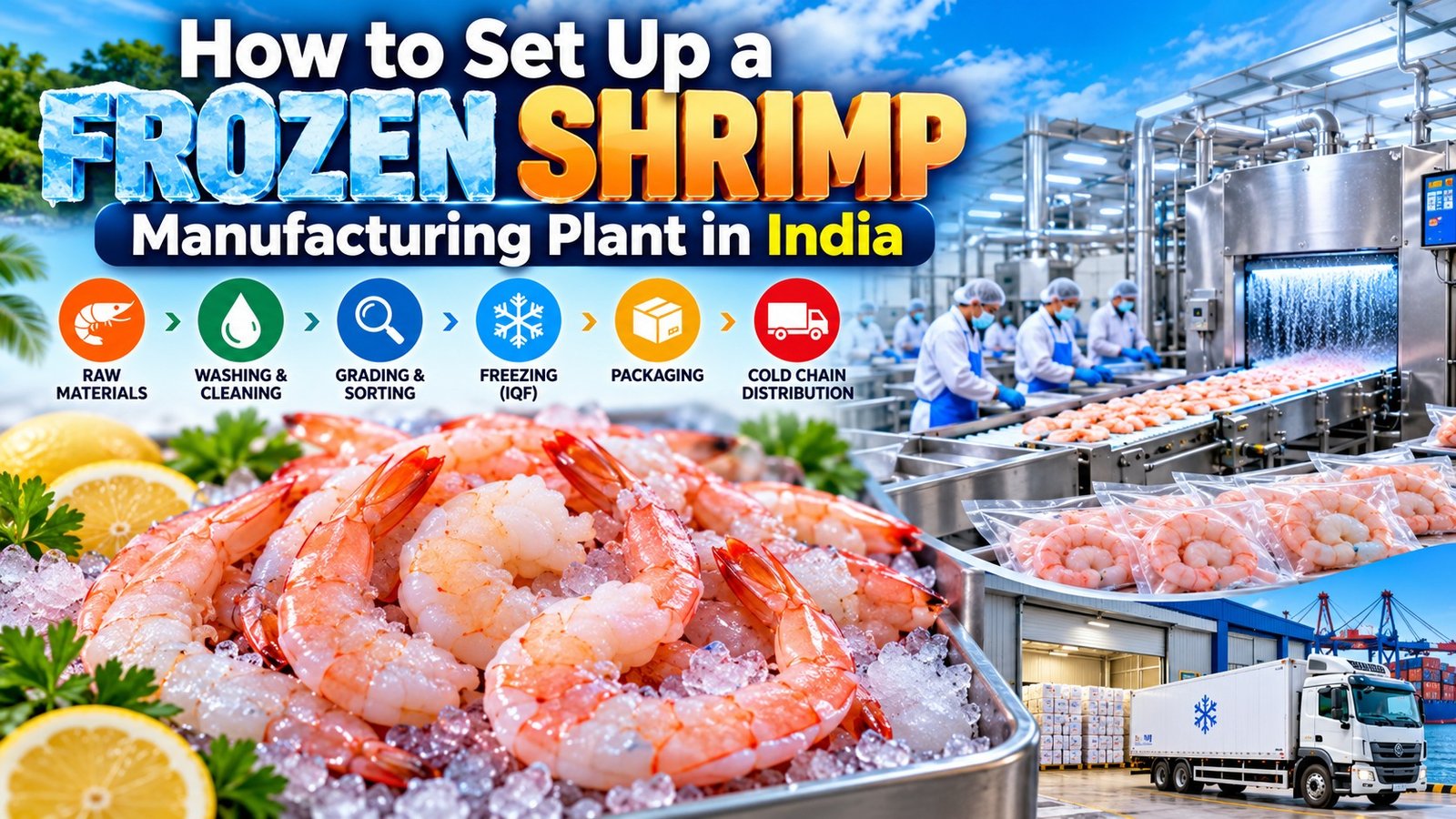
The frozen shrimp manufacturing process uses receiving, washing, grading, deheading/peeling (as required), deveining, sulfite treatment, quick-freezing, glazing, packaging, and cold storage. This method serves end-use industries such as food processing, retail, foodservice, hospitality, seafood distribution, and export.
Cost of Setting Up a Frozen Shrimp Manufacturing Plant in India
The cost of a frozen shrimp manufacturing plant depends on capacity, technology, location, automation, and regulatory compliance.
1. Capital Expenditure (CapEx)
Capital investment covers land acquisition, site preparation, and infrastructure, optimized through industrial estates or SEZ-linked plots with developed utilities and faster approvals. Civil works cover the production shed, laboratory, cold storage areas, and administrative block.
Machinery is the largest portion of capital expenditure for a frozen shrimp manufacturing plant, since equipment costs scale with automation level and capacity. Key machinery required includes:
- Washing and grading machines
- Deheading and peeling equipment
- Deveining machines
- Blanching/sulfite treatment tanks
- IQF freezers
- Glazing systems
- Weighing and packaging machines
- Metal detectors
- Cold storage facilities
Other capital costs include effluent treatment systems, monitoring systems to detect leaks or process deviations, pre-operative and commissioning expenses, and import duties on machinery.
Request a Sample Report for In-Depth Market Insights: https://www.imarcgroup.com/frozen-shrimp-manufacturing-plant-project-report/requestsample
2. Operational Expenditure (OpEx)
Raw material cost dominates the operating structure at approximately 65–75% of OpEx, driven by fresh/live shrimp, along with sodium metabisulfite, salt/brine, and IQF glazing water. This unusually high share makes long-term supplier contracts essential to stabilize pricing and secure consistent supply.
Utility cost, covering electricity, water, and steam, accounts for approximately 10–14% of OpEx. Other costs include transportation, packaging, salaries, depreciation, taxes, and maintenance. By the fifth year, operational cost is expected to rise on inflation, market fluctuations, and supply chain disruptions.
3. Plant Capacity
The proposed facility is designed with an annual manufacturing capacity ranging between 10,000–30,000 MT, enabling economies of scale while maintaining flexibility. Capacity can be customized to investor requirements, and profitability improves with higher capacity utilisation as fixed costs spread across greater output.
4. Profit Margins and Financial Projections
Financial projections cover net present value (NPV), internal rate of return (IRR), payback period, liquidity, and profitability analysis. Under normal conditions, a frozen shrimp manufacturing plant typically shows gross margins of 14–22% and net margins of 5–10%, reflecting profitability supported by stable demand and value-added applications.
Why Set Up a Frozen Shrimp Plant in India?
High-Value Export-Oriented Food Processing Industry: Frozen shrimp is one of the most-traded seafood products globally, serving retail, foodservice, and processing industries across North America, Europe, Asia-Pacific, and the Middle East, positioning it as a strategic product for export earnings.
Moderate but Justifiable Entry Barriers: Although less capital-intensive than highly automated food processing industries, production requires stringent quality control, cold chain infrastructure, HACCP and international food safety certifications, and compliance with export regulations, favouring established, quality-focused producers.
Megatrend Alignment: Rising global seafood consumption, increasing preference for convenient ready-to-cook products, expanding quick-service restaurants, and growing demand for high-protein diets are driving sustained demand, while aquaculture expansion continues to support long-term market growth.
Policy and Export Promotion Support: Government initiatives promoting seafood exports, aquaculture development, cold chain infrastructure, and food processing investments, including MPEDA programs and the PMMSY scheme in India, are strengthening the domestic manufacturing ecosystem.
Localization and Supply Chain Reliability: International buyers increasingly prefer reliable processors with integrated sourcing networks, advanced freezing technologies, and robust quality assurance systems, creating opportunities for efficient regional manufacturers.
Active Industry Investment: In February 2026, High Liner Foods’ Sea Cuisine brand partnered with Guinness to launch Sea Cuisine Guinness Battered Fish Strips and Shrimp, now available in US grocery and club stores — reflecting continued product innovation and brand investment across the category.
Manufacturing Process – Step by Step
The frozen shrimp manufacturing process uses receiving and washing as the starting point, followed by a series of unit operations, material handling steps, and quality checks.
- Receiving and Washing: Washing and grading machines clean and sort incoming shrimp by size and quality.
- Grading: Shrimp are graded to meet product and customer specifications.
- Deheading and Peeling: Deheading and peeling equipment removes heads and shells as required by the product format.
- Deveining: Deveining machines remove the digestive tract for a cleaner final product.
- Sulfite Treatment: Blanching/sulfite treatment tanks treat the shrimp to preserve color and extend shelf life.
- IQF Freezing: IQF freezers individually quick-freeze each piece to lock in texture and quality.
- Glazing: Glazing systems apply a protective ice layer to prevent dehydration during storage.
- Packaging and Cold Storage: Weighing and packaging machines, supported by metal detectors, prepare product for cold storage and dispatch to retail, foodservice, and export end-users.
Key Applications
This product serves a broad set of end-use industries centered on seafood distribution:
- Retail and Supermarkets: Packaged product sold through grocery stores, hypermarkets, and retail chains.
- Foodservice: Restaurants, hotels, cafés, and catering services for seafood-based meals.
- Food Processing: Ready-to-cook meals, frozen seafood mixes, instant noodles, and value-added seafood products.
- Export Markets: Bulk product supplied to international seafood distributors, wholesalers, and importers.
Leading Manufacturers
Leading manufacturers in this global industry include several multinational companies with extensive manufacturing capacities and diverse application portfolios. Key players include:
- Thai Union Group
- CP Foods
- High Liner Foods
Timeline to Start the Plant
- Feasibility study and project report preparation
- Land acquisition and site development
- Regulatory approvals and environmental clearances
- Factory licence and fire safety compliance
- Machinery procurement and installation
- Raw material supplier agreements and supply chain setup
- Trial production and quality testing
- Commercial production launch
Licences and Regulatory Requirements
Starting a frozen shrimp manufacturing unit in India requires several approvals:
- Business registration (Proprietorship, LLP, or Pvt Ltd)
- Factory Licence under the Factories Act
- Environmental Clearance from State Pollution Control Board
- GST Registration
- Fire Safety NOC
- HACCP and food safety/export compliance
- Effluent Treatment Plant (ETP) operational clearance
- Occupational Health and Safety compliance
Key Challenges to Consider
High Capital Requirements: Machinery is the largest share of capital expenditure, with quick-freezing and cold storage systems demanding significant investment.
Raw Material Price Volatility: With fresh/live shrimp at 65–75% of OpEx, margins are unusually exposed to shrimp price and supply movements, making sourcing strategy decisive.
Regulatory Compliance: HACCP, international food safety certification, traceability systems, SOPs, documentation protocols, and regular audits govern each stage, with export-market compliance adding further rigor.
Competition from Established Players: Thai Union Group, CP Foods, and High Liner Foods hold extensive manufacturing capacities and diverse application portfolios.
Cold Chain and Quality Pressure: Maintaining an unbroken cold chain from harvest through freezing, storage, and distribution requires sustained investment in infrastructure and monitoring.
Skilled Manpower: Grading, deveining, and quality-control operations require trained personnel to maintain consistent standards.
Frequently Asked Questions
1. How much does it cost to set up a frozen shrimp manufacturing plant in India?
Cost depends on capacity, automation level, land and site development, and civil works; a detailed CapEx and OpEx breakdown is covered in the full feasibility report.
2. Is frozen shrimp manufacturing profitable in India in 2026?
The facility demonstrates healthy profitability potential, with gross margins of 14–22% and net margins of 5–10% under normal operating conditions.
3. What machinery is required for a frozen shrimp plant in India?
Key machinery includes washing and grading machines, deheading and peeling equipment, deveining machines, blanching/sulfite treatment tanks, IQF freezers, glazing systems, weighing and packaging machines, metal detectors, and cold storage facilities.
4. What licences and approvals are required to start a frozen shrimp plant in India?
Requirements include business registration, a Factory Licence, Environmental Clearance, GST Registration, Fire Safety NOC, HACCP and food safety/export compliance, ETP clearance, and occupational health and safety compliance.
5. What raw materials are needed for frozen shrimp manufacturing?
Fresh/live shrimp, sodium metabisulfite, salt/brine, and IQF glazing water are the primary raw materials.
6. What are the environmental compliance requirements for a frozen shrimp plant in India?
Plants require Environmental Clearance from the State Pollution Control Board, an operational Effluent Treatment Plant, and adherence to emission and safety monitoring standards.
7. What is the best location to set up a frozen shrimp plant in India?
Sites should offer access to raw materials, proximity to target markets, robust transportation and utility infrastructure, and compliance with zoning and environmental regulations.
8. What is the break-even period for this type of plant in India?
Break-even timing depends on capacity utilisation, pricing, and cost structure, assessed through payback period and net present value analysis.
9. What government incentives are available for manufacturers in India?
Incentives vary by state and are typically tied to industrial estate or SEZ location, land and infrastructure support, and regulatory compliance; MPEDA programs and the PMMSY scheme further support seafood manufacturers in India.
Key Takeaways for Investors
A frozen shrimp manufacturing plant offers a compelling opportunity supported by demand from food processing, retail, foodservice, hospitality, seafood distribution, and export sectors. Financial projections indicate sound viability across capacities of 10,000–30,000 MT annually, with gross margins of 14–22% and net margins of 5–10%. The global market, valued at USD 18.50 Billion in 2025 and projected to reach USD 30.47 Billion by 2034 at a 5.7% CAGR, alongside India’s MPEDA and PMMSY policy support, points to sustained demand for this high-value, export-oriented seafood product.
About the Author