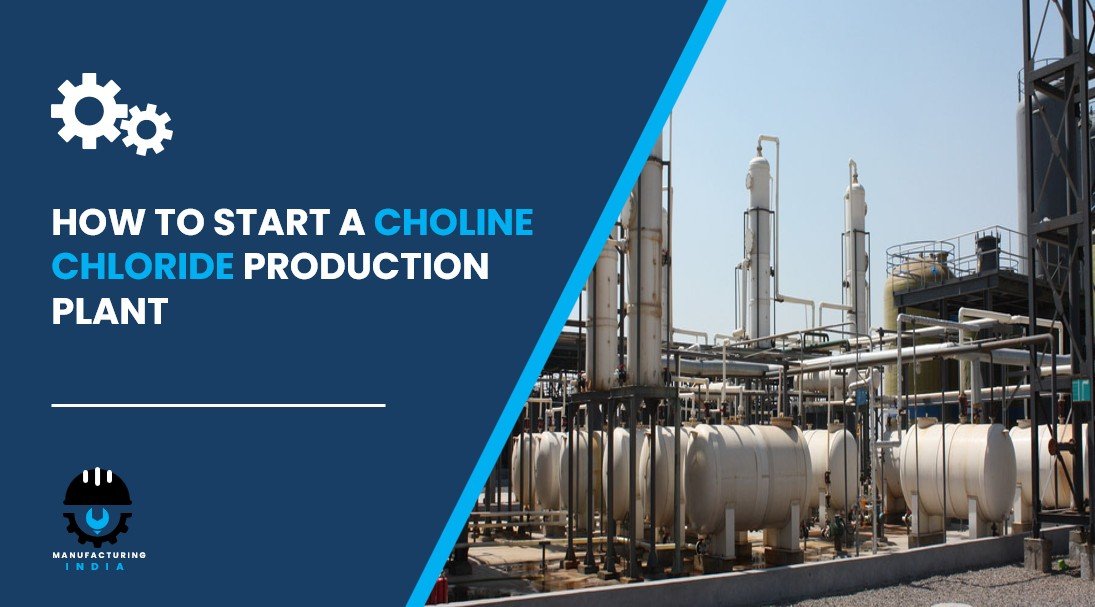
Setting up a choline chloride production plant is driven by the increasing demand for animal nutrition additives, growth in the livestock and poultry sectors, rising awareness regarding feed efficiency, and expanding applications in pharmaceuticals and personal care. The choline chloride market size was valued at USD 626.36 Million in 2025. According to IMARC Group estimates, the market is expected to reach USD 1,062.43 Million by 2034, exhibiting a CAGR of 6.1% from 2026 to 2034. This feasibility report covers a comprehensive market overview to micro-level information such as unit operations involved, raw material requirements, utility requirements, infrastructure requirements, machinery and technology requirements, manpower requirements, packaging requirements, and transportation requirements, along with a detailed setup cost covering project economics, capital investments (CapEx), operating expenses (OpEx), income and expenditure projections, and financial analysis.
What is Choline Chloride?
Choline chloride is a water-soluble quaternary ammonium compound widely used as an essential nutrient additive, primarily in animal feed formulations. It plays a critical role in lipid metabolism, liver function, and cellular structure by supporting the synthesis of phospholipids and neurotransmitters. Commercially, choline chloride is available in liquid form as well as dry powder adsorbed on carriers such as silica or corncob. It is extensively utilized in poultry, swine, and aquaculture feed to enhance growth performance, improve feed conversion ratios, and prevent fatty liver syndrome. In addition to feed applications, choline chloride is also used in pharmaceuticals, oil and gas drilling fluids, and as a clay stabilizer. Its stability, high bioavailability, and compatibility with various formulations make it a vital ingredient in industrial and nutritional applications. Businesses and entrepreneurs exploring this sector can also evaluate the choline chloride production plant setup cost in India to understand the investment requirements, infrastructure needs, machinery costs, and overall project feasibility.
Minimum Cost Required to Set Up a Choline Chloride Production Plant:
Industry cost benchmarking for choline chloride production indicates a minimum entry investment of approximately USD 15–25 million for a smaller-scale facility with a capacity of around 20,000 MT/year, covering essential equipment such as reaction vessels, raw material storage tanks, dosing systems, condensers, evaporators, concentration units, spray dryers for powder production, and automated packaging systems. Capital requirements can increase to around USD 30–45 million for mid-sized plants with capacities of approximately 30,000–40,000 MT/year, while larger and highly automated facilities can require USD 50–70 million or more for capacities approaching 50,000 MT/year, particularly where advanced process controls, corrosion-resistant equipment, emission-control systems, quality-control laboratories, utilities, and material-handling infrastructure are incorporated. IMARC’s 2026 report specifies a proposed production capacity of 20,000–50,000 tons annually and identifies the chemical reaction, concentration, drying for powder formulations, and packaging as key production stages.
Key Investment Highlights
- Process Used: Reaction of trimethylamine with ethylene oxide or hydrochloric acid, followed by neutralization, concentration, drying (for powder form), and packaging.
- End-use Industries: Animal feed industry, pharmaceutical industry, oil and gas industry, and personal care and chemical manufacturing sectors.
- Applications: Used as a feed additive, liver protectant in livestock, drilling fluid additive, and intermediate in chemical synthesis.
Choline Chloride Plant Capacity
The proposed production facility is designed with an annual production capacity ranging between 20,000–50,000 tons, enabling economies of scale while maintaining operational flexibility.
Choline Chloride Plant Profit Margins
The project demonstrates healthy profitability potential under normal operating conditions. Gross profit margins typically range between 30–40%, supported by stable demand and value-added applications.
- Gross Profit: 30–40%
- Net Profit: 15–22%
Choline Chloride Plant Cost Analysis
The operating cost structure of a choline chloride production plant is primarily driven by raw material consumption, particularly hydrochloric acid, which accounts for approximately 60–70% of total operating expenses (OpEx).
- Raw Materials: 60–70% of OpEx
- Utilities: 15–20% of OpEx
Financial Projection
The financial projections for the proposed project have been developed based on realistic assumptions related to capital investment, operating costs, production capacity utilization, pricing trends, and demand outlook. These projections provide a comprehensive view of the project’s financial viability, ROI, profitability, and long-term sustainability.
Major Applications
- Animal Feed Industry: Choline chloride is widely incorporated into poultry, swine, and aquaculture feed to improve growth rates, metabolic functions, and overall animal health.
- Pharmaceutical Industry: It is used in formulations supporting liver health, cognitive function, and as a nutritional supplement in therapeutic applications.
- Oil and Gas Industry: Acts as a clay stabilizer in drilling fluids, preventing swelling and improving drilling efficiency in challenging formations.
- Chemical Industry: Utilized as an intermediate in the production of specialty chemicals and as a phase transfer catalyst in various reactions.
Request Sample: https://www.imarcgroup.com/choline-chloride-manufacturing-plant-project-report/requestsample
Why Choline Chloride Production?
- Rising Demand for Animal Nutrition: Growing global meat consumption is increasing the demand for efficient feed additives such as choline chloride to improve livestock productivity.
- Essential Nutritional Additive: Its critical biological role ensures consistent demand across poultry and livestock industries worldwide.
- Expanding Industrial Applications: Increasing use in oilfield chemicals and pharmaceuticals enhances market diversification and revenue streams.
- Cost-Effective Production: Scalable production processes and availability of raw materials support efficient manufacturing and competitive pricing.
- Stable and Growing Market: Moderate but steady growth ensures long-term investment viability with relatively lower market volatility.
Choline Chloride Industry Outlook 2026
The choline chloride market is primarily driven by the expansion of the global livestock and poultry sectors, supported by rising protein consumption and increasing demand for high-quality animal nutrition. Rapid industrialization of the feed industry, particularly in emerging economies, is further strengthening market growth. Regulatory emphasis on animal health and productivity has encouraged the adoption of nutritionally balanced feed additives, including choline chloride. Additionally, the growing aquaculture industry is contributing to demand, as choline chloride supports metabolic functions and improves feed efficiency in aquatic species. For instance, according to the data reported by OECD, aquaculture is set to remain the primary growth engine in global fisheries, with total production projected to reach 212 Mt by 2034. Its share is expected to rise to about 56%. This expansion is likely to drive increased demand for choline chloride, widely used in aquatic feed formulations.
Leading Choline Chloride Producers
Leading producers in the global choline chloride industry include several multinational companies with extensive production capacities and diverse application portfolios. Key players include:
- Balaji Amines Ltd.
- Balchem Inc.
- BASF SE
- Eastman Chemical Company
- Imperial Group Limited
- Liaoning Biochem Co. Ltd.
- Nuproxa Switzerland Ltd.
All of the above serve end-use sectors such as the animal feed industry, pharmaceutical industry, oil and gas industry, and chemical manufacturing sector.
How to Setup a Choline Chloride Production Plant?
Setting up a choline chloride production plant requires evaluating several key factors, including technological requirements and quality assurance. Some of the critical considerations include:
Detailed Process Flow
The production process is a multi-step operation that involves several unit operations, material handling, and quality checks. Below are the main stages involved in the choline chloride production process flow:
- Unit Operations Involved
- Mass Balance and Raw Material Requirements
- Quality Assurance Criteria
- Technical Tests
- Site Selection: The location must offer easy access to key raw materials such as hydrochloric acid, ethylene oxide, and trimethylamine. Proximity to target markets will help minimize distribution costs. The site must have robust infrastructure, including reliable transportation, utilities, and waste management systems. Compliance with local zoning laws and environmental regulations must also be ensured.
- Plant Layout Optimization: The layout should be optimized to enhance workflow efficiency, safety, and minimize material handling. Separate areas for raw material storage, production, quality control, and finished goods storage must be designated. Space for future expansion should be incorporated to accommodate business growth.
- Equipment Selection: High-quality, corrosion-resistant machinery tailored for choline chloride production must be selected. Essential equipment includes reactors, storage tanks, distillation units, evaporators, spray dryers, material handling systems, and packaging units. All machinery must comply with industry standards for safety, efficiency, and reliability.
- Raw Material Sourcing: Reliable suppliers must be secured for raw materials like hydrochloric acid, ethylene oxide, and trimethylamine to ensure consistent production quality. Minimizing transportation costs by selecting nearby suppliers is essential. Sustainability and supply chain risks must be assessed, and long-term contracts should be negotiated to stabilize pricing and ensure a steady supply.
- Safety and Environmental Compliance: Safety protocols must be implemented throughout the production process of choline chloride. Advanced monitoring systems should be installed to detect leaks or deviations in the process. Effluent treatment systems are necessary to minimize environmental impact and ensure compliance with emission standards.
- Quality Assurance Systems: A comprehensive quality management system should be implemented across all stages of operations to ensure consistent product and service standards. Appropriate testing, monitoring, and validation processes must be established to evaluate performance, safety, reliability, and compliance with applicable regulatory and industry requirements. Standard operating procedures (SOPs), documentation protocols, and traceability mechanisms should be maintained to support transparency, risk management, and continuous improvement. Regular audits, inspections, and corrective action frameworks should also be integrated to enhance overall operational excellence.
Speak to an Analyst: https://www.imarcgroup.com/request?type=report&id=10491&flag=C
Project Economics
Establishing and operating a choline chloride production plant involves various cost components, including:
- Capital Investment: The total capital investment depends on plant capacity, technology, and location. This investment covers land acquisition, site preparation, and necessary infrastructure.
- Equipment Costs: Equipment costs, such as those for reactors, storage tanks, distillation units, evaporators, spray dryers, material handling systems, and packaging units, represent a significant portion of capital expenditure. The scale of production and automation level will determine the total cost of machinery.
- Raw Material Expenses: Raw materials, including hydrochloric acid, ethylene oxide, and trimethylamine, are a major part of operating costs. Long-term contracts with reliable suppliers will help mitigate price volatility and ensure a consistent supply of materials.
- Infrastructure and Utilities: Costs associated with land acquisition, construction, and utilities (electricity, water, steam) must be considered in the financial plan.
- Operational Costs: Ongoing expenses for labor, maintenance, quality control, and environmental compliance must be accounted for. Optimizing processes and providing staff training can help control these operational costs.
- Financial Planning: A detailed financial analysis, including income projections, expenditures, and break-even points, must be conducted. This analysis aids in securing funding and formulating a clear financial strategy.
Capital Expenditure (CapEx) and Operational Expenditure (OpEx) Analysis
Capital Investment (CapEx): Machinery costs account for the largest portion of the total capital expenditure. The cost of land and site development, including charges for land registration, boundary development, and other related expenses, forms a substantial part of the overall investment. This allocation ensures a solid foundation for safe and efficient plant operations.
Operating Expenditure (OpEx): In the first year of operations, the operating cost for the choline chloride production plant is projected to be significant, covering raw materials, utilities, depreciation, taxes, packing, transportation, and repairs and maintenance. By the fifth year, the total operational cost is expected to increase substantially due to factors such as inflation, market fluctuations, and potential rises in the cost of key materials. Additional factors, including supply chain disruptions, rising consumer demand, and shifts in the global economy, are expected to contribute to this increase.
Latest Industry Developments
- March 2026: A research study published by the Journal of Ionic Liquids highlighted choline chloride-based deep eutectic solvents demonstrating notable physicochemical stability, low toxicity, and enhanced biodegradability. Findings emphasize strong anti-tyrosinase activity, supporting potential skin depigmentation applications. The study underscores formulation versatility and cost efficiency, strengthening interest in sustainable cosmetic ingredients centered on choline chloride.
- February 2026: A research study published by the Royal Society of Chemistry demonstrated a continuous-flow, biomass-based pathway improving sustainability in chemical manufacturing. The process achieved 99% purity with one-minute conversion and 20-fold productivity gains, while reducing energy demand by 51% and environmental impact by 24% through optimized base selection and lifecycle efficiency, reinforcing scalable green production of choline chloride.
Frequently Asked Questions
1. How much capital is required to start a choline chloride production plant?
The capital required to establish a choline chloride production plant depends on production capacity, plant location, manufacturing technology, automation level, and infrastructure requirements. Major investment components include land acquisition, site development, factory construction, chemical-processing machinery, installation, utilities, storage facilities, quality-control laboratories, and pre-operative expenses. Working capital must also be allocated for raw materials, employee salaries, maintenance, packaging, transportation, and other operating costs.
2. How do I start a choline chloride production business?
Starting a choline chloride production business involves conducting a feasibility study, identifying target markets, arranging financing, selecting a suitable industrial site, obtaining the necessary regulatory approvals, and procuring appropriate manufacturing equipment. Entrepreneurs should establish dependable supply agreements for chemical feedstocks and develop distribution channels serving animal feed manufacturers, pharmaceutical companies, and other industrial customers.
3. What raw materials are required for choline chloride production?
The primary raw materials used in choline chloride production include trimethylamine, ethylene oxide, hydrochloric acid, and water, with the exact requirements depending on the selected production route and formulation. Additional materials may include carriers such as silica or corn-cob-based materials for certain dry feed-grade products, as well as packaging materials and process auxiliaries.
4. What machinery and equipment are required to start a choline chloride manufacturing plant?
A choline chloride manufacturing plant requires specialized equipment for chemical reaction, storage, concentration, product finishing, and packaging. Essential machinery includes chemical reactors, corrosion-resistant storage tanks, mixing systems, pumps, heat exchangers, evaporators, and process-control equipment. Depending on the selected manufacturing route and product form, the facility may also require separation or purification units, drying systems, and blending equipment.
5. Who are the top choline chloride manufacturers in the world?
Prominent companies operating in the global choline chloride market include BASF SE, Eastman Chemical Company, Jubilant Ingrevia Limited, NB Group Co. Ltd., and Taian Havay Group Co., Ltd. These companies are associated with the broader choline chloride supply chain, serving applications that include animal nutrition, feed additives, and selected industrial and chemical markets.
Buy Report Now: https://www.imarcgroup.com/checkout?id=10491&method=2175
About Us:
IMARC Group is a global management consulting firm that helps the world’s most ambitious changemakers to create a lasting impact. The company excels in understanding its client’s business priorities and delivering tailored solutions that drive meaningful outcomes. We provide a comprehensive suite of market entry and expansion services. Our offerings include thorough market assessment, feasibility studies, company incorporation assistance, factory setup support, regulatory approvals and licensing navigation, branding, marketing and sales strategies, competitive landscape, and benchmarking analyses, pricing and cost research, and procurement research.
Contact Us:
IMARC Group
134 N 4th St. Brooklyn, NY 11249, USA
Email: sales@imarcgroup.com
Tel No: (D) +91 120 433 0800
United States: (+1-201-971-6302)
About the Author