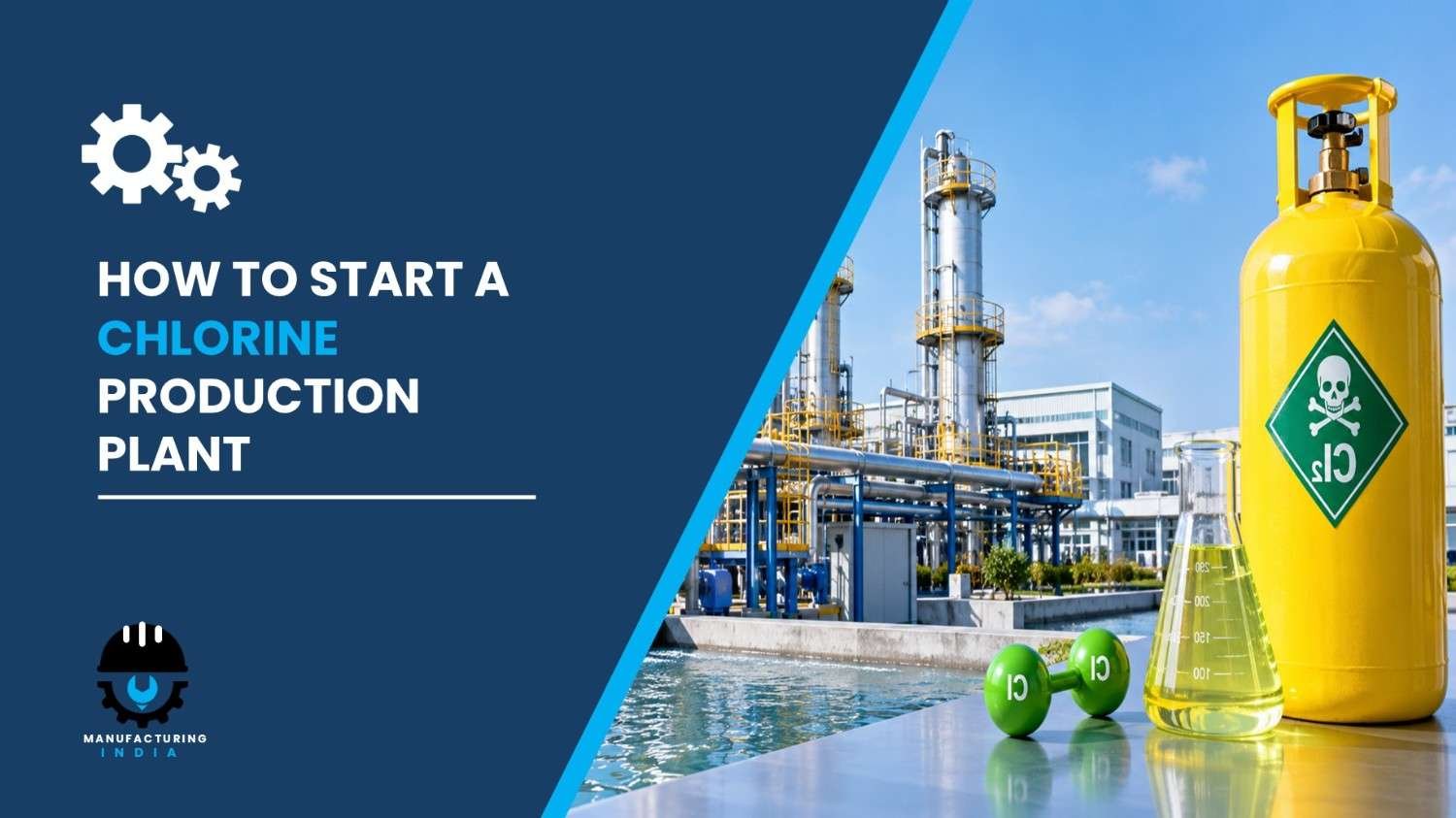
A chlorine production plant setup in India presents a compelling investment case for entrepreneurs and chemical groups targeting water and wastewater treatment, chemical production, plastics and polymers, pharmaceuticals, pulp and paper, and textile processing. Chlorine is a fundamental building block of the chemical industry, required for downstream products such as polyvinyl chloride (PVC), solvents, and disinfectants. Its strong oxidising and antimicrobial properties also make it central to water purification and sanitation. The global chlorine market was valued at USD 26.40 Billion in 2025, and IMARC Group estimates it will reach USD 35.20 Billion by 2034, exhibiting a CAGR of 3.2% from 2026 to 2034.
Urbanisation is increasing the use of PVC in construction and plumbing, while the growth of the chemical and plastics industries lifts demand for chlorinated intermediates. In September 2025, DCM Shriram Ltd and Aarti Industries Ltd signed a long-term chlorine supply agreement linked to a downstream chemicals facility at Zone IV, Jhagadia, Gujarat. Integration between chlor-alkali producers and downstream users of this kind is a strong reason why India is a strategically sound base for production.
The investment case rests on diversified demand from water treatment, PVC, chemicals, and pharmaceuticals. Gross margins of 35-45%, net margins of 18-25%, and a typical break-even of 3 to 6 years support the economics, while government incentives and proximity to salt, electricity, and downstream buyers can improve returns further.
What is Chlorine?
Chlorine is a highly reactive halogen element and a greenish-yellow gas at room temperature, with a strong, pungent odour. Chlorine is primarily produced through the electrolysis of sodium chloride (brine) in the chlor-alkali process, and it serves as an essential raw material for PVC, solvents, pharmaceuticals, and disinfectants. Due to its oxidising and antimicrobial properties, it is also used in water purification, sanitation, and industrial processing.
The chlorine production process combines brine purification, electrolysis, gas separation and collection, drying and compression, and liquefaction and storage. The end-use industries served include:
- Water and wastewater treatment
- Chemical production
- Plastics and polymers
- Pharmaceuticals
- Pulp and paper
- Textile processing
Cost of Setting Up a Chlorine Production Plant in India
The cost of setting up a chlorine production plant depends on plant capacity, technology, location, automation level, and regulatory compliance. IMARC Group’s report covers each cost head in detail.
1. Capital Expenditure (CapEx)
Land and site development: Land cost includes registration charges, boundary development, and site preparation. Investors in India can evaluate industrial estates or special economic zones, and the site should offer easy access to salt (NaCl) and electricity, with proximity to target markets to reduce distribution costs.
Civil works and construction: This covers the production shed, laboratory, storage areas, and administrative block.
Machinery and equipment: Machinery accounts for the largest portion of total capital expenditure. Key machinery required includes:
- Electrolyzers (membrane, diaphragm, or mercury cells)
- Brine purification units
- Gas separation equipment
- Chlorine drying towers
- Compressors and liquefaction systems
- Scrubbers
- Storage tanks
- Cooling systems
- Safety systems for gas handling and neutralisation
Other capital costs: These include effluent treatment, pre-operative expenses, installation, commissioning, and initial working capital.
Request a Sample Report for In-Depth Market Insights: https://www.imarcgroup.com/chlorine-manufacturing-plant-project-report/requestsample
2. Operational Expenditure (OpEx)
Raw material cost: Salt (NaCl) is the core input, accounting for roughly 40-50% of total OpEx. A chlorine production plant also needs electricity, purified water, and brine treatment agents such as sodium carbonate or caustic soda. Long-term contracts with reliable suppliers help stabilise pricing and secure steady supply.
Utility cost: Electricity, water, and steam are the main utilities, and utilities also account for 40-50% of OpEx.
Other operating costs: These cover transportation, packaging, salaries and wages, repairs and maintenance, depreciation, and taxes. Operating cost is expected to increase substantially by the fifth year because of inflation, market fluctuations, and potential rises in the cost of key materials.
3. Plant Capacity
The proposed chlorine production plant is designed for an annual capacity of 50,000-200,000 MT, which enables economies of scale while keeping operations flexible. Capacity can be customised to investor requirements, and profitability improves with higher capacity utilisation.
4. Profit Margins and Financial Projections
Under normal operating conditions, gross profit margins typically range between 35-45%, and net profit margins between 18-25%. A chlorine production plant is integrated with the chlor-alkali process, which also yields sodium hydroxide and hydrogen and creates additional revenue streams. The report includes NPV, IRR, payback period, and profit and loss analysis, and break-even for the chlorine plant typically falls between 3 and 6 years depending on electricity costs, market pricing, by-product sales, and plant efficiency.
Why Set Up a Chlorine Production Plant in India?
Growing demand for water treatment: Chlorine is one of the most commonly used disinfectants for municipal drinking water. Rising demand for safe drinking water keeps disinfectant demand steady.
Strong demand from construction: PVC is increasingly used in pipes, cables, flooring, window frames, fittings, and insulation. Urbanisation supports continuous consumption of the chlorine that feeds PVC production.
Wide industrial applications: Plastics, pharmaceuticals, paper, and textiles all consume chlorine or its derivatives. Around 450 million tons of plastic are produced globally according to Our World in Data, as cited in the report,.
Chlor-alkali integration: Because chlorine production is integrated with the chlor-alkali industry, sodium hydroxide and hydrogen add revenue. Strategic location and integration with downstream users improve profitability.
Incentive support: Governments may offer capital subsidies, tax exemptions, reduced utility tariffs, export benefits, or interest subsidies under industrial policies.
Active industry investment: In September 2025, DCM Shriram Ltd agreed to supply chlorine from its chlor-alkali plant to Aarti Industries’ upcoming facility at Zone IV, Jhagadia, Gujarat, through a jacketed underground pipeline. Aarti is expected to buy an additional 200 tons per day, on top of the 150 tons per day it already procures. In December 2025, Tidal Metals and Alexander Chemical Corporation signed an MOU to market and distribute chlorine from Tidal Metals’ planned magnesium-from-seawater facility.
Production Process – Step by Step
The chlorine production process uses the chlor-alkali process, based on electrolysis of sodium chloride brine, as the primary production method.
- Brine purification: Brine is purified using agents such as sodium carbonate or caustic soda.
- Electrolysis: Electrolyzers split the brine to produce chlorine, with sodium hydroxide and hydrogen as co-products.
- Gas separation and collection: Gas separators and collection systems isolate the chlorine stream.
- Drying and compression: Drying towers remove moisture, and compressors raise the gas pressure.
- Liquefaction and storage: Liquefaction systems and cooling units convert chlorine gas to liquid for storage in tanks.
- Quality control, bottling, and dispatch: Finished chlorine is tested, bottled, and dispatched to water treatment, chemical, plastics, pharmaceutical, pulp and paper, and textile customers.
Key Applications
Chlorine serves these industries:
- Water and wastewater treatment: Disinfects municipal drinking water by eliminating bacteria, viruses, and other microorganisms.
- Chemical production: Feedstock for solvents, chlorinated intermediates, and specialty chemicals.
- Plastics and polymers: Used to make PVC for pipes, cables, flooring, and window frames.
- Pharmaceuticals: Chlorine derivatives support synthesis of pharmaceutical compounds and active pharmaceutical ingredients.
- Pulp and paper: Chlorine compounds bleach wood pulp by removing lignin.
Leading Producers
The global chlorine industry includes several multinational producers with large capacities and diverse application portfolios.
- Olin Corporation
- Solvay
- Tosoh Corporation
- Hanwha Group
- Occidental Petroleum Corporation
- INEOS
- Covestro AG
Timeline to Start the Plant
A chlorine plant typically takes 12 to 24 months to start. The main phases are:
- Feasibility study and project report preparation
- Land acquisition and site development
- Regulatory approvals and environmental clearances
- Factory licence and fire safety compliance
- Machinery procurement and installation
- Raw material supplier agreements and supply chain setup
- Trial production and quality testing
- Commercial production launch
Licences and Regulatory Requirements
Starting a chlorine production unit in India requires several approvals:
- Business registration (Proprietorship, LLP, or Pvt Ltd)
- Factory Licence under the Factories Act
- Environmental Clearance from State Pollution Control Board
- GST Registration
- Fire Safety NOC
- Hazardous/chemical compliance for toxic gas handling
- Effluent Treatment Plant (ETP) operational clearance
- Occupational Health and Safety compliance
Key Challenges to Consider
- High capital requirements: A chlorine plant needs heavy upfront investment in machinery, land, and infrastructure.
- Raw material price volatility: Salt (NaCl) and electricity dominate operating cost, so price swings affect margins directly.
- Regulatory compliance: Approvals, safety protocols, leak monitoring, and effluent treatment must meet emission standards.
- Technology pressure: Advances in the chlorine production process and the phase-out of mercury cells can lengthen project timelines.
- Competition: Established producers such as Olin Corporation, Solvay, Tosoh Corporation, Hanwha Group, Occidental Petroleum Corporation, and INEOS compete in the same sectors.
- Skilled manpower: Safe handling of a toxic gas needs trained operators and engineers.
Frequently Asked Questions
How much does it cost to set up a chlorine production plant in India?
It depends on capacity, technology, and location. Machinery is the largest share, and line-item figures are in the IMARC Group report.
Is chlorine production profitable in India in 2026?
The report indicates a chlorine production plant can earn gross margins of 35-45% and net margins of 18-25% under normal operating conditions, with profitability rising as capacity utilisation improves.
What machinery is required for a chlorine production plant in India?
Electrolyzers, brine purification units, gas separators, chlorine drying towers, compressors and liquefaction systems, scrubbers, storage tanks, cooling systems, and safety systems.
What licences and approvals are required to start a chlorine production plant in India?
Business registration, factory licence, environmental clearance, fire safety certification, and industry-specific permits.
What raw materials are needed for chlorine production?
Brine (sodium chloride in water) and electricity, plus purified water and brine treatment agents such as sodium carbonate or caustic soda.
What are the environmental compliance requirements for a chlorine production plant in India?
Effluent treatment, leak-detection monitoring, safety protocols, and adherence to emission standards.
What is the best location to set up a chlorine production plant in India?
A site with easy access to salt and electricity, nearby target markets, and strong infrastructure, such as Jhagadia in Gujarat.
What is the break-even period for this type of plant in India?
Break-even typically ranges from 3 to 6 years, depending on electricity costs, pricing, by-product sales, and efficiency.
What government incentives are available for producers in India?
Governments may offer capital subsidies, tax exemptions, reduced utility tariffs, export benefits, or interest subsidies under industrial policies.
Key Takeaways for Investors
A chlorine production plant offers an attractive opportunity backed by demand from water treatment, PVC and construction, chemicals, pharmaceuticals, pulp and paper, and textiles. Financial viability holds across the 50,000-200,000 MT capacity range, with gross margins of 35-45% and net margins of 18-25%. The global market is projected to grow from USD 26.40 Billion in 2025 to USD 35.20 Billion by 2034 at a CAGR of 3.2%. As urbanisation and sanitation needs continue, demand for chlorine is expected to remain durable.
About the Author