Setting up a denim fabric manufacturing plant in India presents a compelling investment case, driven by the increasing demand from the apparel and fashion industry, growing preference for durable and versatile textiles, and the rising popularity of casual and workwear clothing across global markets. Denim fabric, valued for its strength, wear resistance, durability, and air circulation properties, has become a staple input for the apparel, fashion and lifestyle, and workwear manufacturing sectors. As global brands and domestic apparel makers continue to scale up sourcing of cotton-based textiles, denim fabric remains a critical raw material connecting India’s textile economy to international fashion and lifestyle supply chains.
India’s textile manufacturing ecosystem, supported by the Make in India initiative, offers strong advantages for setting up such a facility, including access to integrated production hubs, cost-efficient labour, and established export infrastructure. As one of the major textile manufacturing nations alongside Bangladesh and Vietnam, India is positioned to gain from export subsidies, infrastructure development, and domestic production support that strengthen the competitiveness of a denim fabric manufacturing plant. With Asia-Pacific recognized as the largest and fastest-growing production hub for denim fabric, supported by cost-efficient labour and integrated textile ecosystems, India is strategically placed to capture a larger share of this expanding global demand through new manufacturing capacity.
A denim fabric manufacturing plant in India benefits from policy support under initiatives like Make in India, cost-competitive production tied to the apparel and workwear sectors, and gross margins of 25-35% with net margins of 10-15%. With stable, evergreen global demand and a market projected to grow steadily through 2034, the investment case for this type of plant remains financially sound and well-positioned for long-term viability.
What is denim fabric?
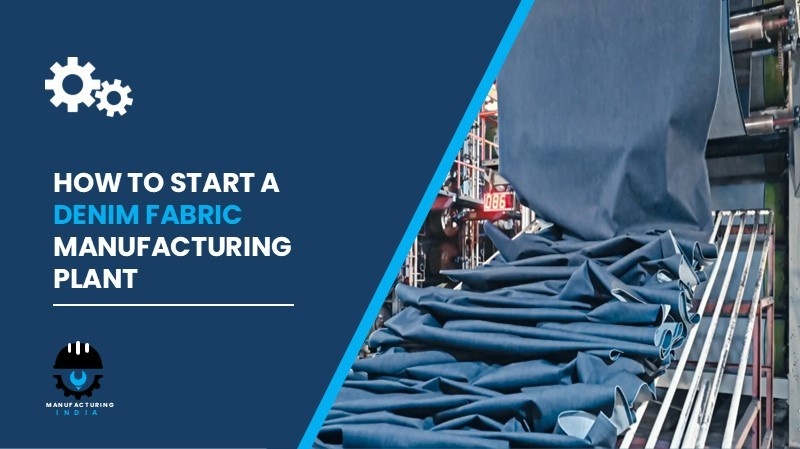
Denim fabric is a strong material which manufacturers make by using a traditional twill method to weave cotton into the fabric. A denim fabric manufacturing process typically uses indigo-dyed warp yarns with undyed or lightly dyed weft yarns to create the fabric’s distinct appearance and fading properties. Denim fabric can be used in many ways as it combines strength with wear resistance and provides air circulation and maintains its durability. Any denim fabric manufacturing plant set up to produce this material must account for these process requirements from the outset.
Denim fabrics are available in multiple weight options and contain cotton-polyester and cotton-elastane blends, along with different finishing methods and surface treatments that improve stretchability, comfort, colour retention, and visual aesthetics. The primary production method for this facility is spinning, warp dyeing, sizing, weaving, and finishing. The plant is designed to serve end-use industries including apparel, fashion and lifestyle, and workwear manufacturing.
Cost of Setting Up a Denim Fabric Manufacturing Plant in India
The overall cost of setting up a denim fabric manufacturing plant in India depends on capacity, technology, location, automation, and regulatory compliance.
1. Capital Expenditure (CapEx)
Land and site development form a substantial part of the overall capital investment, including charges for land registration, boundary development, and other related site preparation expenses, with options to set up the unit within an industrial estate or SEZ to benefit from streamlined approvals and infrastructure support. Civil works and construction cover the production shed, quality control laboratory, raw material and finished goods storage areas, and the administrative block, all designed for efficient workflow and future expansion.
Machinery costs account for the largest portion of the total capital expenditure for a denim fabric manufacturing plant. Key machinery required includes:
- Modern looms
- Indigo dyeing ranges
- Sizing machines
- Finishing equipment
- Inspection systems
Other capital costs include effluent treatment plant (ETP) installation, pre-operative expenses, and commissioning costs, all of which contribute to a solid foundation for safe and efficient plant operations.
Request a Sample Report for In-Depth Market Insights: https://www.imarcgroup.com/denim-fabric-manufacturing-plant-project-report/requestsample
2. Operational Expenditure (OpEx)
The operating cost structure of a denim fabric manufacturing plant is primarily driven by raw material consumption. Raw materials, including cotton yarn and chemicals, account for approximately 60-70% of total operating expenses, making long-term supplier contracts essential to mitigate price volatility and ensure a consistent supply of materials. Reliable suppliers must be secured for these raw materials to maintain consistent production quality, with sustainability and supply chain risks assessed as part of procurement strategy.
Utility costs, covering electricity, water, and steam, account for approximately 15-20% of operating expenses. Other operating costs for the plant include transportation, packaging, salaries and wages, repairs and maintenance, depreciation, and taxes, all of which form part of the first-year operating cost projection.
By the fifth year, the total operational cost of the plant is expected to increase substantially due to factors such as inflation, market fluctuations, and potential rises in the cost of key materials, along with supply chain disruptions, rising consumer demand, and shifts in the global economy.
3. Plant Capacity
The proposed denim fabric manufacturing plant is designed with an annual production capacity ranging between 10-20 million meters (approximately 5,000-10,000 MT), enabling economies of scale while maintaining operational flexibility. This capacity can be customized based on investor requirements, location, and target markets, and profitability of the unit improves with higher capacity utilisation.
4. Profit Margins and Financial Projections
The project demonstrates healthy profitability potential under normal operating conditions. Gross profit margins for a denim fabric manufacturing plant typically range between 25-35%, while net profit margins range between 10-15%, supported by stable demand and value-added applications. Financial projections for the facility are developed based on realistic assumptions related to capital investment, operating costs, production capacity utilization, pricing trends, and demand outlook, providing a comprehensive view of the project’s financial viability, return on investment (ROI), net present value (NPV), and long-term sustainability, along with internal rate of return (IRR) and payback period.
Why Set Up a Denim Fabric Manufacturing Plant in India?
Stable and Evergreen Demand: Denim fabric maintains permanent market demand which exists throughout all seasons, as people from all demographic groups continue to use denim products regularly. This consistent demand base supports steady offtake for a new denim fabric manufacturing plant.
Moderate Capital with Scalable Operations: The production process for denim needs funding to acquire looms and dyeing and finishing machinery, enabling manufacturers to expand their business from local distribution centers to international markets. This scalability allows the plant to grow in line with demand.
Alignment with Fashion and Casualization Trends: Rising preference for casual wear, athleisure, and durable everyday clothing supports sustained denim consumption worldwide, directly benefiting facilities supplying the apparel, fashion and lifestyle, and workwear segments.
Export Potential and Policy Support: Major textile manufacturing nations like India, Bangladesh, and Vietnam gain advantages from export subsidies, infrastructure development, and domestic production support, reinforcing India’s position as a competitive base for a denim fabric manufacturing plant in India targeting both domestic and export markets.
Active Industry Investment and Sustainability Push: The industry continues to see active development activity relevant to new entrants. In September 2025, Denim Deal expanded its circularity initiative into Asia with the launch of the Denim Deal India Hub in Bengaluru, in collaboration with the Global Alliance for Textile Sustainability Council (GATS) and venture builder Enviu, aiming to scale post-consumer recycled cotton in denim manufacturing and strengthen circular supply chains in India for domestic and export markets. In August 2025, World Collective announced a strategic collaboration with Denim Deal to strengthen circular sourcing in the fashion industry, spotlighting denim suppliers, mills, and recyclers within its upcoming global digital platform. Additionally, in November 2025, Archroma announced its Denim Halo system, a finishing innovation recognized by the ITMF Sustainability & Innovation Award that reduces the need for hazardous chemicals, excessive water, and energy-intensive processes while delivering high-contrast, distressed denim looks.
Scope for Value Addition: The existence of premium finishes, sustainable dyeing methods, recycled fibers, and stretch blends enables manufacturers to increase profit margins while pursuing partnerships with high-value fashion brands, adding a further layer of revenue potential to the plant.
Manufacturing Process – Step by Step
The denim fabric manufacturing process uses spinning, warp dyeing, sizing, weaving, and finishing as the primary production method. This manufacturing process forms the core operational workflow of the plant.
- Spinning: Cotton fibers are processed into yarn suitable for warp and weft applications.
- Warp Dyeing: Warp yarns are treated using indigo dyeing ranges to achieve the distinct indigo colouration characteristic of denim, while weft yarns remain undyed or are lightly dyed.
- Sizing: Warp yarns pass through sizing machines to strengthen them and reduce breakage during weaving.
- Weaving: The sized, indigo-dyed warp yarns and weft yarns are woven together using modern looms with a traditional twill weave to form the denim fabric.
- Finishing: As the final stage of the manufacturing process, the woven fabric undergoes finishing equipment treatments and surface treatments that improve stretchability, comfort, colour retention, and visual aesthetics.
- Inspection: Inspection systems are used to verify fabric quality, consistency, and compliance with technical specifications before dispatch.
- Dispatch and Packaging: The finished denim fabric is packaged and dispatched to apparel, fashion and lifestyle, and workwear manufacturing customers for further processing into end products.
Key Applications
Denim fabric produced at the plant serves a range of end-use industries spanning apparel, workwear, accessories, and home textiles.
- Apparel: Denim serves as the primary material for jeans, jackets, shirts, and skirts.
- Workwear: Suitable for industrial uniforms and protective clothing used in manufacturing and construction environments.
- Accessories: The fashion industry adopts denim for bags, footwear, caps, and lifestyle accessories that match current casual fashion trends.
- Home Textiles: Denim serves as upholstery material, cushion stuffing, and decorative furnishings.
Leading Manufacturers
Leading manufacturers in the global denim fabric industry include several multinational companies with extensive production capacities and diverse application portfolios. Key players include:
- Cone Denim Llc
- House Of Gold Llc
- Arvind Limited
- Bextex
- Advance Denim Co. Ltd.
- Raymond Uco Denim Pvt. Ltd.
Timeline to Start the Plant
- Feasibility study and project report preparation
- Land acquisition and site development
- Regulatory approvals and environmental clearances
- Factory licence and fire safety compliance
- Machinery procurement and installation
- Raw material supplier agreements and supply chain setup
- Trial production and quality testing
- Commercial production launch
Licences and Regulatory Requirements
Starting a denim fabric manufacturing unit in India requires several approvals:
- Business registration (Proprietorship, LLP, or Pvt Ltd)
- Factory Licence under the Factories Act
- Environmental Clearance from State Pollution Control Board
- GST Registration
- Fire Safety NOC
- Effluent Treatment Plant (ETP) operational clearance
- Occupational Health and Safety compliance
Key Challenges to Consider
High Capital Requirements: Machinery costs, including modern looms, indigo dyeing ranges, sizing machines, finishing equipment, and inspection systems, account for the largest portion of total capital expenditure, requiring significant upfront investment.
Raw Material Price Volatility: Cotton yarn and chemicals, which together represent 60-70% of operating expenses, are subject to price fluctuations driven by inflation, market conditions, and global supply shifts, making long-term supplier contracts important for cost stability.
Regulatory Compliance: Environmental impact assessments, effluent treatment requirements, and zoning law compliance must be managed throughout the setup and operational phases of the plant.
Competition from Established Players: The plant will compete with established global manufacturers such as Cone Denim Llc, Arvind Limited, Advance Denim Co. Ltd., and Raymond Uco Denim Pvt. Ltd., which have extensive production capacities and diverse application portfolios.
Sustainability and Technology Pressure: Industry developments such as Archroma’s Denim Halo system and the Denim Deal India Hub indicate a shift toward water-efficient dyeing, recycled fibers, and reduced chemical usage, requiring new entrants to keep pace with sustainable production practices.
Skilled Manpower: Operating modern looms, dyeing ranges, and finishing equipment to industry standards requires a trained workforce, and human resource planning forms part of the overall project economics.
Frequently Asked Questions
- How much does it cost to set up a denim fabric manufacturing plant in India?
The total cost depends on plant capacity, technology, and location, covering land acquisition, site preparation, machinery, and infrastructure, with machinery representing the largest share of capital expenditure.
- Is denim fabric manufacturing profitable in India in 2026?
The project demonstrates healthy profitability potential, with gross profit margins of 25-35% and net profit margins of 10-15% under normal operating conditions, supported by stable demand and value-added applications.
- What machinery is required for a denim fabric plant in India?
Essential equipment includes modern looms, indigo dyeing ranges, sizing machines, finishing equipment, and inspection systems, all of which must comply with industry standards for safety, efficiency, and reliability.
- What licences and approvals are required to start a denim fabric plant in India?
Requirements include business registration, a Factory Licence under the Factories Act, Environmental Clearance from the State Pollution Control Board, GST Registration, Fire Safety NOC, ETP operational clearance, and Occupational Health and Safety compliance.
- What raw materials are needed for denim fabric manufacturing?
The primary raw materials are cotton yarn and chemicals, which together account for approximately 60-70% of operating expenses.
- What are the environmental compliance requirements for a denim fabric plant in India?
Plants must implement effluent treatment systems to minimize environmental impact, ensure compliance with emission standards, and conduct environmental impact assessments as part of site selection and regulatory approval.
- What is the best location to set up a denim fabric plant in India?
The location should offer easy access to raw materials such as cotton yarn and chemicals, proximity to target markets to minimize distribution costs, robust infrastructure including transportation and utilities, and compliance with local zoning laws and environmental regulations.
- What is the break-even period for this type of plant in India?
The financial analysis for the plant includes payback period, net present value (NPV), and internal rate of return (IRR) calculations based on capital investment, operating costs, and income projections.
- What government incentives are available for manufacturers in India?
India, as one of the major textile manufacturing nations, gains advantages from export subsidies, infrastructure development, and domestic production support under broader policy initiatives supporting the textile sector.
Key Takeaways for Investors
A denim fabric manufacturing plant in India is well-positioned to serve the apparel, fashion and lifestyle, and workwear manufacturing sectors, which continue to drive stable and evergreen global demand for denim. The project demonstrates financial viability across its proposed 10-20 million meters annual capacity range, with gross margins of 25-35% and net margins of 10-15% supporting healthy returns under normal operating conditions. The global denim fabric market, valued at USD 25.4904 Billion in 2025, is expected to reach USD 33.84 Billion by 2034 at a CAGR of 3.2%, reflecting steady long-term growth. With rising casualization trends, export potential, and ongoing sustainability-driven innovation across the industry, demand for denim fabric manufacturing capacity is expected to remain sustainable well into the next decade.
About the Author