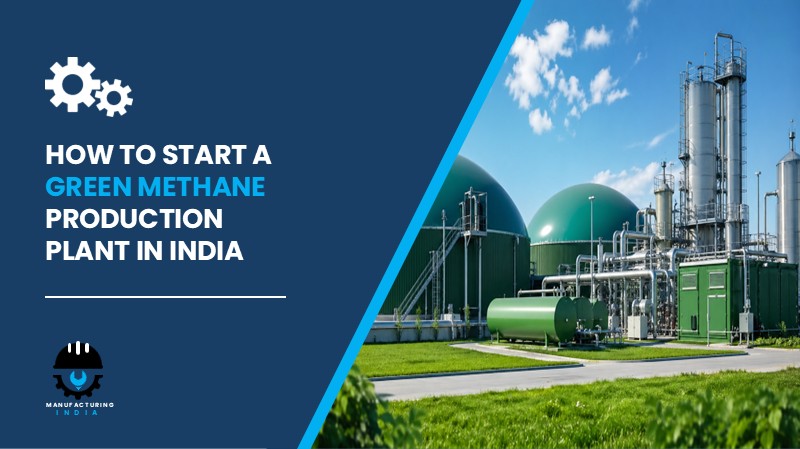
Setting up a green methane production plant in India presents a compelling investment case at a time when the country’s renewable energy ambitions, clean fuel transition, and urgent need for waste-to-energy infrastructure are converging around one of the most commercially versatile and strategically critical energy molecules of the net-zero era. Green methane — also known as biomethane when produced through anaerobic digestion of organic waste, or as synthetic methane when produced through power-to-gas pathways combining green hydrogen and captured CO₂ — is a carbon-neutral or carbon-negative form of methane that can directly substitute for fossil natural gas across heating, power generation, transport, and industrial feedstock applications without requiring new end-use infrastructure. As India’s government accelerates its clean energy transition, tightens carbon pricing frameworks, and actively develops compressed biogas (CBG) infrastructure through the SATAT scheme, the domestic demand for domestically produced green methane from organic waste is building into one of the most policy-supported and commercially viable green energy investment opportunities available to Indian entrepreneurs and industrial investors today.
India’s structural advantages for green methane production are exceptional and uniquely India-specific. The country generates vast quantities of agricultural residues, cattle dung, municipal solid waste, and food processing by-products — the organic feedstocks that anaerobic digestion converts into biogas and subsequently upgraded biomethane — across rural and peri-urban geographies where this waste currently creates significant environmental and public health problems. Continuous progress in anaerobic digestion and gasification processes has significantly improved the efficiency and scalability of methane recovery from organic waste, while enhanced purification techniques including membrane separation and pressure swing adsorption have enabled the production of high-quality biomethane meeting stringent standards for grid injection and transport applications. The Make in India initiative and the SATAT (Sustainable Alternative Towards Affordable Transportation) scheme — targeting 5,000 CBG plants by 2023–24 with a production target of 15 million metric tonnes of CBG annually — provide both policy demand anchoring and commercial incentive frameworks that make green methane production a government-backed investment priority.
Investing in a green methane production plant in India today aligns the country’s vast organic waste availability, the SATAT scheme’s 5,000-plant target, and declining renewable energy and electrolyzer costs with a global biomethane market growing at a robust CAGR supported by carbon pricing mechanisms, government subsidies, and feed-in tariffs for renewable gas. With gross profit margins of 30–45% and net profit margins of 15–25%, the unit economics are compelling across anaerobic digestion-based facilities, and the production model’s waste-to-wealth value proposition provides additional revenue streams through tipping fees, organic fertiliser by-products, and carbon credit monetisation.
What is Green Methane?
Green methane is a carbon-neutral or carbon-negative form of methane produced through biological or synthetic pathways rather than fossil fuel extraction. It exists in two primary production variants: biogenic methane produced through anaerobic digestion of organic waste materials — cattle dung, agricultural residues, municipal solid waste, food processing effluents — and thermogenic synthetic methane produced through power-to-gas pathways where green hydrogen produced by electrolysis is combined with captured CO₂ through methanation to produce synthetic natural gas. Both variants produce a methane molecule chemically identical to fossil natural gas, enabling direct substitution across existing gas infrastructure without modification to end-use equipment.
Green methane is a colourless and odourless gas composed of one carbon atom and four hydrogen atoms — the same molecular structure as fossil methane — offering all the combustion, energy density, and infrastructure compatibility advantages of natural gas while eliminating the fossil carbon emissions that make conventional natural gas incompatible with net-zero targets. Currently, there are two main types of product variants: biogenic (from anaerobic digestion and gasification of organic waste) and thermogenic (from power-to-gas synthesis). Biogenic methane production through anaerobic digestion is the more commercially mature pathway for India’s current investment stage, while power-to-gas synthetic methane production offers a longer-term pathway aligned with declining electrolyzer costs and renewable electricity availability.
The primary production process covers feedstock pre-treatment, anaerobic digestion, biogas collection and purification, biomethane upgrading through membrane separation or pressure swing adsorption, compression and storage, and distribution. End-use industries served include transport (CNG/CBG vehicles), power generation, industrial heating, grid injection, and chemical feedstock applications. Applications span compressed biogas for transport, grid-injected renewable natural gas, industrial process heat, electricity generation, and synthetic natural gas for chemical manufacturing.
Cost of Setting Up a Green Methane Production Plant in India
The cost of establishing a green methane production plant in India depends on production capacity, feedstock type and availability, technology pathway between anaerobic digestion and power-to-gas synthesis, upgrading technology selection between membrane separation and pressure swing adsorption, geographic location — particularly proximity to organic waste sources and CBG offtake infrastructure — and the safety and environmental compliance requirements applicable to biogas and compressed gas handling facilities.
1. Capital Expenditure (CapEx)
Land and Site Development forms a foundational component of total capital investment, covering land acquisition charges, site registration, boundary development, feedstock receiving and pre-treatment area infrastructure, digestate storage and management, gas containment drainage, and site utilities. Investors may explore agri-waste rich rural geographies in states such as Punjab, Haryana, Uttar Pradesh, Maharashtra, and Andhra Pradesh — where cattle dung, crop residue, and food processing waste availability supports cost-competitive feedstock procurement — and locate near existing CBG offtake partnerships with oil marketing companies under the SATAT scheme, which provides Indian Oil Corporation, BPCL, and HPCL as guaranteed CBG buyers through offtake agreements.
Civil Works and Construction cover the main digester infrastructure — reinforced concrete anaerobic digesters, pre-treatment and mixing tanks, biogas collection domes, and gas holder structures — biomethane upgrading unit housing, compression and storage infrastructure for compressed biogas, digestate dewatering and storage areas, a quality control laboratory, utility buildings, and administrative facilities.
Machinery and Equipment represent the largest single component of total CapEx for a green methane production plant. Key machinery required includes:
- Anaerobic digesters
- Biogas purification systems
- Upgrading units (membrane separation or pressure swing adsorption)
- Compressors
- Gas storage systems
- Monitoring and control systems
Other Capital Costs include an effluent treatment plant (ETP) for managing digestate liquid fraction and process water, gas safety infrastructure including leak detection, flame arrestors, and emergency shutdown systems, pre-operative expenses, PESO (Petroleum and Explosives Safety Organisation) safety approval costs, commissioning charges, and import duties on specialised membrane upgrading modules or control systems not available domestically.
Request a Sample Report for In-Depth Market Insights: https://www.imarcgroup.com/green-methane-manufacturing-plant-project-report/requestsample
2. Operational Expenditure (OpEx)
Raw Material Cost is a significant operational expense component, covering feedstock procurement including cattle dung, agricultural residues, municipal organic waste, and food processing effluents. A defining commercial advantage of Indian green methane production is that many feedstocks are available at low or near-zero cost — or even generate tipping fee revenue when the facility accepts municipal organic waste or food processing effluent as a paid waste management service. This tipping fee income stream fundamentally improves the economics of green methane production compared to conventional manufacturing, where raw materials represent a cost rather than a potential revenue source. Long-term feedstock supply agreements with cattle farms, agricultural cooperatives, food processors, and municipal authorities ensure supply continuity.
Utility Cost covers electricity for pre-treatment equipment, mixing systems, upgrading units, compressors, and plant monitoring systems. A well-designed green methane plant can self-generate a portion of its electricity requirement by combusting a fraction of produced biogas in a CHP (combined heat and power) unit, reducing net utility purchase cost. Natural gas price volatility affecting economic competitiveness, declining renewable electricity costs benefiting power-to-gas economics, and energy costs for compression and upgrading operations are key utility cost variables requiring active management.
Other Operating Costs include transportation and distribution of compressed biomethane to CBG stations or pipeline injection points, packaging and cylinder costs where applicable, salaries and wages for process engineers and plant operators, routine machinery maintenance including digester cleaning and membrane module replacement, carbon credit administration and verification costs, digestate processing and sale as organic fertiliser, depreciation on production equipment, and applicable taxes. By the fifth year of operations, total operational costs are projected to increase substantially due to inflation, feedstock cost changes, competition for organic waste feedstocks from composting and other applications, and shifts in carbon pricing and regulatory frameworks.
3. Plant Capacity
Green methane production plant capacity can be customised across a wide range — from small-scale decentralised units processing 5–10 tonnes of feedstock per day to large-scale centralised facilities processing 100–500 tonnes per day — depending on feedstock aggregation logistics, offtake contract volumes, and capital availability. The SATAT scheme’s target of 5,000 CBG plants across India with varied capacities demonstrates the viability of both small and large installation scales within the domestic policy framework. Profitability improves with higher capacity utilisation and effective feedstock aggregation, with additional revenue streams from tipping fees, organic fertiliser (digestate) sale, and carbon credit monetisation improving the overall project economics beyond the core biomethane sales revenue.
4. Profit Margins and Financial Projections
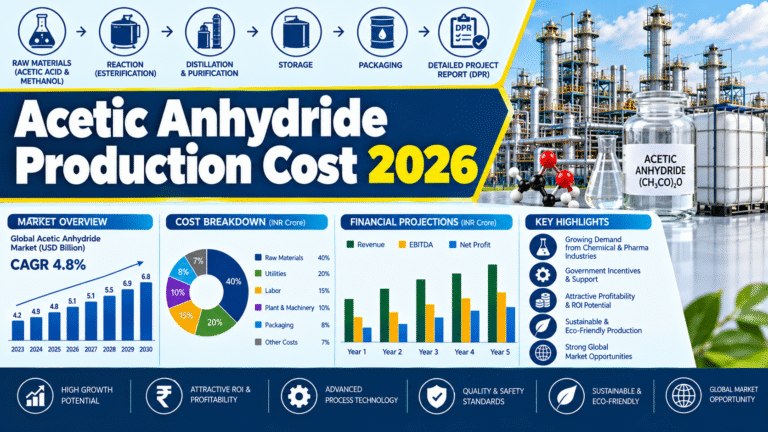
The financial projections for a green methane production plant demonstrate attractive profitability potential under normal operating conditions. Gross profit margins typically range between 30–45%, with net profit margins projected at 15–25% — supported by the combination of biomethane sales revenue, tipping fee income from waste acceptance, organic fertiliser revenue from digestate, and carbon credit monetisation through India’s emerging carbon market. Break-even in a green methane production business typically ranges from 3 to 7 years depending on capital investment, operational costs, feedstock availability, and energy sales revenue. Government incentives and carbon credits can accelerate profitability beyond base case projections. A comprehensive financial analysis covering NPV, IRR, payback period, and five-year projections is essential before committing capital.
Why Set Up a Green Methane Production Plant in India?
SATAT Scheme Creating Guaranteed Offtake Market. India’s SATAT (Sustainable Alternative Towards Affordable Transportation) scheme — targeting 5,000 compressed biogas plants with 15 million metric tonnes annual production — provides green methane producers with guaranteed offtake agreements through Indian Oil Corporation, BPCL, and HPCL at government-notified prices. This policy-guaranteed revenue anchor significantly de-risks the commercial case for green methane production investment, providing price certainty and offtake security that conventional industrial investments cannot match.
Continuous Technological Advancements Improving Project Economics. Continuous progress in anaerobic digestion and gasification processes has significantly improved the efficiency and scalability of methane recovery from organic waste. Enhanced purification techniques including membrane separation and pressure swing adsorption have facilitated the production of high-quality biomethane meeting stringent regulatory standards for grid injection and transport applications. Developments in feedstock pre-treatment methods have increased yield optimisation, enabling more efficient conversion. These technological advancements have reduced operational costs and enhanced the economic feasibility of biomethane projects — improvements that benefit new facilities established with current state-of-the-art technology.
Active Global Investment Confirming Commercial Scale. On January 14, 2025, Anaergia entered into a binding agreement with Techbau to construct five biomethane plants in Italy — demonstrating the active commercial-scale investment in biomethane infrastructure by established engineering companies that reflects the global maturation of this technology category. In March 2025, WasteFuel announced a partnership to commence Front-End Engineering Design on a green methanol biorefinery in Ankara, Türkiye — the first green methane-based facility in Anatolia and one of the largest of its kind in the world — confirming that green methane production is transitioning from niche demonstration to mainstream industrial investment across emerging markets comparable to India.
Carbon Pricing Mechanisms Improving Project Economics. Carbon pricing mechanisms and emission trading schemes improving project economics are among the key economic trends influencing green methane plant setup and operation. As India develops its carbon trading framework and global carbon markets mature, green methane producers can monetise the emissions reduction achieved by displacing fossil natural gas, generating additional revenue per tonne of CO₂ equivalent avoided. Government subsidies, feed-in tariffs, and production incentives for renewable gas further strengthen the economic case beyond core biomethane sales.
Abundant Organic Waste Feedstock Across India’s Agricultural States. India generates enormous quantities of cattle dung from its world-leading cattle population, crop residues from its vast agricultural sector, municipal solid waste from its rapidly urbanising cities, and food processing effluents from its expanding food manufacturing industry — all of which serve as feedstocks for anaerobic digestion-based green methane production. This abundant, widely distributed, and largely underutilised organic waste resource provides a unique cost advantage for Indian green methane producers that few other countries can match.
Declining Electrolyzer Costs Enabling Power-to-Gas Pathway Development. Declining renewable electricity costs benefiting power-to-gas economics and electrolyzer cost reductions through manufacturing scale-up are improving the long-term economics of synthetic methane production through the power-to-gas pathway. While anaerobic digestion-based biomethane is the commercially viable near-term pathway, investors who establish green methane production infrastructure today can position for integration of power-to-gas synthetic methane production as electrolyzer costs continue their decline trajectory — creating a technology upgrade pathway within the same production facility framework.
Production Process — Step by Step
The green methane production process uses feedstock pre-treatment, anaerobic digestion, biogas collection and purification, biomethane upgrading through membrane separation or pressure swing adsorption, compression and storage, and distribution as the primary production method for the biogenic pathway. Each stage requires precisely controlled biological process parameters — temperature, pH, volatile solid loading rate, and hydraulic retention time — and quality verification to deliver biomethane meeting the purity, calorific value, and moisture specifications required by CBG offtake, grid injection, or industrial customer standards.
- Feedstock Reception and Pre-Treatment: Organic feedstocks — cattle dung, agricultural residues, food waste, municipal organic waste — are received, weighed, and subjected to pre-treatment including shredding, size reduction, and homogenisation using mixing equipment to achieve the particle size and consistency required for efficient anaerobic digestion. Feedstock composition is analysed for volatile solid content, carbon-to-nitrogen ratio, and absence of inhibitory substances before loading into digesters.
- Anaerobic Digestion: Pre-treated feedstock is fed into anaerobic digesters — sealed, oxygen-free tanks operating at mesophilic (35–40°C) or thermophilic (50–55°C) temperatures — where microbial communities break down organic matter through hydrolysis, acidogenesis, acetogenesis, and methanogenesis stages to produce biogas containing approximately 55–70% methane and 30–45% CO₂, along with trace hydrogen sulphide, water vapour, and other components.
- Biogas Collection and Primary Purification: Produced biogas is collected from digester headspace through sealed collection systems and passed through primary purification stages including hydrogen sulphide removal using iron sponge or biological desulphurisation, and moisture removal through condensate traps and drying systems, to protect downstream upgrading equipment from corrosion and performance degradation.
- Biomethane Upgrading: Purified biogas is processed through upgrading units — membrane separation systems that selectively permeate CO₂ while retaining methane, or pressure swing adsorption (PSA) systems that adsorb CO₂ onto molecular sieve materials under pressure — to separate CO₂ from methane and produce biomethane of 97%+ methane purity meeting CBG specifications under IS 16087 or equivalent standards.
- Compression and Storage: Specification-grade biomethane is compressed to the required pressure — 200–250 bar for CBG transport applications or pipeline injection pressure for grid-connected facilities — using gas compressors, and stored in gas storage systems including cascade storage vessels or buffer tanks pending dispatch.
- Quality Testing and Monitoring: Biomethane quality is continuously monitored through online monitoring and control systems covering methane content, calorific value, moisture, hydrogen sulphide, oxygen, and CO₂ levels to ensure consistent specification compliance against CBG offtake agreement requirements throughout production operations.
- Digestate Processing: Residual digestate from anaerobic digestion is separated into liquid and solid fractions through dewatering equipment, with solid digestate processed into organic fertiliser for agricultural application — providing an additional revenue stream — and liquid fraction managed through the ETP or applied to agricultural land as liquid biofertiliser within regulatory limits.
- Distribution and Dispatch: Compressed biomethane is filled into CBG cylinders or tube trailers using compression and filling systems, then dispatched to CBG outlets under SATAT offtake agreements, or injected into gas distribution grids for industrial heating, power generation, or chemical feedstock applications.
Key Applications
Green methane produced in India serves a commercially diverse and strategically important range of clean energy and industrial applications:
- Transport (CBG Vehicles): Compressed biomethane serves as a clean transport fuel for CNG vehicles across automotive, bus, and trucking fleets, delivering significantly lower tailpipe and lifecycle emissions than petrol or diesel.
- Power Generation: Green methane fuels gas engines and turbines for distributed power generation, providing dispatchable renewable electricity from organic waste streams that complements intermittent solar and wind generation.
- Industrial Heating: Direct substitution for fossil natural gas in industrial process heating across food processing, ceramics, textiles, and other manufacturing sectors requiring clean, controllable thermal energy.
- Grid Injection and Renewable Natural Gas: Biomethane injected into existing gas distribution networks provides consumers and industrial users with certified renewable natural gas without infrastructure modification.
Leading Producers
The global green methane and biomethane industry is served by a growing group of technology developers, engineering companies, and energy producers with active investment in anaerobic digestion and power-to-gas production facilities. Key developments include Anaergia’s January 2025 agreement with Techbau for five Italian biomethane plants, WasteFuel’s March 2025 Front-End Engineering Design partnership for a green methane biorefinery in Ankara, and active biomethane plant development across Europe by multiple operators in response to the EU biomethane production target of 35 billion cubic metres annually by 2030 set under REPowerEU.
Timeline to Start the Plant
Establishing a green methane production plant in India involves a structured multi-phase development sequence. Investors should plan for the following phases:
- Feasibility study and project report preparation
- Land acquisition and site development
- Regulatory approvals and environmental clearances
- Factory licence and fire safety compliance
- Machinery procurement and installation
- Raw material supplier agreements and supply chain setup
- Trial production and quality testing
- Commercial production launch
Licences and Regulatory Requirements
Starting a green methane production unit in India requires several approvals spanning business registration, compressed gas safety, environmental, and renewable energy compliance domains:
- Business registration (Proprietorship, LLP, or Pvt Ltd)
- Factory Licence under the Factories Act
- Environmental Clearance from the State Pollution Control Board
- GST Registration
- Fire Safety NOC
- PESO (Petroleum and Explosives Safety Organisation) approval for compressed biogas storage and filling infrastructure under the Gas Cylinder Rules
- SATAT scheme registration with Ministry of Petroleum and Natural Gas for CBG offtake agreement access
- Consent to Establish and Consent to Operate from the State Pollution Control Board covering biogas facility operations and digestate management
- Effluent Treatment Plant (ETP) operational clearance for digestate liquid fraction management
- Occupational Health and Safety compliance
Key Challenges to Consider
High Initial Capital Investment Particularly for Power-to-Gas Pathway. The anaerobic digestion pathway carries moderate capital requirements well-suited to Indian investment scales, but power-to-gas synthetic methane production — combining electrolysers, methanation reactors, and CO₂ capture systems — represents a significantly higher capital intensity that currently limits this pathway to large-scale or government-supported projects. Investors must carefully evaluate technology pathway selection against available capital and feedstock conditions.
Feedstock Aggregation and Supply Chain Management. While organic waste feedstocks are abundant across India, aggregating sufficient volumes from geographically dispersed sources — cattle farms, crop fields, food processors, and municipalities — to supply a commercial-scale biogas plant consistently year-round requires active supply chain management, contractual feedstock agreements, and logistics investment that must be planned and resourced from the project development stage.
Natural Gas Price Volatility Affecting Economic Competitiveness. The competitiveness of green methane against fossil natural gas depends partly on prevailing gas prices — when fossil gas prices are low, the premium for green methane narrows. Managing this price risk through long-term SATAT offtake agreements at government-notified prices, carbon credit revenue, and tipping fee income reduces dependence on market-price competitiveness and stabilises project economics.
Technical and Operational Complexity of Biogas Upgrading Systems. Membrane separation and pressure swing adsorption upgrading systems require precise operational management, regular membrane or adsorbent replacement, and skilled technical maintenance to maintain biomethane purity at the 97%+ methane content required for CBG specifications. Operator training and preventive maintenance programmes are essential for sustained quality compliance.
Competition for Organic Waste Feedstocks. Competition for organic waste feedstocks from composting, vermicompost production, and other applications — as well as from other biogas producers in the same geography — can create feedstock scarcity and price increases over time. Securing long-term feedstock supply contracts from the earliest stage of project development is critical for protecting production economics across the investment horizon.
Carbon Credit and Incentive Framework Uncertainty. While carbon pricing mechanisms and government incentives are improving project economics, the specific parameters — carbon price levels, subsidy rates, and feed-in tariff structures — can change with policy cycles, creating revenue uncertainty for the non-core income streams that contribute to the project’s margin profile. Building project economics that are viable on core biomethane sales alone, with incentive income as margin enhancement rather than project viability prerequisite, is the most prudent financial planning approach.
Frequently Asked Questions
1. How much does it cost to set up a green methane production plant in India?
The total setup cost depends on plant capacity, technology pathway between anaerobic digestion and power-to-gas synthesis, upgrading technology selection, feedstock type, and location. CapEx covers land and site development, digester civil infrastructure, core machinery including anaerobic digesters, biogas purification systems, upgrading units, compressors, gas storage systems, and monitoring and control systems, along with PESO-compliant gas safety infrastructure, ETP, and other capital costs. A detailed project report with full CapEx and OpEx breakdowns is available on request.
2. Is green methane production profitable in India in 2026?
Yes. The project demonstrates gross profit margins of 30–45% and net profit margins of 15–25% under normal operating conditions, supported by SATAT scheme guaranteed offtake agreements, tipping fee revenue from organic waste acceptance, organic fertiliser revenue from digestate, and emerging carbon credit monetisation opportunities. Break-even typically ranges from 3 to 7 years, with government incentives and carbon credits accelerating profitability beyond base case projections.
3. What machinery is required for a green methane production plant in India?
Key machinery includes anaerobic digesters, biogas purification systems, upgrading units including membrane separation or pressure swing adsorption systems, compressors, gas storage systems, and monitoring and control systems. Anaerobic digesters and biomethane upgrading units are the most technically critical capital items determining production capacity, gas quality, and overall plant performance.
4. What licences and approvals are required to start a green methane production plant in India?
Required approvals include business registration, a Factory Licence under the Factories Act, Environmental Clearance from the State Pollution Control Board, GST registration, a Fire Safety NOC, PESO approval for compressed biogas storage and filling, SATAT scheme registration for CBG offtake access, Consent to Establish and Operate from the State Pollution Control Board, ETP operational clearance, and Occupational Health and Safety compliance.
5. What raw materials are needed for green methane production?
The primary feedstocks are cattle dung, agricultural residues, municipal organic waste, and food processing effluents for the anaerobic digestion pathway. A key commercial advantage for Indian producers is that many of these feedstocks are available at low or near-zero cost — or generate tipping fee revenue — substantially improving the economics of green methane production relative to conventional manufacturing investments with significant raw material cost.
6. What are the environmental compliance requirements for a green methane production plant in India?
The unit must obtain Environmental Clearance from the State Pollution Control Board, hold Consent to Operate with digestate management compliance, operate a certified ETP for liquid digestate fraction management, implement gas safety and leak detection systems under PESO regulations, and maintain monitoring systems for air emissions and wastewater discharge consistent with biogas facility regulatory norms.
7. What is the best location to set up a green methane production plant in India?
Optimal locations offer abundant organic waste feedstock availability — particularly cattle dung from dairy belts and agricultural residues from crop-intensive districts — proximity to CBG offtake infrastructure under the SATAT scheme, reliable grid electricity supply, and logistics connectivity to transport fuel markets. Agri-waste rich states including Punjab, Haryana, Uttar Pradesh, Maharashtra, and Andhra Pradesh are among the most strategically relevant options.
8. What is the break-even period for this type of plant in India?
Break-even in a green methane production business typically ranges from 3 to 7 years depending on capital investment, operational costs, feedstock availability, and energy sales revenue. Government incentives and carbon credits can accelerate profitability. A detailed financial analysis including payback period, NPV, and IRR projections is available via the sample request link.
9. What government incentives are available for manufacturers in India?
The SATAT scheme provides guaranteed CBG offtake agreements through oil marketing companies at government-notified prices — the most direct and commercially significant incentive available. Additional support includes capital subsidies from MNRE for biogas plant establishment, priority sector lending for renewable energy projects, GST exemptions on agricultural waste feedstocks, and emerging carbon credit revenue under India’s carbon market framework.
Key Takeaways for Investors
A green methane production plant in India represents one of the most timely, policy-supported, and multi-revenue-stream investment opportunities in the country’s renewable energy and clean fuel transition — where the SATAT scheme’s guaranteed offtake, abundant organic waste feedstock availability, continuous technological improvements in anaerobic digestion and biomethane upgrading, and India’s carbon market development combine to create a commercially compelling and environmentally purposeful investment case with gross profit margins of 30–45% and net profit margins of 15–25%. The project’s unique economic structure — where organic waste feedstocks can generate tipping fee revenue rather than representing a cost, digestate produces a saleable organic fertiliser, and carbon credits provide an additional income stream alongside core biomethane sales — creates a multi-revenue business model that is fundamentally more robust than single-product manufacturing investments at comparable capital scale. With Anaergia’s January 2025 agreement for five Italian biomethane plants, WasteFuel’s March 2025 Ankara biorefinery FEED partnership, and global biomethane investment accelerating under carbon pricing and renewable gas mandates, the international momentum confirms that green methane production is a commercially mature, scalable industrial investment category whose time in India has arrived. With the SATAT target of 5,000 CBG plants representing a generational infrastructure buildout opportunity, demand sustainability for India-based green methane production is structurally robust, government-backed, and essential to India’s clean energy transition across the full investment horizon.
About the Author