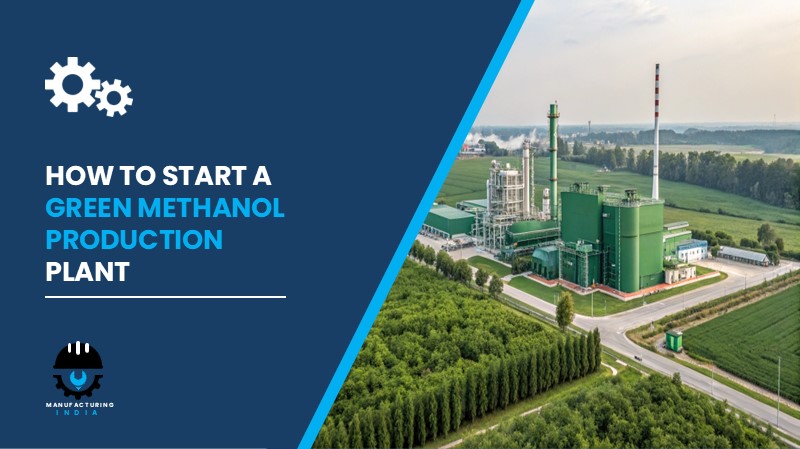
Setting up a green methanol production plant in India presents a compelling investment case, driven by accelerating demand from the shipping and marine fuels sector, a rapidly expanding chemicals industry, and the growing need for low-carbon energy carriers across power and industrial applications. This production facility, as a versatile, liquid-at-ambient-conditions fuel and chemical feedstock, is emerging as a pivotal molecule in India’s decarbonisation roadmap — enabling hard-to-abate sectors such as ocean shipping and chemical production to reduce their carbon intensity without requiring a complete overhaul of existing logistics and distribution infrastructure.
India offers a strategically compelling environment for green methanol production. The country’s rapid urbanisation, infrastructure expansion under national programmes, and the Government of India’s Make in India initiative collectively create robust domestic demand for clean fuels and low-carbon chemical inputs. Key production states such as Odisha — where landmark investments in this space are already being executed — alongside industrial hubs in Gujarat and Maharashtra, provide access to renewable energy corridors, port infrastructure for marine fuel bunkering, and established chemical supply chains. As India’s chemical sector, estimated at approximately USD 250 billion in 2024 and projected to grow to USD 300 billion by 2028, scales up its production base, domestically manufactured product is positioned to capture significant import substitution and export value.
India’s policy support under Make in India, combined with cost-competitive renewable energy, rising demand from marine and chemicals sectors, gross margins of 25–40%, and a break-even pathway that improves with scale, makes investing in this sector one of the most strategically sound clean-energy decisions of this decade.
What is Green Methanol?
Green methanol is a low-carbon alternative to conventional methanol, produced from renewable feedstocks rather than fossil-based natural gas or coal. It is typically manufactured via two primary pathways: as e-methanol, by combining green hydrogen — derived from renewable-powered electrolysis — with captured CO₂ (either biogenic or recycled carbon), or as bio-methanol through biomass- and biogas-derived syngas pathways. The result is a liquid fuel and chemical feedstock that is easy to store and transport using established methanol logistics infrastructure, making it uniquely practical among clean energy molecules.
The product’s key properties include its liquid state at ambient conditions, compatibility with existing methanol storage and handling systems, versatility as a marine fuel for blending and bunkering, and its role as a low-carbon chemical building block for producing formaldehyde, acetic acid derivatives, olefins, and other green chemicals. These characteristics make it a drop-in platform molecule suitable for a wide range of industrial applications.
The green methanol production process involves four interconnected stages: green hydrogen generation, CO₂ capture and conditioning, methanol synthesis, and distillation and purification. End-use industries served include shipping and marine fuels, chemicals, and power and industrial energy — sectors that are collectively at the forefront of India’s energy transition.
Cost of Setting Up a Green Methanol Production Plant in India
The total cost of establishing a green methanol production plant in India depends on several interdependent variables, including plant capacity, technology selection, geographic location, degree of automation, and the extent of regulatory compliance infrastructure required. A detailed understanding of both capital and operational expenditure is essential for investors to determine project viability and financial returns.
1. Capital Expenditure (CapEx)
Capital investment for this facility covers land and site development, civil construction, high-value process machinery, and other preparatory costs.
Land and Site Development: Site acquisition costs include land registration, boundary development, and related charges. Investors should evaluate industrial estates, Special Economic Zones (SEZs), and coastal or port-proximate locations in states like Odisha, Gujarat, and Maharashtra, where renewable energy access and port infrastructure align with the plant’s operational requirements.
Civil Works and Construction: Civil expenditure covers the construction of the production shed, quality control laboratory, raw material storage zones, finished goods warehouse, effluent treatment plant area, and administrative block. Layout optimisation is critical to ensure workflow efficiency and safety compliance.
Key machinery required for a green methanol production plant includes:
- Gas purification systems
- Steam methane or biomass reformers
- Advanced electrolyzers
- Synthesis reactors
- Methanol distillation columns
- Purification units
- Storage tanks
- Specialized loading infrastructure
Other Capital Costs: Additional CapEx items include effluent treatment plant installation, pre-operative expenses such as feasibility studies and regulatory filings, commissioning costs, and import duties applicable to specialised equipment such as electrolyzers and synthesis reactors, which may be sourced internationally.
Request a Sample Report for In-Depth Market Insights: https://www.imarcgroup.com/green-methanol-production-plant-project-report/requestsample
2. Operational Expenditure (OpEx)
Raw Material Cost: The operating cost structure of the production unit is primarily driven by raw material consumption. Key raw materials include green hydrogen, captured CO₂, and catalyst. Green hydrogen alone accounts for approximately 60–70% of total OpEx, underscoring the importance of securing long-term contracts with reliable renewable hydrogen suppliers to mitigate price volatility and ensure supply continuity.
Utility Cost: Utility expenses, including electricity, water, and steam, account for 20–30% of operational expenditure. Given that green hydrogen generation through electrolysis is energy-intensive, proximity to renewable power sources — solar or wind — is a significant cost-reduction lever for plants in India.
Other Operating Costs: Additional OpEx components include transportation and logistics, packaging, salaries and wages, maintenance, depreciation, and taxes. From the first year of operations onward, total operational costs are expected to increase substantially by the fifth year, driven by inflation, market fluctuations, supply chain dynamics, and potential rises in the cost of key input materials.
3. Plant Capacity
The proposed production facility is designed with an annual production capacity ranging between 50,000 and 200,000 metric tonnes, enabling economies of scale while maintaining operational flexibility. Capacity can be customised per investor requirements based on available capital, market demand, and feedstock access. Profitability improves materially with higher capacity utilisation, making larger-scale plants more financially viable over the medium to long term.
4. Profit Margins and Financial Projections
The green methanol production plant project demonstrates healthy profitability potential under normal operating conditions. Gross profit margins typically range between 25–40%, supported by stable demand and value-added applications across marine and chemical sectors. Net profit margins are projected in the range of 10–25%. Financial projections cover NPV (net present value), IRR (internal rate of return), payback period analysis, and a full profit and loss account, developed on the basis of realistic assumptions related to capital investment, operating costs, production capacity utilisation, pricing trends, and demand outlook.
Why Set Up a Green Methanol Plant in India?
Critical Role in Marine Decarbonisation. Demand for this low-carbon fuel as a marine fuel is being accelerated by a combination of policy signals, corporate climate commitments, and the expanding availability of methanol-ready engines and vessel orders. India’s major ports and coastline position domestic producers as natural suppliers for the bunkering market, particularly as international shipping regulations tighten.
Rising Demand from the Chemicals Sector. India’s chemical sector, estimated at approximately USD 250 billion in 2024 and projected to reach USD 300 billion by 2028 and USD 1 trillion by 2040, is a major demand driver for green methanol as a low-carbon feedstock. Chemical buyers are increasingly seeking low-carbon inputs to reduce product footprints, creating strong pull for this molecule in formaldehyde, olefin, and acetic acid derivative production.
Policy and Regulatory Tailwinds. Government mandates and incentives for carbon reduction, alternative marine fuels, and domestic clean-energy production — including carbon pricing frameworks, fuel standards, and green hydrogen missions — directly improve the bankability of green methanol projects in India. The Make in India initiative further strengthens the investment rationale for domestic production capacity.
Cost-Competitive Production Environment. India offers cost advantages in land acquisition, construction, and labour relative to developed markets. Declining renewable power costs in solar- and wind-rich states reduce the operating cost of electrolysis-based green hydrogen, which is the dominant cost driver in this sector. Strategic location near renewable energy corridors can substantially improve project economics.
Active Industry Investment Signalling Strong Momentum. In January 2026, ACME Group partnered with the Odisha government to invest ₹12,422 crore (approximately USD 1.4 billion) in a 200,000-tonne per annum green methanol plant in Kendrapada, Odisha. This landmark commitment validates India as a commercially viable destination for large-scale production of this clean fuel and demonstrates the appetite of both private capital and state governments for the sector.
Supply Security and Localisation Advantage. Industrial consumers, shipping companies, and government agencies are prioritising localised, reliable production to reduce fossil fuel dependence and manage price volatility. This preference for domestically sourced supply creates a durable competitive advantage for Indian producers integrated with renewable energy sources and regional CO₂ capture infrastructure.
Production Process – Step by Step
The green methanol production process uses green hydrogen generation, CO₂ capture and conditioning, methanol synthesis, and distillation and purification as its primary production method — a multi-step operation involving several integrated unit operations, material handling, and quality assurance checkpoints. Understanding this green methanol production process in detail is essential for investors evaluating technology partners and equipment procurement strategies.
- Green Hydrogen Generation: Renewable electricity powers advanced electrolyzers to split water into hydrogen and oxygen. The quality and purity of green hydrogen at this stage is critical to downstream synthesis efficiency.
- CO₂ Capture and Conditioning: Captured CO₂ from biogenic sources or industrial carbon recycling is conditioned and purified using gas purification systems to meet specifications required for catalytic methanol synthesis.
- Feedstock Preparation and Mixing: Green hydrogen and conditioned CO₂ are combined in the correct stoichiometric ratios and fed into the synthesis stage. Steam methane or biomass reformers may also be employed in bio-methanol pathways using biogas-derived syngas.
- Methanol Synthesis: The combined feedstock is passed through synthesis reactors containing catalysts. Under controlled pressure and temperature conditions, CO₂ and H₂ are catalytically converted into crude methanol and water.
- Distillation and Purification: Crude methanol is processed through methanol distillation columns and purification units to remove water and impurities, yielding high-purity product meeting fuel-grade or chemical-grade specifications.
- Storage and Dispatch: Finished product is transferred to storage tanks and specialised loading infrastructure for dispatch to end-use industries including shipping and marine fuel bunkering, chemical manufacturers, and industrial energy consumers.
Key Applications
Green methanol manufactured in India serves a diverse range of end-use industries, spanning clean energy, transportation, and chemical production sectors.
- Shipping and Marine Fuels: Used for marine fuel blending and bunkering as a compliant low-carbon alternative for methanol-ready vessel engines.
- Renewable Energy Storage: Deployed in power-to-liquid systems and for seasonal energy balancing, enabling large-scale storage of renewable electricity in liquid chemical form.
- Sustainable Fuels: Applied in aviation e-fuels and broader low-carbon transport applications as part of the emerging e-fuels ecosystem.
- Chemical Production: Serves as a low-carbon feedstock for the production of formaldehyde, olefins, and other green chemicals, supporting the decarbonisation of chemical value chains.
- Green Methanol Synthesis: Enables electrolysis-derived hydrogen integration and catalytic reactor operations for derivative chemical production.
Leading Producers
The global green methanol market is served by a group of multinational producers with significant production capacities and diverse end-use sector exposure. Key players in the industry, as identified in the IMARC Group report, include:
- Carbon Recycling International
- Clariant
- Shanghai Electric
- ACME Group
- Assam Petro-Chemicals Limited
These companies serve end-use sectors including shipping and marine fuels, chemicals, and power and industrial energy, and their activities underscore the global commercial momentum behind this priority decarbonisation fuel and platform chemical.
Timeline to Start the Plant
Setting up a green methanol production unit in India is a multi-phase process typically spanning 24–42 months depending on capacity, location, and technology procurement lead times. The key phases are:
- Feasibility study and project report preparation
- Land acquisition and site development
- Regulatory approvals and environmental clearances
- Factory licence and fire safety compliance
- Machinery procurement and installation
- Raw material supplier agreements and supply chain setup
- Trial production and quality testing
- Commercial production launch
Licences and Regulatory Requirements
Starting a green methanol production unit in India requires several approvals across central and state regulatory bodies. Given the chemical nature of the inputs and outputs, compliance requirements are comprehensive:
- Business registration (Proprietorship, LLP, or Private Limited Company)
- Factory Licence under the Factories Act
- Environmental Clearance from the State Pollution Control Board
- GST Registration
- Fire Safety NOC
- Hazardous and Chemical compliance — mandatory given the handling of green hydrogen, CO₂, and catalysts under high-pressure synthesis conditions
- Effluent Treatment Plant (ETP) operational clearance
- Occupational Health and Safety compliance
Key Challenges to Consider
While the investment case is strong, investors should carefully evaluate the following challenges before committing capital:
High Capital Requirements. This investment is capital-intensive due to the cost of electrolyzers, CO₂ capture systems, synthesis reactors, and the complexity of system integration. Well-capitalised investors with long-term vision and access to project finance or green financing instruments are best positioned to execute.
Raw Material Price Volatility. Green hydrogen — the dominant raw material accounting for 60–70% of OpEx — is subject to price fluctuations linked to renewable electricity costs and electrolyzer efficiency. Long-term offtake agreements and power purchase agreements (PPAs) with renewable energy generators are essential risk mitigation tools.
Regulatory Compliance. Navigating environmental clearances, chemical handling regulations, and fire safety requirements for a high-pressure synthesis plant requires dedicated compliance resources and expert guidance.
Technology and Innovation Pressure. Rapid improvements in electrolyzer scale and efficiency, falling renewable power costs, and evolving CO₂ capture technologies mean that plant design choices made today may face obsolescence risk. Investors should build technology upgrade pathways into the project plan.
Competition from Global and Domestic Players. Established producers such as Carbon Recycling International, Clariant, Shanghai Electric, ACME Group, and Assam Petro-Chemicals Limited are advancing global capacity rapidly. Domestic entrants must differentiate on cost, offtake agreements, and integration with local renewable energy and CO₂ sources.
Skilled Manpower. Operating advanced electrolyzer systems, synthesis reactors, and distillation columns requires a trained workforce with expertise in chemical engineering, process control, and safety management. Workforce development and retention are ongoing operational priorities.
Frequently Asked Questions
1. How much does it cost to set up a green methanol production plant in India?
The total setup cost depends on plant capacity, technology selection, location, and automation level. The capital investment covers land, civil construction, machinery (including electrolyzers, synthesis reactors, and distillation columns), and pre-operative expenses. A detailed cost breakdown is available in the IMARC Group Detailed Project Report (DPR).
2. Is green methanol production profitable in India in 2026?
The project demonstrates healthy profitability with gross margins of 25–40% and net margins of 10–25% under normal operating conditions, supported by strong demand from marine, chemical, and industrial energy sectors.
3. What machinery is required for a green methanol plant in India?
Key equipment includes gas purification systems, steam methane or biomass reformers, advanced electrolyzers, synthesis reactors, methanol distillation columns, purification units, storage tanks, and specialised loading infrastructure.
4. What licences and approvals are required to start a green methanol plant in India?
Required approvals include business registration, Factory Licence, Environmental Clearance from the State Pollution Control Board, GST registration, Fire Safety NOC, hazardous chemical compliance, ETP clearance, and occupational health and safety certification.
5. What raw materials are needed for green methanol production?
The primary raw materials are green hydrogen, captured CO₂ (biogenic or recycled carbon), and catalysts used in the synthesis reactor.
6. What are the environmental compliance requirements for a green methanol plant in India?
Plants must comply with State Pollution Control Board standards, operate a certified ETP, adhere to chemical and hazardous material handling regulations, and implement advanced monitoring systems to detect process deviations and emissions.
7. What is the best location to set up a green methanol plant in India?
Locations with access to renewable energy, CO₂ sources, port infrastructure for marine fuel bunkering, and established chemical industry supply chains are optimal. States such as Odisha, Gujarat, and Maharashtra are strategically well-suited.
8. What is the break-even period for this type of plant in India?
The break-even period is detailed in the IMARC Group DPR’s financial projections section, covering payback period, NPV, and IRR based on plant capacity, utilisation rates, and prevailing market conditions.
9. What government incentives are available for manufacturers in India?
Indian manufacturers can benefit from Make in India incentives, state-level industrial investment policies, green hydrogen mission support, renewable energy subsidies, and potential carbon pricing frameworks that improve the economics of clean fuel production.
Key Takeaways for Investors
A green methanol production plant in India presents a strategically sound and financially attractive investment opportunity, driven by rising demand from shipping and marine fuels, chemicals, and power and industrial energy sectors — all of which are under increasing pressure to decarbonise. The project demonstrates strong financial viability across plant capacities ranging from 50,000 to 200,000 metric tonnes per annum, with gross margins of 25–40% and net margins of 10–25% achievable under normal operating conditions. The global green methanol market, valued at USD 39.67 billion in 2025 and projected to reach USD 58.45 billion by 2034 at a CAGR of 4.4%, reflects sustained long-term demand growth. With India’s chemical sector on track to grow from USD 250 billion to USD 1 trillion by 2040, and landmark domestic investments such as ACME Group’s USD 1.4 billion plant in Odisha already underway, the structural demand drivers underpinning this investment are durable, policy-supported, and globally aligned with the net-zero transition.
About the Author