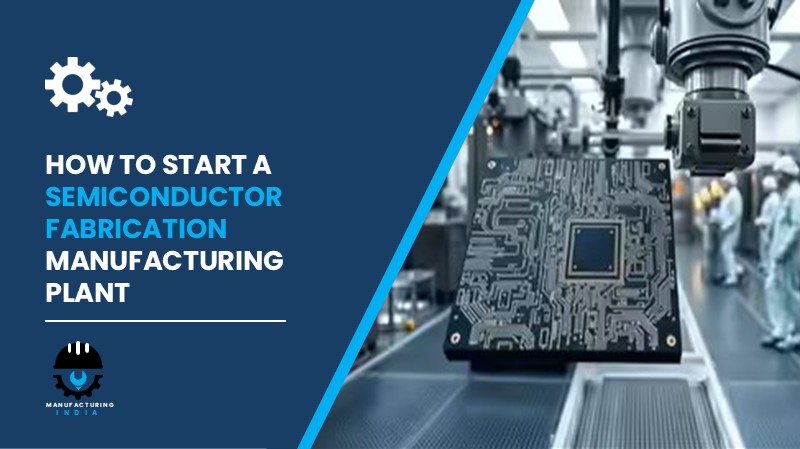
Setting up a semiconductor fabrication manufacturing plant in India presents a compelling investment case driven by the surging demand for microchips across consumer electronics, automotive electronics, telecommunications infrastructure, industrial automation, and AI and cloud computing applications. Semiconductor fabrication – the process of creating integrated circuits on silicon wafers – has become the backbone of modern technology, powering everything from smartphones and electric vehicles to 5G base stations and data centre servers. India’s domestic electronics production has surged nearly sixfold over the past decade, reaching INR 11.3 lakh crore (approximately USD 140 billion) in 2024–25, generating unprecedented demand for locally fabricated chips and creating a structural opportunity for new-age investors.
India offers a strategically sound environment for establishing a semiconductor fabrication unit. The Government of India’s Make in India initiative, combined with active policy support for semiconductor self-sufficiency, has accelerated investment in domestic chip manufacturing infrastructure. India’s large engineering talent pool, rapidly expanding electronics consumption base, and growing integration into global technology supply chains make it one of the most attractive destinations for capital-intensive, high-value manufacturing. States such as Gujarat and Maharashtra, with their established industrial estates, SEZ frameworks, and robust utility infrastructure, provide ideal locations for cleanroom-grade fabrication facilities that require stable power, water, and logistics connectivity.
Establishing a semiconductor fabrication plant in India combines strong policy tailwinds with structural chip demand from high-growth sectors including automotive, AI, and 5G. With gross profit margins ranging between 50–60% and net profit margins of 20–30%, this investment offers compelling financial returns and long-term demand sustainability – making it one of the most viable high-technology manufacturing opportunities available to Indian and global investors today.
What is Semiconductor Fabrication?
Semiconductor fabrication, also referred to as wafer fabrication or chip manufacturing, is the industrial process of creating integrated circuits through the controlled processing of silicon wafers. The process involves multiple highly controlled stages – including photolithography, etching, ion implantation, thin-film deposition, and metallization – to create microscopic electronic circuits on silicon substrates. Fabrication plants, commonly known as fabs, operate within cleanroom environments specifically designed to eliminate contamination, and use specialised machinery and chemicals to achieve exact manufacturing results with nanometre-level precision.
The product of this process is the microchip – a component indispensable to computers, smartphones, automotive electronics, industrial machinery, and data centres. Advanced fabs incorporate cutting-edge processes such as FinFET architecture, EUV lithography, and 3D stacking to enhance chip performance while decreasing power requirements and raising transistor density. From a global manufacturing perspective, semiconductor fabrication operates as the most technologically demanding and capital-intensive industry, serving end-use sectors including consumer electronics, automotive, telecommunications, industrial automation, AI and cloud computing, and healthcare devices. Key applications include the production of microprocessors, memory chips, logic circuits, sensors, microcontrollers, and specialty ICs for high-tech applications.
Cost of Setting Up a Semiconductor Fabrication Manufacturing Plant in India
The cost of establishing a semiconductor fabrication manufacturing plant in India depends on several variables, including plant capacity, technology node, degree of automation, site location, and the extent of regulatory compliance infrastructure required. Investors should plan for both substantial capital outlays and ongoing operational expenditures across the life of the project.
1. Capital Expenditure (CapEx)
The total capital investment for a semiconductor fabrication unit covers land acquisition, site preparation, civil construction, cleanroom-grade machinery, and other pre-operative costs. Land and site development – including boundary development, land registration charges, and site preparation – forms a substantial portion of the initial investment. Investors should evaluate industrial estate locations and Special Economic Zone (SEZ) options in states such as Gujarat and Maharashtra to benefit from infrastructure subsidies and regulatory incentives.
Civil works and construction costs cover the cleanroom structure, laboratory facility, raw material and chemical storage, effluent treatment infrastructure, and administrative block. These are specialised build-outs and require engineering expertise in contamination-controlled environments.
Machinery costs account for the largest single portion of total CapEx in a semiconductor fabrication plant. Key machinery required includes:
- Photolithography machines
- Etchers (dry and wet)
- Ion implanters
- Chemical vapour deposition (CVD) systems
- Metrology tools
- Packaging equipment
Other capital costs include effluent treatment plant (ETP) setup, import duties on specialised equipment, pre-operative expenses, and commissioning charges.
Request a Sample Report for In-Depth Market Insights: https://www.imarcgroup.com/semiconductor-fabrication-manufacturing-plant-project-report/requestsample
2. Operational Expenditure (OpEx)
The operating cost structure of a semiconductor fabrication manufacturing plant is primarily driven by raw material consumption. Raw materials – including silicon wafers, specialty gases, photoresists, and chemicals – account for approximately 35–45% of total operating expenses. Investors are advised to negotiate long-term supplier contracts to mitigate price volatility and ensure supply chain continuity. Utility costs, covering electricity, water, and steam, form the second-largest cost category, representing 25–35% of OpEx – reflecting the energy-intensive nature of cleanroom operations. Other ongoing operational costs include transportation, packaging, salaries and wages, maintenance, depreciation, and taxes. By the fifth year of operations, the total operational cost is expected to increase substantially due to factors such as inflation, market fluctuations, potential rises in the cost of key materials, supply chain disruptions, and shifts in the global economy.
3. Plant Capacity
The proposed manufacturing facility referenced in IMARC Group’s project report is designed with an annual production capacity of approximately 1.2 million wafers, enabling economies of scale while maintaining operational flexibility. Capacity configurations can be customised to match individual investor requirements and capital availability, and profitability improves meaningfully with higher capacity utilisation through absorption of fixed costs across a larger production volume.
4. Profit Margins and Financial Projections
A semiconductor fabrication plant demonstrates healthy profitability potential under normal operating conditions. Gross profit margins typically range between 50–60%, supported by stable demand and value-added applications. Net profit margins are projected at 20–30% on average. A comprehensive financial analysis should cover NPV, IRR, payback period, liquidity analysis, and sensitivity analysis. Detailed income projections, expenditure forecasts, and break-even calculations are covered in IMARC Group’s full project report and are accessible via the sample request link above.
Why Set Up a Semiconductor Fabrication Plant in India?
Growing Global Chip Demand: The global need for microchips has reached an all-time high because of increased electronics usage, the development of artificial intelligence and IoT technology, and rapid advances in automotive electronics. This sustained demand creates a long-duration revenue opportunity for new fabrication entrants in India.
High Value-Added Manufacturing: Through advanced fabrication processes, manufacturers achieve precise chip performance specifications through technologies such as EUV lithography, 3D stacking, and FinFET architecture. These capabilities enable premium pricing and market differentiation, supporting the gross margin range of 50–60% described above.
Strategic Government Support: Governments around the world – including India – have made local chip manufacturing a national priority to reduce supply chain risks and build technological independence. India’s electronics production surge to INR 11.3 lakh crore in 2024–25 reflects the direct impact of policy-backed industrial growth, and the semiconductor sector is a key beneficiary of ongoing government incentives.
Cost-Competitive Manufacturing: India offers competitive land costs, a large engineering talent base, and developing supply chain infrastructure for high-technology industries. These structural advantages, combined with improving utility infrastructure in major industrial corridors, support cost-competitive fab operations relative to other global manufacturing destinations.
Active Industry Investment: In January 2026, the Government of India announced that four semiconductor plants operated by Micron Technology, CG Power, Kaynes Technology, and Tata Electronics are on track to begin commercial production in 2026, moving from pilot and trial stages to full-scale manufacturing for domestic and export markets. In the same month, Micron Technology signed an exclusive Letter of Intent to acquire Powerchip Semiconductor Manufacturing Corporation’s P5 fabrication site in Taiwan for USD 1.8 billion – a signal of major global players expanding their fab capacity aggressively.
Local Supply Chain Preference: Consumer electronics manufacturers, automotive OEMs, and industrial automation firms operating in India are increasingly prioritising local semiconductor sourcing to reduce import dependency and manage supply chain risk – creating a ready domestic customer base for new fabrication units.
Manufacturing Process – Step by Step
The semiconductor fabrication manufacturing process uses wafer fabrication as the primary production method, involving multiple highly controlled unit operations performed in cleanroom environments. Each step requires precision machinery and rigorous quality assurance:
- Wafer Cleaning: Silicon wafers are cleaned using chemical and deionised water processes to remove surface contaminants before processing begins.
- Oxidation: A thin silicon dioxide layer is grown on the wafer surface to serve as an insulating or masking layer in subsequent steps.
- Photolithography: A photoresist is applied to the wafer, exposed through a photomask using UV or EUV light, and developed to transfer circuit patterns onto the silicon substrate.
- Ion Implantation: Dopant ions are accelerated into the wafer to modify electrical properties in specific regions, defining transistor characteristics.
- Etching: Dry or wet etching processes remove unwanted material from the wafer surface, defining the circuit topology at nanometre resolution.
- Thin-Film Deposition: Chemical vapour deposition (CVD) and other deposition methods add insulating, conducting, or semiconducting layers as required by the circuit design.
- Metallization: Metal interconnects are deposited and patterned to create electrical connections between circuit components across multiple layers.
- Testing and Metrology: Metrology tools measure layer thickness, alignment accuracy, and electrical characteristics at each stage to detect process deviations early.
- Packaging: Finished wafers are diced into individual chips and packaged into protective housings for dispatch to consumer electronics, automotive, telecommunications, and industrial end-use industries.
Key Applications
Semiconductor fabrication serves a wide range of high-technology industries, with each application segment placing distinct performance and reliability demands on fabricated chips:
- Consumer Electronics: Semiconductor chips power smartphones, laptops, tablets, and wearable devices through their processing and memory capabilities.
- Automotive Electronics: Fabricated chips function in electric vehicles through ADAS systems, infotainment systems, and battery management systems.
- Telecommunications and 5G Infrastructure: Chips enable base stations to process data at high speeds and establish connections with IoT devices across 5G networks.
- Industrial Automation and AI: Semiconductor components serve as a foundational element for robotics systems, machine learning applications, cloud computing services, and smart manufacturing operations.
Leading Manufacturers
The global semiconductor fabrication industry is served by several multinational companies with extensive production capacities and diverse application portfolios. Key players active in this industry include:
- BASF SE
- Kanto Chemical Co., Inc.
- Praxair, Inc.
- Dow Chemical Company
- Air Products and Chemicals Inc.
Timeline to Start the Plant
Investors planning a semiconductor fabrication unit in India should allow adequate time for each phase of establishment, typically spanning multiple years given the regulatory, infrastructure, and technology complexity involved:
- Feasibility study and project report preparation
- Land acquisition and site development
- Regulatory approvals and environmental clearances
- Factory licence and fire safety compliance
- Machinery procurement and installation
- Raw material supplier agreements and supply chain setup
- Trial production and quality testing
- Commercial production launch
Licences and Regulatory Requirements
Starting a semiconductor fabrication manufacturing unit in India requires several approvals:
- Business registration (Proprietorship, LLP, or Private Limited Company)
- Factory Licence under the Factories Act
- Environmental Clearance from the State Pollution Control Board
- GST Registration
- Fire Safety NOC
- Hazardous and chemical compliance (highly relevant given use of specialty gases, photoresists, and reactive chemicals in the process)
- Effluent Treatment Plant (ETP) operational clearance
- Occupational Health and Safety compliance
Key Challenges to Consider
High Capital Requirements: Semiconductor fabrication is among the most capital-intensive manufacturing sectors globally. Land, cleanroom construction, and precision machinery – including photolithography machines and CVD systems – demand very large upfront investment.
Raw Material Price Volatility: Key inputs including silicon wafers, specialty gases, photoresists, and chemicals are subject to global supply-demand fluctuations and geopolitical disruption. Raw materials constitute 35–45% of OpEx, making price stability critical to margin management.
Regulatory Compliance: Environmental and safety regulations for semiconductor fabs are stringent, given the use of hazardous gases and chemicals in the process. Maintaining continuous ETP operation and meeting emission standards requires dedicated compliance infrastructure.
Technology and Innovation Pressure: The industry demands ongoing adoption of cutting-edge processes such as EUV lithography, FinFET, and 3D stacking to remain competitive. Fabs must invest continuously in technology upgrades to serve leading-edge chip requirements.
Competition: Key players including BASF SE, Kanto Chemical Co., Praxair, Dow Chemical Company, and Air Products and Chemicals maintain substantial scale and supply chain advantages. New entrants must define a clear niche or customer base strategy.
Skilled Manpower: Semiconductor fabrication requires highly trained engineers and technicians in cleanroom operations, process control, and quality systems. Attracting and retaining this talent in India remains a strategic challenge that requires investment in training and compensation.
Frequently Asked Questions
1. How much does it cost to set up a semiconductor fabrication manufacturing plant in India?
The total cost depends on plant capacity, technology node, automation level, and location. The capital expenditure structure covers land, civil works, cleanroom construction, photolithography machines, etchers, ion implanters, CVD systems, and other specialised equipment. Full CapEx details are available in IMARC Group’s project report.
2. Is semiconductor fabrication manufacturing profitable in India in 2026?
Yes. The industry demonstrates gross profit margins of 50–60% and net profit margins of 20–30% under normal operating conditions. India’s growing electronics market and policy support make this a viable and attractive investment.
3. What machinery is required for a semiconductor fabrication plant in India?
Key machinery includes photolithography machines, etchers, ion implanters, chemical vapour deposition systems, metrology tools, and packaging equipment.
4. What licences and approvals are required to start a semiconductor fabrication plant in India?
Required approvals include business registration, Factory Licence, Environmental Clearance, GST Registration, Fire Safety NOC, hazardous chemical compliance, ETP operational clearance, and occupational health and safety compliance.
5. What raw materials are needed for semiconductor fabrication manufacturing?
Key raw materials include silicon wafers, specialty gases, photoresists, and chemicals.
6. What are the environmental compliance requirements for a semiconductor fabrication plant in India?
Plants must obtain Environmental Clearance from the State Pollution Control Board, operate a functional Effluent Treatment Plant, comply with chemical and hazardous material handling regulations, and monitor emissions continuously.
7. What is the best location to set up a semiconductor fabrication plant in India?
Locations should offer proximity to raw material suppliers, reliable power and water utilities, strong transportation infrastructure, and access to engineering talent. Industrial estates and SEZ zones in Gujarat and Maharashtra are among the preferred options.
8. What is the break-even period for this type of plant in India?
Break-even period varies with capacity, utilisation rate, and cost structure. A detailed payback period analysis is included in IMARC Group’s full feasibility report.
9. What government incentives are available for semiconductor manufacturers in India?
India’s government has prioritised semiconductor manufacturing under its Make in India initiative and related schemes, offering policy support and incentives for new fab investments. Four plants by Micron Technology, CG Power, Kaynes Technology, and Tata Electronics are already on track for commercial production in 2026 under this framework.
Key Takeaways for Investors
A semiconductor fabrication manufacturing plant in India represents a high-value investment opportunity anchored by demand from consumer electronics, automotive, telecommunications, industrial automation, and AI and cloud computing sectors – all of which are growing rapidly in both the domestic and global markets. The project demonstrates strong financial viability across capacity configurations, with gross margins of 50–60% and net margins of 20–30% under realistic operating assumptions. The global semiconductor fabrication market was valued at USD 603 million in 2025 and is projected to reach USD 1,672.17 million by 2034, growing at a CAGR of 12.0% from 2026 to 2034. With governments worldwide – including India – actively incentivising local chip production and four Indian fabs already moving to commercial scale in 2026, demand sustainability for well-positioned fabrication plants is structurally assured for the decade ahead.
About the Author