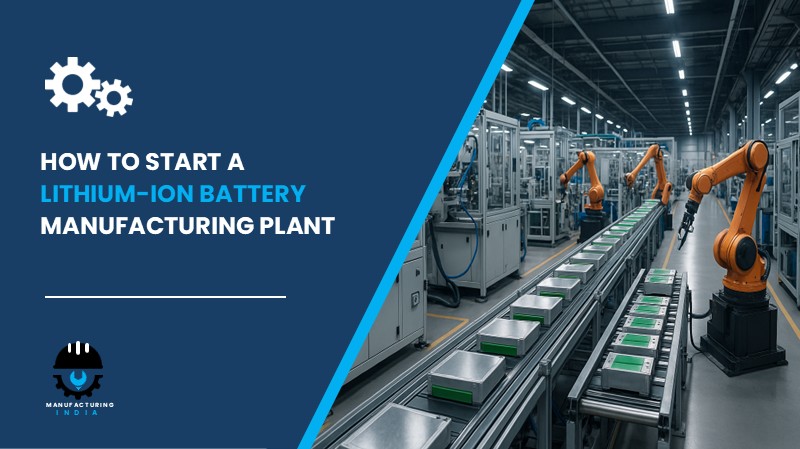
Lithium-ion batteries have become the backbone of modern energy storage. From electric vehicles and smartphones to renewable energy systems and industrial power backups, the global demand for lithium-ion batteries is expanding rapidly. As industries transition toward cleaner technologies, setting up a lithium-ion battery manufacturing plant offers a significant business opportunity for forward-thinking entrepreneurs and investors.
This comprehensive step-by-step guide covers everything you need to know from market fundamentals to plant setup, machinery, raw materials, and key considerations.
Industry Overview
The lithium-ion battery industry is growing at an exceptional pace due to:
- Rising adoption of electric vehicles (EVs)
- Increasing demand for portable electronics
- Expansion of renewable energy storage systems
- Government incentives for clean energy manufacturing
- Advancements in battery chemistry and performance
With global investments shifting toward electrification, establishing a manufacturing facility today can secure strong long-term benefits. Lithium-ion batteries are essential for next-generation mobility, grid storage, smart devices, and automation—making this a high-growth, future-ready business.
Request a Sample Report to Explore the Full Study: https://www.imarcgroup.com/lithium-ion-battery-manufacturing-plant-project-report/requestsample
Step-by-Step Guide to Start a Lithium-Ion Battery Manufacturing Plant
Step 1: Conduct a Feasibility Study
Start with a detailed feasibility assessment that evaluates:
- Target industries (EVs, consumer electronics, energy storage, industrial equipment)
- Competition and market demand across regions
- Battery types to manufacture (LFP, NMC, NCA, LCO, etc.)
- Estimated production capacity
- Capital requirements and ROI
- Regulatory compliance and safety standards
The feasibility study shapes your business model, product mix, and investment structure.
Step 2: Select an Ideal Location
Lithium-ion battery plants require safe, well-planned industrial environments.
Ideal location features:
- Access to skilled technicians and engineers
- Strong power supply and backup systems
- Proximity to raw material suppliers
- Good transportation connectivity
- Adequate water supply and ventilation
- Government incentives for clean energy manufacturing
Choosing the right region can lower logistics costs and improve overall operational efficiency.
Step 3: Design the Plant Layout
Lithium-ion battery plants involve multiple controlled environments. A well-designed layout ensures safety, efficiency, and contamination-free production.
Key sections include:
- Electrode manufacturing area
- Mixing and coating units
- Calendering and slitting sections
- Cell assembly (dry room)
- Electrolyte filling chamber
- Formation and aging area
- Testing and quality control
- Battery pack assembly (optional)
- Automated storage and packaging
- Waste management and recycling area
Dry rooms with controlled humidity are essential for preventing moisture-related failures.
Step 4: Procure Machinery and Equipment
The machinery required varies depending on capacity, automation level, and battery chemistry.
Essential equipment includes:
- Mixing and slurry preparation machines
- Electrode coating and drying lines
- Calendering machines
- Slitting and cutting equipment
- Winding or stacking machines
- Cell assembly systems
- Electrolyte filling machines
- Formation and aging chambers
- Battery testing and grading machines
- Battery pack assembly tools
Automation improves consistency and reduces labor-intensive tasks.
Step 5: Source Raw Materials and Components
Lithium-ion battery production requires specialized materials, including:
- Lithium salts (carbonate, hydroxide)
- Cathode materials (LFP, NMC, NCA, LCO)
- Anode materials (graphite, silicon-based composites)
- Electrolytes
- Separators
- Aluminum and copper foils
- Battery casing materials
- BMS (Battery Management System) components (for packs)
Establishing long-term supplier agreements ensures quality and cost stability.
Step 6: Understand the Manufacturing Process
Lithium-ion battery manufacturing involves multiple precise stages:
1. Electrode Preparation
Raw materials are mixed into a slurry and coated on metal foils.
2. Electrode Drying & Calendering
Electrodes are dried, compressed, and cut into required sizes.
3. Cell Assembly
Electrodes and separators are assembled using:
- Winding (cylindrical cells)
- Stacking (prismatic/pouch cells)
4. Electrolyte Filling
Cells are vacuum-filled with electrolyte to enable ion movement.
5. Formation & Aging
Cells are charged/discharged to form the SEI layer and stabilize performance.
6. Testing & Grading
Cells undergo strict quality, safety, and efficiency checks.
7. Module & Pack Assembly (Optional)
Cells can be configured into modules or battery packs with BMS integration.
This highly controlled process ensures safety and long-term reliability.
Step 7: Implement Robust Quality Control Systems
Quality assurance is critical because lithium-ion batteries must meet strict safety standards.
Testing includes:
- Capacity and cycle life
- Thermal stability
- Voltage and internal resistance
- Drop tests and vibration tests
- High/low temperature performance
- Safety and short-circuit evaluation
Reliable QC systems protect brand reputation and reduce rejection rates.
Step 8: Regulatory and Safety Compliance
Due to the chemical and thermal nature of lithium-ion batteries, facilities must meet:
- Environmental regulations
- Worker safety standards
- Chemical handling guidelines
- Emission control requirements
- Fire safety and emergency response protocols
- International certification standards (UN38.3, IEC, BIS, etc.)
Compliance ensures safe operations and global market acceptance.
Step 9: Estimate the Cost of Starting a Lithium-Ion Battery Plant
The cost of starting a lithium-ion battery manufacturing plant depends on:
- Production capacity (GWh scale or smaller)
- Automation level
- Battery chemistry and design
- Machinery and technology adoption
- Dry room size and setup
- Safety systems and quality control equipment
- Raw material and labor costs
- Utilities and environmental systems
- Working capital requirements
Battery manufacturing is capital-intensive, but strong demand and government incentives make it a highly profitable opportunity for long-term investors.
Setting up a lithium-ion battery manufacturing plant requires technological expertise, investment planning, and strict safety measures. However, with global trends favoring electrification, energy storage, and sustainable mobility, this industry promises exceptional growth prospects.
By following this step-by-step guide—covering feasibility, layout design, machinery, raw materials, processes, and compliance—you can build a competitive and future-ready manufacturing operation.
About the Author