Setting up a neem oil processing plant in India presents a compelling investment case anchored in the country’s unrivalled position as the world’s largest neem-growing nation, the rapidly expanding global demand for natural pesticides, herbal personal care ingredients, and therapeutic botanical products, and the accelerating shift among consumers and agricultural producers toward chemical-free, eco-friendly, and sustainably sourced alternatives. Neem oil a natural vegetable oil extracted from the seeds of the Azadirachta indica tree containing active compounds including azadirachtin, nimbin, and salannin serves as a uniquely versatile bio-resource across agriculture, personal care, and pharmaceutical sectors, offering natural pesticidal, antifungal, antibacterial, antiviral, and healing properties that no single synthetic chemical product can replicate across this range of applications. The global neem oil market was valued at USD 2.72 billion in 2025 and is projected to reach USD 9.05 billion by 2034 at a CAGR of 14.3% one of the highest growth rates among all natural ingredient and botanical extract categories globally confirming the exceptional commercial opportunity that early-mover investors can capture in this rapidly scaling market.
India’s structural advantages make it the most naturally positioned country in the world for establishing a neem oil processing facility. The country’s neem tree cultivation base concentrated across Rajasthan, Uttar Pradesh, Madhya Pradesh, Maharashtra, Karnataka, and Andhra Pradesh provides abundant, low-cost, and year-round access to neem seeds at the direct farmgate level, eliminating the import dependency and landed cost premiums that constrain processors in developed markets. The Asia-Pacific region, led by India and Indonesia, dominates neem oil production due to abundant neem cultivation and low production costs and India’s established herbal and agricultural chemical processing industry, government support for organic farming and herbal product export through APEDA and the Spices Board, and rapidly expanding natural personal care manufacturing sector collectively provide the commercial infrastructure for a well-positioned neem oil processing investment to achieve both domestic and export-oriented financial returns.
A neem oil processing plant in India draws on the world’s most abundant and cost-competitive neem seed cultivation base, a global market growing at 14.3% CAGR from USD 2.72 billion in 2025 toward USD 9.05 billion by 2034, and multi-sector demand across agriculture, personal care, pharmaceuticals, and animal care. With gross profit margins of 35–45% and net margins of 18–28% at a production capacity of 300 MT per annum and above, this investment delivers exceptional agri-processing returns in one of the fastest-growing natural ingredient categories globally.
What is Neem Oil?
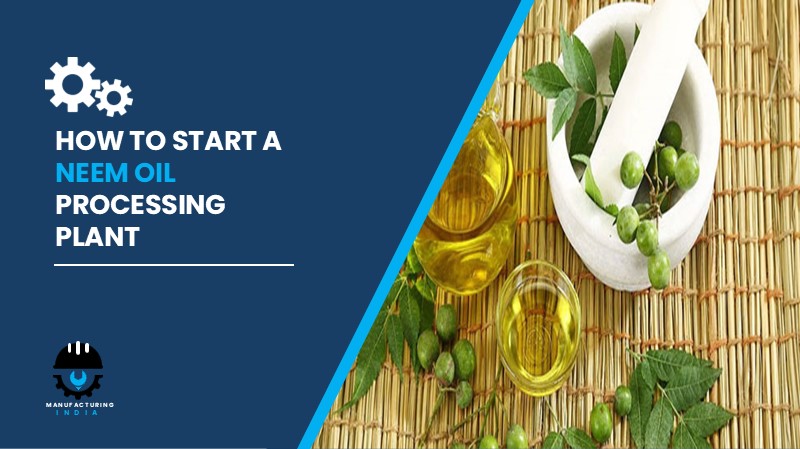
Neem oil is a natural vegetable oil extracted from neem tree seeds (Azadirachta indica). The oil contains active compounds including azadirachtin, nimbin, and salannin that provide it with antifungal, antibacterial, antiviral, and insecticidal abilities. Neem oil functions as a natural pesticide in agricultural practices, serves as an ingredient in personal care products including soaps, shampoos, and cosmetics, and is used in traditional medicine for its healing properties. Cold-pressed neem oil maintains its complete bioactive content, which produces high effectiveness in its multiple end-use applications.
The primary production method involves seed cleaning, crushing, cold pressing, filtration, and packaging a multi-step agri-processing operation integrating agricultural raw material management, controlled cold-press oil extraction, filtration, and quality verification at each stage. End-use industries served include agriculture, personal care, and pharmaceuticals, with additional applications in animal care. Key product uses include use as a natural pesticide and soil conditioner in organic farming, an active ingredient in soaps, lotions, shampoos, and hair oils in personal care manufacturing, a formulation ingredient in ointments, creams, and herbal preparations in pharmaceutical production, and a treatment agent in livestock feed and skin care for animals.
Cost of Setting Up a Neem Oil Processing Plant in India
The total investment required to establish a neem oil processing plant in India depends on plant capacity, oil extraction technology selection, geographic location, level of automation, and compliance with food safety, cosmetics ingredient, and agricultural chemical regulatory requirements. Investors must account comprehensively for both one-time capital expenditure and recurring operational costs when preparing a feasibility study or detailed project report (DPR).
1. Capital Expenditure (CapEx)
Land and Site Development constitutes a foundational investment. Costs for land registration, boundary development, internal road layout, drainage infrastructure, and site levelling vary based on whether the facility is within a government-notified agro-processing industrial estate, a herbal and botanical extract processing cluster, or on privately acquired land in neem-growing districts. Processing facilities in Rajasthan, Uttar Pradesh, and Madhya Pradesh benefit from direct proximity to primary neem seed collection areas, reducing inbound transportation costs and enabling rapid delivery of fresh, high-quality seed lots to the processing floor.
Civil Works and Construction encompasses the seed receiving and storage hall which must maintain low-humidity and pest-proof conditions to preserve seed quality and azadirachtin content before pressing along with the seed cleaning and crushing area, cold-press extraction facility, filtration and clarification room, quality control laboratory, neem oil storage tanks, packaging hall, and administrative block. Food-grade facility construction standards including hygienic surfaces, adequate ventilation, and pest exclusion design apply throughout the facility given the personal care and pharmaceutical end-use applications of the processed oil.
Machinery and Equipment represent the single largest component of capital expenditure. Key machinery required for a neem oil processing plant includes:
- Seed cleaners
- Crushers
- Cold-press machines
- Filters
- Storage tanks
- Packaging units
Other Capital Costs include the effluent treatment plant (ETP) for managing seed cake moisture and press effluent streams, pre-operative expenses covering regulatory filings and feasibility study preparation, plant commissioning charges, utility connection fees, and import duties applicable to specialised high-capacity cold-press extraction equipment sourced internationally for superior azadirachtin retention.
Request a Sample Report for In-Depth Market Insights: https://www.imarcgroup.com/neem-oil-processing-plant-project-report/requestsample
2. Operational Expenditure (OpEx)
Raw Material Cost is the dominant driver of operating expenditure, accounting for approximately 55–65% of total OpEx. The primary inputs are neem seeds, along with solvent (hexane) if solvent extraction is used as a complementary process to cold pressing for maximum oil yield. Neem seed prices are subject to seasonal variability driven by harvest frequency neem fruits ripen once annually in most growing regions and procurement competition from multiple buyers including fertiliser companies, herbal product manufacturers, and direct export buyers. Investors are advised to establish long-term procurement contracts with neem seed collection networks, tribal cooperative societies, and contract farming arrangements with neem plantation owners in Rajasthan, Uttar Pradesh, and Madhya Pradesh to stabilise input pricing and ensure supply continuity across the annual harvest cycle. Locating processing facilities in geographic proximity to neem seed-growing regions minimises both inbound transportation costs and seed quality deterioration risk.
Utility Costs – covering electricity for seed crushers, cold-press machines, filtration systems, and facility operations account for approximately 15–20% of total OpEx, reflecting the moderate energy intensity of oil extraction and filtration operations. Cold-press extraction, while more energy-intensive per unit output than solvent extraction, is preferred for premium-grade neem oil products targeting personal care and pharmaceutical markets due to its superior bioactive compound retention. Investors in regions with competitive industrial electricity tariffs and reliable power supply are better positioned to manage this cost component.
Other Operating Costs include outbound transportation to agricultural input distributors, personal care ingredient buyers, pharmaceutical formulators, and export freight to international organic farming and herbal product buyers; packaging materials for industrial drums, retail bottles, and bulk tanker shipments; employee salaries and wages for seed processing operators, quality inspectors, and regulatory compliance personnel; equipment maintenance; quality assurance testing for azadirachtin content, purity, and safety compliance; depreciation on civil and machinery assets; and applicable taxes. By the fifth year of operations, total operational costs are expected to increase substantially due to inflation, market fluctuations, potential rises in neem seed procurement prices, supply chain disruptions, rising consumer demand, and shifts in the global economy.
3. Plant Capacity
The proposed neem oil processing facility is designed with an annual production capacity of approximately 300 MT, enabling economies of scale while maintaining operational flexibility across different oil grades cold-pressed premium, agricultural-grade, and cosmetic-grade and customer specification requirements. This capacity level is well-aligned with the requirements of personal care ingredient buyers, organic farming input distributors, pharmaceutical formulators, and export buyers in North America, Europe, and the Middle East seeking authentic cold-pressed neem oil with certified bioactive content. Capacity can be customised based on investor requirements and neem seed procurement network scale. Profitability improves consistently with higher capacity utilisation, and neem oil processing plants support phased capacity expansion through additional cold-press lines with contained incremental CapEx.
4. Profit Margins and Financial Projections
The neem oil processing plant demonstrates among the strongest profitability profiles in the Indian agri-processing investment category. Gross profit margins typically range between 35–45%, supported by the premium natural ingredient market positioning and high-value bioactive compound content of cold-pressed neem oil relative to solvent-extracted or refined alternatives. Net profit margins range between 18–28%, reflecting the moderate utility intensity and relatively contained civil infrastructure cost of the cold-press extraction model. A comprehensive financial analysis should include income projections, expenditure forecasts, gross and net margin tracking across Years 1 through 5, net present value (NPV), internal rate of return (IRR), payback period, and a full profit and loss account. Sensitivity analysis covering neem seed price movements and export market pricing variability is recommended for investment-grade financial planning.
Why Set Up a Neem Oil Processing Plant in India?
Rapid Global Shift Toward Natural Pesticides and Organic Farming. Neem oil’s natural pesticidal properties are replacing chemical pesticides in organic farming globally, driven by rising regulatory restrictions on synthetic pesticide residues, growing consumer demand for organic produce, and the expanding area under certified organic cultivation worldwide. In October 2024, Rovensa Next secured new product registrations in Colombia and Peru for Kuneka a Karanja oil and neem extract bioinsecticide-acaricide reinforcing the company’s commitment to sustainable crop protection solutions across Latin America. This cross-continental regulatory approval confirms the growing global acceptance of neem-based crop protection solutions and the expanding geographic market that Indian neem oil processors can access through export channels.
Rising Consumer Demand for Chemical-Free Personal Care and Herbal Products. The rising awareness about chemical-free and herbal alternatives is boosting neem oil demand in developed markets, particularly in North America and Europe. Key players are expanding into value-added, plant-based consumer products as demand for natural and sustainable solutions increases across the globe. In February 2025, Himalaya Wellness continued its association with the Women’s T20 Cricket League for the third year, strengthening ties with the Royal Challengers Bengaluru Women’s team, with its brand campaign showcasing its face wash range powered by nature and science with key ingredients including neem demonstrating how India’s largest herbal wellness brand continues to amplify neem as a mainstream personal care ingredient at a national marketing scale.
India’s Domestic Market Growth Validated by GNFC’s Retail Expansion. As per the India Brand Equity Foundation (IBEF), in 2019, Gujarat Narmada Valley Fertilizers and Chemicals Ltd (GNFC) inaugurated its first Neo Neem World parlour, marking its entry into exclusive retailing of neem-based consumer products including neem hand wash, shampoo, face wash, soaps, and oils. GNFC’s retail entry underscores the strong growth of the neem oil market, driven by rising consumer awareness of herbal ingredients, eco-friendly products, and preventive health and personal care trends and signals the organised retail channel opportunity for neem oil-derived product manufacturers serving both ingredient and consumer product market positions.
Asia-Pacific Regional Production Leadership Providing Structural Cost Advantage. The Asia-Pacific region, led by India and Indonesia, dominates neem oil production due to abundant neem cultivation and low production costs. India’s neem tree cultivation base naturally distributed across millions of hectares of agricultural and agroforestry land across Rajasthan, Uttar Pradesh, and other central and southern states provides processors with the lowest farm-gate neem seed procurement costs available globally, creating a structural production cost advantage over processors in any other geography.
Government Support for Organic Farming and Herbal Product Export. Increasing government initiatives for organic farming, export promotion, and herbal product research are supporting long-term neem oil market growth across the globe. India’s own government support mechanisms including the National Mission for Sustainable Agriculture’s organic farming promotion schemes, APEDA’s agricultural and processed food export development programmes, and Ministry of AYUSH’s herbal product export initiatives collectively create a favourable policy and financial support environment for neem oil processing investors targeting both domestic and international markets.
Exceptional Market Growth Rate Creating Early-Mover Premium Opportunity. The global neem oil market’s 14.3% CAGR growing from USD 2.72 billion in 2025 toward USD 9.05 billion by 2034 is among the highest growth trajectories in the entire natural ingredient and botanical extract sector. Processors who establish certified, export-grade production capacity during this rapid market development phase can secure long-term offtake agreements with organic farming input distributors, personal care brands, and pharmaceutical ingredient buyers building commercial relationships and quality reputations that translate into sustainable competitive advantage as the market scales.
Processing Process – Step by Step
The neem oil processing plant uses seed cleaning, crushing, cold pressing, filtration, and packaging as the primary production method. Below are the main stages involved in the neem oil processing process flow:
- Neem Seed Receipt and Inspection: Neem seeds are received from contracted farms, tribal cooperative collection networks, or direct farmgate procurement, weighed, and inspected for seed quality including moisture content, freshness, absence of mould or contamination, and kernel-to-shell ratio before being cleared for the processing line.
- Seed Cleaning and Sorting: Seed cleaners remove foreign matter including stones, soil, dust, twigs, and extraneous material from the raw neem seed lot using mechanical screens and aspiration systems, delivering a clean, uniform seed input to the crushing and pressing stage.
- Seed Drying (where required): Where incoming seed moisture is above the optimal processing specification, seeds are dried using natural sun drying or mechanical dryers to achieve the target moisture content that maximises oil extraction efficiency and minimises oxidation during pressing.
- Crushing and Kernel Separation: Crushers crack the neem seed outer shell to expose the neem kernel the oil-bearing fraction which is separated from shell fragments before entering the cold-press extraction stage. Shell separation improves oil yield, reduces press wear, and prevents shell-derived impurities from entering the oil stream.
- Cold Pressing: Cold-press machines extract neem oil from the cleaned, separated neem kernels through mechanical pressing at controlled low temperatures that preserve the complete bioactive compound profile including azadirachtin, nimbin, and salannin which would be partially degraded by heat in expeller-pressed or refined oil production. The cold-press process produces raw neem oil and neem seed cake as the primary co-product.
- Primary Filtration: The raw pressed neem oil passes through filtration systems to remove suspended solid particles including kernel fibre, fine seed particles, and press debris, producing a clarified neem oil with reduced turbidity before secondary purification.
- Secondary Filtration and Clarification: Further filtration through finer filter media produces the clear, specification-grade neem oil required by cosmetics ingredient, pharmaceutical, and premium agricultural buyers. For high-grade personal care and pharmaceutical applications, additional clarification through centrifugation or filter press systems achieves the required clarity and purity standards.
- Quality Inspection and Testing: Analytical instruments monitor finished neem oil for azadirachtin content the primary bioactive efficacy marker for agricultural applications along with purity, colour, viscosity, acid value, moisture content, and microbial safety parameters. Batch release is conditional on all parameters meeting specification acceptance criteria for the designated product grade.
- Storage: Finished neem oil is stored in temperature-controlled storage tanks protected from light and oxygen exposure to preserve bioactive compound stability and prevent oxidation-related quality degradation during inventory holding and pre-dispatch periods.
- Packaging: Packaging units fill finished neem oil into industrial drums for bulk agricultural and pharmaceutical buyers, amber glass or HDPE bottles for personal care ingredient and retail applications, and tanker vehicles for large-volume bulk export shipments. Labels apply product name, azadirachtin content certification, batch code, best-before date, and applicable safety and regulatory information for each market and application.
- Dispatch to End-Use Channels: Finished neem oil is dispatched to organic farming input distributors and agricultural cooperatives, personal care and cosmetics ingredient buyers, pharmaceutical and herbal product formulators, animal care product manufacturers, and export buyers in international organic, natural health, and herbal product markets.
Key Applications
Neem oil produced at this type of facility serves four primary end-use sectors with specific product grade, purity, azadirachtin content, and certification requirements for each:
- Agriculture: Used as an eco-friendly pesticide and soil conditioner in organic and integrated pest management farming systems replacing synthetic chemical pesticides for a wide range of crop protection applications against insects, mites, fungi, and nematodes.
- Personal Care: Incorporated in soaps, lotions, shampoos, and hair oils as a natural active ingredient offering antibacterial, antifungal, and skin-nourishing properties a growing premium application in India’s expanding natural and herbal personal care market.
- Pharmaceuticals: Used in ointments, creams, and herbal formulations for therapeutic applications including skin condition treatment, wound healing, and antimicrobial activity leveraging the multi-bioactive compound profile that makes neem one of Ayurveda’s most comprehensively documented medicinal plant oils.
- Animal Care: Applied in livestock feed supplements and skin treatments for parasites and fungal infections in both companion animals and farm livestock a growing application driven by the premiumisation of pet care and increasing producer awareness of natural parasite control solutions.
Leading Neem Oil Processors
The global neem oil industry is served by a range of specialist processors with strong domestic and international supply chain relationships. Key players include:
- Gramin India Agri Busines
- Parker Biotech Private Limited
- Neem India Products Pvt Ltd
- Ozone Biotech
- Agro Extracts Limited
- Fortune Biotech Ltd
- Brahmani Industries
- Katyayani Organics
- GreeNeem Agri Private Limited
- Neeming Australia Pty Ltd
- Nisarg Biotech
- P J Margo Private Limited
- Parry America Inc
- Green Earth Products Pvt Ltd
- Neem Tree Farms
Timeline to Start the Plant
Investors planning to establish a neem oil processing plant in India should anticipate the following project development phases:
- Feasibility study and project report preparation
- Land acquisition and site development
- Regulatory approvals and environmental clearances
- Factory licence and fire safety compliance
- Machinery procurement and installation
- Raw material supplier agreements and supply chain setup
- Trial production and quality testing
- Commercial production launch
Licences and Regulatory Requirements
Starting a neem oil processing unit in India requires several approvals:
- Business registration (Proprietorship, LLP, or Private Limited Company)
- Factory Licence under the Factories Act
- FSSAI (Food Safety and Standards Authority of India) licence where neem oil is used in food-contact or edible formulations
- Central Insecticides Board (CIB) registration for neem oil marketed as a biopesticide under the Insecticides Act, 1968
- Environmental Clearance from the State Pollution Control Board
- GST Registration
- Fire Safety NOC
- Effluent Treatment Plant (ETP) operational clearance for seed processing waste and press effluent management
- APEDA registration and export certification for manufacturers targeting international organic farming, personal care ingredient, and herbal product export markets
- Organic certification from NPOP or NOP-accredited certifying agencies for neem oil marketed to certified organic farming and personal care buyers
- Occupational Health and Safety compliance covering seed processing, pressing, and chemical handling operations
Key Challenges to Consider
Neem Seed Supply Seasonality and Quality Variability. Neem seeds ripen and are available for collection only once per year in most growing regions, creating a concentrated annual procurement window during which processors must acquire and store sufficient seed volumes to support year-round production. Seed quality including moisture content, freshness, and azadirachtin precursor content degrades with prolonged storage, requiring investment in proper storage infrastructure to maintain processing quality through the off-season period.
Azadirachtin Content Variability Affecting Product Potency. Azadirachtin content in neem oil varies by seed origin, harvest maturity, storage conditions, and processing temperature factors that are challenging to control across diverse multi-farmer procurement networks. Maintaining consistent azadirachtin content across production batches is essential for agricultural buyers who purchase neem oil on a content-guaranteed specification basis. Robust incoming seed testing and controlled cold-press processing conditions are mandatory quality management requirements for premium product positioning.
CIB Registration for Biopesticide Applications. Neem oil marketed as a biopesticide for agricultural crop protection in India requires registration with the Central Insecticides Board under the Insecticides Act, 1968. The CIB registration process requires submission of efficacy data, safety data, and product composition documentation adding regulatory preparation time and cost before the agricultural channel can be served commercially.
Export Market Certification and Organic Compliance. International buyers in North American and European organic farming and personal care markets require NPOP, NOP, or EU Organic certification, azadirachtin content test reports, pesticide residue and heavy metal test documentation, and in many cases third-party quality audits for each production batch. Maintaining these certifications across seasonal production cycles adds ongoing compliance and testing overhead that must be built into the production economics.
Competition from Established Domestic Processors. India’s neem oil market is served by an extensive network of established processors including Parker Biotech, Agro Extracts, P J Margo, and several other well-qualified exporters with long-standing international buyer relationships and certified processing facilities. New entrants must differentiate through superior cold-press quality and azadirachtin content certification, organic certification, consistent year-round supply capability, or value-added product development such as neem oil emulsifiable concentrates or personal care-grade refined neem oil.
Skilled Manpower for Quality-Critical Natural Oil Processing. Operating cold-press machines, filtration systems, and quality testing laboratory instruments while maintaining organic certification documentation and export compliance requires processing technicians and quality assurance personnel trained in natural oil extraction chemistry, bioactive compound analysis, and food-grade and cosmetics-grade quality management. Sourcing qualified staff for facilities located in neem-growing agricultural districts presents a recurring operational challenge.
Frequently Asked Questions
1. How much does it cost to set up a neem oil processing plant in India?
The total cost depends on plant capacity (approximately 300 MT per annum and above), oil extraction technology selection, location, and automation level. CapEx covers land, agri-processing civil construction, and machinery including seed cleaners, crushers, cold-press machines, filters, storage tanks, and packaging units, along with pre-operative and regulatory costs including CIB registration and organic certification fees.
2. Is neem oil processing profitable in India in 2026?
Yes. With gross margins of 35–45% and net margins of 18–28% among the highest in Indian agri-processing supported by a global market growing at 14.3% CAGR toward USD 9.05 billion by 2034, strong multi-sector demand from agriculture, personal care, pharmaceuticals, and animal care, and India’s structural raw material cost advantage as the world’s largest neem-growing nation, the investment presents an exceptional profitability case.
3. What machinery is required for a neem oil processing plant in India?
Key equipment includes seed cleaners, crushers, cold-press machines, filters, storage tanks, and packaging units. Supporting systems include seed drying equipment, centrifugation or filter press systems for premium-grade clarification, analytical laboratory instruments for azadirachtin and quality testing, and temperature-controlled storage tanks for finished neem oil.
4. What licences and approvals are required to start a neem oil processing plant in India?
Required approvals include business registration, Factory Licence, CIB registration for biopesticide applications, Environmental Clearance, GST Registration, Fire Safety NOC, ETP operational clearance, NPOP or NOP organic certification where applicable, and APEDA export registration for international market access.
5. What raw materials are needed for neem oil processing?
The primary raw material is neem seeds sourced from Azadirachta indica trees. For cold-press processing, no solvent is used. If solvent extraction is employed for maximum yield, hexane is used as the extraction solvent. Additional inputs include packaging materials for drums, bottles, and bulk export containers.
6. What are the environmental compliance requirements for a neem oil processing plant in India?
Environmental Clearance from the State Pollution Control Board is required, along with an operational ETP for managing seed cake moisture, press effluent, and organic waste streams, compliance with organic solid waste management rules for neem seed cake by-product disposal or marketing, and adherence to water discharge standards applicable to agri-processing operations.
7. What is the best location to set up a neem oil processing plant in India?
States with the highest neem tree density and established neem seed collection networks particularly Rajasthan, Uttar Pradesh, Madhya Pradesh, Maharashtra, and Andhra Pradesh offer the best combination of raw material access at farmgate procurement costs, agri-processing infrastructure, export logistics connectivity, and government organic farming and herbal product incentive support for neem oil processing investment.
8. What is the break-even period for this type of plant in India?
The break-even period depends on plant capacity utilisation, product grade mix between agricultural, personal care, and pharmaceutical grades, export market development speed, and neem seed procurement cost management across the annual harvest cycle. A full NPV and IRR analysis incorporating sensitivity testing for neem seed price and export selling price variability is recommended for investment-grade financial planning.
9. What government incentives are available for neem oil processors in India?
National Mission for Sustainable Agriculture organic farming promotion support, APEDA agricultural and processed food export development grants, Ministry of AYUSH herbal product research and export incentives, MoFPI agro-processing infrastructure support, state-level agro-industrial incentive schemes in Rajasthan and Uttar Pradesh, and government initiatives for organic farming promotion providing indirect market support all provide relevant financial and regulatory backing for qualifying neem oil processing investments.
Key Takeaways for Investors
A neem oil processing plant in India represents one of the most financially exceptional and commercially differentiated agri-processing investment opportunities available — positioned within a global market growing at 14.3% CAGR from USD 2.72 billion in 2025 toward USD 9.05 billion by 2034, supported by multi-sector demand across organic agriculture, chemical-free personal care, herbal pharmaceutical, and animal care applications, and anchored by India’s unmatched structural advantage as the world’s primary neem-growing nation with the lowest farmgate neem seed procurement costs globally. Financial viability is compellingly demonstrated across a production capacity of 300 MT per annum and above, with gross margins of 35–45% and net margins of 18–28% achievable under cold-press extraction operations — among the highest profitability levels in India’s entire agri-processing investment landscape. Active market development validated by Himalaya Wellness’s February 2025 national marketing campaign featuring neem as a hero ingredient, Rovensa Next’s October 2024 regulatory approvals for neem-based biopesticide products across Latin American markets, and GNFC’s pioneering exclusive neem consumer retail parlour launch confirm the sustained commercial momentum and multi-channel expansion of neem oil as a globally relevant natural ingredient. With India’s organic farming expansion, herbal personal care growth, and export market deepening all simultaneously reinforcing demand, the long-term investment returns for neem oil processing in India are comprehensively and multiply well-supported throughout the decade ahead.
About the Author