Setting up a sugarcane processing plant in India presents a compelling investment case rooted in the country’s unrivalled position as one of the world’s largest producers and consumers of sugarcane-derived products. India’s food and beverage sector, bioenergy industry, agriculture value chain, and pharmaceutical manufacturing all depend significantly on refined sugar, molasses, and ethanol the three primary outputs of any commercial cane processing operation. With total global sugarcane production reaching approximately 1,976 million tons in 2024, and Brazil, India, and China collectively accounting for over 60-67% of global production and consumption, India sits at the strategic heart of this essential commodity market.
India’s structural advantages make it one of the most attractive destinations for this type of facility. The country’s vast tropical agricultural belt spanning Maharashtra, Uttar Pradesh, Karnataka, Tamil Nadu, and Gujarat offers proximity to abundant, low-cost raw material. The Make in India initiative, combined with government support for renewable energy and biofuel programmes, has created strong policy tailwinds for investors. With domestic food and beverage packaged industry revenues projected to rise from USD 33.7 billion in 2023 to USD 46.3 billion by 2028 (per FICCI), the demand pull for this production category is structurally embedded in India’s growth story.
India’s sugarcane processing sector combines policy support, cost-competitive manufacturing, and rising demand across food and beverage, bioenergy, and pharmaceutical industries to deliver gross profit margins of 20-30%. With strong agricultural supply chains and a clear path to break-even, this investment offers long-term financial sustainability across multiple plant capacities.
What is Sugarcane?
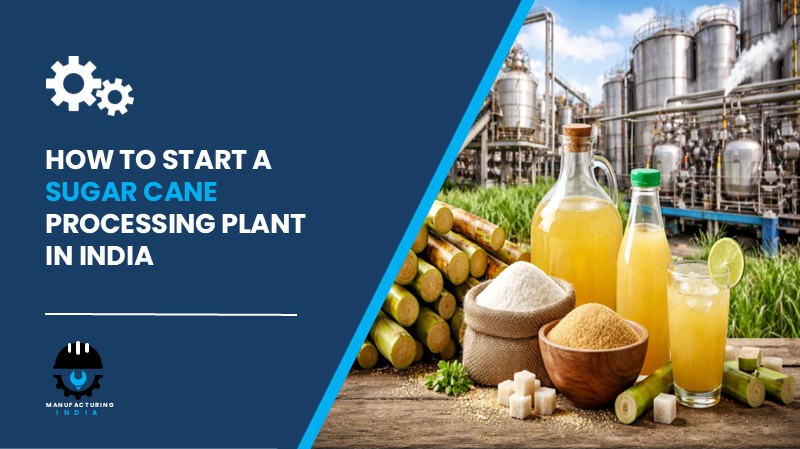
Sugarcane is a tall, perennial, tropical grass belonging to the Poaceae family, widely cultivated for its thick, fibrous stalks that store a high concentration of sucrose. It ranks among the world’s most significant agricultural crops and functions as a highly efficient converter of solar energy. Its primary commercial value lies in the production of sugar, molasses, and ethanol, making it indispensable to the food and beverage, bioenergy, agriculture, and pharmaceutical sectors. Beyond table sugar, it serves as a major source of biofuel, with countries like Brazil and India leading its application in national energy programmes. Byproducts such as bagasse are used for energy generation and paper production, further enhancing the economic value of each tonne processed.
The sugarcane manufacturing process uses crushing, juice extraction, evaporation, crystallization, refining, and ethanol production as the primary production method. This multi-step approach enables processors to extract maximum value from raw cane generating refined sugar for food applications, ethanol for biofuel blending, and molasses for fermentation and animal feed. End-use industries served include food and beverage, bioenergy, agriculture, and pharmaceuticals, making this one of the most versatile agro-industrial processing investments in the Indian market today.
Cost of Setting Up a Sugarcane Processing Plant in India
The cost of establishing this facility depends on several interdependent variables including plant capacity, technology selection, geographic location, level of automation, and regulatory compliance obligations. Investors must account for both one-time capital expenditure and recurring operational costs to develop accurate financial projections.
1. Capital Expenditure (CapEx)
The total capital investment covers four primary categories. Land and Site Development includes land acquisition charges, boundary development, registration costs, and site preparation — a cost component that can be optimised by locating the unit within a designated SEZ, MIDC estate, or state industrial development authority zone. Civil Works and Construction cover the production shed, raw material storage yards, quality control laboratory, effluent treatment area, and administrative block.
Machinery and Equipment represent the single largest share of CapEx. Key machinery required includes:
- Cane unloaders and conveyors
- Heavy-duty crushers and mills
- Clarification tanks
- Evaporator stations
- Vacuum pans for crystallization
- Centrifugals
- Drying and cooling units
- Automated bagging systems
Other Capital Costs include effluent treatment plant (ETP) construction, pre-operative expenses, trial production costs, commissioning charges, and applicable import duties on specialised machinery components sourced internationally.
Request a Sample Report for In-Depth Market Insights: https://www.imarcgroup.com/sugar-cane-processing-plant-project-report/requestsample
2. Operational Expenditure (OpEx)
Raw Material Cost is the dominant driver of ongoing operational expenditure, with sugarcane accounting for approximately 70-80% of total OpEx. Given the seasonal nature of cane availability and inherent price volatility, investors are advised to secure long-term procurement contracts with nearby farmers or cooperative societies to stabilise input costs. Utility Cost encompassing electricity, steam, and water consumption constitutes a further 10-15% of OpEx, reflecting the energy-intensive nature of evaporation and crystallization stages. Other Operating Costs include transportation and logistics, packaging materials, salaries and wages, routine maintenance, asset depreciation, and applicable taxes. By the fifth year of operations, total operational costs are expected to increase substantially due to inflation, market fluctuations, rising costs of key materials, supply chain disruptions, and shifts in global economic conditions.
3. Plant Capacity
The proposed processing facility is designed with an annual production capacity of 5,000 TCD (Tons of Cane per Day), a scale that enables meaningful economies of scale while maintaining operational flexibility. Capacity can be customised based on investor requirements, with smaller configurations available for regional market entry. Profitability improves significantly with higher capacity utilisation, as fixed costs are spread across a larger volume of output making efficient throughput management a critical operational priority.
4. Profit Margins and Financial Projections
The investment demonstrates healthy profitability potential under normal operating conditions. Gross profit margins typically range between 20-30%, supported by stable demand across multiple end-use sectors and value-added product applications. Net profit margins range between 10-20%, reflecting the relatively high raw material share of total costs. Comprehensive financial projections encompassing NPV, IRR, payback period analysis, and sensitivity analysis are available through IMARC Group’s detailed project report, developed based on realistic assumptions related to capital investment, operating costs, production capacity utilisation, pricing trends, and demand outlook.
Why Set Up a Sugarcane Processing Plant in India?
Crucial Agricultural Commodity with Diversified Output. Sugarcane is a staple crop used across food production, renewable energy, pharmaceuticals, and animal nutrition generating multiple high-value revenue streams simultaneously. India’s deep-rooted cane cultivation infrastructure gives domestic processors a structural cost and logistics advantage over imported alternatives.
High Growth in Biofuels and Sugar Demand. With increasing demand for biofuels and renewable energy sources, sugarcane ethanol is becoming a critical component of the global energy transition, particularly in markets focused on reducing carbon emissions. The shift toward biofuels will continue to accelerate as governments implement stricter fuel standards and sustainability initiatives, providing long-term demand certainty.
Policy and Regulatory Tailwinds. Government policies supporting renewable energy including biofuel blending mandates and agriculture-sector subsidies for sugarcane farmers are likely to drive stable demand for processing infrastructure. The Make in India initiative further incentivises domestic manufacturing investment through fiscal benefits, faster approvals, and improved industrial estate infrastructure.
Cost-Competitive Manufacturing. India offers among the most competitive land, labour, and agricultural supply chain costs globally for agro-processing ventures. Proximity to sugarcane-growing belts in Uttar Pradesh, Maharashtra, and Karnataka substantially reduces inbound logistics costs, while domestic equipment fabrication capabilities limit capital expenditure on machinery.
Active Industry Investment. In November 2025, Omnicane Ltd. announced its strategic expansion into the premium spirits market with the launch of Major Philippe Rum a milestone built on nearly a century of sustainable sugarcane expertise illustrating the broadening commercial potential of sugarcane processing beyond conventional sugar and ethanol applications.
Local Supply Chain Preference. Food and beverage manufacturers, bioenergy producers, pharmaceutical companies, and animal feed producers across India increasingly prefer locally sourced cane derivatives to manage import exposure, reduce lead times, and align with domestic content policies.
Manufacturing Process – Step by Step
The sugarcane manufacturing process uses crushing, juice extraction, evaporation, crystallization, refining, and ethanol production as the primary production method. Below are the main stages in the processing flow:
- Cane Reception and Unloading: Raw sugarcane is received and unloaded using cane unloaders and conveyors feeding the primary processing line.
- Crushing and Milling: Heavy-duty crushers and mills break down fibrous cane stalks, extracting raw juice while separating bagasse for energy generation.
- Juice Clarification: Extracted juice passes through clarification tanks where impurities are removed using filtration screens and corrosion-resistant connectors.
- Evaporation: Clarified juice is concentrated through evaporator stations equipped with steam lines, expansion joints, and flexible connectors for high-temperature operations.
- Crystallization: Concentrated juice enters vacuum pans for crystallization, where sucrose crystals are formed under controlled temperature and pressure.
- Centrifugation and Drying: Centrifugals separate sugar crystals from molasses; drying and cooling units reduce moisture content using wear-resistant linings and flexible material-handling components.
- Refining: Refined sugar undergoes final processing to achieve commercial purity, colour, and grain standards required by food and beverage buyers.
- Ethanol Production: Molasses is directed to fermentation and distillation systems for ethanol production, adding a significant high-value revenue stream.
- Packaging and Dispatch: Automated bagging systems package finished sugar for distribution to food manufacturers, while ethanol and molasses are transported in bulk to bioenergy, pharmaceutical, and animal feed end-users.
Key Applications
The production serves a broad range of industries, making this one of the most commercially versatile agro-industrial investments available in India:
- Food and Beverage: Refined sugar is a foundational input for packaged foods, confectionery, beverages, and dairy products across the entire food manufacturing value chain.
- Bioenergy: Ethanol derived from sugarcane is blended with petrol as a renewable biofuel, supporting national energy transition mandates and reducing carbon emissions.
- Agriculture: Molasses is used as a fermentation substrate and nutrient-dense animal feed supplement, generating demand from the livestock and dairy farming sectors.
- Pharmaceuticals: Refined sugar and molasses derivatives serve as excipients, fermentation media, and active ingredient precursors in pharmaceutical manufacturing processes.
Leading Manufacturers
The global market is served by a combination of large multinational agribusinesses and specialised processors with extensive production capacities and diverse application portfolios. Key players operating in this space include:
- E.I. DuPont de Nemours and Co.
- Tata Chemicals
- The Associated British Foods
- Olam Group
- Suedzucker
Timeline to Start the Plant
Investors should plan for the following sequential phases when establishing a new facility in India:
- Feasibility study and project report preparation
- Land acquisition and site development
- Regulatory approvals and environmental clearances
- Factory licence and fire safety compliance
- Machinery procurement and installation
- Raw material supplier agreements and supply chain setup
- Trial production and quality testing
- Commercial production launch
Licences and Regulatory Requirements
Starting a sugarcane processing manufacturing unit in India requires several approvals:
- Business registration (Proprietorship, LLP, or Pvt Ltd)
- Factory Licence under the Factories Act
- Environmental Clearance from State Pollution Control Board
- GST Registration
- Fire Safety NOC
- Effluent Treatment Plant (ETP) operational clearance
- Occupational Health and Safety compliance
Key Challenges to Consider
High Capital Requirements. Establishing this type of processing operation at commercial scale demands significant upfront investment in land, civil infrastructure, and specialised machinery making thorough financial planning and project financing access essential before committing.
Raw Material Price Volatility. Sugarcane accounts for 70–80% of total operating expenditure and is subject to agricultural price cycles, monsoon dependency, and government-regulated price revisions that can compress margins if not hedged through long-term supplier contracts.
Regulatory Compliance. Plants must navigate multiple frameworks — including environmental clearance, ETP operational standards, factory licensing, and food safety regulations requiring dedicated compliance teams and ongoing monitoring investment.
Technology and Innovation Pressure. Growing focus on sustainable processing, zero-liquid discharge systems, and energy recovery from bagasse means facilities must remain technologically current to meet evolving regulatory and buyer expectations.
Competition from Established Players. The presence of globally scaled processors such as E.I. DuPont de Nemours and Co., Tata Chemicals, The Associated British Foods, Olam Group, and Suedzucker creates competitive pricing pressure, making operational efficiency the primary lever of differentiation for new entrants.
Skilled Manpower. Operating complex equipment — including vacuum pans, centrifugals, and automated bagging systems requires trained technical personnel whose availability may be constrained in certain plant locations.
Frequently Asked Questions
1. How much does it cost to set up a sugarcane processing plant in India? The total project cost varies based on plant capacity, location, technology selection, and automation level. A detailed CapEx breakdown covering land, civil works, machinery, and other capital costs is available through IMARC Group’s project report.
2. Is sugarcane processing profitable in India in 2026? Yes. The project demonstrates gross profit margins of 20-30% and net profit margins of 10–20% under normal operating conditions, supported by stable multi-sector demand and value-added product applications.
3. What machinery is required for a sugarcane processing plant in India? Essential equipment includes cane unloaders and conveyors, heavy-duty crushers and mills, clarification tanks, evaporator stations, vacuum pans for crystallization, centrifugals, drying and cooling units, and automated bagging systems.
4. What licences and approvals are required to start this type of plant in India? Required approvals include business registration, Factory Licence under the Factories Act, Environmental Clearance from the State Pollution Control Board, GST Registration, Fire Safety NOC, ETP operational clearance, and Occupational Health and Safety compliance.
5. What raw materials are needed for sugarcane processing manufacturing? The primary raw material is sugarcane, which accounts for 70-80% of total operating expenditure. Consistent supply is secured through long-term contracts with local farmers or cooperative societies.
6. What are the environmental compliance requirements for a sugarcane plant in India? Plants must obtain Environmental Clearance from the State Pollution Control Board, operate a functional ETP, and implement advanced monitoring systems to ensure compliance with emission and discharge standards.
7. What is the best location to set up a sugarcane plant in India? Optimal locations are proximate to cane cultivation zones such as Uttar Pradesh, Maharashtra, Karnataka, and Tamil Nadu, with reliable transportation, utilities, and waste management infrastructure.
8. What is the break-even period for this type of plant in India? The break-even timeline depends on plant capacity, utilisation rate, and prevailing market prices. IMARC Group’s financial projections include detailed payback period analysis based on realistic operating assumptions.
9. What government incentives are available for manufacturers in India? Manufacturers can access incentives under the Make in India initiative, biofuel blending policy support, agricultural processing scheme subsidies, and state-level industrial development authority benefits including concessional land, power tariff rebates, and capital subsidy programmes.
Key Takeaways for Investors
A sugarcane processing plant in India represents a multi-sector investment opportunity with demand anchored in the food and beverage industry, bioenergy sector, agriculture value chain, and pharmaceutical manufacturing all on structural growth trajectories in the Indian economy. The investment demonstrates financial viability across a range of plant capacities, with gross margins of 20-30% and net margins of 10-20% achievable under prudent raw material procurement strategies. India’s food and beverage packaged industry alone is projected to expand from USD 33.7 billion in 2023 to USD 46.3 billion by 2028, providing a growing domestic demand base that new processing capacity can directly address. With accelerating biofuel adoption, rising sugar consumption driven by urbanisation, and strong policy support for agro-industrial investment, the long-term demand sustainability for this type of manufacturing infrastructure in India is firmly established.
About the Author