Setting up a hummus manufacturing plant cost in india represents a highly attractive investment proposition underpinned by robust and structurally growing demand from the global shift toward plant-based diets, rising consumer preference for healthy snacking options, expanding vegan and flexitarian populations, and widening retail distribution across supermarkets, hypermarkets, online grocery platforms, and foodservice channels. As consumers increasingly seek protein-rich, clean-label, ready-to-eat products made from simple and recognisable ingredients, hummus has moved from a regional specialty to a staple of mainstream refrigerated snacking and meal preparation. This growth trajectory, combined with the global popularity of Mediterranean cuisine and the wide availability of chickpeas, the primary raw material, creates a highly favourable manufacturing environment for new entrants with efficient cooking, grinding, blending, pasteurization, and filling systems.
What is Hummus?
Hummus is a ready-to-eat, plant-based dip or spread traditionally prepared from cooked and mashed chickpeas blended with tahini (sesame seed paste), olive oil, lemon juice, garlic, and salt. It is known for its creamy texture, smooth consistency, and balanced savory flavour profile, and is widely enjoyed as a dip, spread, and meal accompaniment across retail and foodservice settings.
Nutritionally, hummus is valued for its high protein and dietary fibre content, healthy unsaturated fats, and micronutrients such as iron, folate, and magnesium. It is free from cholesterol and commonly gluten-free, making it suitable for diverse dietary preferences. Commercially manufactured hummus is produced under controlled hygienic conditions, often pasteurized to extend shelf life, and packaged in sealed containers for refrigerated distribution, which makes quality assurance and cold-chain management central to successful plant operations.
The global hummus market was valued at approximately USD 4.7 Billion in 2025 and is expected to reach USD 9.1 Billion by 2034, exhibiting a CAGR of 7.5% from 2026 to 2034, supported by rising consumer preference for plant-based diets, increasing demand for healthy snacking options, growing vegan and flexitarian populations, and expanding retail distribution across supermarkets and foodservice channels.
Minimum Cost Required to Set Up a Hummus Plant:
Industry cost benchmarking indicates that setting up a hummus manufacturing plant may require an initial investment of approximately USD 3–5 million for a smaller-scale facility producing around 5,000 MT annually, covering essential equipment such as chickpea washing and cooking systems, industrial grinders, high-shear mixers, homogenizers, pasteurization units, cooling systems, refrigerated storage, and automated filling and sealing machines. Capital requirements can increase to approximately USD 6–10 million for mid-sized plants producing around 8,000–10,000 MT per year, while larger and highly automated facilities may require USD 12–18 million or more for capacities approaching 15,000 MT annually, particularly where advanced processing controls, automated packaging lines, cold-chain infrastructure, and wastewater treatment systems are installed. The key manufacturing stages include chickpea cleaning and cooking, grinding, blending with tahini and other ingredients, homogenization, pasteurization, cooling, quality testing, and packaging. According to IMARC Group’s 2026 report, the proposed facility has an annual production capacity of 5,000–15,000 MT, with chickpeas, tahini, olive oil, garlic, and lemon juice among the key raw materials.
Hummus Manufacturing Plant Setup Cost
The total capital investment required to establish a hummus manufacturing plant is shaped by several key parameters: annual production capacity (typically ranging from 5,000 to 15,000 MT per annum), the level of automation across cooking, grinding, blending, and filling sections, the choice of pasteurization and cooling technology, packaging format, facility specification, cold storage requirements, and applicable food safety and regulatory compliance requirements. Below is a structured breakdown of the major cost components.
1. Capital Expenditure (CapEx)
Total capital investment in a hummus manufacturing plant covers the following major heads:
Land and Site Development
This encompasses land acquisition or lease, land registration, site preparation, boundary development, and utilities connectivity. Site selection should prioritise easy access to key raw materials such as chickpeas, tahini, olive oil, garlic, and lemon juice, along with proximity to target markets to minimise refrigerated distribution costs. The site must offer reliable transportation links, dependable electricity and water supply, and adequate waste management systems. Compliance with local zoning laws, food-processing facility norms, and environmental regulations must be assessed from project initiation, and space for future capacity expansion should be planned into the site layout.
Civil Works and Construction
Building costs cover the main production hall and the areas required for chickpea receiving and storage, cooking and grinding, blending and homogenization, pasteurization and cooling, filling and sealing, finished goods cold storage, quality control laboratory, administrative block, and utility infrastructure including boiler and steam systems, water treatment, and effluent treatment facilities. Hygienic design is critical, with separate zones for raw material storage, production, quality control, and finished goods, and construction must comply with applicable food safety, factory, and environmental requirements.
Machinery and Equipment
Machinery represents the single largest CapEx component. Key equipment required for a hummus manufacturing plant includes:
- Raw Material Receiving, Cleaning, and Storage Systems: Cleaning, destoning, and grading units, along with silos and storage areas for chickpeas and ambient storage for tahini, olive oil, and other ingredients
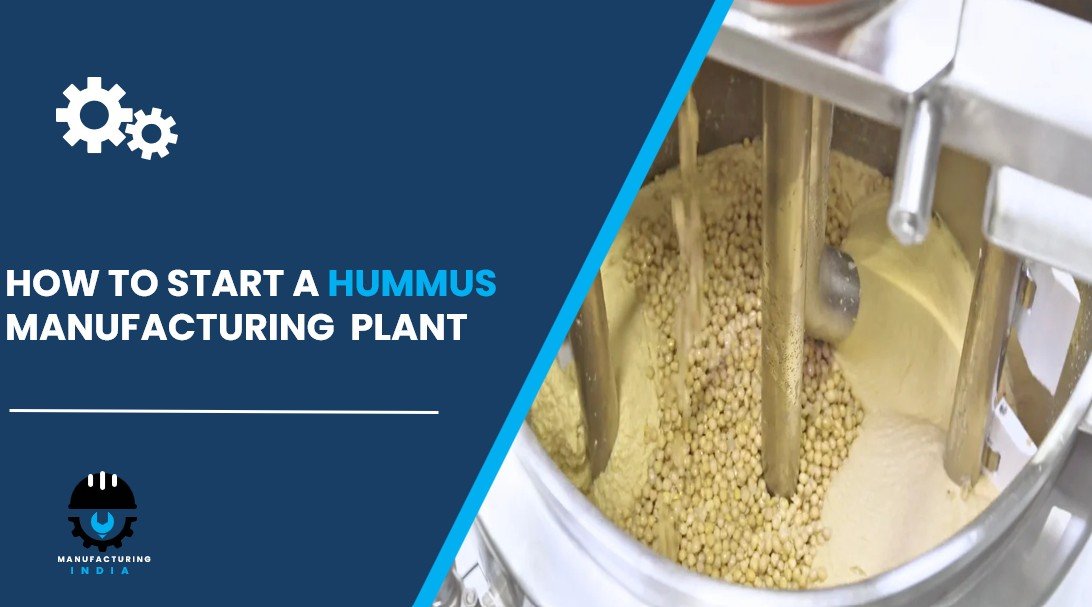
- Soaking and Continuous Cooking Equipment: Continuous cookers for chickpeas that deliver uniform cooking and softening, forming the first major processing step of the plant
- Grinding Equipment: Industrial grinding stones or hammer mills that reduce cooked chickpeas to a fine, consistent paste
- High-Shear Mixers and Blending Systems: High-shear mixers for blending chickpea paste with tahini, olive oil, lemon juice, garlic, and salt into a smooth, stable emulsion
- Homogenizers: Homogenization units that refine texture and consistency to deliver the creamy mouthfeel expected of commercial hummus
- Pasteurization Units: Thermal treatment systems that extend shelf life and support food safety compliance for a refrigerated, ready-to-eat product
- Cooling Tunnels: Rapid cooling systems that bring the pasteurized product to the temperature required ahead of filling and refrigerated storage
- Automated Filling and Sealing Machines: Filling, sealing, and labelling lines for tubs, cups, and other retail and foodservice formats, engineered for hygienic and accurate dosing
- Cold Storage and Refrigeration Infrastructure: Chillers, cold rooms, and refrigerated dispatch areas to maintain product quality from production through distribution
- Quality Control and Laboratory Equipment: Instruments for testing moisture, pH, texture, microbiological safety, and shelf-life stability against product specifications
- Utility and Effluent Treatment Systems: Steam generation, water treatment, compressed air, and effluent treatment systems to support continuous operation and environmental compliance
Other Capital Costs
These include pre-operative expenses, commissioning charges, import duties on specialised processing and packaging equipment where applicable, staff training and competency development, initial working capital for production commissioning, regulatory compliance setup including food safety registrations and licences, and quality and food safety management system certification costs.
Request a Sample Report for In-Depth Market Insights: https://www.imarcgroup.com/hummus-manufacturing-plant-project-report/requestsample
2. Operational Expenditure (OpEx)
Raw materials, principally chickpeas, together with tahini, olive oil, garlic, and lemon juice, constitute the dominant operating cost, typically representing 60–70% of total OpEx, with chickpeas alone accounting for the largest share of raw material consumption. Utility costs, driven primarily by steam, electricity, water, and refrigeration for cooking, pasteurization, and cold storage, account for 10–15% of OpEx. Transportation, packaging, salaries and wages, depreciation, taxes, repairs and maintenance, and other overhead costs constitute the remainder of the operating cost base.
3. Plant Capacity
The proposed hummus manufacturing facility is designed with an annual production capacity ranging between 5,000–15,000 MT, enabling economies of scale while maintaining operational flexibility. This capacity range supports a diversified customer portfolio spanning retail grocery chains, foodservice and hospitality operators, catering businesses, private-label supply arrangements, and export-oriented distribution supported by cold-chain logistics.
4. Profit Margins and Financial Projections
The project demonstrates healthy profitability potential under normal operating conditions. Financial projections encompass capital investment, operating costs, capacity utilisation ramp-up, pricing trends, and the forward demand outlook underpinned by growing plant-based food consumption and expanding retail penetration. A comprehensive feasibility analysis includes sensitivity analysis, Net Present Value (NPV), Internal Rate of Return (IRR), and Payback Period calculations. Gross profit margins for hummus manufacturing typically range from 40–50%, supported by stable demand and value-added applications, while net profit margins of 20–28% are achievable with disciplined cost management, optimal capacity utilisation, and effective raw material procurement.
Why Set Up a Hummus Manufacturing Plant?
Rising Plant-Based Food Demand
Increasing consumer transition toward plant-based and vegan diets is driving consistent demand for protein-rich alternatives such as hummus. Growing awareness of plant-based nutrition and sustainable protein sources positions hummus as a staple in health-conscious product portfolios, giving new entrants a structurally supported demand base.
Health and Clean-Label Appeal
Hummus is made from simple, recognisable ingredients and aligns closely with clean-label trends, reduced cholesterol consumption, and demand for minimally processed foods. Its suitability for gluten-free and lactose-free diets further widens its consumer base, particularly as the prevalence of lactose intolerance and gluten-free dietary adoption continues to rise.
Product Innovation Opportunities
Manufacturers can diversify offerings through flavoured variants, organic certifications, preservative-free and low-fat formulations, and fortified options. This scope for differentiation allows producers to build premium product tiers, command stronger pricing, and respond quickly to evolving consumer tastes without changing the core production process.
Expanding Retail Penetration
Growing shelf space in supermarkets, hypermarkets, and online grocery platforms is enhancing market accessibility and consumer visibility for hummus. The expansion of organised retail, improving cold-chain logistics infrastructure, and private-label programmes by major supermarket chains create additional avenues for contract and branded supply.
Export and Global Cuisine Popularity
The international popularity of Mediterranean cuisine supports cross-border trade opportunities and export-driven manufacturing models. Producers with consistent quality, strong food safety credentials, and reliable cold-chain partnerships can serve both domestic markets and international customers across foodservice and retail channels.
Scalable and Phased Investment Approach
The hummus value chain, spanning chickpea cooking, grinding, blending, pasteurization, and packaging, allows processors to begin operations at a moderate scale and expand capacity as volumes and customer commitments grow. New product variants, additional packaging formats, and further automation can be added in phases, allowing new entrants to manage capital deployment while building operational expertise and distribution reach.
Rising Investor and Brand Confidence
Continued investor interest in the category reflects growing confidence in its long-term commercial viability. In July 2025, Little Sesame, a recognised brand in the hummus category, announced the closing of a USD 8.5 Million Series A round led by InvestEco Capital, underscoring the funding appetite for differentiated hummus brands and supporting a favourable environment for new project developers.
Major Regions Driving Hummus Manufacturing Plant Demand
Demand for hummus manufacturing capacity is shaped by a combination of consumption centres, raw material origins, and retail and cold-chain infrastructure. The following regions represent the key hubs influencing hummus plant investment:
North America
North America is a leading consumption market, where growing preference for convenient, ready-to-eat refrigerated snacks has expanded the retail and foodservice footprint of hummus. The region is home to several established brands, including Sabra Dipping Company, Tribe Hummus, Cedar’s Mediterranean Foods, Hope Foods, and Boar’s Head Brand, and benefits from mature supermarket networks, private-label programmes, and well-developed cold-chain infrastructure.
Europe
Europe shows steady demand driven by consumer preference for convenient, plant-based, ready-to-eat products, together with the expansion of private-label ranges by major supermarket chains. Strong organised retail and cold-chain logistics networks support wide product availability across supermarkets and foodservice channels.
Middle East and Mediterranean
The Middle East and the wider Mediterranean region form the traditional heartland of hummus, with deep-rooted consumption, strong culinary relevance, and an established base of regional producers such as Strauss Group. Chickpeas are widely cultivated across the Middle East, supporting raw material availability for regional manufacturers and export-oriented production.
Asia Pacific
Asia Pacific combines major chickpea production with a growing organised retail sector. India is the single-largest pulse-producing country for chickpeas, with a harvest expected in the range of 10–11 million tonnes according to Grains Australia (estimates vary), while Australia is also a significant cultivator. This raw material base, together with expanding supermarket and online grocery distribution, makes the region attractive for both domestic and export-oriented hummus manufacturing.
Collectively, these regions combine reliable access to chickpeas, established retail and foodservice demand, and improving cold-chain infrastructure, which together continue to draw new hummus manufacturing plant investment across both consumption markets and raw material-producing geographies.
Ask An Analyst – Hummus Manufacturing Plant Cost and DPR 2026
Manufacturing Process Overview
The hummus manufacturing operation transforms chickpeas and supporting ingredients into a smooth, pasteurized, packaged dip through a sequence of cleaning, cooking, grinding, blending, thermal treatment, and packaging operations. The key process stages are:
- Raw Material Receiving and Cleaning: Chickpeas, tahini, olive oil, garlic, lemon juice, and other ingredients are received, inspected against quality specifications, and stored under suitable conditions, with chickpeas cleaned and graded to remove foreign matter before processing.
- Soaking and Cooking: Chickpeas are soaked and cooked in continuous cookers until softened to the consistency required for smooth grinding, forming the foundation of the final product texture.
- Grinding: Cooked chickpeas are reduced to a fine paste using industrial grinding stones or hammer mills, ensuring a uniform base for blending.
- Blending and Emulsification: High-shear mixers combine the chickpea paste with tahini, olive oil, lemon juice, garlic, and salt, producing a creamy, stable emulsion with the desired flavour profile.
- Homogenization: The blended mixture passes through homogenizers to refine particle size and texture, delivering a consistently smooth product.
- Pasteurization: The hummus is thermally treated in pasteurization units to extend shelf life and meet food safety requirements for a refrigerated, ready-to-eat product.
- Cooling: Pasteurized product is rapidly brought down to the required temperature in cooling tunnels ahead of filling to preserve quality and minimise microbial risk.
- Filling and Sealing: Automated filling and sealing machines dispense hummus into tubs, cups, or other containers, followed by sealing and labelling for retail and foodservice supply.
- Quality Control: Moisture, pH, texture, flavour, and microbiological parameters are monitored and tested at key stages to verify compliance with product specifications and food safety standards.
- Cold Storage and Dispatch: Finished products are held in refrigerated storage and dispatched through cold-chain logistics to supermarkets, foodservice customers, and export markets.
Key Applications of Hummus
The hummus market serves several major end-use segments across retail, foodservice, and hospitality:
- Retail Grocery: Hummus is sold as a ready-to-eat dip and spread through supermarkets, hypermarkets, and online grocery platforms, with refrigerated tubs forming the core of the retail offering.
- Foodservice and Hospitality: Restaurants, hotels, and catering operators use hummus in dips, platters, and gourmet meal preparation, driving demand for bulk and foodservice pack formats.
- Sandwich Fillings and Meal Preparation: Hummus is used as a sandwich and wrap filling and a base for salad toppings, offering a plant-based, protein-rich alternative to conventional spreads.
- Snacking and Vegetable Pairings: Hummus is widely paired with vegetables, crackers, and snack platters, and features in snack packs aimed at health-conscious, on-the-go consumers.
- Health and Wellness Food Products: The product’s protein, fibre, and clean-label profile supports its use in health and wellness food ranges and specialty food manufacturing.
Global Hummus Market Outlook
The global hummus market was valued at approximately USD 4.7 Billion in 2025. According to IMARC Group estimates, the market is expected to reach USD 9.1 Billion by 2034, exhibiting a CAGR of 7.5% from 2026 to 2034. The hummus market benefits from multiple structural demand drivers:
- Rising consumer preference for plant-based diets and sustainable protein sources, positioning hummus as a staple in health-conscious food portfolios
- Increasing demand for healthy snacking options and convenient, ready-to-eat refrigerated products across North America and Europe
- Growing vegan and flexitarian populations driving mainstream adoption of plant-based dips and spreads
- Expanding retail distribution through supermarkets, hypermarkets, online grocery platforms, and foodservice channels
- Wide availability of chickpeas, the primary raw material, from major producing regions including India, Australia, and the Middle East, supporting supply security
- Product innovation, including organic, preservative-free, flavoured, low-fat, and fortified variants that enable premium positioning
- Growth in organised retail, cold-chain logistics infrastructure, and private-label expansion by major supermarket chains
- Rising lactose intolerance and gluten-free dietary adoption strengthening the consumption base for hummus products
Leading producers in the global hummus industry include Sabra Dipping Company, Tribe Hummus, Cedar’s Mediterranean Foods, Hope Foods, Boar’s Head Brand, and Strauss Group, serving end-use sectors including food service, retail grocery, hospitality, catering, health and wellness, and specialty food manufacturing.
Latest Industry Developments
- February 2026: Firehook Crackers launched a limited-edition cracker flavour, Firehook x Ithaca Hummus French Onion Crackers, in collaboration with hummus brand Ithaca. The product translates the savory profile of French onion dip into a crunchy snack, illustrating how hummus brands are extending into cross-category collaborations.
- July 2025: Little Sesame, an established name in the hummus category, announced the closing of its USD 8.5 Million Series A financing. The round was led by InvestEco Capital, with participation from Watchfire Ventures, Santatera Capital, Beliade Consumer Partners, and other investors in the consumer packaged goods space, reflecting strong investor interest in the category.
Licenses and Regulatory Requirements
Establishing a hummus manufacturing unit requires a range of approvals and certifications, which may vary by country and jurisdiction, including:
- Business registration and company incorporation under applicable company law
- Factory or manufacturing licence from the relevant local or state authority for food processing operations
- Food business operator licence or registration with the national food safety authority in the country of operation
- Environmental clearance and pollution control approvals, including consent to establish and consent to operate where applicable, for effluent and emission generation
- Compliance with Good Manufacturing Practices (GMP) and Hazard Analysis and Critical Control Points (HACCP) requirements for hygienic food production
- Food safety management certification such as ISO 22000 or equivalent standards recognised by retail and foodservice buyers
- ISO 9001:2015 Quality Management System certification for quality management infrastructure compliance
- Allergen labelling and food labelling compliance, including declaration of sesame as an allergen where required by local regulations
- Optional product certifications such as organic, halal, and kosher, depending on target markets and customer requirements
- Fire safety certification and occupational health and safety compliance for production and storage facilities
- Import-export registration and phytosanitary and export documentation for international market access
Key Challenges to Consider
Raw Material Price Volatility and Supply
Raw materials account for most of the operating cost base, with chickpeas the principal driver, alongside tahini, olive oil, garlic, and lemon juice. Crop yields, weather conditions, trade dynamics, and supply chain disruptions can influence prices and availability. Securing reliable suppliers, selecting nearby sources where possible, assessing sustainability and supply chain risks, and negotiating long-term contracts are critical project development priorities.
Food Safety and Shelf-Life Management
Hummus is a perishable, ready-to-eat refrigerated product, which makes hygiene, pasteurization effectiveness, and rapid cooling essential to controlling microbial risk. Any lapse in food safety can create significant regulatory, commercial, and brand exposure, making robust quality management systems, standard operating procedures, traceability mechanisms, and regular audits a non-negotiable operational requirement.
Cold-Chain Dependence
Maintaining product quality from the plant to the retail shelf requires consistent refrigerated storage and distribution. Reliable cold-chain partners and adequate on-site cold storage are essential, and gaps in cold-chain infrastructure in certain markets can limit distribution reach or increase logistics costs.
Competition and Private-Label Pressure
The category includes established multinational brands as well as growing private-label offerings from major supermarket chains. New entrants must differentiate through quality, flavour innovation, certifications, and packaging formats, and balance branded growth with contract manufacturing opportunities to secure stable volumes.
Capital Intensity and Financing
Machinery represents the largest portion of capital expenditure, and the level of automation chosen significantly affects total investment. New entrants must carefully evaluate financing structures and phase capital deployment to align with ramp-up in capacity utilisation and customer commitments.
Break-Even Timelines
Break-even timelines for hummus manufacturing projects depend on plant size, capital investment, raw material costs, capacity utilisation ramp-up, and the pace of distribution and customer onboarding. Securing long-term supplier contracts and early retail or foodservice commitments supports faster break-even, and the detailed payback period analysis is covered in the full feasibility report.
Frequently Asked Questions (FAQs)
1. How much does it cost to set up a hummus manufacturing plant?
The total investment depends on plant capacity (5,000–15,000 MT per annum), the level of automation, pasteurization and packaging technology, facility specification, and location. Costs cover land and site development, civil construction (production hall, cold storage, quality laboratory, utilities), machinery (continuous cookers, grinders, high-shear mixers, homogenizers, pasteurization units, cooling tunnels, filling and sealing machines), regulatory compliance, and working capital. A comprehensive feasibility study from IMARC Group provides detailed, capacity-specific cost estimates covering all CapEx and OpEx components.
2. Is hummus manufacturing a profitable business in 2026?
Yes. Sustained demand driven by plant-based diets, healthy snacking, and expanding retail and foodservice distribution, combined with gross margins of 40–50% and net profit margins of 20–28%, make hummus manufacturing financially attractive, particularly for projects that secure reliable raw material supply and strong retail and foodservice relationships.
3. What machinery and equipment are required for a hummus manufacturing plant?
Key equipment includes raw material cleaning and storage systems, continuous cookers for chickpeas, industrial grinding stones or hammer mills, high-shear mixers for blending, homogenizers, pasteurization units, cooling tunnels, automated filling and sealing machines, cold storage and refrigeration systems, quality control laboratory equipment, and utility and effluent treatment systems.
4. What licenses and approvals are required?
Required approvals typically include company registration, a factory or manufacturing licence, food business registration with the national food safety authority, environmental clearances, GMP and HACCP compliance, and fire safety certification. Food safety and quality management certifications such as ISO 22000 and ISO 9001 are also important for retail and foodservice buyers, and requirements vary by country.
5. How long does it take to commission a hummus manufacturing plant?
The timeline from project initiation to commercial production depends on project scale, site selection and construction progress, equipment procurement lead times, regulatory approvals, and food safety certification. Licensing and certification processes should be initiated early in the project to avoid delays to commercial launch.
6. What are the key raw materials for hummus manufacturing?
The primary inputs are chickpeas, tahini (sesame seed paste), olive oil, garlic, lemon juice, and salt. Chickpeas account for the largest share of raw material consumption and are widely cultivated in regions such as India, Australia, and the Middle East, while packaging materials such as tubs, lids, and labels are also important procurement items.
7. What is the break-even period for a hummus manufacturing plant?
The break-even period depends on plant size, capital investment, raw material costs, capacity utilisation, and the pace of customer onboarding. Long-term supply contracts for key raw materials and early agreements with retail and foodservice customers improve revenue predictability and support faster break-even achievement. A detailed payback period analysis is included in the IMARC feasibility report.
8. Which regions drive the strongest demand for hummus manufacturing?
North America and Europe are leading consumption markets, supported by demand for ready-to-eat refrigerated snacks, mature retail networks, and private-label expansion. The Middle East and Mediterranean remain the traditional heartland of hummus, while Asia Pacific combines significant chickpea production with growing organised retail, making it attractive for domestic and export-oriented production.
9. How large is the global hummus market?
The global hummus market was valued at USD 4.7 Billion in 2025 and, according to IMARC Group estimates, is expected to reach USD 9.1 Billion by 2034, exhibiting a CAGR of 7.5% from 2026 to 2034, driven by plant-based diets, healthy snacking demand, and expanding retail distribution.
10. How does hummus manufacturing compare to other refrigerated dip and spread production in terms of setup?
Hummus production shares several requirements with other refrigerated dips and spreads, including hygienic processing zones, pasteurization, and a dependable cold chain. Its distinguishing features are the chickpea cooking and grinding stages and the tahini-based emulsion, which call for specific equipment such as continuous cookers, grinding mills, and high-shear mixers, along with sesame allergen management in production and labelling.
Key Takeaways for Investors
The hummus manufacturing industry represents a resilient and financially attractive investment opportunity positioned at the intersection of plant-based nutrition, healthy snacking, and expanding retail and foodservice distribution. A global market projected to grow from USD 4.7 Billion in 2025 to USD 9.1 Billion by 2034, together with gross margins of 40–50% and net margins of 20–28%, provides a favourable economic backdrop for new entrants.
Wide availability of chickpeas, growing popularity of Mediterranean cuisine, and scope for product innovation across organic, preservative-free, and flavoured variants support both domestic and export-oriented strategies. The scalable nature of the hummus value chain allows investors to phase capital deployment according to risk appetite and target market positioning, while continued funding activity and brand collaborations in the category reflect strong confidence in its long-term growth and profitability.
Contact Us:
IMARC Group
134 N 4th St. Brooklyn, NY 11249, USA
Email: sales@imarcgroup.com
Tel No: (D) +91 120 433 0800
United States: (+1-201-971-6302)
About the Author