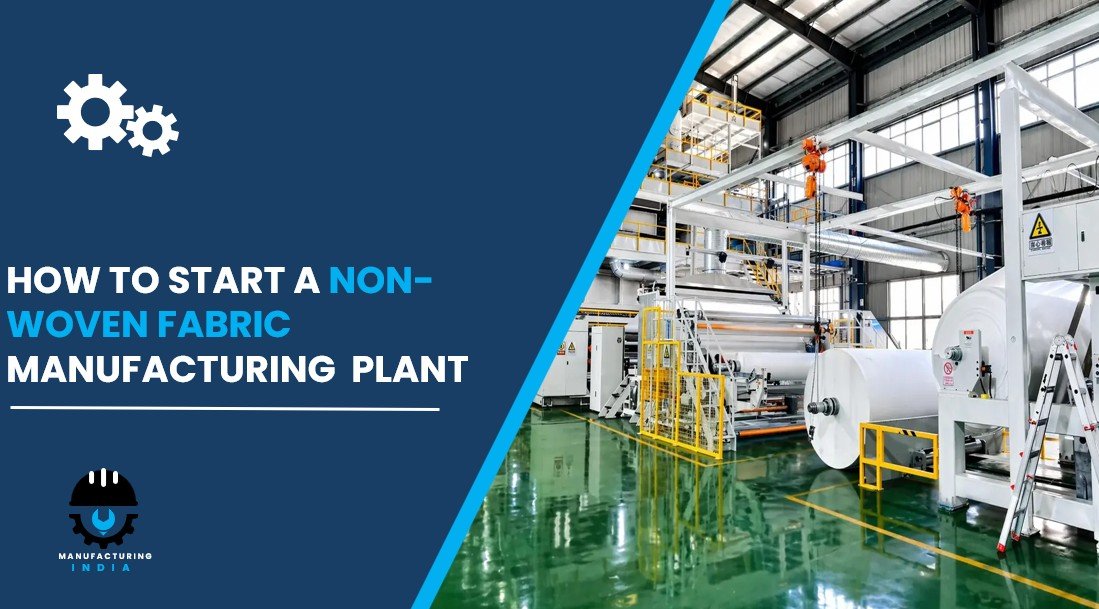
Setting up a non-woven fabric manufacturing plant cost in india represents a highly attractive investment proposition underpinned by robust and structurally growing demand from the hygiene and medical sectors, expanding construction and geotextile applications, automotive lightweighting, and rising requirements for air and liquid filtration media. As disposable hygiene consumption rises, healthcare infrastructure expands, and infrastructure development accelerates, non-woven fabric manufacturing is emerging as a scalable and strategically important segment of the technical textiles value chain, offering new entrants a diversified, multi-industry demand base.
The global non-woven fabric market is projected to grow steadily through 2034, supported by structural demand from disposable hygiene products and medical textiles, while India continues to strengthen its position as one of Asia’s leading non-woven producers, backed by policy support for technical textiles. This report provides a detailed overview of the plant setup cost, capital and operating expenditure structure, key demand-driving states, manufacturing process, regulatory requirements, and investment considerations for establishing a non-woven fabric manufacturing plant in India.
What is Non-Woven Fabric?
Non-woven fabric is an engineered textile material produced by bonding or interlocking fibers through mechanical, thermal, or chemical processes rather than traditional weaving or knitting. These fabrics are manufactured from synthetic polymers such as polypropylene (PP), polyester (PET), polyethylene (PE), and polyamide, as well as natural fibers such as viscose and cotton. Non-woven fabrics offer advantages including lightweight structure, high absorbency, breathability, tensile strength, filtration efficiency, and cost-effectiveness, and can be customised for specific properties such as fluid resistance, flame retardancy, softness, or durability.
Due to their versatility and scalable production technologies, non-woven fabrics are extensively used in disposable hygiene products, medical textiles, construction materials, automotive components, filtration media, and packaging applications. Key production routes include spunbond, meltblown, needle punching, thermal bonding, and calendering, each suited to specific weight, strength, and barrier performance requirements.
Minimum Cost Required to Set Up a Non-Woven Fabric Plant:
Industry cost benchmarking for non-woven fabric manufacturing in India is best anchored to recent project announcements, as total investment varies widely with production technology, line configuration, and capacity. A recent reference point is the specialty non-woven facility inaugurated at Halol, Gujarat in 2022, where the first phase of the project, designed for an annual capacity of 10,000 MT, was estimated at around INR 175 Crore. The site was planned with land sufficient to expand up to three high-speed lines. Capital requirements scale from there depending on the number of spunbond and meltblown beams, the level of automation, and the extent of converting and downstream integration at the plant.
Non-Woven Fabric Plant Setup Cost in India
The total capital investment required to establish a non-woven fabric manufacturing plant in India is shaped by several key parameters: annual production capacity (typically ranging from 10,000 to 50,000 MT per annum), the production technology adopted (spunbond, meltblown, needle punching, thermal bonding, or spunlace), the number of lines and the level of automation, facility specification, raw material sourcing strategy, and applicable regulatory and environmental compliance requirements. Below is a structured breakdown of the major cost components.
1. Capital Expenditure (CapEx)
Total capital investment in a non-woven fabric manufacturing plant covers the following major heads:
Land and Site Development
This encompasses land acquisition or lease, land registration, site preparation, boundary development, and utilities connectivity. Site selection should prioritise proximity to polymer suppliers such as polypropylene and polyester chip producers, as well as to hygiene, medical, and industrial converting clusters, to minimise inbound and outbound logistics costs. Reliable power and water supply, road connectivity, and availability of a trained technical workforce are critical site selection criteria, along with compliance with industrial zoning regulations, fire safety norms, and environmental clearance frameworks assessed from project initiation. Space for future line expansion should be built into the layout from the outset.
Civil Works and Construction
Building costs cover the main production hall housing extrusion and web-forming lines, raw material and additive storage, a bonding and finishing area, slitting and rewinding section, quality control laboratory, finished goods warehouse, administrative block, and utility infrastructure including compressed air, chilled water, and effluent handling systems. Clean-zone construction may be required where medical-grade or hygiene-grade fabrics are produced.
Machinery and Equipment
Machinery represents the single largest CapEx component. Key equipment required for a non-woven fabric manufacturing plant includes:
- Extrusion Lines: Single or twin-screw extruders with melt pumps and filtration systems for melting and conveying polypropylene, polyester, or other polymer feedstock
- Spunbond Units: Spinning beams, quench systems, and drawing units that convert molten polymer into continuous filaments laid as a web for hygiene, packaging, and agricultural fabrics
- Meltblown Systems: Meltblown dies and high-velocity hot-air systems that produce ultra-fine fibre webs for filtration, barrier, and medical applications
- Web Formers: Carding, air-laid, or wet-laid web forming equipment that arranges staple or short fibres into uniform webs prior to bonding
- Calenders and Bonding Ovens: Heated calender rolls and thermal bonding ovens that consolidate the web into a stable fabric with defined strength, softness, and surface characteristics
- Needle Punching Lines: Needle looms that mechanically entangle fibres, widely used for geotextiles, automotive felts, and filtration media
- Slitter Rewinders: High-speed slitting and rewinding machines that cut master rolls to customer-specified widths and diameters
- Laminating Machines: Equipment for laminating non-woven layers with films or other substrates for barrier and composite fabric applications
- Packaging Lines: Roll wrapping, labelling, and palletising systems for finished goods dispatch
- Quality Testing and Utility Systems: Laboratory instruments for basis weight, tensile strength, and barrier testing, along with chillers, compressors, and power backup systems
Other Capital Costs
These include pre-operative expenses, commissioning charges, import duties on specialised imported lines, staff training and competency development, initial working capital for production commissioning, regulatory compliance setup including environmental consents and fire safety approvals, and ISO 9001 quality management system establishment.
Request a Sample Report for In-Depth Market Insights: https://www.imarcgroup.com/non-woven-fabric-manufacturing-plant-project-report/requestsample
2. Operational Expenditure (OpEx)
Raw materials, principally polypropylene or polyester chips, binder, and additives, constitute the dominant operating cost, typically representing 70–80% of total OpEx. Utility costs, driven primarily by electricity for extrusion, bonding, and compressed air systems, account for 10–15% of OpEx. Transportation, packaging, salaries and wages, depreciation, taxes, and other expenses make up the balance of the operating cost structure. Long-term supply contracts with polymer producers and efficient energy management are key levers for controlling operating costs.
3. Plant Capacity
The proposed non-woven fabric manufacturing facility is designed with an annual production capacity ranging between 10,000–50,000 MT, enabling economies of scale while maintaining operational flexibility. This capacity range supports a diversified product portfolio spanning hygiene, medical, filtration, automotive, and construction grades, serving domestic converters as well as export customers.
4. Profit Margins and Financial Projections
The project demonstrates healthy profitability potential under normal operating conditions. Gross profit margins typically range between 25–35%, while net profit margins are in the range of 10–20%, supported by stable demand and value-added applications. Financial projections encompass capital investment, operating costs, production capacity utilisation, pricing trends, and demand outlook, providing a comprehensive view of the project’s financial viability, return on investment (ROI), and long-term sustainability.
Why Set Up a Non-Woven Fabric Manufacturing Plant?
Growing Demand in the Hygiene Sector
Increasing consumption of disposable hygiene products, including baby diapers, sanitary napkins, adult incontinence products, and wipes, particularly in emerging economies, ensures consistent demand for spunbond and meltblown non-woven fabrics with high production scalability.
Expanding Healthcare Infrastructure
Rising healthcare expenditure and infection control protocols support sustained demand for medical-grade non-woven materials such as surgical masks, gowns, drapes, wound dressings, and sterilisation wraps across hospitals and diagnostic facilities.
Versatility and Customisation
Non-woven manufacturing technologies allow property customisation such as thickness, density, strength, and barrier performance, enabling manufacturers to serve diverse industrial segments efficiently from a single production platform.
Strong Policy Support for Technical Textiles
India’s National Technical Textiles Mission (NTTM) focuses on research, standards development, and market creation across segments such as geo-textiles, medical textiles, agro-textiles, and protective textiles. The Production Linked Incentive (PLI) Scheme for Textiles also covers technical textiles, with 170 companies approved and 225 products notified across man-made fibre apparel, fabrics, and technical textiles segments as of August 2026, creating a supportive framework for new capacity.
Infrastructure and Geotextile Demand
Rapid urbanisation and road, rail, and water infrastructure development are driving demand for needle-punched and spunbond geotextiles used in erosion control, drainage, and pavement reinforcement, adding a construction-linked demand channel alongside hygiene and healthcare.
Alignment with Sustainability Trends
The development of biodegradable and recyclable non-woven materials supports circular economy initiatives and regulatory compliance in multiple regions, opening premium product opportunities for manufacturers investing in sustainable polymer and fibre options.
Economies of Scale
High-speed production lines enable mass manufacturing with optimised cost per unit, improving profitability and competitive positioning in domestic and global markets, while phased line additions allow new entrants to expand capacity as offtake grows.
Major States Driving Non-Woven Fabric Manufacturing Plant Demand in India
Non-woven fabric manufacturing capacity in India is concentrated in a handful of states that combine access to polymer feedstock, industrial and port infrastructure, and proximity to hygiene, medical, and construction demand centres. According to the Non Woven Federation of India, the leading states for spunbond non-woven output include Gujarat, Tamil Nadu, Haryana, Himachal Pradesh, West Bengal, and Andhra Pradesh. The following states represent key hubs for non-woven fabric plant investment:
Gujarat
Gujarat is among the leading hubs for non-woven fabric production in India, hosting spunbond and spunlace producers across Rajkot, Halol, Panoli, and Bharuch. Notable facilities include the Avgol specialty non-woven plant at Halol and the Spunweb spunbond capacity in the Rajkot region, which is expanding its installed capacity from 32,640 MT to 39,140 MT. The state’s petrochemical corridor supports access to polypropylene feedstock, strengthening raw material logistics for manufacturers.
Maharashtra
Maharashtra, with manufacturing clusters in Pune and Nashik, hosts producers of spunbond, SMS, SMMS, and spunlace non-wovens serving healthcare, hygiene, wipes, and industrial applications. State road and infrastructure programmes also support demand for non-woven geotextiles, while the Ichalkaranji region has been identified for technical textiles research and excellence initiatives.
Tamil Nadu
Tamil Nadu combines an established textile manufacturing base with strong port connectivity at Chennai and Tuticorin, supporting both domestic supply to hygiene and medical converters and export-oriented non-woven fabric production.
Haryana and Himachal Pradesh
Haryana and Himachal Pradesh are identified among the leading spunbond non-woven producing states, benefiting from proximity to northern India’s large consumption markets and industrial clusters in the National Capital Region, which support efficient distribution to hygiene product and medical textile converters.
West Bengal and Andhra Pradesh
West Bengal and Andhra Pradesh contribute to India’s spunbond non-woven output, serving eastern and southern demand centres respectively, with coastal access supporting raw material imports and finished goods exports.
Collectively, India has emerged as Asia’s second-largest non-woven producer after China, and the India non-woven fabric market was valued at USD 2,224.5 Million in 2024, with Gujarat, Maharashtra, and Tamil Nadu anchoring much of the country’s production and converting capacity.
Ask An Analyst -Non-Woven Fabric Manufacturing Plant Cost and DPR 2026
Manufacturing Process Overview
The non-woven fabric manufacturing operation transforms polymer chips or staple fibres into bonded fabric rolls through a sequence of melting, web formation, bonding, and finishing operations. The key process stages are:
- Raw Material Reception and Blending: Polypropylene or polyester chips, binders, and additives such as colour masterbatches and hydrophilic or flame-retardant agents are received, inspected, and blended or dosed according to the target fabric specification.
- Melting and Extrusion: Polymer feedstock is melted and homogenised in extruders and passed through melt pumps and filtration systems to deliver a consistent, contaminant-free melt to the spinning or meltblown dies.
- Web Formation: Molten polymer is converted into continuous filaments (spunbond) or ultra-fine fibres (meltblown), or staple fibres are carded or air-laid, and deposited on a moving conveyor to form a uniform fibre web of the required basis weight.
- Bonding: The web is consolidated through thermal bonding, calendering, or needle punching, with the bonding method selected to achieve the required strength, softness, and surface characteristics of the finished fabric.
- Finishing and Lamination: Fabrics may undergo surface treatments, coating, or lamination with films or other layers to deliver properties such as fluid resistance, flame retardancy, or barrier performance.
- Slitting and Rewinding: Master rolls are slit and rewound to customer-specified widths, lengths, and core diameters using slitter rewinders.
- Quality Control: Basis weight, thickness, tensile strength, elongation, air permeability, and barrier properties are tested against specification and applicable standards before release.
- Packaging and Dispatch: Finished rolls are wrapped, labelled, and palletised for dispatch to hygiene, medical, automotive, filtration, and construction customers.
Key Applications of Non-Woven Fabric
The non-woven fabric market serves several major end-use segments across consumer, healthcare, industrial, and infrastructure sectors:
- Hygiene Products: Baby diapers, sanitary napkins, adult incontinence products, and wipes rely on soft, absorbent, and breathable spunbond and meltblown non-woven layers.
- Medical: Surgical masks, gowns, drapes, wound dressings, and sterilisation wraps use non-woven fabrics for their barrier performance and cost-effectiveness as disposable materials.
- Filtration: Air filters, liquid filters, HVAC systems, and industrial filtration media use meltblown and needle-punched non-wovens for high filtration efficiency.
- Automotive: Cabin air filters, insulation materials, headliners, and upholstery backing use non-wovens to support lightweighting, acoustic insulation, and comfort.
- Construction and Geotextiles: Roofing membranes, erosion control mats, drainage layers, and road reinforcement use needle-punched and spunbond non-woven fabrics.
- Furniture and Packaging: Upholstery backing, mattress components, and packaging applications use non-wovens as lightweight and cost-effective materials.
Global Non-Woven Fabric Market Outlook
The global non-woven fabric market was valued at USD 50.18 Billion in 2025. According to IMARC Group estimates, the market is expected to reach USD 79.19 Billion by 2034, exhibiting a CAGR of 5.2% from 2026 to 2034. The non-woven fabric market benefits from multiple structural demand drivers:
- Rising global consumption of disposable hygiene products, particularly in emerging economies, driving sustained demand for spunbond and meltblown fabrics
- Expanding healthcare infrastructure and stronger infection prevention protocols supporting demand for medical-grade non-woven textiles
- Growth in geotextile applications due to rapid urbanisation and infrastructure development projects
- Automotive lightweighting initiatives aimed at improving fuel efficiency, increasing use of non-woven components in vehicle interiors and filtration
- Rising air pollution levels and industrial emissions increasing demand for advanced filtration materials
- Technological advancements in high-speed production lines improving output, quality consistency, and cost per unit
- Growing research into biodegradable and recyclable polymer-based non-woven fabrics supporting circular economy objectives
- Customisation of thickness, density, strength, and barrier performance enabling manufacturers to serve diverse industrial segments
Leading producers in the global non-woven fabric industry include Berry Global Inc., Freudenberg Performance Materials, Ahlstrom, Kimberly-Clark Corporation, DuPont de Nemours, Inc., and Fitesa S.A., serving end-use sectors including hygiene, medical, automotive, filtration, construction, geotextiles, and furniture.
Licenses and Regulatory Requirements
Establishing a non-woven fabric manufacturing unit requires a range of approvals and certifications, which may vary by country and jurisdiction, including:
- Business registration and company incorporation under applicable company law
- Factory License under applicable state Factories Act provisions for manufacturing operations
- GST registration and applicable MSME or Udyam registration, where eligible
- Pollution Control Board Clearances – Consent to Establish (CTE) and Consent to Operate (CTO) for manufacturing operations involving emissions and effluent generation
- Fire Safety Certification from the applicable state fire department for polymer storage and production facilities
- Electrical Inspectorate approvals for high-capacity power connections and installations
- Bureau of Indian Standards (BIS) certification or conformity with applicable Indian standards for technical textiles, where relevant to the product
- ISO 9001:2015 Quality Management System Certification for quality management infrastructure compliance
- ISO 13485 Quality Management System for Medical Devices certification, where medical-grade non-woven fabrics are produced
- ISO 45001 Occupational Health and Safety Management System Certification for manufacturing worker safety
- Export-Import Code (IEC) for international market access
- Registration for applicable incentives under the Production Linked Incentive (PLI) Scheme for Textiles and National Technical Textiles Mission, where eligible
Key Challenges to Consider
Raw Material Price Volatility
Polymer feedstock such as polypropylene and polyester chips accounts for 70–80% of total operating costs, exposing margins to crude oil and petrochemical price fluctuations. Securing long-term supply contracts, diversifying suppliers, and maintaining efficient raw material inventory practices are important for managing cost volatility.
Capital Intensity and Technology Selection
Spunbond, meltblown, and composite lines require substantial upfront investment, and the choice of technology and line configuration determines product range, quality, and cost positioning. New entrants must carefully evaluate technology suppliers, line speeds, automation levels, and financing structures, including term loans and available government-backed incentives.
Intense Competition and Price Pressure
The non-woven fabric industry includes large multinational producers as well as a growing number of domestic manufacturers, particularly in commodity spunbond segments, creating price competition. Differentiation through value-added grades, consistent quality, and strong customer relationships with converters is important for sustaining margins.
Quality and Regulatory Compliance
Medical and hygiene-grade non-woven fabrics must meet stringent quality, barrier, and safety requirements, and customers frequently require certified quality systems and consistent test performance. Investment in quality assurance infrastructure, traceability, and certification should be planned from the project design stage.
Energy Costs and Operational Efficiency
Electricity accounts for a significant share of utility costs, which represent 10–15% of OpEx, because of the energy demands of extrusion, bonding, and compressed air systems. Energy-efficient equipment, optimised line utilisation, and procurement strategies for power can materially improve operating margins.
Sustainability and Waste Management
Growing scrutiny on single-use plastics and disposable products is encouraging development of biodegradable and recyclable alternatives. Manufacturers should plan for in-line recycling of trim waste and evaluate sustainable polymer and fibre options to remain aligned with evolving regulatory and customer expectations.
Frequently Asked Questions (FAQs)
1. How much does it cost to set up a non-woven fabric manufacturing plant in India?
The total investment depends on plant capacity (10,000–50,000 MT per annum), production technology (spunbond, meltblown, needle punching, or thermal bonding), number of lines, automation level, facility specification, and location. Costs cover land, civil construction (production hall, storage, quality laboratory, utilities), machinery (extrusion lines, spunbond units, meltblown systems, calenders, web formers, bonding ovens, slitter rewinders, laminating machines, and packaging lines), and other capital costs. A recent reference point is the first phase of a 10,000 MT specialty non-woven facility at Halol, Gujarat, estimated at around INR 175 Crore.
2. Is non-woven fabric manufacturing a profitable business in 2026?
Yes. Sustained demand from hygiene, medical, filtration, automotive, and construction sectors, combined with gross margins of 25–35% and net profit margins of 10–20%, makes non-woven fabric manufacturing financially attractive, particularly for plants that secure competitive raw material supply and diversify across value-added applications.
3. What machinery and equipment are required for a non-woven fabric manufacturing plant?
Key equipment includes extrusion lines, spunbond units, meltblown systems, web formers, calenders, bonding ovens, needle punching lines, slitter rewinders, laminating machines, packaging lines, and quality testing and utility systems.
4. What licenses and approvals are required?
Required approvals include company registration, Factory License, Pollution Control Board consents (CTE and CTO), Fire Safety Certification, Electrical Inspectorate approvals, and ISO 9001 and ISO 45001 certification. Medical-grade production may also require ISO 13485 certification, and applicable BIS standards should be reviewed for the intended product range.
5. How long does it take to commission a non-woven fabric manufacturing plant?
The timeline depends on project scale, site selection, equipment procurement lead times for imported production lines, civil construction, regulatory approvals, and commissioning and trial runs. Long-lead items such as spunbond and meltblown lines and statutory approvals should be initiated early to avoid delays in commercial production launch.
6. What are the key raw materials for non-woven fabric production?
The primary inputs are polypropylene (PP) and polyester (PET) chips, along with binders and additives such as colour masterbatches and hydrophilic or flame-retardant agents. Natural and regenerated fibres such as cotton and viscose are used for specific production routes. Raw materials account for approximately 70–80% of total operating expenses.
7. What is the break-even period for a non-woven fabric manufacturing plant?
The break-even period depends on plant size, capital investment, technology and product mix, raw material costs, capacity utilisation ramp-up, and pricing trends. Securing long-term raw material contracts and stable offtake arrangements with hygiene and medical converters improves revenue predictability and supports faster break-even.
8. Which Indian states offer the strongest demand for non-woven fabric manufacturing plants?
Gujarat, Maharashtra, Tamil Nadu, Haryana, Himachal Pradesh, West Bengal, and Andhra Pradesh are the leading states for non-woven fabric production, combining access to polymer feedstock, industrial and port infrastructure, and proximity to hygiene, medical, and construction demand centres.
9. What government support is available for non-woven fabric producers in India?
The Production Linked Incentive (PLI) Scheme for Textiles covers technical textiles, and the National Technical Textiles Mission (NTTM) supports research, standards development, and market creation. Eligibility and incentive details depend on the product, investment, and sales criteria of each scheme, and should be verified against current guidelines.
10. How does spunbond differ from meltblown non-woven production?
Spunbond lines produce continuous filaments that form strong, durable webs used in hygiene, agriculture, and packaging, while meltblown lines produce ultra-fine fibres that deliver superior filtration and barrier performance for masks, filters, and medical applications. Many plants combine both in composite configurations such as SMS to balance strength and barrier properties.
Key Takeaways for Investors
The non-woven fabric manufacturing industry represents a resilient and financially attractive investment opportunity positioned at the intersection of rising hygiene consumption, expanding healthcare infrastructure, infrastructure-led geotextile demand, and growing technical textile adoption. Strong policy support under India’s National Technical Textiles Mission and the PLI Scheme for Textiles, combined with a growing domestic production base and a global market projected to reach USD 79.19 Billion by 2034, supports a favourable long-term outlook for new capacity.
The scalable nature of non-woven production, from single-line spunbond operations to multi-beam composite facilities, allows investors to begin at a moderate scale and expand as offtake grows. Careful attention to raw material sourcing, technology selection, quality certification, and energy efficiency will be critical to capturing stable margins of 25–35% gross and 10–20% net profit across this diversified end-use landscape.
Contact Us:
IMARC Group
134 N 4th St. Brooklyn, NY 11249, USA
Email: sales@imarcgroup.com
Tel No: (D) +91 120 433 0800
United States: (+1-201-971-6302)
About the Author