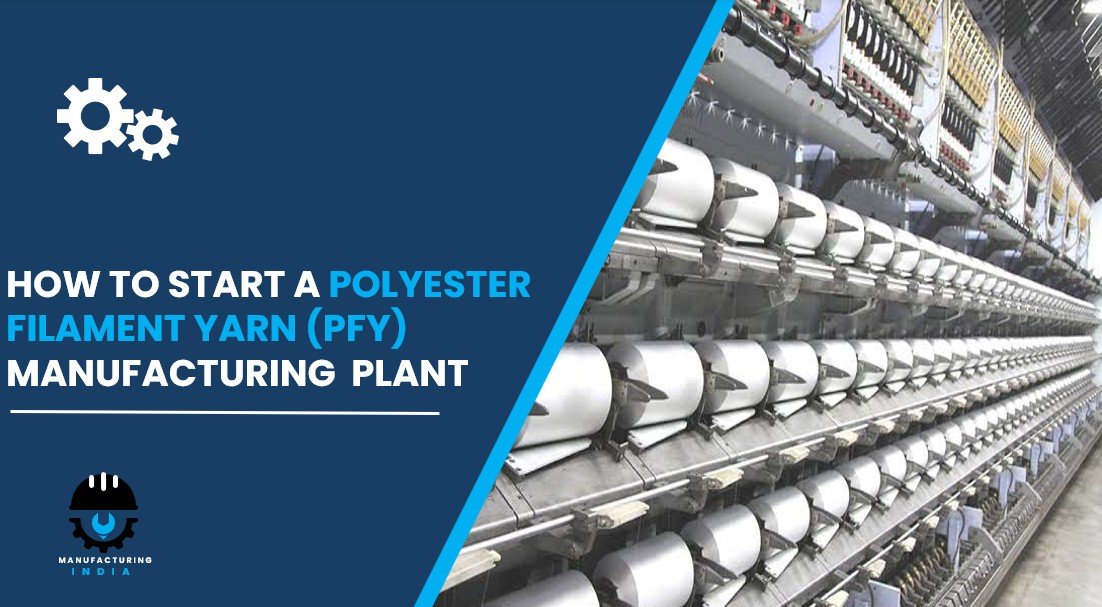
Setting up a polyester filament yarn (pfy) manufacturing plant cost in india is driven by rising demand from the textiles and apparel industry, increasing use in home furnishings, and expanding applications in industrial textiles, supported by growth in synthetic fiber consumption worldwide. The global polyester filament yarn (PFY) market size was volumed at 81.78 Million Tons in 2025. According to IMARC Group estimates, the market is expected to reach 127.72 Million Tons by 2034, exhibiting a CAGR of 5.1% from 2026 to 2034. This feasibility report covers a comprehensive market overview to micro-level information such as unit operations involved, raw material requirements, utility requirements, infrastructure requirements, machinery and technology requirements, manpower requirements, packaging requirements, and transportation requirements, along with a detailed setup cost covering project economics, capital investments (CapEx), operating expenses (OpEx), income and expenditure projections, and financial analysis.
Minimum Cost Required to Set Up a Polyester Filament Yarn (PFY) Manufacturing Plant:
Industry cost benchmarking indicates that setting up a polyester filament yarn manufacturing plant may require an initial investment of approximately USD 20–35 million for a smaller-scale facility producing around 20,000 MT annually, covering essential equipment such as polymer melting and extrusion systems, melt-spinning machines, spinnerets, quenching units, drawing machines, texturizing equipment, winding machines, and quality-testing instruments. Capital requirements can increase to approximately USD 40–70 million for mid-sized plants producing around 40,000–60,000 MT per year, while larger and highly automated facilities may require USD 80–150 million or more for capacities approaching 100,000 MT annually, particularly where advanced spinning technology, automated winding, energy-efficient utilities, and integrated process-control systems are installed. The key manufacturing stages include polymer melting, melt spinning, filament cooling, drawing, texturizing, winding, and quality inspection.
What are Polyester Filament Yarn (PFY)?
Polyester filament yarns consist of continuous synthetic fibers that originate from polymerized esters which include polyethylene terephthalate PET. The yarns exhibit high tensile strength together with uniform properties and resistance to chemical substances and maintenance of thermal stability. The materials are commonly utilized in textiles and automotive fabrics and industrial ropes and composite materials as they provide durability and flexibility and protection against wear and environmental damage.
Key Investment Highlights
- Process Used: Melt spinning, drawing, texturizing, and winding.
- End-use Industries: Textiles and apparel, home furnishings, industrial fabrics, and technical textiles.
- Applications: Used for upholstery, industrial fabrics, automotive seat belts, wiring insulation, and conveyor belts.
Request Sample: https://www.imarcgroup.com/polyester-filament-yarn-manufacturing-plant-project-report/requestsample
Polyester Filament Yarn (PFY) Plant Capacity
The proposed manufacturing facility is designed with an annual production capacity ranging between 20,000–100,000 MT, enabling economies of scale while maintaining operational flexibility.
Polyester Filament Yarn (PFY) Plant Profit Margins
The project demonstrates healthy profitability potential under normal operating conditions. Gross profit margins typically range between 10–20%, supported by stable demand and value-added applications.
- Gross Profit: 10–20%
- Net Profit: 3–10%
Polyester Filament Yarn (PFY) Plant Cost Analysis
The operating cost structure of a polyester filament yarn (PFY) manufacturing plant is primarily driven by raw material consumption, particularly PTA (purified terephthalic acid), which accounts for approximately 85–90% of total operating expenses (OpEx).
- Raw Materials: 85–90% of OpEx
- Utilities: 5–10% of OpEx
Financial Projection
The financial projections for the proposed project have been developed based on realistic assumptions related to capital investment, operating costs, production capacity utilization, pricing trends, and demand outlook. These projections provide a comprehensive view of the project’s financial viability, ROI, profitability, and long-term sustainability.
Major Applications
- Apparel and Fashion: used for woven and knitted fabrics in garments, sportswear, and innerwear.
- Home Textiles: employed in curtains, upholstery fabrics, bed linens, carpets, and furnishings.
- Industrial Textiles: utilized for tire cords, conveyor belts, safety fabrics, and reinforcement materials.
- Technical Uses: used for sewing threads, ropes, nets, and specialty fabrics.
Why Polyester Filament Yarn (PFY) Manufacturing?
- High Demand Across Sectors: Polyester filament yarns serve as key materials which automotive and textile and electronics industries use to produce end products with enhanced durability and flexibility and thermal resistance capabilities.
- Moderate Entry Barriers: The field requires substantial financial investment to match standard textile production costs yet established manufacturers gain market superiority through their ability to produce superior goods using specialized spinning techniques and accredited production processes.
- Industry Growth Alignment: The worldwide demand for yarns will increase due to the rising automotive production and expanding industrial textile markets and growing electronics manufacturing activities.
- Policy and Infrastructure Support: Government programs that promote textile exports and support automotive production and industrial growth create an indirect demand for polyester filament yarn.
- Supply Chain Stability: Local suppliers provide manufacturers with dependable sources of PET chips and chemical additives which enable manufacturers to maintain continuous production with shorter delivery times.
Polyester Filament Yarn (PFY) Industry Outlook 2026
The global polyester filament yarn market is primarily driven by the ongoing growth due to the growing automotive, textile and electronics industries. The adoption of their products increases as manufacturers produce more wiring harnesses and industrial fabrics and seat belts and high-performance textiles. The shift towards lightweight, durable and flexible materials in vehicles and industrial applications creates new business opportunities. Moreover, the Asia-Pacific region will experience its fastest growth as China and India expand their manufacturing capabilities and develop their infrastructure. North America and Europe experience market growth as automotive industry modernizes, industrial automation increases and safety regulations become more stringent. Strong export performance and rising demand for synthetic textiles are reinforcing growth across India’s yarn and fiber industry. The textile exports have experienced strong growth due to growing yarn and fiber business sectors. For example, according to the India Brand Equity Foundation (IBEF), during FY25 (from April to August) total exports increased by 5.8% while filament yarn represented 61% of total yarn exports. The segment’s main product polyester filament yarn (PFY) achieved a market share of 48%. These export trends highlight the expanding polyester filament yarn market, driven by its dominant share in yarn exports, wide application across textiles and apparel, and increasing global demand for cost-effective and versatile synthetic fibers.
Leading Polyester Filament Yarn (PFY) Manufacturers
Leading manufacturers in the global polyester filament yarn (PFY) industry include several multinational companies with extensive production capacities and diverse application portfolios. Key players include:
- Reliance Industries Limited
- Hengli Petrochemical Group
- Toray Industries Inc.
- Xin Feng Ming Group
- Alpek S.A.B. de C.V.
- Billion Industrial Co. Ltd.
- IndoRama Synthetics Limited
- Filatex India Limited
- Garden Vareli
- AYM Syntex Limited
- Wellknown Polyester Limited
- Shaoxing Global Chemical Fiber Co. Ltd.
- Grantex Industries Private Limited
- Formosa Synthetics Pvt. Ltd.
- Lealea Group
- Advansa
All of the above serve end-use sectors such as textiles and apparel, home furnishings, industrial fabrics, and technical textiles.
How to Setup a Polyester Filament Yarn (PFY) Manufacturing Plant?
Setting up a polyester filament yarn (PFY) manufacturing plant requires evaluating several key factors, including technological requirements and quality assurance. Some of the critical considerations include:
Detailed Process Flow
The manufacturing process is a multi-step operation that involves several unit operations, material handling, and quality checks. Below are the main stages involved in the polyester filament yarn (PFY) manufacturing process flow:
- Unit Operations Involved
- Mass Balance and Raw Material Requirements
- Quality Assurance Criteria
- Technical Tests
- Site Selection: The location must offer easy access to key raw materials such as PTA (purified terephthalic acid), and MEG (monoethylene glycol). Proximity to target markets will help minimize distribution costs. The site must have robust infrastructure, including reliable transportation, utilities, and waste management systems. Compliance with local zoning laws and environmental regulations must also be ensured.
- Plant Layout Optimization: The layout should be optimized to enhance workflow efficiency, safety, and minimize material handling. Separate areas for raw material storage, production, quality control, and finished goods storage must be designated. Space for future expansion should be incorporated to accommodate business growth.
- Equipment Selection: High-quality, corrosion-resistant machinery tailored for polyester filament yarn (PFY) manufacturing must be selected. Essential equipment includes spinning machines, drawing units, texturizing machines, winding machines, and QC instruments. All machinery must comply with industry standards for safety, efficiency, and reliability.
- Raw Material Sourcing: Reliable suppliers must be secured for raw materials like PTA (purified terephthalic acid), and MEG (monoethylene glycol) to ensure consistent production quality. Minimizing transportation costs by selecting nearby suppliers is essential. Sustainability and supply chain risks must be assessed, and long-term contracts should be negotiated to stabilize pricing and ensure a steady supply.
- Safety and Environmental Compliance: Safety protocols must be implemented throughout the manufacturing process of polyester filament yarn (PFY). Advanced monitoring systems should be installed to detect leaks or deviations in the process. Effluent treatment systems are necessary to minimize environmental impact and ensure compliance with emission standards.
- Quality Assurance Systems: A comprehensive quality control system should be established throughout production. Analytical instruments must be used to monitor product concentration, purity, and stability. Documentation for traceability and regulatory compliance must be maintained.
Project Economics
Establishing and operating a polyester filament yarn (PFY) manufacturing plant involves various cost components, including:
- Capital Investment: The total capital investment depends on plant capacity, technology, and location. This investment covers land acquisition, site preparation, and necessary infrastructure.
- Equipment Costs: Equipment costs, such as those for spinning machines, drawing units, texturizing machines, winding machines, and QC instruments, represent a significant portion of capital expenditure. The scale of production and automation level will determine the total cost of machinery.
- Raw Material Expenses: Raw materials, including PTA (purified terephthalic acid), and MEG (monoethylene glycol), are a major part of operating costs. Long-term contracts with reliable suppliers will help mitigate price volatility and ensure a consistent supply of materials.
- Infrastructure and Utilities: Costs associated with land acquisition, construction, and utilities (electricity, water, steam) must be considered in the financial plan.
- Operational Costs: Ongoing expenses for labor, maintenance, quality control, and environmental compliance must be accounted for. Optimizing processes and providing staff training can help control these operational costs.
- Financial Planning: A detailed financial analysis, including income projections, expenditures, and break-even points, must be conducted. This analysis aids in securing funding and formulating a clear financial strategy.
Capital Expenditure (CapEx) and Operational Expenditure (OpEx) Analysis
Capital Investment (CapEx): Machinery costs account for the largest portion of the total capital expenditure. The cost of land and site development, including charges for land registration, boundary development, and other related expenses, forms a substantial part of the overall investment. This allocation ensures a solid foundation for safe and efficient plant operations.
Operating Expenditure (OpEx): In the first year of operations, the operating cost for the polyester filament yarn (PFY) manufacturing plant is projected to be significant, covering raw materials, utilities, depreciation, taxes, packing, transportation, and repairs and maintenance. By the fifth year, the total operational cost is expected to increase substantially due to factors such as inflation, market fluctuations, and potential rises in the cost of key materials. Additional factors, including supply chain disruptions, rising consumer demand, and shifts in the global economy, are expected to contribute to this increase.
Frequently Asked Questions:
1. How much capital is required to start a polyester filament yarn (PFY) manufacturing plant?
The capital investment required to establish a polyester filament yarn (PFY) manufacturing plant depends on production capacity, plant location, technology, automation level, and infrastructure requirements. Major expenses include land acquisition, site development, factory construction, machinery procurement and installation, utilities, quality-control systems, and pre-operative expenses. Working capital must also be allocated for raw materials, employee salaries, packaging, transportation, and routine maintenance.
2. How do I start a polyester filament yarn manufacturing business?
Starting a polyester filament yarn manufacturing business involves conducting market research, preparing a detailed feasibility study, selecting an appropriate location, arranging financing, obtaining necessary approvals, and installing suitable production equipment. Entrepreneurs should assess demand from textile manufacturers, apparel producers, home-furnishing companies, and industrial textile businesses before deciding on production capacity and product specifications.
3. What raw materials are required for polyester filament yarn production?
The principal raw materials depend on whether the plant manufactures polyester polymer and yarn from basic chemical feedstocks or purchases ready-made polyester chips for conversion into filament yarn. Integrated production typically uses purified terephthalic acid (PTA) and monoethylene glycol (MEG) to manufacture polyester polymer. Plants using purchased polymer generally require polyester chips or polymer feedstock suitable for melt spinning.
4. What machinery and equipment are required for a polyester filament yarn manufacturing plant?
The machinery required depends on the production process, yarn type, plant capacity, and desired level of automation. Typical equipment includes polymer melting and extrusion systems, melt filters, metering pumps, spinnerets, quenching systems, take-up or winding machines, drawing units, texturizing machines where applicable, and yarn handling systems.
5. What are the major challenges in establishing a polyester filament yarn manufacturing plant?
Major challenges include fluctuations in PTA, MEG, and polyester chip prices; high energy consumption; substantial initial capital expenditure; competition from established manufacturers; and the need to maintain consistent yarn quality. Changes in textile demand, export conditions, customer specifications, and selling prices can also affect capacity utilization and profitability.
6. Who are the leading polyester filament yarn manufacturers in the world?
Major companies operating in the polyester filament yarn and related synthetic-fiber industry include Reliance Industries Limited, Hengli Petrochemical Group, Toray Industries, Xin Feng Ming Group, Alpek, Indo Rama Synthetics, Filatex India, AYM Syntex, and Advansa. These companies serve various end-use markets, including apparel, home textiles, industrial fabrics, and technical textiles.
Buy the full Polyester Filament Yarn (PFY) Manufacturing Plant Cost report: https://www.imarcgroup.com/checkout?id=9389&method=2175
About Us:
IMARC Group is a global management consulting firm that helps the world’s most ambitious changemakers to create a lasting impact. The company excels in understanding its client’s business priorities and delivering tailored solutions that drive meaningful outcomes. We provide a comprehensive suite of market entry and expansion services. Our offerings include thorough market assessment, feasibility studies, company incorporation assistance, factory setup support, regulatory approvals and licensing navigation, branding, marketing and sales strategies, competitive landscape, and benchmarking analyses, pricing and cost research, and procurement research.
Contact Us:
IMARC Group
134 N 4th St. Brooklyn, NY 11249, USA
Email: sales@imarcgroup.com
Tel No: (D) +91 120 433 0800
United States: (+1-201-971-6302)
About the Author