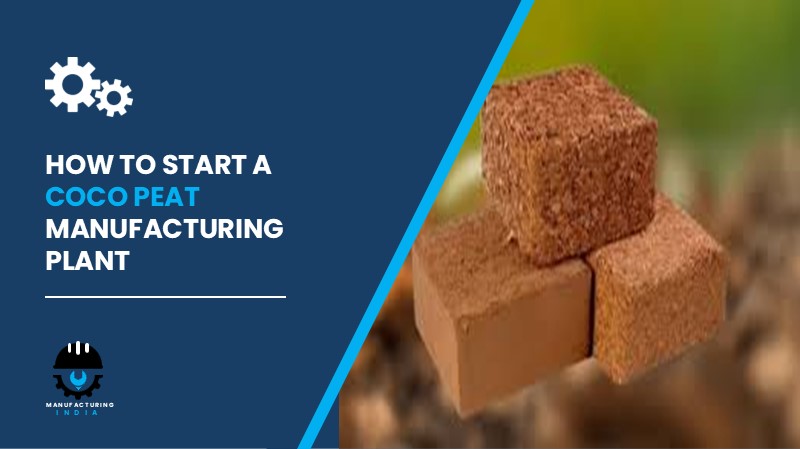
Setting up a coco peat manufacturing plant in India presents a highly compelling investment opportunity as the coco peat market is primarily driven by rising adoption of sustainable agricultural practices, increasing demand for organic growing media, expanding horticulture and floriculture activities, and the growing popularity of soilless cultivation techniques.
“With a rapidly expanding global market projected to grow at a CAGR of 4.1% from 2026 to 2034, rising from USD 3.74 Billion in 2025 to USD 5.37 Billion by 2034, and gross margins of 35-45%, coco peat manufacturing in India offers one of the most financially attractive opportunities in the agriculture and horticulture sector.”
What is Coco Peat?
Coco peat, also called coir pith, is a natural by-product derived from processing coconut husks. It consists of fine particles and fibers remaining after the extraction of coir fiber. Known for its excellent water retention, porosity, and aeration properties, coco peat improves soil structure and supports healthy plant growth. It is naturally biodegradable, renewable, and resistant to fungal and bacterial growth, making it an eco-friendly alternative to traditional growing media. Coco peat comes in multiple forms, like compressed blocks, briquettes, grow bags, and loose material, providing flexible options for diverse applications. Widely used in horticulture, agriculture, landscaping, and hydroponics, it provides an effective, sustainable solution for enhancing soil fertility, plant hydration, and root development.
- Process Used: Coconut husk collection, washing, retting, drying, screening, grinding, compression, block/briquette formation, quality inspection, and packaging.
- End-use Industries: Agriculture, horticulture, floriculture, landscaping, greenhouse farming, and retail gardening.
- Applications: Soil conditioning, hydroponics, nursery planting, greenhouse cultivation, potting mixes, seed germination, and landscaping.
Cost of Setting Up a Coco Peat Manufacturing Plant in India
The coco peat manufacturing plant setup cost is provided in detail covering project economics, capital investments (CapEx), project funding, operating expenses (OpEx), income and expenditure projections, fixed costs vs. variable costs, direct and indirect costs, expected ROI and net present value (NPV), profit and loss account, financial analysis, and more. Here is a structured breakdown of all major cost components:
1. Capital Expenditure (CapEx)
The total capital investment in a coco peat manufacturing plant in India typically covers the following:
Land and Site Development The cost of land and site development, including charges for land registration, boundary development, and other related expenses, forms a substantial part of the overall investment. The location must offer easy access to key raw materials such as coconut husk. Proximity to target markets will help minimize distribution costs. The site must have robust infrastructure, including reliable transportation, utilities, and waste management systems. Compliance with local zoning laws and environmental regulations must also be ensured.
Request a Sample Report for In-Depth Market Insights: https://www.imarcgroup.com/coco-peat-manufacturing-plant-project-report/requestsample
Civil Works and Construction Building costs cover the main production facility and supporting infrastructure. The layout should be optimized to enhance workflow efficiency, safety, and minimize material handling. Separate areas for raw material storage, production, quality control, and finished goods storage must be designated. Space for future expansion should be incorporated to accommodate business growth.
Machinery and Equipment Machinery costs account for the largest portion of the total capital expenditure. High-quality, corrosion-resistant machinery tailored for coco peat manufacturing must be selected. Key machinery includes:
- Coconut Husk Defibering Machine
- Husk Crushers and Washing Units
- Dryers (Natural or Mechanical)
- Sieving and Screening Machines
- Grinders
- Hydraulic Presses and Block/Briquetting Machines
- Conveyor System
- Automatic Packing Machines
The scale of production and automation level will determine the total cost of machinery. All machinery must comply with industry standards for safety, efficiency, and reliability.
Other Capital Costs These include pre-operative expenses and other related costs. This allocation ensures a solid foundation for safe and efficient plant operations.
2. Operational Expenditure (OpEx)
In the first year of operations, the operating cost for the coco peat manufacturing plant in India is projected to be significant, covering raw materials, utilities, depreciation, taxes, packing, transportation, and repairs and maintenance. By the fifth year, the total operational cost is expected to increase substantially due to factors such as inflation, market fluctuations, and potential rises in the cost of key materials. Additional factors, including supply chain disruptions, rising consumer demand, and shifts in the global economy, are expected to contribute to this increase.
Raw Material Cost (Coconut Husk): 50-60% of Total OpEx Raw materials, including core ingredients like coconut husk, are a major part of operating costs. Long-term contracts with reliable suppliers will help mitigate price volatility and ensure a consistent supply of materials.
Utility Cost: 20-25% of Total OpEx Costs associated with utilities including electricity, water, and steam must be considered in the financial plan.
Other Operating Costs The remaining budget covers transportation, packaging, salaries and wages, depreciation, taxes, repairs and maintenance, and other expenses.
3. Plant Capacity
The proposed coco peat manufacturing facility in India is designed with an annual production capacity ranging between 10,000 – 20,000 MT, enabling economies of scale while maintaining operational flexibility.
4. Profit Margins and Financial Projections
The project demonstrates healthy profitability potential under normal operating conditions:
- Gross Profit Margin: 35-45%
- Net Profit Margin: 15-20%
The financial projections for the proposed project have been developed based on realistic assumptions related to capital investment, operating costs, production capacity utilization, pricing trends, and demand outlook. These projections provide a comprehensive view of the project’s financial viability, ROI, profitability, and long-term sustainability. A detailed financial analysis including income projections, expenditures, and break-even points must be conducted, as this aids in securing funding and formulating a clear financial strategy.
Why Set Up a Coco Peat Manufacturing Plant in India?
The global market environment presents a uniquely favorable opportunity for establishing a coco peat manufacturing facility in India:
Growing Shift Toward Organic and Sustainable Farming Practices Rising adoption of eco-friendly agricultural methods is driving demand for natural growing media like coco peat. The government and the agricultural sector are planning to cut down on the use of chemical fertilizers through the use of organic inputs, thus contributing to market growth.
Increasing Global Demand for Eco-Friendly Soil Alternatives The need for sustainable and biodegradable soil substitutes fuels market growth for coco peat. The agitations for peat moss are making coco peat a favored, eco-friendly alternative, further accelerating its adoption across agriculture and horticulture sectors.
Abundant Availability of Raw Materials Easy access to coconut husks ensures a steady supply of raw material for coco peat production. The huge amount of coconut husks in the processing areas guarantees consistent raw materials supply, which in turn allows for the production to be scaled up.
Strong Export Opportunities Across Europe, Asia, and the Middle East High international demand presents significant export potential for coco peat producers. Strong export markets, especially from countries with very little arable land and water resources, continue to propel the international trade, making coco peat a crucial part of sustainable horticulture and agriculture worldwide.
Scalable Production with Low Technological Complexity Coco peat manufacturing is easily scalable and requires minimal technological investment, supporting efficient production expansion. Coco peat products are mainly used in greenhouses, urban gardening, and hydroponic cultivation, all of which are moving toward the advanced and more sustainable side of agriculture.
Manufacturing Process Overview
Setting up a coco peat manufacturing plant in India requires evaluating several key factors, including technological requirements and quality assurance. The manufacturing process is a multi-step operation that involves several unit operations, material handling, and quality checks. The main stages involved in the coco peat manufacturing process flow include:
- Unit Operations Involved
- Mass Balance and Raw Material Requirements
- Quality Assurance Criteria
- Technical Tests
Key considerations in the manufacturing setup include:
- Raw Material Sourcing: Reliable suppliers must be secured for raw materials like coconut husk to ensure consistent production quality. Minimizing transportation costs by selecting nearby suppliers is essential. Sustainability and supply chain risks must be assessed, and long-term contracts should be negotiated to stabilize pricing and ensure a steady supply.
- Safety and Environmental Compliance: Safety protocols must be implemented throughout the manufacturing process of coco peat. Advanced monitoring systems should be installed to detect leaks or deviations in the process. Effluent treatment systems are necessary to minimize environmental impact and ensure compliance with emission standards.
- Quality Assurance Systems: A comprehensive quality control system should be established throughout production. Analytical instruments must be used to monitor product concentration, purity, and stability. Documentation for traceability and regulatory compliance must be maintained.
Key Applications of Coco Peat
Coco peat serves a wide variety of end-use industries and applications:
- Agriculture: Used as a soil amendment and moisture-retaining medium.
- Horticulture and Floriculture: Ideal for nurseries and ornamental plants.
- Greenhouse Farming: Preferred substrate for controlled cultivation.
- Hydroponics: Acts as a growing medium in soilless farming systems.
- Home Gardening: Used in potting mixes and garden soil conditioning.
Global Market Outlook
The global coco peat market size was valued at USD 3.74 Billion in 2025. According to IMARC Group estimates, the market is expected to reach USD 5.37 Billion by 2034, exhibiting a CAGR of 4.1% from 2026 to 2034. The coco peat sector is on a road of gradual expansion, driven by the awareness of the use of eco-friendly techniques for agriculture and soil conservation. High-quality coco peat products are in strong demand, mainly used in greenhouses, urban gardening, and hydroponic cultivation. A report from the industry reveals that nearly 55% of American families do some sort of gardening, amounting to roughly 71.5 million households engaged in gardening and about 185.9 million individuals, making the U.S. one of the top three countries in the world when it comes to gardening participants.
Leading manufacturers in the global coco peat industry include:
- Dutch Plantin Coir Pvt. Ltd.
- Samarasinghe Brothers International
- Sai Coco Peat Export Private Limited
- Kumaran Coir
- Fibre Family
- CoirGreen Coco Solution
- Dynamic International
- Nature’s Bounty PLC
All of which serve end-use sectors such as agriculture, horticulture, floriculture, landscaping, greenhouse farming, and retail gardening industries.
Latest Industry Developments
- December 2025: India’s urban local bodies, under the Swachh Bharat Mission, transformed coconut waste into economic and environmental value. Coconut husks were processed into coir, ropes, compost, and high-demand cocopeat, powering sustainable livelihoods, accelerating farmer income, and supporting circular economy models across cities like Chennai, Indore, Bhubaneswar, and Patna.
- July 2025: Kerala’s NCRMI developed Cocoaura, a patented air-freshener gel made from biodegradable coir pith, using natural oils for fragrance. Lasting up to 22 days, it promotes in-vehicle air quality with minimal environmental impact. Technology transfer deals target overseas markets, including the UAE, highlighting coir pith’s sustainable commercial potential.
Licenses and Regulatory Requirements in India
Starting a coco peat manufacturing unit in India requires several regulatory approvals and certifications. The report covers regulatory procedures, financial assistance, and necessary certifications, ensuring all legal and compliance requirements are met, including:
- Business registration and incorporation
- Factory License under applicable labor and manufacturing laws
- Environmental Clearance from relevant pollution control authorities
- Fire safety certifications
- Industry-specific permits
- Intellectual property rights (IPR) registrations and licensing
Frequently Asked Questions
The following questions are answered in the report:
- How much are the capital requirements to start a coco peat manufacturing plant in India?
- How do I start a coco peat manufacturing business in India?
- What raw materials are required for coco peat production in India?
- What machinery and equipment are required to start a coco peat factory in India?
- What are the key steps involved in coco peat production in India?
- How long does it take to start a coco peat manufacturing plant in India?
- What are the biggest challenges in starting a coco peat manufacturing business in India?
- What licenses and approvals are needed to start a coco peat factory in India?
- Who are the top coco peat manufacturers in the world?
- Is coco peat manufacturing a profitable business in India?
- What is the cost breakdown of setting up a coco peat manufacturing plant in India?
- How long does it take to break even in a coco peat manufacturing business in India?
- Are there any government subsidies or incentives for coco peat manufacturing in India?
- What financing options are available for setting up a coco peat manufacturing unit in India?
Key Takeaways for Investors
The coco peat manufacturing industry in India represents a strong and scalable investment opportunity backed by growing global demand across agriculture, horticulture, and greenhouse farming sectors. This report provides the comprehensive blueprint needed to transform your coco peat manufacturing plant cost in India vision into a technologically advanced and highly profitable reality. With gross margins of 35-45% and net margins of 15-20%, a well-planned coco peat manufacturing plant remains competitive and financially viable. The convergence of rising adoption of sustainable agricultural practices, increasing demand for organic growing media, expanding horticulture and floriculture activities, and the growing popularity of soilless cultivation techniques creates a robust and diversified revenue base for coco peat manufacturers entering or expanding in this market.
About the Author