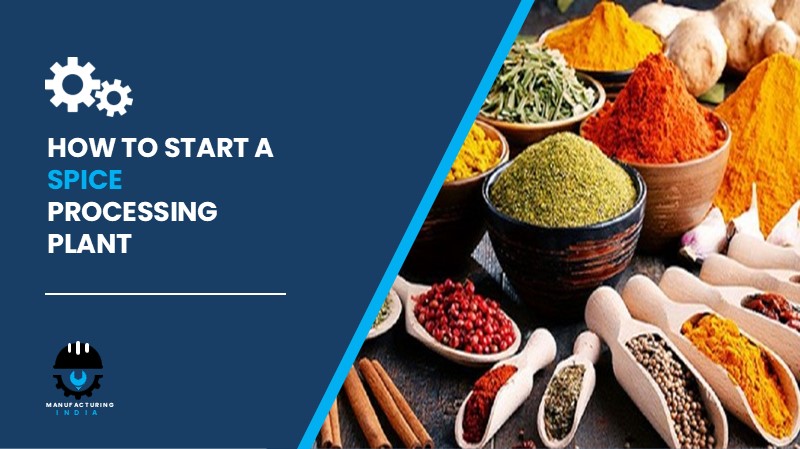
Setting up a spice processing plant in India presents a compelling investment case rooted in the country’s unrivalled position as the world’s largest producer, consumer, and exporter of spices, its deeply embedded culinary culture centred on turmeric, chili, cumin, coriander, black pepper, cardamom, and cloves, and the rapidly expanding domestic and global demand for processed, packaged, and blended spice products across household, foodservice, and industrial food manufacturing channels. Spices strong-smelling or flavour-active plant substances sold in whole, powdered, or blended forms are among India’s most strategically important agricultural export commodities, and the shift from farm-gate raw spice to value-added processed forms is the defining investment opportunity in the sector today. The global spice market was valued at USD 19.08 billion in 2025 and is projected to reach USD 29.60 billion by 2034 at a CAGR of 5.0%, underpinned by rising demand for convenience foods, growing popularity of ethnic and international cuisines, and rapid expansion of foodservice and retail channels across both developed and emerging markets.
India’s structural advantages make it the natural and most commercially compelling location globally for establishing a spice processing facility. The country’s spice-growing belts in Kerala, Andhra Pradesh, Telangana, Rajasthan, Gujarat, Madhya Pradesh, and Tamil Nadu provide direct, cost-competitive access to every major spice variety at source eliminating the raw material procurement costs and lead times that constrain processors in import-dependent markets. Government support through the Spices Board of India’s export promotion programmes, MoFPI food processing infrastructure grants, APEDA export development incentives, and PLI scheme support for processed food manufacturing collectively strengthen the financial and market access case for new investment in this processing category. In 2025, around 38% of global consumers purchased prepared foods such as deli products and ready meals every week a trend that directly drives spice consumption as food manufacturers and home cooks rely on processed spices to enhance flavour, diversify recipes, and meet evolving taste preferences at speed and convenience.
A spice processing plant in India is backed by a global market growing at 5.0% CAGR from USD 19.08 billion in 2025 toward USD 29.60 billion by 2034, India’s unmatched position as the world’s largest spice producer and exporter, and multi-channel demand across household kitchens, food processing units, restaurants, hotels, and the organised retail packaged spice segment. With gross profit margins of 25–35% and net margins of 10–15% achievable at a production capacity of 5,000–10,000 MT per annum, and supported by active domestic innovation including Vasant’s December 2025 AI-driven Masala Mausi avatar, this investment delivers commercially proven and improving financial returns.
What is Spice Processing?
Spices are strong-smelling or bitter plant substances that have been used throughout history to improve the flavour, scent, and even the appearance of foods. Among the most common spices are turmeric, chili, cumin, coriander, black pepper, cardamom, and cloves, which are sold in whole, powdered, or blended forms. Processed spices provide the benefits of being easy to use, having consistent flavour, and having a long shelf life while maintaining the quality always needed in different culinary applications. Their applications range across homes, restaurants, packaged food products, and foodservice operations.
The modern spice industry produces ready-to-use blends, seasoning mixes, and functional spice extracts, with production focused on health-conscious consumers and growing demand for quick-cook solutions. A spice processing plant is a value-added facility that transforms raw whole spices into market-ready powdered, blended, and packaged products through a multi-step operation integrating cleaning, grading, sorting, drying, grinding, blending, sieving, quality inspection, and packaging. The primary production method involves these integrated stages, with food-grade hygiene controls and quality verification maintained throughout. End-use industries served include household kitchens, food processing units, restaurants and hotels, and the packaged spice retail sector covering applications from culinary usage in households through spice blends for industrial food production, ready-to-use cooking pastes, and retail packaging for supermarkets.
Cost of Setting Up a Spice Processing Plant in India
The total investment required to establish a spice processing plant in India depends on plant capacity, spice variety focus, geographic location, level of automation, and compliance with FSSAI food safety and export certification requirements. Investors must account comprehensively for both one-time capital expenditure and recurring operational costs when preparing a feasibility study or detailed project report (DPR).
1. Capital Expenditure (CapEx)
Land and Site Development constitutes a foundational and substantial investment. Costs for land registration, boundary development, internal road layout, drainage infrastructure, and site levelling vary based on whether the facility is located within a government-notified food processing cluster, a Mega Food Park under MoFPI schemes, a spice processing industrial estate, or on privately acquired land in spice-producing districts. Spice processing clusters in states such as Kerala, Andhra Pradesh, Rajasthan, and Gujarat offer proximity to raw spice procurement networks, competitive land costs, and established export logistics infrastructure that reduces site development costs and time to market.
Civil Works and Construction encompasses the main cleaning and grading hall, drying facility, grinding and milling room with dust containment and extraction systems, blending and mixing area, quality control laboratory, finished goods warehouse with humidity-controlled storage to preserve spice aroma and shelf life, packaging hall, effluent treatment facility, and administrative block. Food-grade construction requirements including pest-proof design, hygienic floor and wall surfaces, and adequate ventilation for grinding dust management add to civil construction costs relative to standard industrial buildings.
Machinery and Equipment represent the single largest component of capital expenditure. Key machinery required for a spice processing plant includes:
- Cleaning machines
- Grinders
- Blenders
- Sieving systems
- Automated packaging units
Other Capital Costs include the effluent treatment plant (ETP) for managing spice wash water and organic waste streams, pre-operative expenses covering regulatory filings and Spices Board export registration preparation, plant commissioning charges, utility connection fees, and import duties applicable to specialised grinding or automated packaging equipment sourced internationally.
Request a Sample Report for In-Depth Market Insights: https://www.imarcgroup.com/spice-processing-plant-project-report/requestsample
2. Operational Expenditure (OpEx)
Raw Material Cost is the dominant driver of operating expenditure, accounting for approximately 70–80% of total OpEx. The primary input is whole spices including turmeric, chili, cumin, coriander, black pepper, cardamom, and cloves sourced from farmer markets, mandis, and agricultural cooperatives across India’s established spice-growing regions. Whole spice prices are subject to seasonal variability driven by monsoon-dependent harvest outcomes, crop area planted, and export demand dynamics. Investors are advised to establish long-term supply contracts with registered spice dealers, FPOs, and contract farming networks particularly in spice-growing heartland districts to stabilise input pricing and ensure production continuity across product variants. Raw material quality including moisture content, colour intensity, essential oil content, and absence of adulterants directly determines the flavour profile, shelf life, and market value of finished processed spices, making quality management as critical as cost management in this operating model.
Utility Costs – covering electricity for grinding machines, blending equipment, sieving systems, and facility operations account for approximately 10–15% of total OpEx. Grinding is the most energy-intensive process step, particularly for hard whole spices such as black pepper, coriander, and cumin seed. Investors in regions with competitive industrial electricity tariffs, reliable grid supply, and access to renewable energy options are better positioned to manage this cost component. Water usage for spice washing and steam for optional sterilisation treatments add further utility requirements for export-grade quality production targeting international food safety standards.
Other Operating Costs include outbound transportation to retail chains, foodservice distributors, food processing companies, and export freight to international buyers; packaging materials including primary retail pouches, secondary cartons, and bulk export bags; employee salaries and wages for cleaning operators, grinding technicians, blending specialists, quality inspectors, and packaging line workers; equipment maintenance; quality assurance testing for FSSAI compliance including pesticide residue, heavy metal, and microbiological testing; depreciation on civil and machinery assets; and applicable taxes. By the fifth year of operations, total operational costs are expected to increase substantially due to inflation, market fluctuations, potential rises in whole spice procurement prices, supply chain disruptions, rising consumer demand, and shifts in the global food economy.
3. Plant Capacity
The proposed spice processing facility is designed with an annual production capacity ranging between 5,000 and 10,000 MT, enabling economies of scale while maintaining operational flexibility across different spice varieties, product formats whole, powdered, and blended and buyer specification requirements. This capacity range is well-aligned with the procurement volumes of organised retail chains, food processing companies, institutional foodservice distributors, and export buyers in North America, Europe, and the Middle East. Capacity can be customised based on investor requirements, raw material procurement network scale, and target market segment focus. Profitability improves consistently with higher capacity utilisation, and spice processing plants support phased capacity expansion through additional grinding lines and automated packaging capacity with contained incremental investment.
4. Profit Margins and Financial Projections
The spice processing plant demonstrates healthy and stable profitability potential under normal operating conditions. Gross profit margins typically range between 25–35%, supported by stable multi-channel demand and the value-added nature of cleaned, dried, ground, and packaged spice products relative to unprocessed whole spice farm-gate outputs. Net profit margins range between 10–15%, reflecting the high raw material intensity and moderate utility costs of the processing model. A comprehensive financial analysis should include income projections, expenditure forecasts, gross and net margin tracking across Years 1 through 5, net present value (NPV), internal rate of return (IRR), payback period, and a full profit and loss account. Sensitivity analysis covering whole spice commodity price movements and export market pricing variability is recommended for investment-grade financial planning.
Why Set Up a Spice Processing Plant in India?
Growing Global Demand for Convenience Foods Driving Processed Spice Consumption. In 2025, around 38% of global consumers purchased prepared foods such as deli products and ready meals every week reflecting a sustained multi-year increase in the share of consumer food spending directed toward convenient, pre-prepared formats that rely heavily on processed spices for flavour delivery. This structural shift in global food consumption patterns directly and consistently expands procurement demand for processed spice products across food manufacturing, foodservice, and retail channels simultaneously.
Rising Demand for Packaged, Hygienic, and Consistently Flavoured Products. The transition from loose, unprocessed spice purchased from unorganised markets to branded, hygienically packaged, and consistently graded processed spice is accelerating across India’s rapidly urbanising consumer base. Dual-income households, changes in lifestyle, and the growth of retail and e-commerce have made it easy for people to get accustomed to and buy processed spices a trend that is strengthening the domestic market for packaged spice products alongside the long-established export demand.
Expansion of Foodservice and Organised Retail Driving Industrial Demand. The increasing number of restaurants, cafés, hotels, and quick-service chains in India’s expanding organised hospitality sector is driving procurement of ready-to-use processed spice blends and seasonings that reduce kitchen prep time, ensure consistent quality across outlets, and minimise skilled labour requirements. India’s rapidly growing organised retail and e-commerce grocery channels are simultaneously expanding the distribution reach of branded packaged spices to consumers in Tier 2 and Tier 3 cities where traditional spice retail previously dominated.
Product Customisation, Organic, and Health-Oriented Formulations Opening Premium Segments. Organic, low-sodium, and functionally fortified spice blends are attracting diverse consumer preferences and commanding significant premium price points over standard ground spice products. The growing consumer preference for special and health-oriented spices provides processors with margin-accretive product extension opportunities beyond commodity powdered spice production including spice extracts, oleoresins, and functional blends for the nutraceutical and health food ingredient markets.
Active Domestic Innovation Validating Sector Momentum. In December 2025, Vasant introduced Masala Mausi, India’s first AI-driven avatar by a spice brand, blending a 50-year legacy with innovation. Masala Mausi embodies warmth, wisdom, and the essence of Indian kitchens, offering interactive guidance on spices, flavour pairings, and regional cuisines demonstrating the sophisticated digital marketing and consumer engagement strategies that India’s leading spice brands are deploying to capture the growing urban, digitally connected consumer segment. In November 2025, the World Spice Organisation concluded the 4th National Spice Conference 2025 in ITC Welcom, Guntur, themed “Spice Route Ahead Safe, Sustainable and Scalable,” where FSSAI, the Ministry of Agriculture, spice companies, agri-innovation firms, and FPOs explored strategies to strengthen India’s global spice trade, enhance compliance, and expand opportunities for farmers domestically and internationally signalling strong institutional commitment to scaling India’s spice processing sector.
India’s Unmatched Raw Material Cost Advantage and Export Infrastructure. India’s position as the world’s largest spice producer with established spice mandi infrastructure, Spices Board quality certification systems, APEDA export support, and well-developed freight logistics from major spice export hubs provides domestic processors with a structural competitive advantage in raw material cost and export market access that processors in other countries cannot replicate. This advantage, combined with competitive land, labour, and utility costs, positions Indian spice processors as globally cost-competitive suppliers for both branded retail and private-label export supply chains.
Processing Process – Step by Step
The spice processing plant uses cleaning, grading, sorting, drying, grinding, blending, sieving, quality inspection, and packaging as the primary production method. Below are the main stages involved in the spice processing process flow:
- Raw Spice Receipt and Inspection: Whole spices are received from farmer markets, FPOs, or direct procurement networks, weighed, and inspected for moisture content, colour, aroma, foreign matter content, and absence of adulteration or contamination before being cleared for the processing line.
- Pre-Cleaning: Cleaning machines remove extraneous matter including stones, soil, dust, stems, and other foreign materials from the raw spice lot using mechanical sieving, air classification, and gravity separation to achieve a clean input for subsequent processing stages.
- Grading and Sorting: Grading equipment separates incoming spices by size, colour, and quality grade, ensuring that each production batch starts from a consistent and defined raw material quality baseline. Colour sorters remove off-colour or damaged spice material that would impair the finished product’s visual and flavour quality.
- Washing: Whole spices requiring surface decontamination are washed using food-grade water to remove surface microbial contamination and residual pesticide deposits before drying a critical step for export-grade product destined for markets with stringent pesticide residue maximum residue limits.
- Drying: Cleaned and washed spices are dried using mechanical dryers or solar drying systems to reduce moisture content to the specified level required for safe grinding, long shelf life, and microbial stability. Moisture control during drying is critical for preserving the volatile essential oil content that determines spice flavour and aroma intensity in the finished product.
- Sterilisation (for Export-Grade Products): Export-grade spice products are processed through steam sterilisation or ethylene oxide treatment to achieve the low microbial counts required by international food safety standards including USFDA, EU, and buyer-specific microbiological specifications without impairing essential oil content or colour.
- Grinding: Grinders process dried whole spices into powdered form at controlled temperature and particle size parameters that preserve colour intensity, essential oil content, and flavour profile in the finished spice powder. Grinding temperature management is particularly important for high-oil spices such as pepper, coriander, and cumin to prevent oxidation and flavour loss.
- Blending and Mixing: Blenders combine ground spice powders from different varieties, batches, or origin sources in defined proportions to achieve the target blend specifications including masala mixes, curry powder, chaat masala, and custom industrial blends with consistent colour, aroma, and heat level across production lots.
- Sieving: Sieving systems pass ground spice powders through mesh screens of defined aperture sizes to ensure particle size uniformity, remove coarse particles or fibre, and deliver the smooth, consistent texture that retail and industrial buyers require.
- Quality Inspection and Testing: Analytical instruments and quality inspection systems test finished processed spice for moisture content, colour measurement, essential oil content, pesticide residue levels, heavy metal content, aflatoxin levels, and microbiological safety parameters. Batch release is conditional on all parameters meeting FSSAI, Spices Board, and buyer specification acceptance criteria.
- Packaging: Automated packaging units fill finished spice powder or blends into primary retail pouches, stand-up resealable packs, glass jars, and bulk export bags depending on the customer format and market channel requirement. Labels apply product name, net weight, ingredients, nutritional information, FSSAI licence number, best-before date, batch code, and applicable quality certification marks for full supply chain traceability and regulatory compliance.
- Dispatch to End-Use Channels: Finished processed spices are dispatched to household consumers through retail chains and e-commerce platforms, to food processing units producing packaged foods and ready meals, to restaurants and hotels through foodservice distributors, and to international export buyers through APEDA-registered export channels.
Key Applications
Processed spices produced at this type of facility serve four primary end-use markets with specific product format, quality grade, and packaging requirements for each:
- Household Kitchens: Ensures consistent spice flavour, aroma, and quality for daily cooking in Indian and international household kitchens the largest single volume application for processed spice in the domestic retail market.
- Food Processing Units: Serves as flavourings for packaged foods, ready meals, snacks, instant noodles, and namkeen products produced by industrial food manufacturers requiring consistent, specification-grade spice ingredients across large-volume production batches.
- Restaurants and Hotels: Sharpens the taste and presentation of dishes in professional kitchen environments where consistent quality, time efficiency, and reliable supply are operational priorities for high-volume meal production.
- Retail Packaged Spice Segment: Meets the demands of consumers who buy ready-to-use dried spices that are both good quality and convenient driving the branded and private-label retail packaged spice market through supermarkets, modern trade channels, and e-commerce grocery platforms.
Leading Spice Processors
The global spice processing industry is served by several large-scale manufacturers with extensive production capacities and diversified end-use market portfolios. Key players include:
- McCormick & Company Inc.
- Baria Pepper
- Sensient Technologies Corporation
- Associated British Food PLC
- Ajinomoto Co. Inc.
Timeline to Start the Plant
Investors planning to establish a spice processing plant in India should anticipate the following project development phases:
- Feasibility study and project report preparation
- Land acquisition and site development
- Regulatory approvals and environmental clearances
- Factory licence and fire safety compliance
- Machinery procurement and installation
- Raw material supplier agreements and supply chain setup
- Trial production and quality testing
- Commercial production launch
Licences and Regulatory Requirements
Starting a spice processing unit in India requires several approvals:
- Business registration (Proprietorship, LLP, or Private Limited Company)
- Factory Licence under the Factories Act
- FSSAI (Food Safety and Standards Authority of India) licence for spice processing, blending, and packaging
- Spices Board of India registration for manufacturers and exporters of spice products
- Environmental Clearance from the State Pollution Control Board
- GST Registration
- Fire Safety NOC
- Effluent Treatment Plant (ETP) operational clearance for spice washing process water and organic waste management
- APEDA registration for export of processed spice products to international markets
- Organic certification from NPOP-accredited certifying agencies where organic spice processing is targeted
- Occupational Health and Safety compliance covering grinding dust management, machinery operations, and food-grade hygiene
Key Challenges to Consider
Whole Spice Price Volatility and Seasonal Supply Fluctuation. Whole spices accounting for 70–80% of total OpEx are subject to pronounced seasonal and weather-driven price volatility. Crop failures, irregular monsoons, or pest outbreaks in primary spice-growing districts can simultaneously reduce raw material availability and increase procurement costs, compressing margins and challenging production scheduling. Long-term supplier contracts, multi-region sourcing diversification, and strategic inventory management across harvest and lean seasons are essential risk mitigation practices.
FSSAI and Export Market Pesticide Residue Compliance. India’s spice exports have historically faced rejection and recall issues in the United States, European Union, and other major markets due to excessive pesticide residue levels, aflatoxin contamination, and microbiological safety failures. FSSAI’s domestic standards and international market MRL (Maximum Residue Limits) requirements are continuously being enforced more stringently. Maintaining compliant pesticide residue testing protocols, sourcing from GAP (Good Agricultural Practice)-certified farmers, and investing in steam sterilisation capability for export-grade products are mandatory quality compliance priorities.
Aroma and Essential Oil Preservation During Processing. Spice flavour quality is determined primarily by the essential oil content and profile of the processed powder, which is highly sensitive to heat, moisture, light, and oxidation during grinding, storage, and packaging. Managing grinding temperatures, minimising exposure time to air and light, and using appropriate packaging materials with adequate moisture and oxygen barrier properties are critical operational requirements for producing premium-quality processed spice that commands market premium over commodity competitors.
Competition from Established Domestic and Global Brands. India’s organised spice market is dominated by strong national brands including MDH, Everest, Catch, and Badshah, alongside international players such as McCormick and Sensient Technologies. New entrants must differentiate through regional specialisation, organic or clean-label positioning, custom industrial blend capability for food processing buyers, or private-label export manufacturing to build sustainable market share against entrenched brand loyalty and established distribution networks.
Food Safety and Adulteration Management. Spice adulteration including artificial colour addition, mixing with inferior varieties, and moisture loading is a well-documented challenge in India’s unorganised spice procurement markets. Implementing robust incoming raw material testing protocols, maintaining documented supplier qualification records, and investing in analytical testing capability for colour, essential oil, and contamination parameters are essential measures for protecting product quality and regulatory compliance reputation.
Skilled Manpower for Quality-Critical Food Processing Operations. Operating grinding mills, blending systems, automated packaging lines, and quality testing laboratory instruments in a food-grade environment while maintaining FSSAI compliance documentation requires skilled food processing technologists and quality assurance personnel. Sourcing qualified staff for facilities located in spice-producing agricultural districts often at some distance from urban technical education institutions presents an ongoing operational staffing challenge.
Frequently Asked Questions
1. How much does it cost to set up a spice processing plant in India?
The total cost depends on plant capacity (5,000–10,000 MT per annum), spice variety focus, location, and automation level. CapEx covers land, food-grade civil construction, and machinery including cleaning machines, grinders, blenders, sieving systems, and automated packaging units, along with pre-operative costs including FSSAI and Spices Board registration fees.
2. Is spice processing profitable in India in 2026?
Yes. With gross margins of 25–35% and net margins of 10–15%, supported by a global spice market growing at 5.0% CAGR toward USD 29.60 billion by 2034, strong domestic convenience food demand, and India’s structural raw material cost and export infrastructure advantages, the investment presents a commercially proven and improving profitability case.
3. What machinery is required for a spice processing plant in India?
Key equipment includes cleaning machines, grinders, blenders, sieving systems, and automated packaging units. Supporting systems include drying equipment, colour sorting machines, sterilisation equipment for export-grade production, dust collection and extraction systems, and analytical testing laboratory instruments for quality compliance.
4. What licences and approvals are required to start a spice processing plant in India?
Required approvals include business registration, FSSAI licence for spice processing, Spices Board of India registration, Factory Licence, Environmental Clearance, GST Registration, Fire Safety NOC, ETP operational clearance, and APEDA export registration where international markets are targeted.
5. What raw materials are needed for spice processing?
The primary raw material is whole spices — including turmeric, chili, cumin, coriander, black pepper, cardamom, and cloves. Additional inputs include packaging materials for retail pouches, bulk bags, and export cartons, and process water for washing operations. Optional inputs for value-added products include salt, other spice blending ingredients, and food-grade flow agents.
6. What are the environmental compliance requirements for a spice processing plant in India?
Environmental Clearance from the State Pollution Control Board is required, along with an operational ETP for managing spice washing process water and organic solid waste streams, compliance with ambient dust emission standards for grinding operations, and adherence to organic waste composting or disposal rules for spice by-product management.
7. What is the best location to set up a spice processing plant in India?
States with established spice cultivation and mandi infrastructure — including Kerala for black pepper and cardamom, Andhra Pradesh and Telangana for chili and turmeric, Rajasthan for coriander and cumin, and Gujarat for a range of spice varieties — offer the best combination of raw material access at procurement-level prices, skilled processing labour, Spices Board institutional support, and export logistics connectivity for spice processing investment.
8. What is the break-even period for this type of plant in India?
The break-even period depends on plant scale, product mix between standard and organic or premium blended products, capacity utilisation, and export versus domestic revenue split. A full NPV and IRR analysis incorporating sensitivity testing for whole spice price movements and selling price variability across retail and export channels is recommended for investment-grade financial planning.
9. What government incentives are available for spice processors in India?
The Spices Board of India provides export promotion support, quality development grants, and infrastructure assistance for registered spice processors and exporters. MoFPI food processing infrastructure grants, Pradhan Mantri Kisan Sampada Yojana agro-processing subsidies, APEDA market development and export certification support, state-level agro-processing industrial incentives in Kerala and Andhra Pradesh, and PLI scheme benefits for processed food manufacturers all provide meaningful financial and market access support for qualifying spice processing investments.
Key Takeaways for Investors
A spice processing plant in India represents one of the most commercially established, structurally demand-driven, and export-accessible agri-processing investment opportunities available in Indian manufacturing — backed by a global spice market valued at USD 19.08 billion in 2025 growing at 5.0% CAGR toward USD 29.60 billion by 2034, India’s unmatched position as the world’s largest spice producer with direct raw material procurement advantages, and multi-channel demand across household kitchens, food processing units, restaurants, hotels, and the organised retail packaged spice segment. Financial viability is demonstrated across a production capacity range of 5,000 to 10,000 MT per annum, with gross margins of 25–35% and net margins of 10–15% achievable under competitive raw material procurement and efficient processing operations. Active domestic innovation — including Vasant’s December 2025 launch of India’s first AI-driven Masala Mausi spice brand avatar and the World Spice Organisation’s November 2025 National Spice Conference focusing on food safety, sustainability, and scalability — confirms the dynamic and institutionally supported growth trajectory of India’s spice processing sector. With 38% of global consumers already purchasing prepared foods weekly, convenience food demand sustaining processed spice consumption at scale, and India’s export infrastructure enabling access to premium North American, European, and Middle Eastern buyer markets, the long-term demand sustainability and export-growth opportunity for Indian spice processing investors is comprehensively well-supported for the decade ahead.
About the Author