Setting up a pet food manufacturing plant in India presents a compelling investment case driven by rapidly rising pet ownership, increasing disposable incomes, and a generational shift in consumer behaviour. The country’s expanding middle class – particularly millennials and Gen Z – is humanising pets at an unprecedented pace, fuelling demand across pet care, retail, e-commerce, and veterinary care sectors. As pet owners become more discerning about animal nutrition, the preference for premium, healthy, and natural ingredients in pet food has added a significant value layer to this already high-growth industry.
India’s structural advantages make this investment even more compelling. With a young demographic driving urban pet adoption, the country’s pet care industry was valued at Rs. 30,434 crore (USD 3.6 billion) in CY24 and is projected to grow to Rs. 2,10,000 crore (USD 24.8 billion) by CY32, as estimated by IBEF. States like Gujarat and Maharashtra – with well-developed industrial estates, logistics corridors, and proximity to raw material suppliers – offer ideal locations for establishing a pet food manufacturing unit. The Make in India initiative further incentivises domestic production through policy support, infrastructure development, and regulatory facilitation.
India’s pet food manufacturing sector offers a rare combination of policy support, cost-competitive production, and surging domestic demand from pet care, retail, and veterinary sectors. With gross profit margins of 30–40% and a break-even window of 3 to 5 years, this is a financially sound and strategically well-timed investment for both new entrants and established FMCG players.
What is Pet Food?
Pet food refers to specially formulated food products created to meet the dietary needs of domestic animals, particularly dogs, cats, and other pets. These products are designed to provide a balanced nutritional profile, ensuring that pets receive essential vitamins, minerals, proteins, fats, and carbohydrates necessary for sustained health and longevity.
Pet food is available in various forms, including dry kibble, wet canned food, freeze-dried food, and semi-moist food. The ingredients typically include meat, fish, poultry, grains, and vegetables, supplemented with vitamins and minerals. The increasing trend towards natural and organic ingredients has boosted demand for premium pet food products that cater to health-conscious pet owners, opening new product tiers for manufacturers.
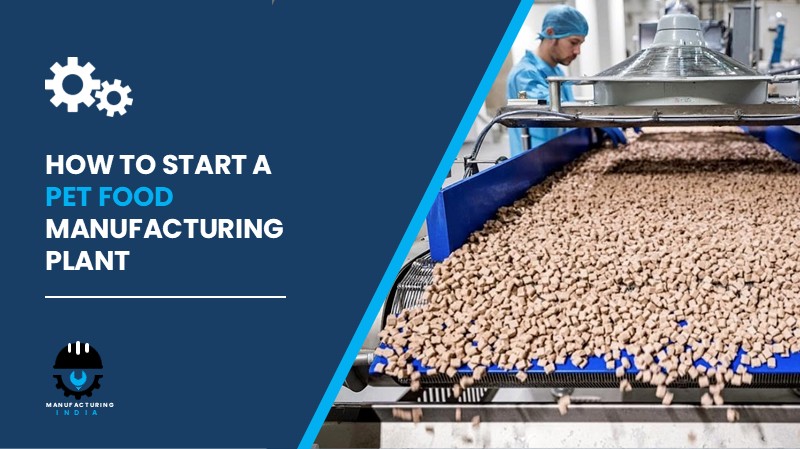
The primary production method involves a multi-stage process of ingredient sourcing, blending, extrusion, drying, and packaging. The end-use industries served by a pet food manufacturing unit include pet care, retail, e-commerce, and veterinary care, with applications spanning food for dogs, cats, fish, birds, and small mammals.
Cost of Setting Up a Pet Food Manufacturing Plant in India
The total cost of establishing this facility depends on several variables, including plant capacity, technology selection, geographic location, level of automation, and local regulatory compliance requirements.
1. Capital Expenditure (CapEx)
Capital investment for a pet food manufacturing plant encompasses multiple cost heads, each of which must be carefully planned.
Land and Site Development: involves acquisition charges, boundary development, land registration fees, and site preparation. Investors may consider locating the facility within an SEZ or designated industrial estate to benefit from concessional land rates, pre-approved utilities, and faster regulatory clearances.
Civil Works and Construction: include the main production shed, raw material storage areas, finished goods warehouse, quality control laboratory, administrative block, effluent treatment facility, and fire safety infrastructure. The scale of civil works depends directly on the proposed annual capacity.
Machinery and Equipment: represent the single largest component of CapEx. Key machinery required includes:
- Industrial grinders
- Mixers and blenders
- Extruders or canners
- Dryers and ovens
- Cooling conveyors
- Coating drums
- Quality control labs
- Automated packaging systems
Other Capital Cost: include effluent treatment plant (ETP) setup, pre-operative expenses such as feasibility studies and project reports, trial production costs, commissioning charges, and import duties applicable on specialised machinery.
Request a Sample Report for In-Depth Market Insights: https://www.imarcgroup.com/pet-food-manufacturing-plant-project-report/requestsample
2. Operational Expenditure (OpEx)
Raw Material Cost: is the dominant driver of operating expenses, accounting for approximately 70–80% of total OpEx. Key raw materials required for pet food production include meat meal, corn, soybean meal, vitamins and minerals, and fats. Establishing long-term procurement contracts with reliable domestic suppliers helps stabilise pricing and protect against supply chain disruptions.
Utility Cost: covering electricity, water, and steam – accounts for 10–15% of total OpEx. Energy-efficient equipment selection and utility optimisation programmes can meaningfully reduce this cost over time.
Other Operating Costs: include transportation and logistics, packaging materials, salaries and wages, routine maintenance, depreciation on fixed assets, taxes, and other sundry expenses. By the fifth year of operations, total OpEx is expected to increase substantially due to inflation, market fluctuations, rising raw material costs, and supply chain dynamics.
3. Plant Capacity
The proposed manufacturing facility is designed with an annual production capacity ranging between 30,000 and 60,000 MT, enabling economies of scale while maintaining operational flexibility. Capacity can be customised based on individual investor requirements, target markets, and available capital. As with any process manufacturing unit, profitability improves progressively with higher capacity utilisation rates, and the financial model becomes stronger beyond the 60–70% utilisation threshold.
4. Profit Margins and Financial Projections
The pet food manufacturing plant project demonstrates healthy profitability potential under normal operating conditions. Gross profit margins typically range between 30–40%, supported by stable demand across pet care and retail channels. Net profit margins are projected at 10–15% on a sustained basis. Financial projections for this investment are developed based on realistic assumptions related to capital investment, operating costs, production capacity utilisation, pricing trends, and demand outlook. Key financial metrics including NPV (Net Present Value), IRR (Internal Rate of Return), payback period, and a detailed profit and loss account are covered in the full project report. The break-even period for a pet food manufacturing business typically ranges from 3 to 5 years, depending on production scale, market demand, and operational efficiency.
Why Set Up a Pet Food Plant in India?
Rising Pet Ownership and Humanisation of Pets: The humanisation of pets is increasing rapidly in India, with owners treating animals as family members and seeking high-quality, nutritious food products. This cultural shift, particularly among millennials and Gen Z consumers, is creating a durable, long-term demand base for premium pet food that did not exist at scale even a decade ago.
Megatrend Alignment with Wellness and Premium Consumption: With increasing disposable incomes and a growing wellness consciousness, consumers are shifting towards premium, health-focused pet food aligned with larger wellness trends. This parallels global developments in North America and Europe, suggesting India is entering a high-growth phase of pet food consumption that could sustain double-digit growth for years.
India’s Pet Care Industry Growth Trajectory: The value of India’s pet care industry stood at Rs. 30,434 crore (USD 3.6 billion) in CY24 and is projected to reach Rs. 2,10,000 crore (USD 24.8 billion) by CY32, according to IBEF estimates. This extraordinary growth trajectory makes the case for domestic manufacturing investment self-evident and strategically sound.
Policy and Regulatory Tailwinds: Government regulations supporting pet health and food safety standards provide a solid foundation for organised industry growth. The Make in India initiative supports manufacturing investment through industrial infrastructure, incentivised capital, and streamlined licensing. Stricter pet food safety laws are indirectly encouraging the production of high-quality, reliable products by establishing minimum compliance thresholds.
Active Industry Investment and Global Market Expansion: In December 2025, The Nutriment Company (TNC) announced the acquisition of Zoo Factory, a Polish distributor of premium pet foods and treats active for over 25 years, marking TNC’s entrance into the Polish market. In December 2024, General Mills, Inc. completed its acquisition of the North American premium cat feeding and pet treat business of Whitebridge Pet Brands from NXMH in a transaction valued at USD 1.45 billion, encompassing the Tiki Pets and Cloud Star brands. These acquisitions signal aggressive global consolidation, making early domestic market entry in India particularly valuable.
Local Supply Chain Preference: Local pet food manufacturers with streamlined sourcing and distribution channels can address consumer demand for fresh, high-quality products, gaining a decisive advantage over global players burdened by complex, multi-country supply chains. Proximity to domestic raw material suppliers for meat meal, corn, and soybean meal further reduces input costs and improves supply reliability.
Manufacturing Process – Step by Step
The pet food manufacturing process uses ingredient sourcing, blending, extrusion, drying, and packaging as the primary production method. The process is a multi-step operation involving several unit operations, material handling stages, and quality checks.
- Raw Material Preparation and Grinding: Meat meal, corn, soybean meal, vitamins, minerals, and fats are received, inspected, and processed through industrial grinders to achieve uniform particle size.
- Mixing and Blending: Ground raw materials are combined in precise formulation ratios using mixers and blenders to ensure consistent nutritional profiles across each batch.
- Cooking and Shaping through Extrusion: Blended material passes through extruders or canners, where it is cooked under controlled heat and pressure and shaped into kibble, pellets, or canned formats.
- Drying and Cooling: Extruded product passes through dryers and ovens to reduce moisture content, followed by cooling conveyors that stabilise the product and prepare it for coating.
- Coating with Fats, Oils, or Flavorings: Coating drums apply palatability enhancers – fats, oils, or flavourings – to the dried product surface to improve taste and consumer acceptance.
- Quality Inspection: Quality control labs conduct analytical tests to verify product concentration, nutritional purity, safety, and stability before release.
- Packaging and Labelling: Automated packaging systems weigh, seal, and label finished goods for dispatch to pet care retailers, e-commerce fulfilment centres, and veterinary care distributors.
Key Applications
The facility serves a diverse range of end-use industries, with applications across the entire companion animal ecosystem.
- Pet Care: Core food products for dogs, cats, fish, birds, and small mammals formulated to meet species-specific nutritional requirements.
- Retail: Packaged dry kibble, wet canned food, freeze-dried food, and semi-moist food distributed through supermarkets, specialty pet stores, and general trade.
- E-Commerce: Subscription-based and on-demand pet food fulfilment via online retail platforms, a rapidly growing distribution channel in India.
- Veterinary Care: Prescription diets and health-focused formulations recommended by veterinary professionals for pets with specific health conditions.
Leading Manufacturers
The global pet food industry is served by several multinational companies with extensive production capacities and diverse application portfolios. Key players operating across pet care, retail, e-commerce, and veterinary care sectors include:
- Nestlé Purina Petcare
- Mars Petcare
- Hill’s Pet Nutrition
- Colgate-Palmolive (Hill’s Pet Nutrition)
- Diamond Pet Foods
Timeline to Start the Plant
- Feasibility study and project report preparation
- Land acquisition and site development
- Regulatory approvals and environmental clearances
- Factory licence and fire safety compliance
- Machinery procurement and installation
- Raw material supplier agreements and supply chain setup
- Trial production and quality testing
- Commercial production launch
Licences and Regulatory Requirements
Starting a pet food manufacturing unit in India requires several approvals:
- Business registration (Proprietorship, LLP, or Pvt Ltd)
- Factory Licence under the Factories Act
- Environmental Clearance from State Pollution Control Board
- GST Registration
- Fire Safety NOC
- Hazardous/Chemical compliance for fats, oils, and chemical additives used in the process
- Effluent Treatment Plant (ETP) operational clearance
- Occupational Health and Safety compliance
Key Challenges to Consider
High Capital Requirements: Establishing a pet food manufacturing plant involves significant upfront investment in land, civil construction, and specialised machinery including extruders, dryers, and automated packaging systems, which may require phased financing strategies.
Raw Material Price Volatility: The operating cost structure is heavily dependent on meat meal, corn, soybean meal, vitamins and minerals, and fats, which together account for 70–80% of total OpEx. Fluctuations in commodity prices and supply chain disruptions can materially affect margins.
Regulatory Compliance: Adherence to food safety standards, environmental clearances, effluent treatment norms, and pet-specific product regulations requires dedicated compliance infrastructure and ongoing monitoring investments.
Technology and Innovation Pressure: Consumer preferences are shifting rapidly towards premium, organic, and natural pet food, requiring manufacturers to continuously innovate formulations and upgrade processing capabilities to stay competitive.
Competition from Established Players: The presence of global manufacturers such as Nestlé Purina Petcare, Mars Petcare, Hill’s Pet Nutrition, and Diamond Pet Foods means new entrants must differentiate on product quality, local sourcing advantages, or specialised health-focused formulations.
Skilled Manpower: Operating extruders, quality control laboratories, and automated packaging systems requires trained technical personnel, and securing qualified food-science and production staff in non-metro locations may present recruitment challenges.
Frequently Asked Questions
1. How much does it cost to set up a pet food manufacturing plant in India?
Total capital requirements vary with capacity, technology, and location, covering land, civil construction, machinery (grinders, extruders, dryers, automated packaging systems), utilities, and working capital.
2. Is pet food manufacturing profitable in India in 2026?
Yes. The pet food manufacturing plant demonstrates gross profit margins of 30–40% and net profit margins of 10–15%, with profitability improving at higher capacity utilisation rates.
3. What machinery is required for a pet food plant in India?
Key equipment includes industrial grinders, mixers and blenders, extruders or canners, dryers and ovens, cooling conveyors, coating drums, quality control labs, and automated packaging systems.
4. What licences and approvals are required to start a pet food plant in India?
Requirements include business registration, Factory Licence, Environmental Clearance, GST Registration, Fire Safety NOC, ETP operational clearance, and Occupational Health and Safety compliance.
5. What raw materials are needed for pet food manufacturing?
Primary raw materials include meat meal, corn, soybean meal, vitamins and minerals, and fats, which together account for approximately 70–80% of total operating costs.
6. What are the environmental compliance requirements for a pet food plant in India?
A functional Effluent Treatment Plant (ETP), environmental clearance from the State Pollution Control Board, and adherence to emission standards are mandatory for operating a compliant pet food manufacturing unit.
7. What is the best location to set up a pet food plant in India?
Industrial states with strong logistics infrastructure, proximity to raw material suppliers for meat meal and grains, and access to e-commerce distribution networks – such as Gujarat, Maharashtra, or Uttar Pradesh – are strategically advantageous.
8. What is the break-even period for this type of plant in India?
The break-even period for a pet food manufacturing business typically ranges from 3 to 5 years, depending on production scale, market demand, and operational efficiency.
9. What government incentives are available for manufacturers in India?
Governments may offer capital subsidies, tax exemptions, reduced utility tariffs, export benefits, or interest subsidies under various national and regional industrial policies, including Make in India-aligned schemes.
Key Takeaways for Investors
A pet food manufacturing plant in India represents a high-conviction investment opportunity anchored by surging domestic demand across pet care, retail, e-commerce, and veterinary care sectors. The investment is financially viable across a range of plant capacities, with gross margins of 30–40% and net margins of 10–15% achievable under normal operating conditions. India’s pet care industry is projected to grow from USD 3.6 billion in CY24 to USD 24.8 billion by CY32, a scale of expansion that will require significant domestic manufacturing capacity well beyond current supply. With the global pet food market expected to reach USD 201.19 billion by 2034 at a CAGR of 4.4%, and India positioned as one of the fastest-growing markets in the Asia-Pacific region, the demand outlook for this investment is both durable and structurally supported.
About the Author