Setting up a butyl acrylate production plant in India presents a compelling investment case driven by surging demand from the paints and coatings, adhesives and sealants, textiles, and plastics industries. As one of the fastest-growing economies in Asia-Pacific, India’s expanding urban infrastructure, rising automotive production, and an active manufacturing base are creating sustained demand for this high-performance chemical. Butyl acrylate a key monomer used in polymer production for coatings, adhesives, and sealants sits at the heart of multiple high-growth value chains, making a dedicated production unit both strategically sound and commercially viable.
India’s structural advantages further strengthen the investment rationale. The country’s Make in India initiative actively incentivises domestic production of industrial chemicals and specialty materials, reducing import dependency and creating a competitive cost base. States like Gujarat and Maharashtra, with their well-developed chemical processing zones, SEZ infrastructure, and proximity to port logistics, offer ideal locations for butyl acrylate production. With the global butyl acrylate market valued at USD 3.89 Billion in 2025 and projected to reach USD 6.03 Billion by 2034 at a CAGR of 5.0%, the commercial opportunity is clear and time sensitive.
The butyl acrylate production sector sits at the intersection of policy support, a cost-competitive production environment, and multi-sector demand growth. With gross profit margins of 35–45% and a well-defined break-even trajectory, a butyl acrylate manufacturing plant represents a financially robust and strategically well-timed investment for entrepreneurs and institutional investors alike.
What is Butyl Acrylate?
Butyl acrylate is an organic chemical compound belonging to the family of acrylate esters, primarily produced through the esterification of acrylic acid with butanol. It is a colourless liquid with a characteristic fruity odour and is widely valued for its excellent flexibility, adhesion properties, and resistance to water and weathering. Butyl acrylate is extensively used as a key monomer in the production of polymers and copolymers that are applied in paints, coatings, adhesives, sealants, textiles, and plastic additives. Its ability to enhance elasticity and durability makes it particularly suitable for high-performance coating formulations.
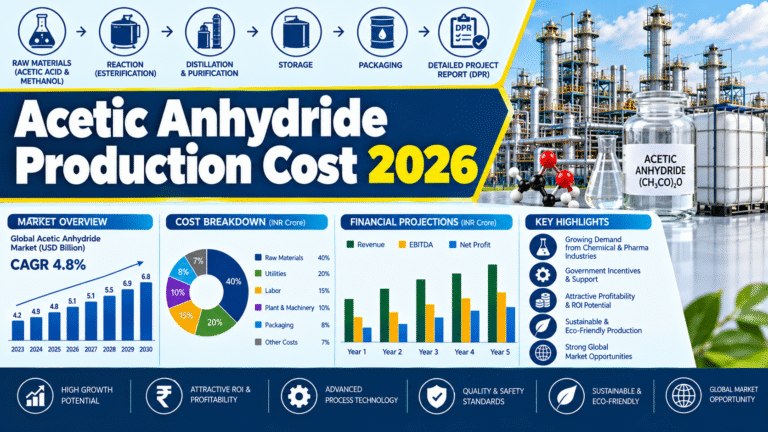
The production process involves esterification of acrylic acid with butanol under catalysis, followed by separation, purification using distillation, inhibitor addition, quality testing, and storage and distribution. End-use industries served by butyl acrylate producers include the paints and coatings industry, adhesives and sealants sector, textile and leather industry, plastics and polymer manufacturing, and construction chemicals. The diversity of applications gives butyl acrylate production a resilient, multi-channel revenue base.
Cost of Setting Up a Butyl Acrylate Production Plant in India
The total cost of establishing a butyl acrylate production plant in India depends on several variables including plant capacity, technology selected, geographic location, level of automation, and regulatory compliance requirements. A thorough feasibility assessment covering all CapEx and OpEx components is essential before committing capital.
1. Capital Expenditure (CapEx)
Capital investment for a butyl acrylate production plant covers several broad cost heads. Land and site development forms a substantial part of the overall investment, encompassing land registration charges, boundary development, and related site preparation expenses. Investors may consider locating the facility within an SEZ or established industrial estate in states such as Gujarat or Maharashtra to benefit from land cost efficiencies and infrastructure readiness. Civil works and construction costs cover the manufacturing shed, quality control laboratory, raw material and finished goods storage, effluent treatment infrastructure, and the administrative block.
Machinery and equipment costs represent the largest single portion of total capital expenditure for a butyl acrylate plant. Key machinery required includes:
- Polymerisation reactors
- Distillation columns
- Heat exchangers and condensers
- Storage tanks and cooling systems
- Vacuum pumps and transfer pumps
- Filtration units and control panels
- Safety systems for pressure and temperature regulation
Other capital costs include the effluent treatment plant (ETP), pre-operative expenses, commissioning costs, and any applicable import duties on specialised machinery not manufactured domestically.
Request a Sample Report for In-Depth Market Insights: https://www.imarcgroup.com/butyl-acrylate-manufacturing-plant-project-report/requestsample
2. Operational Expenditure (OpEx)
The operating cost structure of a butyl acrylate production plant is heavily weighted towards raw materials. Raw material cost accounts for 65–75% of total OpEx, with the primary inputs being acrylic acid and n-butanol. Entering long-term procurement contracts with reliable domestic and international suppliers is essential to mitigate price volatility and ensure supply continuity. Utility cost, covering electricity, water, and steam, accounts for 10–15% of OpEx. Additional operating costs include transportation, packaging, salaries and wages, maintenance, depreciation, and applicable taxes. Operational expenditure is projected to increase substantially by year five of operations, driven by inflation, market fluctuations, and potential rises in key raw material prices.
3. Plant Capacity
The proposed butyl acrylate production facility is designed with an annual production capacity of 31,328 tons, enabling meaningful economies of scale while preserving operational flexibility. Plant capacity can be customised based on the investor’s specific capital availability and target market scale. Profitability improves considerably at higher capacity utilisation levels, making early market development and long-term off-take agreements strategically important.
4. Profit Margins and Financial Projections
A butyl acrylate production plant demonstrates healthy profitability potential under normal operating conditions. Gross profit margins typically range between 35–45%, supported by stable demand across multiple end-use sectors and the value-added nature of specialty acrylate formulations. Net profit margins range between 18–25%. Financial projections incorporate NPV analysis, IRR calculations, payback period modelling, and sensitivity analysis across production capacity and pricing scenarios. These projections are developed based on realistic assumptions related to capital investment, operating costs, capacity utilisation, and demand outlook, providing investors with a comprehensive view of long-term financial viability.
Why Set Up a Butyl Acrylate Plant in India?
Strong Demand from Coatings Industry:
Rising infrastructure and automotive sectors are driving the consumption of high-performance coatings, increasing demand for butyl acrylate. India’s infrastructure pipeline encompassing roads, metro rail, industrial parks, and residential housing is a sustained long-term driver for acrylate-based surface preparation and coating products.
Versatile Industrial Applications:
Butyl acrylate’s usage across multiple industries, including adhesives, textiles, and plastics, ensures diversified revenue streams and reduced dependency on a single sector. Its compatibility with both emulsion and solvent-based systems enables broad industrial deployment.
Growing Construction Activities:
Expanding construction and real estate sectors are boosting demand for paints, coatings, and sealants, indirectly supporting market growth for butyl acrylate as a primary input. India’s own rapid urbanisation and industrial expansion represent the most immediate demand pool.
Export Opportunities:
Increasing global demand provides opportunities for manufacturers to expand into international markets and enhance profitability. Indian producers with cost-competitive manufacturing and quality-certified output are well positioned to serve export markets across Asia-Pacific, the Middle East, and Europe.
Scalable Production Process:
The esterification process allows for large-scale production with efficient process optimisation and cost control mechanisms. Indian plants that adopt modern reaction and purification technology will be able to address higher-value market niches including water-based and low-VOC formulations.
Active Industry Investment:
The global butyl acrylate industry continues to attract significant R&D and product development investment. In March 2026, BASF and Avery Dennison collaborated to advance sustainable materials through the introduction of renewable electricity-based acrylates at BASF’s Freeport, Texas site, targeting adhesives and coatings applications while supporting decarbonisation goals. In March 2026, BASF SE also implemented price increases for butyl acrylate across the Asia Pacific region, citing sustained cost pressures linked to raw materials and energy. These developments illustrate the innovation momentum and pricing discipline driving value across butyl acrylate end-use segments.
Manufacturing Process Step by Step
The butyl acrylate manufacturing process uses esterification of acrylic acid with butanol, followed by separation, purification, inhibitor addition, quality testing, packaging, and distribution as the core stages of the production method. Each stage involves specific unit operations, material handling protocols, and quality assurance checkpoints.
- Preparation of Acrylic Acid Feedstock: Acrylic acid and n-butanol feedstocks are sourced, inspected, and approved against specification before entering the production sequence. Material quality is verified to ensure consistent reaction performance.
- Esterification with Butanol Under Catalysis: Approved raw materials are combined in reactors under controlled temperature, pressure, and catalyst conditions to achieve the required esterification reaction, producing crude butyl acrylate along with water as a byproduct.
- Separation of Byproducts and Unreacted Materials: The reactor output is processed through separation systems to remove water, unreacted acrylic acid, and butanol, which are recovered and recycled to improve process efficiency and reduce waste.
- Purification Using Distillation and Condensation: Distillation columns and condensers are used to purify the crude product, achieving the required purity specification. Inhibitor is added post-distillation to prevent undesired polymerisation during storage and transport.
- Cooling and Storage: Purified butyl acrylate is cooled and transferred to dedicated storage tanks equipped with monitoring systems for temperature and inhibitor levels.
- Quality Testing: Analytical instruments are used throughout production and post-distillation to monitor product purity, stability, and compliance with applicable quality standards.
- Packaging: Finished product is filled, sealed, and labelled using packaging systems prepared for dispatch in appropriate containers suited to the end-use application and customer specification.
- Distribution: Packaged product is dispatched to end-use industries including paints and coatings, adhesives and sealants, textiles, plastics and polymer manufacturing, and construction chemicals.
Key Applications
Butyl acrylate produced at an Indian production facility serves a broad range of industries, each with specific performance and regulatory requirements.
- Paints and Coatings Industry: Widely used in acrylic emulsions and coatings to improve flexibility, adhesion, and weather resistance in architectural and industrial applications.
- Adhesives and Sealants Sector: Enhances bonding strength and elasticity in pressure-sensitive adhesives and sealants, making it suitable for packaging, construction, and automotive uses.
- Textile and Leather Industry: Used in finishing agents to improve softness, durability, and resistance to wear in textile coatings and leather treatments.
- Plastics and Polymer Industry: Acts as a key monomer in copolymer production, improving impact resistance and flexibility of plastic materials.
- Construction Chemicals: Contributes to the formulation of waterproofing agents, joint sealants, and surface treatments used in construction applications.
Leading Manufacturers
The global butyl acrylate industry is served by several multinational companies with extensive production capacities and diverse application portfolios. Key players active across paints and coatings, adhesives and sealants, textiles, plastics, and construction chemicals include:
- Arkema
- NIPPON SHOKUBAI CO., LTD.
- Dow
- LG Chem, Ltd.
- Toagosei Co., Ltd.
- Mitsubishi Chemical Corporation
- BASF SE
Timeline to Start the Plant
Investors planning a butyl acrylate production plant in India should anticipate the following phased development timeline, typically ranging from 18 to 36 months:
- Feasibility study and project report preparation
- Land acquisition and site development
- Regulatory approvals and environmental clearances
- Factory licence and fire safety compliance
- Machinery procurement and installation (reactors, distillation columns, heat exchangers)
- Raw material supplier agreements and supply chain setup
- Trial production and quality testing
- Commercial production launch
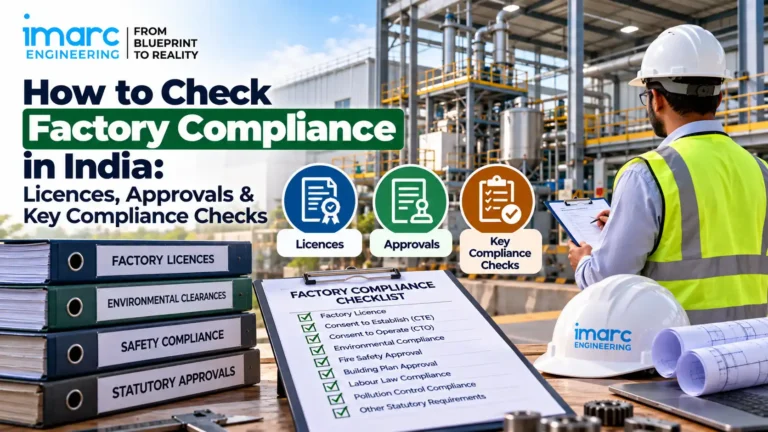
Licences and Regulatory Requirements
Starting a butyl acrylate production unit in India requires several approvals:
- Business registration (Proprietorship, LLP, or Pvt Ltd)
- Factory Licence under the Factories Act
- Environmental Clearance from State Pollution Control Board
- GST Registration
- Fire Safety NOC
- Hazardous and chemical compliance certifications applicable to acrylic acid and acrylate ester handling
- Effluent Treatment Plant (ETP) operational clearance
- Occupational Health and Safety compliance
Key Challenges to Consider
High Capital Requirements:
The machinery and civil infrastructure investment for a butyl acrylate plant represents a significant initial commitment, particularly for small and mid-scale entrepreneurs entering the chemical manufacturing market for the first time.
Raw Material Price Volatility:
Key inputs acrylic acid and n-butanol are subject to global commodity and petrochemical price cycles. Acrylic acid prices are sensitive to propylene feedstock costs, while n-butanol pricing tracks broader oxo-chemical markets. Long-term supplier contracts can partially mitigate this risk but cannot eliminate it entirely.
Regulatory Compliance:
Environmental clearances, ETP operational requirements, and chemical handling regulations add complexity and cost to the establishment and ongoing operation of the facility. Non-compliance carries both financial and reputational risk.
Technology and Innovation Pressure:
The rapid development of water-based, low-VOC, and sustainable acrylate variants means that manufacturers must invest continuously in formulation and process capability to remain competitive in higher-margin segments.
Competition:
The global butyl acrylate market is served by well-capitalised players including BASF SE, Dow Inc., Arkema S.A., LG Chem Ltd., and Wanhua Chemical Group. Indian manufacturers must establish clear differentiation on quality, service, and price to compete effectively.
Skilled Manpower:
Operating reactors, distillation systems, and quality assurance systems at commercial scale requires technically trained personnel. Attracting and retaining talent in a growing specialty chemicals sector adds an ongoing cost and HR management dimension.
Frequently Asked Questions
1. How much does it cost to set up a butyl acrylate production plant in India?
Total setup cost depends on plant capacity, technology, location, and automation level. The capital investment covers land and site development, civil works, machinery (reactors, distillation columns, heat exchangers, condensers, storage tanks), and other pre-operative costs. A detailed project report provides capacity-specific cost estimates.
2. Is butyl acrylate production profitable in India in 2026?
Yes. Gross profit margins typically range between 35–45% and net margins between 18–25%, supported by stable multi-sector demand across paints and coatings, adhesives and sealants, textiles, and plastics and polymer manufacturing.
3. What machinery is required for a butyl acrylate production plant?
Essential machinery includes polymerisation reactors, distillation columns, heat exchangers, condensers, storage tanks, cooling systems, vacuum pumps, transfer pumps, filtration units, control panels, and safety systems for pressure and temperature regulation.
4. What licences and approvals are required to start a butyl acrylate plant in India?
Required approvals include business registration, a Factory Licence, Environmental Clearance from the State Pollution Control Board, GST Registration, Fire Safety NOC, ETP operational clearance, chemical compliance certification for acrylic acid and acrylate handling, and Occupational Health and Safety compliance.
5. What raw materials are needed for butyl acrylate production?
Core raw materials are acrylic acid (produced by oxidation of propylene) and n-butanol. Acrylic acid accounts for the majority of raw material cost and is the primary driver of production economics.
6. What are the environmental compliance requirements?
Operators must obtain Environmental Clearance from the State Pollution Control Board, install and maintain an operational Effluent Treatment Plant, and ensure compliance with emission standards. Acrylic acid and acrylate ester handling require specific chemical safety and hazardous materials compliance.
7. What is the best location to set up a butyl acrylate plant in India?
Ideal locations offer proximity to raw material suppliers (acrylic acid and n-butanol), access to reliable transportation and utilities, robust waste management infrastructure, and compliance with local zoning regulations. Gujarat and Maharashtra, with established chemical processing zones and SEZ infrastructure, are strong candidate states.
8. How long does it take to start a butyl acrylate production plant?
The timeline typically ranges from 18 to 36 months, depending on site development, machinery installation, environmental clearances, safety measures, and trial runs.
9. What government incentives are available for manufacturers in India?
The Make in India initiative, state-level industrial incentives, SEZ benefits, and subsidies available through government schemes for chemical manufacturing and green production provide meaningful support to new investors in this sector.
10. What is the break-even period for a butyl acrylate plant in India?
Break-even typically ranges from 5 to 8 years, depending on scale, regulatory compliance costs, raw material pricing, and market demand. Efficient production and export opportunities can help accelerate returns.
Key Takeaways for Investors
The butyl acrylate production plant opportunity in India is underpinned by sustained demand across paints and coatings, adhesives and sealants, textiles, plastics and polymer manufacturing, and construction chemicals all of which are on growth trajectories aligned with India’s broader economic expansion. The investment demonstrates strong financial viability across a range of plant capacities, with gross margins of 35–45% and net margins of 18–25% providing a compelling return profile. The global butyl acrylate market, valued at USD 3.89 Billion in 2025, is projected to reach USD 6.03 Billion by 2034 at a CAGR of 5.0%, confirming a long demand runway for domestic producers.With policy tailwinds from Make in India, a cost-competitive manufacturing environment, and the shift towards water-based and low-VOC acrylate formulations creating new product opportunities, butyl acrylate production in India offers both near-term profitability and long-term demand sustainability.
About the Author