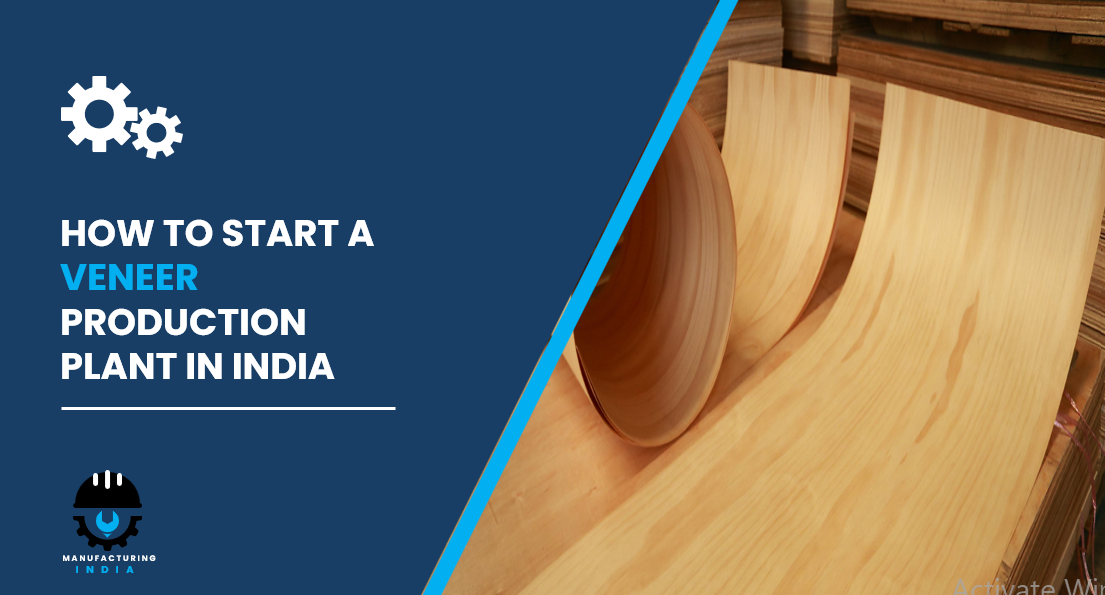
Setting up a veneer production plant in India presents a compelling investment case as the country rapidly emerges as one of the most cost-competitive and high-demand destinations for wood-based manufacturing. Driven by booming demand from the furniture, construction, interior design, and architectural panel industries, veneer has become an indispensable premium surface material in India’s fast-growing built environment. The convergence of a vast plantation timber base, skilled workforce, and expanding middle-class demand for quality interiors makes India a strategically attractive location for veneer manufacturing.
“With a veneer market valued at USD 1.59 Billion in 2025 and projected to reach USD 2.10 Billion by 2034, India offers one of the most financially attractive environments for veneer production — with gross margins of 30–40% and a break-even window of 3–5 years.”
What is Veneer?
Veneer is a thin layer of natural wood produced by cutting a log into sheets through slicing or rotary peeling, designed to maximize timber yield while preserving the wood’s inherent grain aesthetics. Unlike solid wood, veneer enables manufacturers to deliver the visual richness of natural timber across large surface areas with significantly less raw material. Veneer sheets are applied by laminating them onto substrates such as MDF, plywood, or particleboard and are used widely across furniture, cabinetry, architectural paneling, and decorative interior applications.
Veneer is valued for its design versatility, natural appearance, and resource efficiency. Key quality parameters include uniform sheet thickness, controlled moisture content, surface integrity (minimal splits or tears), consistent grain and color matching, and compatibility with adhesive and finishing systems used in panel pressing and furniture production. In India, the growing preference for premium and sustainable interior materials is accelerating demand for high-grade decorative veneer across both residential and commercial segments.
Cost of Setting Up a Veneer Production Plant in India
The veneer production plant cost in India depends on several parameters including production capacity, technology used, plant location, level of automation, and regulatory compliance. Here is a structured breakdown of all major cost components:
1. Capital Expenditure (CapEx)
The total capital investment in a veneer production plant typically covers the following:
Land and Site Development This includes land acquisition, boundary development, land registration charges, and basic site preparation. Cost varies depending on whether the site is located near timber-rich regions such as Assam, West Bengal, Karnataka, or Andhra Pradesh, or within an industrial estate or Special Economic Zone (SEZ).
Civil Works and Construction Building costs cover the main manufacturing shed, log storage yard, conditioning area, drying zone, grading and sorting hall, quality control laboratory, administrative block, and worker amenities. Construction specifications depend on plant scale and local compliance norms.
Machinery and Equipment This is the single largest component of CapEx. Key machinery required for a veneer production plant includes:
- Log Debarkers
- Conditioning Vats and Steam Chambers
- Veneer Lathe (Rotary Peeling Machine)
- Veneer Slicer
- Clipper and Guillotine
- Veneer Dryers
- Grading and Sorting Tables
- Jointing and Splicing Machines
- Stacking and Packaging Equipment
Other Capital Costs These include pre-operative expenses, commissioning charges, import duties (if machinery is sourced internationally), utilities installation, fire safety systems, and Effluent Treatment Plant (ETP) setup.
Request a Sample Report for In-Depth Market Insights: https://www.imarcgroup.com/veneer-manufacturing-plant-project-report/requestsample
2. Operational Expenditure (OpEx)
Once the plant is commissioned, the ongoing cost structure is dominated by a few key components:
Raw Material Cost (Hardwood Logs): 60–70% of Total OpEx Hardwood logs are the primary raw material and account for the majority of operating expenses. Additional materials include adhesives, backing paper or fabric, and packaging consumables.
Utility Cost: 15–20% of Total OpEx Utilities include electricity (consumed by dryers, motors, and processing equipment), steam generation for log conditioning, water for soaking vats, and compressed air supply.
Other Operating Costs The remaining budget covers transportation, secondary packaging, salaries and wages, maintenance, depreciation, taxes, and miscellaneous overhead.
3. Plant Capacity
The proposed manufacturing facility is designed with an annual production capacity ranging between 1 to 5 million square metres of veneer. This range allows the plant to achieve economies of scale while maintaining flexibility to serve multiple end-use segments including furniture, construction panels, and decorative architectural applications.
Smaller pilot setups with limited automation may start at a lower capacity, but profitability significantly improves with higher capacity utilization and a consistent premium-grade product mix.
4. Profit Margins and Financial Projections
- Gross Profit Margin: 30–40%
- Net Profit Margin: 12–20%
- Break-Even Period: 3 to 5 years, depending on production scale, market demand, raw material cost management, and sales efficiency.
Financial projections must account for capital investment, operating costs, capacity utilization rates, pricing trends, and demand outlook. A thorough analysis should also include sensitivity analysis, Net Present Value (NPV), Internal Rate of Return (IRR), and Payback Period.
Why Set Up a Veneer Production Plant in India?
India presents a uniquely favorable environment for establishing a veneer production plant:
Strong Domestic Demand from Interiors and Furniture Value Chains
India’s booming real estate sector, expanding hospitality industry, and growing organized furniture retail market are generating sustained demand for veneer-surfaced products. Veneer is the preferred choice for cabinetry, furniture components, and architectural wall panels due to its natural aesthetics, cost advantage over solid wood, and compatibility with modern interior design requirements.
Efficient Utilization of Hardwood Resources
Veneer production converts logs into thin sheets with minimal saw loss, helping maximize yield from premium timber species. India’s vast plantation forests and growing eucalyptus and poplar cultivation programs provide a sustainable and scalable raw material base, reducing dependence on expensive imported timber.
Policy and Regulatory Tailwinds
The Government of India’s emphasis on sustainable use of forest resources, green building incentives, and support for wood-based manufacturing under industrial development schemes is creating a policy-friendly environment for well-structured veneer producers.
Export Opportunities
India-based veneer manufacturers can tap into growing export demand from the Middle East, Southeast Asia, and Europe, where demand for responsibly sourced natural wood surfaces is expanding. Indian veneer is increasingly competitive on quality, price, and lead-time in these markets.
Platform for Downstream Engineered Products
Veneer manufacturing can be integrated forward into veneered MDF panels, decorative doorskins, or acoustic wall systems, expanding margins through value-added lamination and customer-specific formats. This downstream integration potential makes veneer production an attractive platform business for investors seeking multiple revenue streams within the wood products value chain.
Manufacturing Process Overview
The veneer production process involves a series of carefully controlled unit operations:
- Log Selection and Grading — incoming logs are inspected for species, diameter, straightness, and defect levels before acceptance for processing
- Log Conditioning — selected logs are soaked in water vats or subjected to steam treatment to soften wood fibers for cleaner cuts
- Veneer Cutting (Rotary Peeling or Slicing) — conditioned logs are processed on lathes or slicers depending on the desired grain pattern and end application
- Clipping and Defect Removal — green veneer sheets are clipped to standard widths and lengths with defective sections removed to maximize usable yield
- Drying — sheets pass through industrial roller dryers to reduce moisture content from 40–80% (green) to approximately 8–12% (dry)
- Grading and Sorting — dried sheets are evaluated against grade specifications covering surface integrity, color uniformity, grain consistency, and permissible defects
- Jointing and Splicing — narrow strips are edge-joined into wider panels using jointing machines to meet width requirements of furniture and panel applications
- Final Inspection and Packaging — finished sheets are counted, bundled by flitch, labeled with species and grade, and packaged for dispatch to customers
Key Applications of Veneer
Veneer manufactured in India serves a wide variety of end-use industries:
- Furniture and Cabinetry: Premium visible surfaces on cabinets, wardrobes, tables, and furniture components where natural grain aesthetics are required while managing costs versus solid wood
- Construction and Interior Fit-outs: Wall and ceiling cladding, architectural millwork, and decorative interior panels enabling consistent design themes across large commercial and residential spaces
- Plywood and Engineered Panels: Face and back veneers for plywood and decorative layers on MDF and particleboard substrates, improving surface appearance and enabling species choices tailored to end use
- Doors and Partitions: Surface finishing on flush doors and partitions delivering natural wood aesthetics, stainability, and design continuity for residential and commercial interiors
- Acoustic and Design Panels: Specialty veneered acoustic panels combining sound absorption with natural wood finishes used in corporate offices, auditoriums, hotels, and premium residential interiors
Global Market Outlook
The Indian veneer market was valued at USD 1.59 Billion in 2025 and is projected to reach USD 2.10 Billion by 2034, growing at a CAGR of 3.2% from 2026 to 2034. This sustained growth is driven by accelerating urbanization, rising consumer preference for premium natural surface materials, green building adoption, and expanding furniture and interior fit-out industries across both tier-1 and tier-2 Indian cities.
Leading global players in this industry include:
- Greenlam Industries Ltd.
- Sauers & Company Veneers
- Oakwood Veneer
- Veneer Technologies
- FormWood Industries, Inc.
- Turakhia Overseas Pvt. Ltd.
Timeline to Start a Veneer Production Plant
Setting up a veneer production plant from ideation to commissioning typically requires 12 to 18 months. This covers:
- Feasibility study and detailed project report preparation
- Land acquisition and site development
- Regulatory approvals and environmental clearances
- Factory license and fire safety compliance
- Machinery procurement and installation
- Trial production, quality testing, and grading system calibration
- Commercial production launch and market ramp-up
Licenses and Regulatory Requirements
Starting a veneer production unit in India requires several approvals, including:
- Business registration (Proprietorship, LLP, or Private Limited Company)
- Factory License under the Factories Act, 1948
- Environmental Clearance from the State Pollution Control Board (SPCB)
- Forest produce transit permits and timber import/transit licenses as applicable
- GST Registration
- Fire Safety NOC
- Bureau of Indian Standards (BIS) certification for applicable veneer product standards
- Import Export Code (IEC) for businesses targeting export markets
- MSME/Udyam registration for availing government subsidies and incentives
Key Challenges to Consider
Before investing, entrepreneurs should be aware of the common challenges in this business:
- Raw Material Availability and Price Volatility: Dependence on hardwood logs makes veneer producers susceptible to fluctuations in timber availability due to seasonal harvesting cycles, forest regulations, and competition from plywood and paper industries.
- High Capital Requirements: Initial CapEx for conditioning, drying, and slicing machinery is significant, especially for mid to large-scale plants with automated grading systems.
- Moisture Control and Drying Consistency: Inadequate drying leads to warping, surface cracking, and adhesion failures in downstream lamination, requiring sophisticated dryer controls and regular calibration.
- Regulatory Compliance: Veneer plants generate wood waste, process wastewater, and VOC emissions from adhesive operations. Meeting State Pollution Control Board standards requires investment in treatment and monitoring systems.
- Skilled Manpower: Veneer grading and splicing require experienced workers who can assess grain quality and match patterns by sight. Training and retaining skilled graders is an ongoing challenge.
Frequently Asked Questions
The following questions are answered in the report:
- How much does it cost to set up a veneer production plant in India?
- Is veneer manufacturing profitable in India in 2026?
- What machinery is required for a veneer production plant in India?
- What licences and approvals are required to start a veneer plant in India?
- How long does it take to commission a veneer production plant in India?
- What is the best state or location to set up a veneer plant in India?
- What government incentives are available for wood-based manufacturers in India?
- What is the break-even period for a veneer production plant in India?
- What are the BIS and environmental compliance requirements for veneer manufacturing in India?
Key Takeaways for Investors
The veneer production industry in India represents a strong and scalable investment opportunity backed by growing domestic demand and supportive government policy. With gross margins of 30–40% and a break-even window of 3–5 years, a well-planned veneer production plant cost in India remains competitive and financially viable across plant capacities. Success in this industry demands disciplined raw material sourcing, investment in modern drying and grading technology, rigorous quality systems, and a clear product differentiation strategy targeting premium furniture and architectural segments. Investors who act decisively to establish efficient, quality-focused production facilities are well-positioned to capture meaningful market share as the Indian veneer market grows toward USD 2.10 Billion by 2034.
About the Author