Setting up a biopesticide manufacturing plant in India presents a compelling investment opportunity, driven by rising awareness regarding sustainable agriculture, increasing restrictions on chemical pesticides, growth in organic farming practices, and the need for residue-free crop protection solutions. As one of the most strategically vital segments of the global agrochemical industry, biopesticides combine low toxicity, precise pest targeting, biodegradability, and compatibility with integrated pest management systems to serve a broad range of crop protection applications across agricultural, horticultural, and organic farming markets.
The global biopesticide market is propelled by a convergence of regulatory change, sustainability mandates, and expanding organic agriculture. The global biopesticide market size was valued at USD 8.928 Billion in 2025. According to IMARC Group estimates, the market is expected to reach USD 23.97 Billion by 2034, exhibiting a CAGR of 11.6% from 2026 to 2034.
Rapidly expanding organic farming, government-imposed restrictions on chemical pesticides, and growing consumer demand for residue-free produce continue to elevate demand for biopesticide products, while the shift toward sustainable agriculture integrates biopesticide solutions as a core input in modern integrated pest management programmes.
Biopesticide manufacturing sits at the intersection of biotechnology, agricultural science, and sustainability-driven regulatory reform. With gross profit margins typically ranging between 35–45% and a well-defined break-even trajectory, a dedicated biopesticide manufacturing plant represents both a financially robust and strategically well-timed investment for entrepreneurs, agrochemical processors, and institutional investors targeting the evolving global crop protection and sustainable agriculture markets.
What are Biopesticides?
Biopesticides are crop protection solutions sourced from natural origins such as beneficial microorganisms, plant extracts, insects, and select minerals. They manage pests, weeds, and plant diseases through biological processes instead of synthetic chemicals. Key types include microbial biopesticides (based on bacteria, fungi, viruses, or protozoa), botanical formulations (derived from plant extracts), biochemical agents, and pheromone-based products.
Their distinctive appeal lies in low toxicity to humans and non-target organisms, precise pest targeting, rapid biodegradability, and minimal disruption to soil microbiomes and beneficial insects. Biopesticides are widely adopted in integrated pest management (IPM) programmes and certified organic farming systems, where they help reduce chemical residues in produce, slow the emergence of pest resistance, and enhance long-term farm productivity.
The biopesticide manufacturing process broadly involves microbial culture development or botanical extraction, fermentation or extraction processing, biomass separation, formulation with appropriate carriers and stabilisers, quality testing, blending, packaging, and labelling. End-use segments served include cereal and pulse crop producers, fruit and vegetable growers, plantation crop operators, greenhouse cultivators, and organic farming enterprises seeking certified residue-free crop protection solutions.
Cost of Setting Up a Biopesticide Manufacturing Plant
The total cost of establishing a biopesticide manufacturing plant depends on several variables including plant capacity, level of automation, chosen manufacturing technology (microbial fermentation versus botanical extraction), geographic location, raw material sourcing strategy, regulatory compliance requirements, and quality certification obligations. A thorough feasibility assessment covering all CapEx and OpEx components is essential before committing capital.
1. Capital Expenditure (CapEx)
Capital investment for a biopesticide manufacturing plant covers several broad cost heads. Land and site development forms a substantial part of the overall investment, encompassing land registration charges, boundary development, drainage, and related site preparation expenses. Investors may consider locating the facility in proximity to agricultural raw material sources, fermentation technology clusters, or established agrochemical processing zones to benefit from raw material cost efficiencies and logistical advantages.
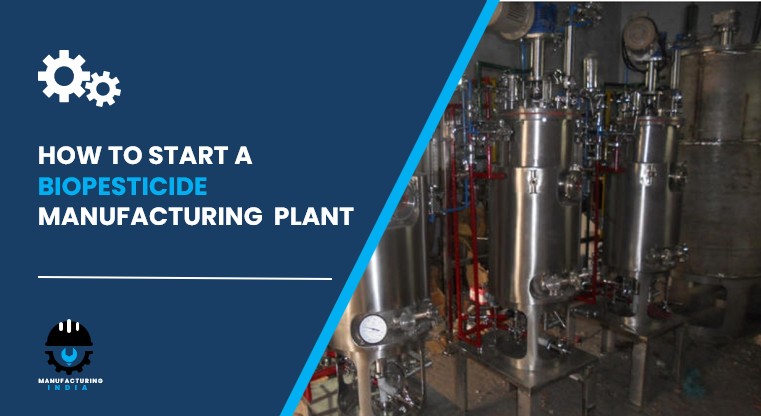
Civil works and construction costs cover the manufacturing plant hall, fermentation and processing infrastructure, raw material and finished goods storage areas, quality control laboratory, effluent management infrastructure, and the administrative block. Machinery and equipment costs represent the largest single portion of total capital expenditure for a biopesticide manufacturing plant. Key machinery and equipment required includes:
- Fermenters and bioreactors (for microbial culture development, growth, and multiplication)
- Sterilisers and autoclaves (for sterilisation of media, equipment, and processing vessels)
- Centrifuges and filtration units (for separation and clarification of fermentation broth)
- Extractors and homogenisers (for botanical extraction and cell disruption)
- Formulation tanks and blending systems (for mixing biomass with carriers, emulsifiers, and stabilisers)
- Dryers (spray dryers, fluidised bed dryers) for powder formulation preparation
- Bottling, sealing, and packaging systems
- Cold storage systems (for temperature-sensitive biological products)
- Quality control and testing equipment (potency testing instruments, microscopes, HPLC systems, bioassay facilities)
- Effluent treatment and wastewater management systems
- Material handling, conveying, and logistics equipment
Other capital costs include utility connections (power, water, steam, refrigeration), pre-operative expenses, product development and trial formulation costs, regulatory submission and product registration fees, and applicable import duties on specialised fermentation or biotechnology equipment not manufactured domestically.
Request a Sample Report for In-Depth Market Insights: https://www.imarcgroup.com/biopesticide-manufacturing-plant-project-report/requestsample
2. Operational Expenditure (OpEx)
The operating cost structure of a biopesticide manufacturing plant is heavily weighted towards raw materials and biological culture inputs. Raw material cost encompassing microbial cultures (Bacillus thuringiensis, Beauveria bassiana, Trichoderma species), nutrient media (molasses, yeast extract, peptone), carrier materials (talc, kaolin), emulsifiers, stabilisers, and solvents accounts for approximately 55–65% of total OpEx, reflecting the high specificity and quality requirements of biological active ingredients. Entering long-term supply agreements with certified microorganism culture banks and reliable carrier material suppliers is essential to mitigate supply disruption risk and ensure formulation consistency.
Utility cost, covering electricity (for fermenters, sterilisers, dryers, refrigeration, and processing systems), water (for fermentation and washing circuits), and steam, accounts for 10–15% of OpEx given the controlled-environment nature of biological manufacturing operations. Cold chain management and refrigeration are particularly important cost drivers for live microbial formulations requiring temperature-controlled storage. Additional operating costs include packaging materials (bottles, pouches, cans, labels), transportation and logistics, salaries and wages for skilled biotechnology and quality assurance personnel, quality testing and bioassay services, maintenance, depreciation, environmental compliance, and applicable regulatory and product registration fees. Operational expenditure is projected to increase substantially by year five of operations, driven by raw material cost inflation, utility escalation, and potential increases in logistics and regulatory compliance costs.
3. Plant Capacity
The proposed biopesticide manufacturing facility is designed with an annual production capacity ranging between 2,500 and 4,000 Tons, enabling meaningful economies of scale while preserving operational flexibility across product formulation types from microbial wettable powders and granules to emulsifiable concentrates, suspension concentrates, and botanical extracts. Plant capacity can be customised based on the investor’s specific capital availability, target market scale, and chosen product mix across applications such as insect pest control, fungal disease management, weed suppression, and nematode management. Profitability improves considerably at higher capacity utilisation levels, making early off-take agreements with agricultural distributors, contract farming organisations, organic produce exporters, and government agricultural programmes strategically important.
4. Profit Margins and Financial Projections
A biopesticide manufacturing plant demonstrates healthy profitability potential under normal operating conditions. Gross profit margins typically range between 35–45%, supported by stable and growing demand across organic farming, conventional integrated pest management, and residue-free export crop production; regulatory tailwinds from chemical pesticide restrictions; premium pricing for certified biological formulations; and value-added product differentiation through strain efficacy, formulation shelf life, and application-specific product development. Net profit margins range between 15–20%.
Financial projections incorporate NPV analysis, IRR calculations, payback period modelling, and sensitivity analysis across production capacity, raw material pricing, utility costs, and market demand scenarios. These projections are developed based on realistic assumptions related to capital investment, operating costs, capacity utilisation, and demand outlook, providing investors with a comprehensive view of long-term financial viability.
Why Set Up a Biopesticide Manufacturing Plant?
Rising Demand for Sustainable Agriculture: Farmers across the globe are rapidly adopting eco-friendly crop protection solutions to meet regulatory requirements, export residue standards, and consumer preferences for chemical-free produce. Biopesticides offer a scientifically validated, commercially scalable, and regulatory-compliant alternative to synthetic pesticides.
Regulatory Push Against Chemical Pesticides: Stricter bans, usage restrictions, and maximum residue limits (MRLs) on synthetic pesticides across the European Union, North America, and Asian markets are structurally redirecting agricultural procurement budgets toward biopesticide alternatives. This regulatory tailwind provides sustained demand growth for compliant biopesticide manufacturers.
Growth in Organic and Residue-Free Produce: Export markets for fresh fruits, vegetables, cereals, spices, and plantation crops mandate compliance with zero-residue or low-residue specifications. Biopesticides are the primary crop protection tool for organic certified farms and residue-free export programmes, creating consistent institutional procurement demand.
Lower Resistance Development: Biopesticides act through multiple modes of action and reduce the risk of pest resistance development compared to single-mode synthetic chemical formulations. This efficacy advantage strengthens long-term commercial uptake, and repeats purchase behaviour among progressive growers.
Scalable and High-Value Production: Biopesticide manufacturing supports scalable operations with premium pricing, repeat demand, and differentiated product positioning. Microbial strains with high field efficacy, extended shelf life, and certified quality credentials command meaningful price premiums in institutional and export markets.
Megatrend Alignment: Growth in greenhouse cultivation, precision farming, vertical agriculture, and controlled environment production creates structured demand for biopesticides compatible with closed-system agriculture. The global expansion of greenhouse farming with China accounting for approximately 60% of global greenhouse cultivation as of 2024 creates concentrated regional demand for biological crop protection.
Policy and Infrastructure Support: Government initiatives in sustainable agriculture, organic farming promotion, and export crop quality enhancement provide incentives for biopesticide manufacturers through capital subsidies, product registration support, and integrated pest management programme procurement. National programmes targeting pesticide residue reduction and organic area expansion generate structural demand.
Export Opportunities: Biopesticide manufacturers with internationally certified product registrations, established efficacy data packages, and competitive cost structures are well positioned to serve export markets across the European Union, North America, South-East Asia, the Middle East, and Africa. Growing demand for registered biopesticide products from certified organic producers and residue-free export programme operators creates large-volume commercial opportunities.
Active Industry Investment: The global biopesticide sector continues to attract significant venture capital, private equity, and corporate investment from multinational agrochemical companies actively acquiring, partnering with, and expanding biological crop protection platforms to address evolving sustainability mandates and premium market opportunities.
Manufacturing Process How Biopesticides are Produced
The biopesticide manufacturing sequence encompasses raw material reception, microbial strain selection and preparation, fermentation or botanical extraction, biomass separation, formulation, drying, blending, quality testing, and packaging as the core stages of production. Each stage involves specific unit operations, quality assurance checkpoints, and process control protocols aligned to product specifications and applicable agricultural and regulatory standards.
- Selection and Preparation of Microbial Strain: Certified, high-efficacy microbial strains (e.g., Bacillus thuringiensis, Beauveria bassiana, Trichoderma harzianum) or botanical raw materials are received, assessed for purity, viability, and potency, and prepared for inoculation. Strain banks and culture collections are maintained under controlled temperature and humidity to preserve biological activity.
- Fermentation for Microbial Growth and Multiplication: Selected strains are inoculated into sterilised nutrient media in seed fermenters, then transferred to production-scale fermenters or bioreactors under precisely controlled conditions of temperature, aeration, agitation, pH, and dissolved oxygen. Fermentation cycles are monitored continuously to optimise biomass yield, spore concentration, and metabolite production.
- Filtration and Separation of Biomass: Following fermentation completion, the broth is processed through centrifuges, filtration units, and separation equipment to recover the biomass, spores, or active metabolites from the fermentation liquor. Multiple separation stages are deployed for high-purity applications.
- Formulation with Suitable Carriers or Solvents: The separated biomass or extract is blended with appropriate carrier materials (talc, kaolin, diatomaceous earth, oil carriers), emulsifiers, stabilisers, preservatives, and adjuvants to produce the desired commercial formulation wettable powder, granule, emulsifiable concentrate, suspension concentrate, or oil dispersion.
- Drying and Blending for Uniform Consistency: Spray dryers or fluidised bed dryers reduce moisture content to specification levels, and the dried product is blended to achieve uniform biological activity, particle size distribution, and physical characteristics across production batches.
- Quality Testing for Potency and Safety: Bioassays, colony-forming unit (CFU) counts, HPLC analysis of active metabolites, contamination screening, pH testing, particle size distribution analysis, shelf-life stability assessment, and regulatory compliance testing are conducted on in-process and finished product samples.
- Packaging, Labelling, and Storage for Distribution: Finished biopesticide products are filled into bottles, pouches, cans, or bulk containers; labelled with regulatory-compliant product information; and stored under appropriate temperature conditions before dispatch to agricultural distributors, cooperatives, and institutional buyers.
Key Applications
Biopesticides manufactured at a dedicated production facility serve a broad range of end-use channels, each with specific efficacy, formulation, stability, and regulatory certification requirements.
Agriculture and Field Crops: Biopesticides are deployed to control insect pests and fungal diseases in cereal crops (wheat, rice, maize), pulses, oilseeds, and cash crops while preserving soil biological health and complying with maximum residue limits for domestic and export markets. Bacillus thuringiensis-based products provide highly targeted control of lepidopteran pests with zero impact on beneficial insects.
Horticulture and Plantation Crops: Used extensively in fruits, vegetables, spices, and plantation crops (tea, coffee, rubber, pepper) to ensure residue-free produce for premium export markets and compliance with increasingly stringent buyer specifications. Biopesticide programmes are integral to quality assurance systems for fresh produce export certification.
Organic Farming Systems: Certified organic biopesticide products comply with international organic certification standards (USDA NOP, EU Organic, NPOP) and are the primary crop protection tool for organic farmers seeking approved biological alternatives to prohibited synthetic inputs. The growth of organic area globally is creating a structurally expanding demand base for certified biopesticide products.
Greenhouse and Protected Cultivation: Biopesticides are particularly well suited to greenhouse and controlled-environment cultivation, where enclosed conditions create high pest pressure while simultaneously requiring non-disruptive, pollinator-safe, and residue-free crop protection solutions. The global concentration of greenhouse farming is a primary driver of structured biopesticide demand.
Integrated Pest Management Programmes: Government-supported and agronomist-designed IPM programmes across Asia-Pacific, Europe, North America, and Latin America mandate or incentivise biopesticide use as part of scientifically balanced pest control strategies that reduce overall pesticide load while maintaining crop yields.
Leading Biopesticide Manufacturers
The global biopesticide manufacturing industry is served by several multinational and large regional companies with extensive production capacities and diverse application portfolios across agricultural, horticultural, organic, and IPM markets. Key players active across institutional supply, export channels, and retail agrochemical networks include:
- BASF SE
- Bayer AG
- Certis USA LLC
- FMC Corporation
- Isagro
- Syngenta Group
- UPL
- Corteva Agriscience
- IPL Biologicals Limited
- Sumitomo Chemical
Timeline to Start the Plant
Investors planning a biopesticide manufacturing plant should anticipate the following phased development timeline, typically ranging from 12 to 24 months depending on regulatory approval complexity and site development requirements:
- Feasibility study and detailed project report preparation
- Land acquisition, site assessment, and environmental impact review
- Regulatory approvals, factory licence, environmental clearances, and utility connections
- Civil construction: manufacturing plant hall, fermentation infrastructure, storage areas, and utility systems
- Processing and fermentation machinery procurement, delivery, installation, and commissioning
- Raw material and biological culture supplier agreements and supply chain setup
- Product development, trial formulation runs, and efficacy and shelf life qualification testing
- Quality management system certification and regulatory product registration
- Agricultural distribution and institutional buyer relationships, commercial production ramp-up
Licences and Regulatory Requirements
Starting a biopesticide manufacturing unit requires several approvals, which vary by country and jurisdiction:
- Business registration (Proprietorship, LLP, or Private Limited Company)
- Factory Licence under applicable factories legislation
- Environmental Clearance and Consent to Operate from the relevant Pollution Control Board
- Product Registration under applicable Pesticides Act or equivalent legislation (e.g., Insecticides Act 1968 in India; FIFRA in the USA; EC Regulation 1107/2009 in the EU)
- Manufacture Licence for biological pesticide products
- GST / VAT Registration
- Fire Safety NOC
- Effluent Treatment Consent and Wastewater Discharge Authorisation
- Organic Certification for products intended for certified organic farming markets
- ISO 9001 Quality Management System certification (recommended for institutional and export procurement)
- Efficacy data package, label approval, and maximum residue limit (MRL) clearance for each registered product
- Import/export code (for international trade)
- MSME registration (for access to government subsidy and incentive schemes in India)
Key Challenges to Consider
Biological Active Ingredient Quality and Stability: Microbial-based biopesticide products are inherently more sensitive to storage temperature, humidity, and age than synthetic chemical alternatives. Maintaining biological activity and shelf life through appropriate formulation technology, packaging, and cold chain management is a critical technical and commercial challenge. Consistency of spore count, CFU viability, and field efficacy across production batches requires robust fermentation process control and quality assurance systems.
Regulatory Complexity and Product Registration: Biopesticide product registration requirements vary significantly across markets. Meeting efficacy data, toxicology, environmental fate, and residue testing requirements for registration in multiple jurisdictions involves substantial time and cost investment. Regulatory approval timelines particularly for novel microbial strains or botanical extracts with limited existing data packages can significantly extend the time to market.
Raw Material Supply and Strain Management: Reliable supply of high-quality microbial cultures, nutrient media components, and carrier materials is essential for consistent production quality. Managing certified strain banks, preventing contamination events, and sourcing carrier materials that meet formulation specifications without compromising biological activity require specialised microbiology expertise and quality management systems.
Farmer Adoption and Application Knowledge: Biopesticides require timely and appropriate application to achieve optimal field performance, and farmer awareness of correct application timing, dilution, and compatibility with other inputs varies significantly. Building agronomic extension support capacity, field demonstration networks, and distribution channel training programmes is an important commercial investment for market penetration.
Competition from Chemical Pesticides: Conventional synthetic pesticides continue to offer advantages in cost-per-application, speed of action, and ease of use for many growers. Biopesticide manufacturers must clearly communicate and demonstrate the agronomic performance, safety, and regulatory compliance advantages of biological alternatives through credible efficacy data, grower testimonials, and field trial evidence.
Cold Chain and Logistics Requirements: Live microbial biopesticide formulations require refrigerated storage and transport to maintain biological viability throughout the supply chain. Building distribution networks with appropriate cold chain infrastructure particularly in tropical and subtropical markets with high average temperatures involves additional capital and operational investment.
Frequently Asked Questions
1. How much does it cost to set up a biopesticide manufacturing plant?
Total setup cost depends on plant capacity, chosen manufacturing technology (microbial fermentation versus botanical extraction), level of automation, product formulation mix, geographic location, and regulatory registration requirements. Capital investment covers land, civil works, fermentation and processing machinery, utility infrastructure, quality testing equipment, and pre-operative costs. A detailed project report provides capacity-specific cost estimates.
2. Is biopesticide manufacturing profitable?
Yes. Gross profit margins typically range between 35–45% and net margins between 15–20%, supported by growing demand across organic farming, residue-free export crop production, and integrated pest management programmes; regulatory tailwinds from chemical pesticide restrictions; and premium pricing for certified biological formulations with high field efficacy.
3. What machinery is required for a biopesticide manufacturing plant?
Essential machinery and equipment includes fermenters and bioreactors, sterilisers and autoclaves, centrifuges and filtration units, extractors and homogenisers, formulation tanks and blending systems, spray dryers or fluidised bed dryers, bottling and sealing systems, cold storage systems, quality control laboratory instruments (potency testing, HPLC, bioassay equipment), and effluent treatment systems.
4. What licences and approvals are required to start a biopesticide manufacturing plant?
Required approvals include business registration, a Factory Licence, Environmental Clearance and Consent to Operate, product registration under applicable pesticide legislation, a Manufacture Licence for biological pesticide products, effluent treatment consent, fire safety NOC, GST/VAT registration, and ISO 9001 quality management certification for institutional procurement. Product-specific efficacy data packages and label approvals are required for each registered formulation.
5. What raw materials are needed for biopesticide manufacturing?
Primary raw materials include microbial cultures (Bacillus thuringiensis, Beauveria bassiana, Trichoderma species, or other certified strains), nutrient media (molasses, yeast extract, peptone), carrier materials (talc, kaolin, diatomaceous earth), emulsifiers, stabilisers, solvents, and preservatives for formulation. Botanical biopesticide manufacturing additionally requires plant-derived extracts from neem, pyrethrum, or other botanical sources. Raw materials collectively account for approximately 55–65% of total operating costs.
6. What are the occupational health and environmental compliance requirements?
Operators must obtain Environmental Clearance and Consent to Operate, install and maintain effluent treatment and wastewater recycling systems, implement biological waste disposal protocols for spent fermentation media and non-viable cultures, and ensure compliance with applicable occupational health standards for biological agent handling. Regular environmental monitoring, worker health surveillance, and biosafety protocols are required for manufacturing units handling live microbial cultures.
7. What is the best location to set up a biopesticide manufacturing plant?
Ideal locations offer access to reliable high-voltage power supply and clean water for fermentation operations, proximity to agricultural raw material sources and key distribution markets, compliance with industrial and biosafety zoning regulations, availability of skilled biotechnology, microbiology, and quality assurance personnel, robust cold chain logistics infrastructure, and access to government incentive programmes for agrochemical or biotechnology manufacturing.
8. How long does it take to start a biopesticide manufacturing plant?
The timeline typically ranges from 12 to 24 months, depending on site development, product registration and regulatory approval timelines, fermentation and processing machinery procurement lead times, civil works completion, efficacy and shelf life qualification testing, and distribution channel establishment.
9. What government incentives are available for biopesticide manufacturers?
In India, the National Mission for Sustainable Agriculture, state-level agribusiness development incentive schemes, MSME capital subsidy programmes, and agricultural biotechnology promotion initiatives provide meaningful support to new biopesticide manufacturers. Many state governments offer additional subsidies under industrial development zone policies. Other jurisdictions offer equivalent incentives through organic farming promotion funds, sustainable agriculture development programmes, and agri-biotechnology investment platforms.
10. What is the break-even period for a biopesticide manufacturing plant?
Break-even typically ranges from 3 to 6 years, depending on scale, automation level, product registration costs, regulatory compliance investment, raw material pricing, and agricultural market off-take contract flow. Securing early supply agreements with organic certification bodies, agricultural cooperatives, government IPM programmes, and export produce processors can significantly accelerate the break-even timeline.
Key Takeaways for Investors
The biopesticide manufacturing plant opportunity is underpinned by sustained demand growth across certified organic farming, residue-free export crop production, conventional integrated pest management, greenhouse cultivation, and precision agriculture all aligned with global sustainability mandates, regulatory restrictions on synthetic pesticides, consumer demand for chemical-free produce, and the long-term structural expansion of organic agriculture and sustainable food systems. With stable gross profit margins of 35–45%, strong regulatory and policy tailwinds in key agricultural geographies, a rich landscape of product formulation and target-crop application differentiation opportunities, and the fundamental role of biopesticides in the global transition toward sustainable and residue-free food production creating consistent institutional demand, biopesticide manufacturing offers both near-term profitability and long-term demand sustainability for well-positioned manufacturers.
About the Author