Setting up a wood vinegar manufacturing plant in India presents a compelling investment case as the country rapidly emerges as one of the most cost-competitive and high-demand destinations for bio-based agricultural inputs and organic chemical manufacturing. Driven by surging demand from the organic farming, pest control, animal husbandry, and biostimulant industries, wood vinegar has become an increasingly valued natural product in India’s growing agri-input and sustainable agriculture economy.
“With over 1.4 billion consumers, a rapidly expanding organic farming sector, Make in India policy support, and a booming demand for bio-based agricultural inputs, India offers one of the most financially attractive environments for wood vinegar manufacturing — with gross margins of 30–45% and a break-even window of 2–4 years.”
What is Wood Vinegar?
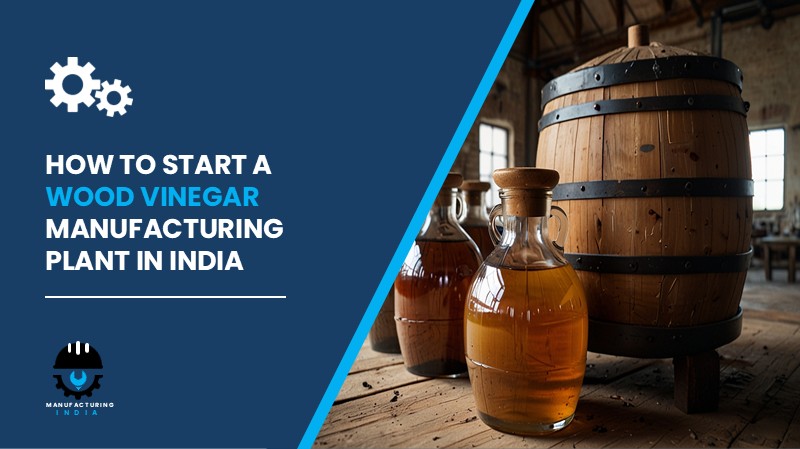
Wood vinegar, also known as pyroligneous acid or pyroligneous liquid, is a dark, smoky liquid obtained as a by-product of the pyrolysis or carbonization of wood biomass, bamboo, rice husks, or other lignocellulosic materials. It is a complex mixture containing over 200 organic compounds, primarily acetic acid, methanol, acetone, phenols, furans, and other organic acids. Wood vinegar is produced during charcoal or biochar manufacturing when biomass is heated in the absence or limited presence of oxygen.
Wood vinegar is widely recognized in organic and sustainable agriculture for its multi-functional properties — as a soil conditioner, plant growth promoter, pesticide and insecticide, fungicide, and animal feed additive. It also finds growing applications in food smoking and preservation, deodorization, wood preservation, and wastewater treatment. As India aggressively pursues organic farming and sustainable agricultural practices, domestic demand for high-quality wood vinegar continues to accelerate.
Cost of Setting Up a Wood Vinegar Manufacturing Plant in India
The wood vinegar manufacturing plant cost in India depends on several parameters including production capacity, biomass feedstock type, pyrolysis technology used, plant location, level of automation, and product quality (crude vs. refined grade). Here is a structured breakdown of all major cost components:
1. Capital Expenditure (CapEx)
The total capital investment in a wood vinegar manufacturing plant typically covers the following:
Land and Site Development
This includes land acquisition, boundary development, land registration charges, and basic site preparation. Cost varies significantly depending on whether the land is in an industrial estate, agricultural zone, or a privately purchased plot. Proximity to biomass feedstock sources such as forests, sawmills, rice mills, or bamboo plantations is a key site selection criterion to minimize raw material logistics costs.
Civil Works and Construction
Building costs cover the main pyrolysis shed, biomass storage yard, liquid collection and storage area, distillation and refining unit, quality control laboratory, administrative block, and worker facilities. Structures must be designed to handle fire safety requirements associated with pyrolysis operations and organic solvent storage.
Machinery and Equipment
This is the single largest component of CapEx. Key machinery required for a wood vinegar plant includes:
- Pyrolysis Kilns or Retort Systems (batch or continuous type)
- Biomass Drying and Pre-treatment Equipment
- Condensation and Collection Systems (for wood vinegar recovery from pyrolysis gases)
- Distillation and Fractionation Columns (for refined-grade production)
- Storage Tanks (acid-resistant, food-grade for refined applications)
- Filtration and Clarification Units
- pH Testing and Quality Analysis Equipment
- Packaging and Filling Machines (drums, jerry cans, bottles)
- Biochar Collection and Packaging Systems (co-product)
Machinery costs represent the largest share of overall capital expenditure, reflecting the engineering requirements of high-temperature pyrolysis systems and corrosion-resistant liquid handling infrastructure involved in wood vinegar production.
Other Capital Costs
These include pre-operative expenses, commissioning charges, utilities installation (electricity, water), fire safety systems, biomass handling infrastructure (conveyors, loaders), and any environmental compliance setup required under state pollution control norms.
Request a Sample Report for In-Depth Market Insights: https://www.imarcgroup.com/wood-vinegar-manufacturing-plant-project-report/requestsample
2. Operational Expenditure (OpEx)
Once the plant is commissioned, the ongoing cost structure is dominated by a few key components:
Raw Material Cost (Biomass Feedstock): 40–55% of Total OpEx
Wood chips, bamboo, rice husks, coconut shells, or agricultural residues are the primary raw materials and represent the largest operating expense. Feedstock cost varies significantly by type and region — agricultural residues such as rice husks and coconut shells are often available at very low cost near processing clusters, while hardwood chips command higher prices. Additional inputs include water for cooling systems and any chemical reagents used in refining.
Utility Cost: 10–15% of Total OpEx
Utilities include electricity (consumed by blowers, condensers, distillation systems, and packaging equipment), process water (used in condensation and cooling), and fuel (if external heating is required for the pyrolysis kiln during startup).
Other Operating Costs
The remaining budget covers transportation of raw materials and finished goods, secondary packaging (drums, IBC containers, retail bottles), salaries and wages, maintenance, depreciation, environmental compliance, taxes, and miscellaneous overhead.
3. Plant Capacity
The proposed manufacturing facility is designed with an annual production capacity ranging between 500 to 5,000 kilolitres of wood vinegar. This range allows the plant to achieve economies of scale while maintaining flexibility to serve multiple end-use segments including organic farming inputs, pest control formulations, and food-grade smoking applications. Smaller pilot setups with simple batch kilns may start at lower capacity, but profitability significantly improves with higher throughput and refined-grade product differentiation.
4. Profit Margins and Financial Projections
- Gross Profit Margin: 30–45%
- Net Profit Margin: 15–25%
- Break-Even Period: 2 to 4 years, depending on production scale, product grade (crude vs. refined vs. food-grade), market demand, feedstock cost management, and sales efficiency.
Financial projections must account for capital investment, operating costs, capacity utilization rates, pricing trends across product grades, and demand outlook. A thorough analysis should also include sensitivity analysis, Net Present Value (NPV), Internal Rate of Return (IRR), and Payback Period.
Why Set Up a Wood Vinegar Plant in India?
India presents a uniquely favorable environment for establishing a wood vinegar manufacturing plant:
Surging Organic Farming Demand
India’s organic farming area and the number of certified organic farmers have grown substantially over the past decade. Government programs such as Paramparagat Krishi Vikas Yojana (PKVY) and the Natural Farming Mission are driving large-scale adoption of bio-based inputs. Wood vinegar, as a versatile and low-cost organic input, is increasingly preferred by organic and natural farmers across multiple states.
Policy and Regulatory Tailwinds
The Government of India’s emphasis on reducing chemical pesticide use, promoting natural farming, and developing bio-input supply chains under various central and state schemes is creating a policy-friendly environment for wood vinegar manufacturers. Several state governments are actively promoting biochar and pyroligneous acid production as part of their agricultural sustainability agendas.
Abundant Biomass Feedstock Availability
India generates over 500 million tonnes of agricultural and forestry biomass residues annually, providing an abundant, low-cost, and geographically distributed feedstock base for wood vinegar production. Key feedstocks such as rice husks, coconut shells, sugarcane bagasse, and bamboo are widely available at minimal cost across different regions.
Cost-Competitive Manufacturing
India offers competitive land costs, a large pool of affordable labor for biomass handling and plant operations, and low-cost access to diverse agricultural biomass residues, making it one of the most cost-effective locations for wood vinegar production in Asia.
Export Opportunities
India-based manufacturers can tap into growing export demand from Japan, South Korea, Southeast Asia, and Europe, where wood vinegar is widely used in organic agriculture, horticulture, and livestock management. Japan, in particular, has a long-established tradition of wood vinegar use and imports significant quantities.
Local Supply Chain Preference
Organic input distributors, bio-pesticide formulators, and natural farming promotion agencies increasingly prefer locally sourced, traceable wood vinegar over imported alternatives — a direct opportunity for domestic manufacturers with consistent quality.
Manufacturing Process Overview
The wood vinegar manufacturing process primarily uses two technology routes:
- Slow Pyrolysis / Traditional Carbonization — wood or biomass is heated in a closed kiln at 300–500°C with limited oxygen, generating wood vinegar-rich smoke that is condensed and collected
- Continuous Retort Pyrolysis — industrial continuous-feed retort systems provide higher throughput, more consistent product quality, and better wood vinegar yield recovery
The complete process flow involves biomass sourcing and drying, loading into pyrolysis kiln or retort, heating and carbonization, collection of pyrolysis gases and smoke, condensation through water-cooled condensers, separation of wood vinegar from tar fractions, optional distillation and refining for high-purity grades, quality testing, and final packaging for dispatch. Biochar or activated charcoal is recovered as a valuable co-product.
Key Applications of Wood Vinegar
Wood vinegar manufactured in India serves a wide variety of end-use industries:
- Agriculture and Organic Farming: Soil conditioner, plant growth promoter, rooting stimulant, seed treatment, and foliar spray to improve crop health and yields
- Pest and Disease Control: Natural insect repellent, fungicide, and bactericide for organic pest management in crops, orchards, and plantations
- Animal Husbandry: Feed additive and deodorizer in poultry, swine, and cattle farming to improve gut health and reduce ammonia emissions
- Food Smoking and Preservation: Liquid smoke flavoring agent for fish, meat, and food processing applications
- Wood Preservation: Natural preservative treatment to protect timber and bamboo from fungi and insects
- Wastewater Treatment: Coagulant and deodorizing agent in industrial and municipal effluent treatment applications
Global Market Outlook
The global wood vinegar market was valued at approximately USD 1.2 billion in 2025 and is projected to reach USD 2.5–3.0 billion by 2034, growing at a CAGR of 8–10% from 2026 to 2034. This strong growth is driven by the global shift toward organic and sustainable agriculture, increasing regulatory restrictions on synthetic pesticides, rising demand for bio-based inputs, and the expanding biochar industry that generates wood vinegar as a co-product.
Leading global players in this industry include:
- Taiko Group (Japan)
- Nettenergy B.V. (Netherlands)
- Sugino Machine Limited (Japan)
- Pacific BioEnergy Corporation (Canada)
- Verora GmbH (Germany)
- ACM Agro Industry (Indonesia)
Timeline to Start a Wood Vinegar Plant
Setting up a wood vinegar manufacturing plant from ideation to commissioning typically requires 12 to 18 months. This covers:
- Feasibility study and project report preparation
- Land acquisition and site development
- Regulatory approvals and environmental clearances
- Factory license and fire safety compliance
- Machinery procurement and installation (kiln or retort, condensation system)
- Trial production and product quality testing
- Commercial production launch and market development
Licenses and Regulatory Requirements
Starting a wood vinegar manufacturing unit in India requires several approvals, including:
- Business registration (Proprietorship, LLP, or Private Limited Company)
- Factory License under the Factories Act
- Environmental Clearance from the State Pollution Control Board (SPCB)
- Consent to Establish (CTE) and Consent to Operate (CTO) under Air and Water Acts
- GST Registration
- Fire Safety NOC (essential for pyrolysis operations)
- BIS or FSSAI Certification (for food-grade wood vinegar used as liquid smoke)
- Fertilizer License under the Fertilizer Control Order (for agricultural input grade products)
- Central Insecticides Board (CIB) Registration (if positioned as a biopesticide)
Key Challenges to Consider
Before investing, entrepreneurs should be aware of the common challenges in this business:
- Feedstock Supply Consistency: Ensuring year-round availability of uniform-quality biomass feedstock is critical to maintaining consistent product quality and plant utilization.
- Product Standardization: Wood vinegar composition varies with feedstock type and pyrolysis conditions, making standardization for premium markets (food-grade, export-grade) technically demanding.
- Market Development: Awareness of wood vinegar benefits among Indian farmers is still growing, requiring investment in agronomic extension, demonstrations, and farmer education.
- Fire Safety Compliance: Pyrolysis operations and flammable liquid storage require stringent fire safety infrastructure and ongoing regulatory compliance.
- Quality Competition: Premium international markets (Japan, Europe) require highly refined, traceable wood vinegar with consistent purity specifications.
- Regulatory Clarity: The regulatory classification of wood vinegar as a fertilizer, biopesticide, or soil amendment varies by state and application, requiring careful product positioning and registration strategy.
Frequently Asked Questions
The following questions are answered in the report:
- How much does it cost to set up a wood vinegar manufacturing plant in India?
- Is wood vinegar manufacturing profitable in India in 2026?
- What machinery is required for a wood vinegar plant in India?
- What licences and approvals are required to start a wood vinegar plant in India?
- How long does it take to commission a wood vinegar manufacturing plant in India?
- What is the best state or location to set up a wood vinegar plant in India?
- What government incentives are available for wood vinegar or biochar manufacturers in India?
- What is the break-even period for a wood vinegar plant in India?
- What is the difference between crude and refined grade wood vinegar?
- What biomass feedstocks are best suited for wood vinegar production in India?
Key Takeaways for Investors
The wood vinegar manufacturing industry in India represents a strong and scalable investment opportunity backed by the country’s growing organic farming movement, abundant biomass resources, and supportive government policy toward bio-based agricultural inputs. With gross margins of 30–45% and a break-even window of 2–4 years, a well-planned wood vinegar manufacturing plant cost in India remains highly competitive and financially attractive — particularly for entrepreneurs who can establish consistent product quality, develop strong distribution channels to organic farming clusters, and leverage the valuable biochar co-product to further enhance overall plant profitability.
About the Author