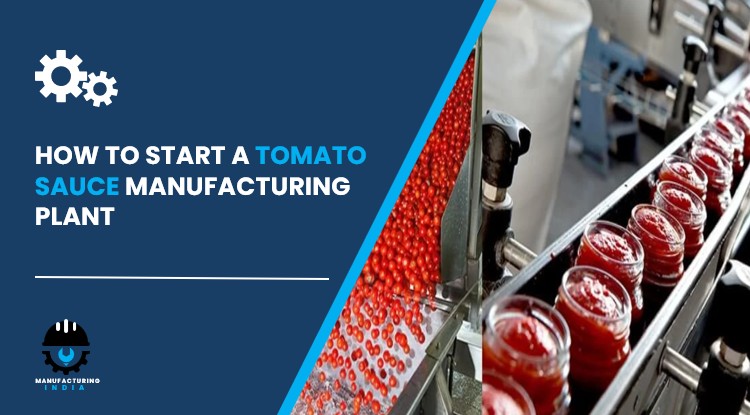
Setting up a tomato sauce manufacturing plant in India presents a compelling investment opportunity, driven by rapid urbanisation, sustained growth in processed food consumption, the expanding footprint of quick service restaurants, and rising consumer demand for convenient, shelf stable, and consistent quality food products. As one of the most strategically important segments of the global food processing industry, tomato sauce manufacturing combines factory-controlled washing, pulping, concentration, formulation, and thermal processing operations to serve a broad range of food and beverage, foodservice, and retail end use markets.
The global tomato sauce market is propelled by changing dietary preferences, foodservice expansion, urbanisation, and the food industry’s continued shift toward convenient, ready to use condiments and ingredients. The global tomato sauce market size was valued at USD 23.15 Billion in 2025. According to IMARC Group estimates, the market is expected to reach USD 32.38 Billion by 2034, exhibiting a CAGR of 3.8% from 2026 to 2034.
Expanding consumer awareness of branded packaged foods, growing demand for ready to cook and ready to eat products, and the increasing use of tomato sauce as a base ingredient in pasta sauces, gravies, pizzas, snacks, and ready meals continue to elevate demand for processed tomato sauce products, while the shift from home prepared tomato preparations to value added, consistently formulated, and packaged formats integrates tomato sauce manufacturing as a core operation in modern food supply chains.
Tomato sauce manufacturing sits at the intersection of agriculture, food processing, and consumer packaged goods, supported by a structurally growing global processed food industry. With gross profit margins typically ranging between 25–35% and a well-defined break even trajectory, a dedicated tomato sauce manufacturing plant represents both a financially sound and strategically well timed investment for entrepreneurs, food processors, and institutional investors targeting the evolving global condiment, sauce, and processed food markets.
What is Tomato Sauce?
Tomato sauce is a processed food product prepared primarily from ripe tomatoes, combined with water, salt, sugar, vinegar, spices, and permitted food additives to enhance flavour, texture, viscosity, and shelf life. The product achieves its smooth consistency through a multistage manufacturing process that includes washing, sorting, crushing, pulping, concentration, formulation, and thermal processing. Tomato sauce is widely used as a condiment and cooking ingredient in households, restaurants, fast food outlets, and food processing industries, serving as a base for pasta sauces, gravies, pizzas, snacks, ready to eat meals, and a wide range of culinary applications. Its long shelf life, consistent taste profile, uniform viscosity, and convenience compared to fresh tomato preparations make it popular across both traditional and modern food systems.
Standard processed product types include classic tomato sauce, spicy formulations, low sugar and reduced sodium grades, organic and preservative free variants, premium gourmet and chef grade formats, and bulk industrial grade tomato sauce for downstream food manufacturing applications.
The tomato sauce manufacturing sequence broadly involves raw material reception and quality inspection, washing and sorting, crushing and pulping, juice extraction and concentration, formulation and seasoning, pasteurisation or sterilisation, filling, sealing, and labelling. End use segments served include food and beverage manufacturers, quick service restaurant chains, hotels and catering services, packaged food producers, and direct retail and household consumers.
Cost of Setting Up a Tomato Sauce Manufacturing Plant
The total cost of establishing a tomato sauce manufacturing plant depends on several variables including plant capacity, level of automation, chosen processing technology (washing and pulping configuration, evaporation and concentration capability, filling and sealing systems), geographic location, raw material sourcing strategy, and applicable regulatory compliance requirements. A thorough feasibility assessment covering all CapEx and OpEx components is essential before committing capital.
1. Capital Expenditure (CapEx)
Capital investment for a tomato sauce manufacturing plant covers several broad cost heads. Land and site development forms a substantial part of the overall investment, encompassing land registration charges, boundary development, drainage, site preparation, and related civil infrastructure expenses. Investors may consider locating the facility in proximity to tomato producing agricultural regions, food processing industrial zones, or urban distribution hubs with established cold chain and logistics infrastructure.
Civil works and construction costs cover the processing plant hall, raw material and finished goods warehousing, quality control laboratory, effluent treatment systems, and the administrative block. Machinery and equipment costs represent the largest single portion of total capital expenditure. Key machinery and equipment required includes:
- Washing and sorting systems (rotary washers, brush washers, flotation tanks, optical sorters, and conveyors for removal of soil, debris, and damaged fruit)
- Crushing and pulping machines (hammer crushers, hot break and cold break pulpers, rotary pulpers, and refiners for tomato disintegration and seed/skin separation)
- Juice extraction and finishing equipment (decanters, centrifugal extractors, and finishers for clean tomato juice and pulp recovery)
- Evaporation and concentration units (multi effect vacuum evaporators, falling film evaporators, and forced circulation systems for moisture reduction and Brix concentration)
- Mixing, formulation, and homogenisation tanks (jacketed stainless steel mixing vessels, high shear homogenisers, and inline blending systems for consistent formulation of sauce, sugar, vinegar, salt, and spice profiles)
- Pasteurisation and sterilisation systems (tubular pasteurisers, plate heat exchangers, and aseptic sterilisers for thermal processing and shelf life stabilisation)
- Filling, sealing, and capping machines (volumetric and piston fillers for bottles, pouches, and sachets; rotary cappers; induction sealers; and aseptic filling lines for retail and bulk pack formats)
- Labelling, coding, and packaging systems (self adhesive labellers, inkjet date coders, shrink wrappers, and case packers for retail ready and institutional packaging)
- Quality control and testing equipment (Brix refractometers, viscosity meters, pH meters, colour analysers, microbial testing kits, and moisture analysers)
- CIP (clean in place) and utility systems (CIP skids, steam boilers, chillers, compressed air, and water treatment infrastructure for hygienic processing operations)
- Material handling and conveying equipment (stainless steel conveyors, pumps, intermediate storage tanks, and forklift logistics infrastructure)
Other capital costs include utility connections (power, water, steam, refrigeration), preoperative expenses, product development and trial production costs, and applicable import duties on specialised processing or packaging equipment not manufactured domestically.
Request a Sample Report for In-Depth Market Insights: https://www.imarcgroup.com/tomato-sauce-manufacturing-plant-project-report/requestsample
2. Operational Expenditure (OpEx)
The operating cost structure of a tomato sauce manufacturing plant is heavily weighted towards raw materials, particularly tomato paste and concentrate. Raw material costs (encompassing tomato paste, fresh tomatoes, sugar, vinegar, salt, spices, food grade preservatives, and packaging consumables) account for approximately 70–75% of total OpEx, reflecting the high volume of agricultural commodity inputs required per tonne of finished sauce. Entering long term supply agreements with reliable tomato growers, paste producers, and ingredient suppliers is essential to mitigate input price volatility and maintain processing continuity.
Utility costs, covering electricity, steam, water, and refrigeration for washing, evaporation, mixing, pasteurisation, filling, and sanitation operations, account for 5–10% of OpEx given the moderate to high energy intensity of thermal processing. Additional operating costs include packaging materials (glass bottles, PET containers, pouches, sachets, caps, labels, and corrugated cases), transportation and distribution logistics, salaries and wages for process operators, quality assurance technicians, and sales personnel, maintenance of processing and packaging machinery, effluent treatment system servicing, quality testing consumables, and applicable regulatory and product certification costs. Operational expenditure is projected to increase substantially by year five of operations, driven by raw material cost inflation, utility escalation, and potential increases in logistics and distribution costs.
3. Plant Capacity
The proposed tomato sauce manufacturing facility is designed with an annual production capacity of 10,000 MT, enabling meaningful economies of scale while preserving operational flexibility across the full product range, from classic and spicy tomato sauce variants to low sugar, organic, and premium chef grade formats. Plant capacity can be customised based on the investor’s specific capital availability, target market scale, and chosen product mix across end use segments such as food processing, foodservice, retail, and quick service restaurants. Profitability improves considerably at higher capacity utilisation levels, making early supply agreements with QSR chains, packaged food manufacturers, and organised retail networks strategically important.
4. Profit Margins and Financial Projections
A tomato sauce manufacturing plant demonstrates healthy profitability potential under normal operating conditions. Gross profit margins typically range between 25–35%, supported by stable and growing demand across food and beverage manufacturing, quick service restaurants, hotels and catering services, foodservice operators, and organised retail markets; the structural shift from home prepared tomato sauces to convenient packaged formats; growing consumer preference for branded ready to use condiments; and differentiation opportunities through premium grades, specialty formulations, and branded consumer packaging. Net profit margins range between 10–15%.
Financial projections incorporate NPV analysis, IRR calculations, payback period modelling, and sensitivity analysis across processing capacity, raw material pricing, utility costs, and market demand scenarios. These projections are developed based on realistic assumptions related to capital investment, operating costs, capacity utilisation, and demand outlook, providing investors with a comprehensive view of long term financial viability.
Why Set Up a Tomato Sauce Manufacturing Plant?
- Convenience and Urbanisation Megatrend: Growing urban populations with time constrained lifestyles are driving demand for ready to use condiments, sauces, and meal preparation ingredients. Tomato sauce, with its long shelf life, consistent taste, and ease of use, directly serves this fast growing consumer segment, which is among the highest growth categories in global food retail and food service.
- Wide Application Across Cuisines: Tomato sauce is a universal culinary ingredient used across regional, ethnic, and international cuisines, from Italian pastas and pizzas to Indian gravies, Mexican salsas, Chinese stir fries, and global QSR menus, supporting diversified demand across multiple product formats and market segments.
- QSR and Foodservice Expansion: The rapid global expansion of quick service restaurant chains, cloud kitchens, and organised foodservice operators is fuelling structural growth in tomato sauce consumption. For instance, McDonald’s plans to open approximately 8,000 new restaurants globally by the end of 2027, which is expected to significantly boost demand for tomato based ingredients across burgers, wraps, and value meals.
- Stable Raw Material Availability: Tomatoes are cultivated across diverse climatic regions throughout the year, supported by mature paste processing supply chains in countries such as China, Italy, the United States, and India, ensuring continuous and cost stable feedstock availability for sauce manufacturers.
- Scalable and Capital Efficient Production: Tomato sauce manufacturing enables phased capacity expansion with moderate incremental investment, with core equipment centred on washing, pulping, evaporation, formulation, and filling systems. Production is scalable, with efficient throughput and well understood unit operations.
- Product Differentiation Potential: Manufacturers can develop region specific flavours, organic and clean label variants, low sugar and reduced sodium formulations, premium chef grade products, and branded retail and private label assortments to serve diverse consumer segments and command premium pricing.
- Retail and Private Label Opportunity: The expansion of organised grocery retail, e commerce food platforms, and private label brands creates significant demand for contract manufacturing and white label tomato sauce supply, providing reliable volume off take channels for new processors.
- Backward Integration with Agriculture: Investors can integrate backward into direct tomato procurement through farmer producer organisations (FPOs), cooperatives, or contract farming arrangements, improving raw material cost control, traceability, and supply chain reliability while supporting rural agricultural development.
- Policy and Institutional Support: Government programmes targeting food processing, agricultural value addition, and rural agro industry development create incentive frameworks for tomato sauce processing operations in major producing countries including India, China, Italy, the United States, and Turkey.
- Export Opportunities: Tomato sauce processors with competitive cost structures, certified product quality, and established logistics capabilities are well positioned to serve export markets across the Middle East, Africa, Southeast Asia, and Europe, where branded and bulk tomato sauce products are imported in growing volumes.
- Active Industry Investment: The global processed food and condiment sector continues to attract significant investment in tomato based ingredients, premium sauces, and clean label platforms, supporting favourable market conditions for new tomato sauce manufacturing operations.
Manufacturing Process: How Tomato Sauce is Manufactured
The tomato sauce manufacturing sequence encompasses raw material reception and quality inspection, washing and sorting, crushing and pulping, juice extraction and concentration, formulation and seasoning, pasteurisation or sterilisation, filling and sealing, and labelling and packaging as the core stages of production. Each stage involves specific unit operations, quality assurance checkpoints, and process control protocols aligned to product specifications and applicable food safety standards.
- Raw Material Reception and Quality Inspection: Fresh tomatoes or tomato paste, along with sugar, vinegar, salt, and spices, are received from suppliers, inspected for quality, Brix value, acidity, microbial load, and specification compliance, and stored under appropriate temperature and hygiene conditions to prevent contamination and maintain ingredient integrity.
- Washing and Sorting: Fresh tomatoes pass through rotary washers, brush washers, and flotation tanks to remove soil, leaves, and surface contaminants, followed by manual or optical sorting to separate damaged, under ripe, or defective fruit before further processing. Effective washing and sorting ensure consistent feed quality to downstream pulping equipment.
- Crushing and Pulping: Cleaned tomatoes are crushed and processed through hot break or cold break pulpers and refiners to disintegrate the fruit, separate skins and seeds, and produce a uniform tomato pulp. Hot break processing yields a thicker, more viscous pulp ideal for sauce, while cold break preserves fresh flavour for premium grades.
- Juice Extraction and Concentration: Tomato pulp is processed through decanters and finishers for further refinement, after which the pulp is concentrated in multi effect vacuum evaporators or falling film evaporators to reduce moisture content and reach the target Brix concentration suited to the finished sauce specification.
- Formulation and Seasoning: Concentrated tomato pulp is transferred to jacketed mixing tanks and combined with sugar, vinegar, salt, spices, thickeners, and permitted preservatives in precise proportions, followed by high shear homogenisation to ensure uniform texture, viscosity, and flavour across the production batch.
- Pasteurisation and Sterilisation: Formulated tomato sauce is heat treated in tubular pasteurisers, plate heat exchangers, or aseptic sterilisers to eliminate microbial contamination, inactivate enzymes, and stabilise the product for extended shelf life across distribution channels.
- Filling and Sealing: Pasteurised sauce is filled hot or aseptically into glass bottles, PET containers, pouches, sachets, or bulk drums using volumetric or piston fillers, followed by sealing, capping, and induction sealing operations to ensure product integrity, hygienic protection, and tamper evidence.
- Labelling and Packaging: Filled containers are labelled with branded artwork, batch and date codes, nutritional information, and barcoding, followed by shrink wrapping, case packing, and palletising for distribution to retail, foodservice, and institutional channels.
- Quality Control Testing: In process and finished product samples undergo Brix measurement, viscosity testing, pH and acidity analysis, colour evaluation, microbial testing, and shelf life stability evaluation. Each production batch is released only upon passing all specified quality parameters.
Key Applications
Tomato sauce manufactured at a dedicated processing facility serves a broad range of end use channels, each with specific product quality, format, and performance requirements.
- Food Processing Industry: Tomato sauce serves as a primary ingredient in ready meals, pasta sauces, frozen foods, canned soups, snack foods, and packaged condiments, where it improves taste, colour, and texture while enabling consistent product quality at industrial scale.
- Foodservice and HoReCa Sector: Restaurants, hotels, catering services, cloud kitchens, and institutional kitchens use bulk tomato sauce to create consistent flavour profiles and prepare dishes more efficiently, supporting standardised menu execution across multiple outlets and operating regions.
- Quick Service Restaurants: QSR chains use tomato sauce as a key component in burgers, pizzas, sandwiches, wraps, and fried snacks to deliver consistent taste and brand experience across all franchise locations globally.
- Retail and Household Consumption: Households use packaged tomato sauce as a primary condiment because it offers convenience, consistent quality, extended shelf life, and versatility across daily cooking applications, supported by branded consumer packs distributed through organised grocery retail, e commerce food platforms, and traditional wholesale channels.
- Industrial and Private Label Supply: Tomato sauce manufacturers also serve packaged food brands, private label retailers, and contract manufacturing customers requiring bulk format, custom formulated sauces for downstream packaging and product development.
Leading Tomato Sauce Manufacturers
The global tomato sauce manufacturing industry is served by several multinational and large regional companies with extensive production capacities and diverse product portfolios across foodservice, retail, and industrial markets. Key players active across institutional supply, export channels, and retail food networks include:
- Bolton Group S.r.l.
- Campbell Soup Company
- Conagra Brands Inc.
- Del Monte Food Inc.
- General Mills Inc.
Recent Industry Developments
- January 2026: Violet Foods LLC acquired the Muir Glen organic tomato products brand from General Mills Inc., expanding its presence in the tomato sauce and canned tomatoes segments. The acquisition integrates Muir Glen’s nationally distributed organic lines with Sclafani, Don Pepino, and Fattoria Fresca, strengthening the company’s offerings for retail partners across the US tomato sauce market.
- December 2025: Campbell Soup Company strengthened its long term partnership with Rao’s pasta sauces through definitive agreements securing a 49% stake in La Regina di San Marzano di Antonio Romano S.p.A. and La Regina Atlantica, LLC. The investment targets tomato sauce innovation, product development, and accelerated growth for the Rao’s tomato based portfolio.
Timeline to Start the Plant
Investors planning a tomato sauce manufacturing plant should anticipate the following phased development timeline, typically ranging from 12 to 18 months depending on site development requirements and regulatory approval timelines:
- Feasibility study and detailed project report preparation
- Land acquisition, site assessment, and environmental impact review
- Regulatory approvals, factory licence, environmental clearances, and utility connections
- Civil construction: processing plant hall, raw material and finished goods warehousing, utility systems, and effluent treatment infrastructure
- Processing machinery procurement, delivery, installation, and commissioning
- Raw material supplier agreements and agricultural procurement network setup
- Product development, trial production runs, and quality specification qualification testing
- Food safety management system certification and product technical documentation
- Distribution channel and institutional buyer relationships, commercial production ramp up
Licences and Regulatory Requirements
Starting a tomato sauce manufacturing unit requires several approvals, which vary by country and jurisdiction:
- Business registration (Proprietorship, LLP, or Private Limited Company)
- Factory Licence under applicable factories legislation
- FSSAI (Food Safety and Standards Authority of India) food business operator licence and product registration (India)
- Environmental Clearance and Consent to Operate from the relevant Pollution Control Board
- Effluent Treatment Plant (ETP) approval and wastewater discharge authorisation
- GST / VAT Registration
- Fire Safety NOC
- Air emission compliance and water consumption permits
- BIS certification for tomato sauce / ketchup (IS 3882) where applicable
- ISO 9001 Quality Management System certification (recommended for institutional and export procurement)
- ISO 22000 / HACCP / FSSC 22000 Food Safety Management System certification (required for food manufacturing supply)
- USFDA registration (for US export markets), EU food law compliance, and applicable Halal, Kosher, and organic certifications
- Import/export code (for international trade in tomato sauce and ingredients)
- MSME registration (for access to government subsidy and incentive schemes in India)
Key Challenges to Consider
- Tomato Price Volatility and Seasonal Supply: Fresh tomato and tomato paste prices are subject to seasonal harvest cycles, weather variability, and global commodity market fluctuations. Managing raw material cost volatility through long term procurement agreements, paste storage strategy, and formulation flexibility is a critical commercial and operational priority.
- Quality Consistency Across Tomato Sources: Achieving uniform Brix, colour, viscosity, and flavour profiles across different tomato varieties, paste suppliers, and seasonal harvests requires robust process control, adaptive evaporation and formulation calibration, and rigorous incoming quality inspection protocols.
- Effluent Management and Environmental Compliance: Tomato processing generates significant wastewater and organic effluent that requires effective treatment to comply with environmental regulations. Implementing efficient effluent treatment plants, water recycling systems, and emission controls is essential for regulatory compliance and sustainable operations.
- Shelf Life and Microbial Safety: Maintaining product quality, taste consistency, and microbial safety across distribution channels requires rigorous thermal processing, hygienic packaging, and shelf life validation. Any deviation can lead to spoilage, customer complaints, and brand reputation damage.
- Competition from Established Brands and Private Labels: Established tomato sauce brands and large food companies with strong distribution networks, marketing budgets, and competitive cost structures present significant competitive barriers for new entrants. Differentiated products, strong quality assurance, reliable supply, and targeted market positioning are essential for gaining market share.
- Packaging Material Cost and Sustainability Pressure: Glass, PET, and flexible packaging input costs are subject to volatility, while consumer demand for recyclable, biodegradable, and reduced plastic packaging is rising. Investing in sustainable packaging strategy and supplier flexibility is increasingly important for new manufacturers.
- Distribution and Cold Chain Logistics: Reaching diverse retail, foodservice, and institutional customers across regions requires robust distribution networks, appropriate storage conditions, and reliable cold chain logistics for premium and clean label variants requiring controlled handling.
Project Economics
Capital Expenditure (CapEx) and Operational Expenditure (OpEx) Analysis
Capital Investment (CapEx)
Machinery costs account for the largest portion of the total capital expenditure. The cost of land and site development, including charges for land registration, boundary development, and other related expenses, forms a substantial part of the overall investment. This allocation ensures a solid foundation for safe and efficient plant operations.
Operating Expenditure (OpEx)
In the first year of operations, the operating cost for the tomato sauce manufacturing plant is projected to be significant, covering raw materials, utilities, depreciation, taxes, packing, transportation, and repairs and maintenance. By the fifth year, the total operational cost is expected to increase substantially due to factors such as inflation, market fluctuations, and potential rises in the cost of key materials.
Frequently Asked Questions
1. How much does it cost to set up a tomato sauce manufacturing plant?
Total setup cost depends on plant capacity, level of automation, processing technology configuration, product range (classic, spicy, organic, low sugar, or premium chef grade variants), geographic location, and applicable regulatory requirements. Capital investment covers land, civil works, washing and pulping machinery, evaporation and concentration systems, mixing and pasteurisation equipment, filling and packaging lines, utility infrastructure, quality testing equipment, and pre operative costs. A detailed project report provides capacity specific cost estimates.
2. Is tomato sauce manufacturing profitable?
Yes. Gross profit margins typically range between 25–35% and net margins between 10–15%, supported by growing demand across food processing, quick service restaurants, foodservice, hotels and catering, and organised retail markets; the structural shift toward convenient ready to use condiments; and product differentiation opportunities through premium grades, branded consumer packaging, and specialty formulations such as organic, low sugar, and clean label variants.
3. What machinery is required for a tomato sauce manufacturing plant?
Essential machinery and equipment includes washing and sorting systems (rotary washers, brush washers, optical sorters), crushing and pulping machines (hot break and cold break pulpers, refiners), juice extraction and concentration units (decanters, evaporators), mixing and homogenisation tanks, pasteurisation and sterilisation systems (tubular pasteurisers, plate heat exchangers, aseptic sterilisers), filling and sealing machines (volumetric fillers, cappers, induction sealers), labelling and case packing equipment, CIP and utility systems, and quality control laboratory instruments (Brix refractometers, viscosity meters, pH meters, microbial testing kits).
4. What licences and approvals are required to start a tomato sauce manufacturing plant?
Required approvals include business registration, a Factory Licence, FSSAI food business operator licence (India), Environmental Clearance and Consent to Operate, Effluent Treatment Plant approval, fire safety NOC, GST/VAT registration, ISO 22000/HACCP/FSSC 22000 food safety management certification, ISO 9001 quality management certification for institutional and export procurement, BIS certification (where applicable), and applicable USFDA, EU, Halal, Kosher, and organic certifications for international markets. Import/export code and MSME registration provide additional operational and incentive access.
5. What raw materials are needed for tomato sauce manufacturing?
Primary raw materials include tomato paste or fresh tomatoes, sugar, vinegar, salt, spices and seasonings, food grade preservatives and thickeners, and packaging materials (glass bottles, PET containers, pouches, sachets, caps, labels, corrugated cases). Raw materials collectively account for approximately 70–75% of total operating costs, making procurement strategy and agricultural supply chain management a critical business priority.
6. What are the environmental compliance requirements?
Operators must obtain Environmental Clearance and Consent to Operate, install and maintain effective effluent treatment plants for processing wastewater, manage organic waste from washing and pulping operations, ensure compliance with air emission and water consumption norms, and adhere to applicable food safety and occupational health standards for thermal food processing. Regular environmental monitoring, water recycling protocols, and waste minimisation initiatives are required.
7. What is the best location to set up a tomato sauce manufacturing plant?
Ideal locations offer proximity to tomato producing agricultural regions or established paste processing hubs to minimise raw material procurement and logistics costs, access to reliable power, water, and steam supply for processing operations, compliance with industrial and food processing zoning regulations, availability of food processing and technical workforce, robust road and rail logistics infrastructure for finished goods distribution, and access to government incentive programmes for food processing and agro industry manufacturing.
8. How long does it take to start a tomato sauce manufacturing plant?
The timeline typically ranges from 12 to 18 months, depending on site development requirements, regulatory approval timelines, processing machinery procurement lead times, civil works completion, product qualification testing, food safety management system certification, and agricultural supply chain establishment.
9. What government incentives are available for tomato sauce manufacturers?
In India, the Pradhan Mantri Kisan SAMPADA Yojana (PMKSY), Production Linked Incentive (PLI) scheme for food processing, MSME capital subsidy programmes, and state level agro processing zone incentive schemes provide meaningful support to new tomato sauce manufacturers. Many state governments offer additional subsidies under industrial development zone policies and food processing manufacturing investment promotion programmes. Other jurisdictions offer equivalent incentives through agricultural value chain development funds and food processing industry promotion platforms.
10. What is the break even period for a tomato sauce manufacturing plant?
Break even typically ranges from 3 to 5 years, depending on scale, automation level, raw material procurement strategy, product mix, and market off take contract flow. Securing early supply agreements with QSR chains, packaged food manufacturers, foodservice operators, and organised retail and e commerce distribution networks can significantly accelerate the break even timeline.
Key Takeaways for Investors
The tomato sauce manufacturing plant opportunity is underpinned by sustained demand growth across food and beverage manufacturing, quick service restaurants, foodservice and HoReCa channels, packaged food production, and consumer retail markets, all aligned with global convenience food megatrends, the food industry’s structural shift toward ready to use condiments and shelf stable products, growing consumer preference for branded, consistent quality sauce formats, and the long term expansion of organised food processing activity across emerging and developed markets alike.
With a well defined market demand base across multiple end use segments, a rich landscape of product differentiation opportunities across classic, spicy, organic, low sugar, premium, and private label formats, capital efficient processing technology with scalable throughput, and the fundamental role of tomato based sauces in addressing global culinary, foodservice, and consumer convenience demand, tomato sauce manufacturing offers both near term commercial viability and long term demand sustainability for well positioned processors.
About the Author