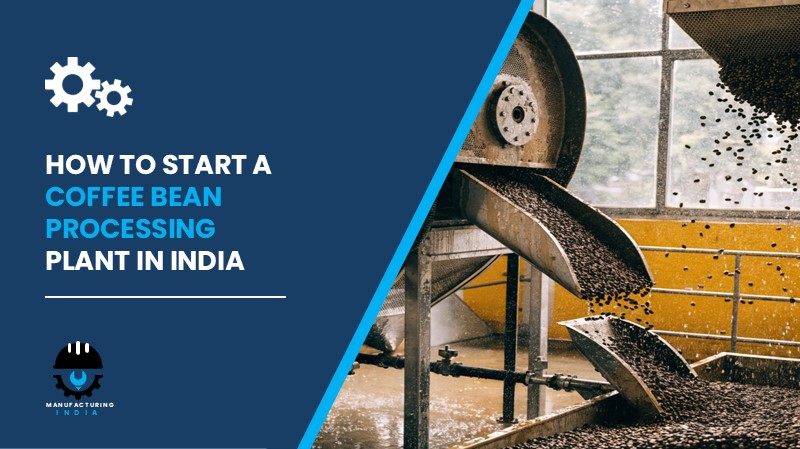
Setting up a coffee bean processing plant in India presents a compelling investment case as the country rapidly emerges as one of the most cost-competitive and high-demand destinations for coffee processing and value-added beverage ingredient manufacturing. Driven by booming demand from cafés and specialty coffee chains, the foodservice and HoReCa sector, the beverage manufacturing segment, and the rapidly expanding retail consumer market, processed coffee beans have become an indispensable part of India’s fast-growing coffee culture and organised food and beverage economy.
“With over 1.4 billion consumers, a rapidly urbanising population, India’s branded coffee shop market reaching 5,339 stores with 12.7% annual growth, and a booming café culture and FMCG sector, India offers one of the most financially attractive environments for coffee bean processing — with gross margins of 25–35% and a break-even window of 3–5 years.”
What is a Coffee Bean?
Coffee beans are the dried and roasted seeds of the Coffea plant, which serve as the primary raw material for producing coffee beverages consumed across the world. After harvesting, coffee cherries are processed to remove the pulp, and the beans are then dried, hulled, roasted, and graded to achieve market-ready quality. Coffee beans are classified into two main groups — Arabica and Robusta — each with distinct flavour profiles, caffeine content, and market positioning. The roasting process plays a crucial role in developing unique aromas and flavours, with categorisation into light, medium, and dark roasts offering a wide spectrum of taste profiles. Coffee beans are sold to coffee shops, restaurants, offices, retailers, and households as either whole beans or ground coffee. Their long shelf life, consistent quality, and compatibility with automatic brewing equipment make them an indispensable ingredient in both the commercial and retail coffee markets.
Cost of Setting Up a Coffee Bean Processing Plant in India:
The coffee bean processing plant cost in India depends on several parameters including processing capacity, technology used, plant location, level of automation, raw material sourcing strategy, and regulatory compliance requirements. Here is a structured breakdown of all major cost components:
1. Capital Expenditure (CapEx)
The total capital investment in a coffee bean processing plant typically covers the following:
Land and Site Development
This includes land acquisition, boundary development, land registration charges, and basic site preparation. Cost varies significantly depending on whether the facility is located near coffee-growing regions such as Karnataka (Coorg, Chikmagalur), Kerala, Tamil Nadu, or Andhra Pradesh — India’s primary coffee cultivation belts. Proximity to growing regions reduces green bean procurement and logistics costs, while proximity to urban markets and export ports improves finished product distribution economics.
Civil Works and Construction
Building costs cover the main processing facility, green coffee bean receiving and storage area, processing and roasting hall, quality control and cupping laboratory, finished product storage, packaging area, administrative block, and worker amenities. Construction specifications must comply with food processing industry hygiene standards, FSSAI food safety infrastructure requirements, and fire safety norms for facilities handling roasted coffee and packaging materials.
Machinery and Equipment
This is the single largest component of CapEx. Key machinery required for a coffee bean processing plant includes:
- Coffee Cherry Receiving and Weighing Systems
- Wet Pulpers (for washed/wet processing method)
- Fermentation Tanks
- Washing Channels and Equipment
- Mechanical Dryers and Raised Drying Beds
- Hulling Machines
- Gravity Separators and Density Sorters
- Electronic Colour Sorters
- Grading and Sizing Machines
- Green Coffee Bean Storage Silos
- Industrial Drum or Hot Air Coffee Roasters
- Roast Profile Control and Monitoring Systems
- Bean Cooling Trays and Systems
- Grinding Machines (for ground coffee variants)
- Nitrogen Flushing and Degassing Systems
- Automated Filling, Sealing, and Packaging Machines
- Labelling Units
Machinery costs represent the largest share of overall capital expenditure, reflecting the precision engineering required in roasting profile control, colour sorting, grading, and food-grade packaging for specialty and commercial coffee bean production.
Other Capital Costs
These include pre-operative expenses, commissioning charges, import duties on specialised roasting and colour sorting equipment sourced internationally, utilities installation, fire safety systems, FSSAI-compliant food safety infrastructure setup, and effluent management for wet processing wastewater. Cupping laboratory equipment and sensory quality assessment tools also form part of the capital outlay for a premium coffee processing facility.
2. Operational Expenditure (OpEx):
Once the plant is commissioned, the ongoing cost structure is dominated by a few key components:
Raw Material Cost (Coffee Beans): 80–85% of Total OpEx:
Green coffee beans are the primary raw material and account for the overwhelming majority of operating expenses. Coffee bean procurement costs are subject to global commodity price movements on the ICE exchange, seasonal harvest variations, and origin-specific quality premiums. Securing long-term supply partnerships with coffee estate owners and cooperative societies in Karnataka, Kerala, and Tamil Nadu, combined with direct farmer sourcing programmes, helps manage procurement cost stability and ensures traceability for specialty and export-grade products.
Utility Cost: 5–10% of Total OpEx:
Utilities include electricity (consumed by roasters, colour sorters, grinders, and packaging lines), fuel or gas for roasting operations, process water for wet processing, and compressed air. Optimising roasting batch sizes and roast profiles, combined with energy-efficient roaster selection, can materially reduce utility costs across the plant lifecycle.
Other Operating Costs:
The remaining budget covers transportation and logistics, specialty packaging materials including valve bags and nitrogen-flushed pouches, salaries and wages for roast masters, quality cupping professionals, and production operators, maintenance, depreciation, FSSAI licence renewal, quality certification audits, and miscellaneous overhead.
3. Plant Capacity:
The proposed processing facility is designed with an annual processing capacity ranging between 8,000 to 12,000 tons. This range allows the plant to achieve economies of scale while maintaining flexibility to serve multiple end-use segments including specialty coffee roasters, café chains, foodservice operators, retail packaged coffee brands, vending machine suppliers, and export customers. Smaller pilot setups may start at lower capacity with a focus on premium specialty grades, but profitability improves significantly with higher throughput and diversification across commercial, institutional, and export market channels.
4. Profit Margins and Financial Projections:
- Gross Profit Margin: 25–35%, supported by stable and growing demand from café chains, foodservice operators, and the rapidly expanding retail packaged coffee segment
- Net Profit Margin: 10–15%, improving with higher value-added product mix including specialty blends, single-origin offerings, and branded retail formats
- Break-Even Period: 3 to 5 years, depending on processing scale, product mix between commercial and specialty grades, raw material cost management, and depth of café chain and retail customer relationships
Financial projections must account for capital investment, operating costs, capacity utilisation rates, green coffee commodity price trends, and demand outlook. A thorough analysis should also include sensitivity analysis, Net Present Value (NPV), Internal Rate of Return (IRR), and Payback Period, with particular attention to coffee commodity price scenarios.
Request a Sample Report for In-Depth Market Insights: https://www.imarcgroup.com/coffee-bean-processing-plant-project-report/requestsample
Why Set Up a Coffee Bean Processing Plant in India?
India presents a uniquely favourable environment for establishing a coffee bean processing plant:
Surging Domestic Demand from Café Culture and Retail Growth:
India’s branded coffee shop market reached 5,339 stores in 2025, growing by 600 outlets — a 12.7% year-on-year expansion — directly increasing daily sourcing volumes for processed coffee beans from café operators. Rising disposable incomes, urbanisation, and a younger consumer demographic are driving strong and sustained demand for specialty coffee, premium blends, and ready-to-brew formats through both out-of-home café channels and organised retail and e-commerce platforms.
Policy and Regulatory Tailwinds:
The Government of India’s support for food processing under the PLI scheme, the Coffee Board of India’s development programmes for domestic value addition and export promotion, and the Make in India initiative for agri-food processing create a policy-supportive environment for coffee processing entrepreneurs. India’s GI-tagged origins — including Coorg Arabica, Chikmagalur Arabica, and Araku Valley Arabica — provide premium positioning opportunities for processed specialty coffee in both domestic and export markets.
Cost-Competitive Manufacturing with Domestic Raw Material Access:
India is among the world’s leading coffee-producing nations, with Karnataka, Kerala, Tamil Nadu, and Andhra Pradesh together contributing the bulk of domestic production. Direct access to green beans from India’s coffee estates and cooperative societies — without the import logistics costs faced by processors in non-producing countries — gives domestic processors a structural input cost advantage. India’s large skilled workforce further reduces labour-intensive processing and quality sorting costs.
Export Opportunities:
India-based coffee processors can serve growing export demand from Europe, the Middle East, Japan, and the United States, where Indian single-origin specialty coffees — particularly from Coorg, Chikmagalur, and Araku Valley — are commanding increasing recognition and price premiums. Value-added processed and roasted coffee exports generate significantly higher foreign exchange earnings compared to raw green bean exports, supporting India’s agricultural export strategy.
Strong Export and Domestic Demand Convergence:
Both international trade and domestic consumption are simultaneously supporting stable and growing market dynamics for Indian coffee processors. The convergence of rising out-of-home coffee consumption driven by café chain expansion, growing household retail coffee penetration through organised trade and e-commerce, and export demand for premium Indian origins creates a uniquely favourable dual-channel demand environment for well-positioned processing facilities.
Manufacturing Process Overview:
The coffee bean processing procedure involves cleaning of coffee cherries, pulping or dry processing, fermenting and washing, drying, hulling, grading and sorting, roasting, cooling, grinding or packing as whole bean, and labelling. The complete process flow involves:
- Coffee Cherry Receiving and Weighing — incoming quality inspection and weighing of freshly harvested coffee cherries
- Sorting and Cleaning — removal of foreign matter, underripe, and overripe cherries
- Wet Pulping (Washed Method) — mechanical removal of the cherry skin and pulp using pulping machines
- Fermentation — controlled fermentation of mucilage-coated beans in fermentation tanks to develop flavour complexity
- Washing and Grading — thorough washing of fermented beans and gravity-based density separation
- Drying — reduction of bean moisture to target level using raised drying beds or mechanical dryers under controlled conditions
- Hulling — removal of the dried parchment layer using hulling machines to produce green coffee beans
- Gravity Separation and Colour Sorting — removal of defective, discoloured, and low-density beans using electronic colour sorters
- Grading and Sizing — separation of green beans by screen size and density to achieve uniform grade specifications
- Green Bean Storage — storage of graded green beans in controlled-atmosphere silos preserving quality
- Roasting — precision roasting of green beans in drum or hot air roasters to the desired roast profile — light, medium, or dark
- Cooling — rapid cooling of roasted beans to halt the roasting process and preserve roast characteristics
- Grinding (Optional) — grinding of roasted beans to the required grind size for ground coffee product variants
- Degassing and Packaging — CO₂ off-gassing rest period, nitrogen flushing, and sealing in valve bags or retail pouches
- Quality Inspection, Labelling, and Dispatch — cupping evaluation, FSSAI label compliance, and final packaging for domestic and export shipment
Key Applications of Processed Coffee Beans:
Processed coffee beans from India serve a wide variety of end-use industries and applications:
- Cafés and Specialty Coffee Chains: Roasted whole bean and ground coffee supply to branded café chains, specialty coffee shops, and independent roasters requiring consistent quality and roast profile standardisation
- Foodservice and HoReCa Sector: Standardised roasted bean supply to hotels, restaurants, airline catering, and institutional foodservice operators requiring reliable quality and volume consistency
- Retail and Packaged Coffee Market: Branded whole bean, ground coffee, and single-serve format products for distribution through supermarkets, modern trade, and e-commerce platforms
- Beverage and Vending Applications: Uniform grind size and roast consistency for automated brewing systems, coffee vending machines, and ready-to-drink coffee beverage manufacturers
- Instant Coffee Inputs and Export: Green bean and roasted bean supply to instant coffee manufacturers and export to international specialty coffee roasters and importers
Global Market Outlook:
The global coffee bean market was valued at USD 36.36 Billion in 2025 and is projected to reach USD 56.90 Billion by 2034, growing at a CAGR of 5.1% from 2026 to 2034. This sustained growth is driven by rising global coffee consumption, the worldwide expansion of café culture and quick-service restaurant chains, increasing demand for specialty and premium coffee varieties, and the widening presence of organised retail and e-commerce platforms making quality coffee more accessible to consumers globally.
Leading global players in the coffee bean processing industry include:
- La Colombe Torrefaction, Inc.
- Hawaii Coffee Company
- Death Wish Coffee
- illycaffè S.p.A.
- Coffee Bean International, Inc.
- Nestlé S.A. (Nespresso and Nescafé)
- JDE Peet’s N.V.
- Starbucks Corporation
- Blue Tokai Coffee Roasters
- Tata Coffee Limited
Timeline to Start a Coffee Bean Processing Plant:
Setting up a coffee bean processing plant from ideation to commissioning typically requires 12 to 18 months. This covers:
- Feasibility study and detailed project report (DPR) preparation
- Land acquisition and site development
- Regulatory approvals and FSSAI food safety licence
- Factory licence and fire safety compliance
- Machinery procurement, installation, and commissioning of roasters and colour sorters
- Quality cupping laboratory setup and roast profile development
- Trial production, quality testing, and product grade qualification
- Commercial production launch and café chain and retail customer supply commencement
Licenses and Regulatory Requirements:
Starting a coffee bean processing unit in India requires several approvals, including:
- Business registration (Proprietorship, LLP, or Private Limited Company)
- Factory Licence under the Factories Act
- FSSAI Central or State Licence (mandatory for all food processing and manufacturing units in India)
- Environmental Clearance from the State Pollution Control Board
- GST Registration
- Fire Safety NOC
- Coffee Board of India Registration (for units involved in processing and trading of Indian coffee)
- APEDA Registration (for export-oriented units supplying processed coffee to international markets)
- BIS / ISO 22000 Food Safety Management System Certification (for institutional and export supply)
- Udyam Registration (for MSME benefits and government scheme eligibility)
Key Challenges to Consider:
Before investing, entrepreneurs should be aware of the common challenges in this business:
- Raw Material Price Volatility: Green coffee bean prices are subject to significant commodity price fluctuations on international exchanges, driven by weather events in producing regions, global supply-demand dynamics, and currency movements, making raw material cost management a critical operational priority.
- Seasonal Availability: Coffee harvests in India are seasonal, with the main crop typically harvested between November and February. Ensuring adequate green bean inventory and storage capacity to sustain year-round processing requires careful procurement planning and proper storage infrastructure.
- Roast Quality Consistency: Achieving consistent roast profiles that meet café chain and retail customer specifications requires skilled roast masters, calibrated roasting equipment, and rigorous sensory quality control through regular cupping evaluation — a specialised skill set that takes time to develop.
- Regulatory Compliance: Meeting FSSAI food safety standards, allergen management requirements, labelling regulations, and Coffee Board compliance norms requires continuous investment in quality systems, documentation, and periodic third-party audits.
- Competition: The market includes large multinational FMCG coffee brands, established regional processors, and a growing number of specialty micro-roasters, requiring new entrants to develop a clear differentiation strategy based on origin quality, roast expertise, or private-label customer service capability.
- Skilled Manpower: Coffee processing requires specialised skills including Q Grader-certified cuppers, experienced roast masters, and trained colour sorting operators, who are in growing demand as India’s specialty coffee sector expands rapidly.
Frequently Asked Questions:
The following questions are answered in the report:
- How much does it cost to set up a coffee bean processing plant in India?
- Is coffee bean processing profitable in India in 2026?
- What machinery is required for a coffee bean processing plant in India?
- What raw materials are required for coffee bean processing?
- What licences and approvals are required to start a coffee bean processing plant in India?
- How long does it take to commission a coffee bean processing plant in India?
- What is the best state or location to set up a coffee bean processing plant in India?
- What government incentives are available for coffee bean processors in India?
- What is the break-even period for a coffee bean processing plant in India?
- What are the FSSAI and Coffee Board of India compliance requirements for coffee bean processing in India?
Key Takeaways for Investors:
The coffee bean processing industry in India represents a strong and scalable investment opportunity backed by India’s rapidly expanding café culture, growing retail coffee market, direct access to premium domestic coffee-growing origins, and supportive food processing policies. With gross margins of 25–35%, a well-planned coffee bean processing plant cost in India remains competitive and financially viable across processing capacities. Investors who combine FSSAI-compliant quality systems, direct farm sourcing from India’s coffee belts, skilled roasting expertise, and strong relationships with café chains, foodservice operators, and retail brands stand to benefit significantly from one of India’s fastest-growing segments of the food processing and premium beverage industry.
About the Author