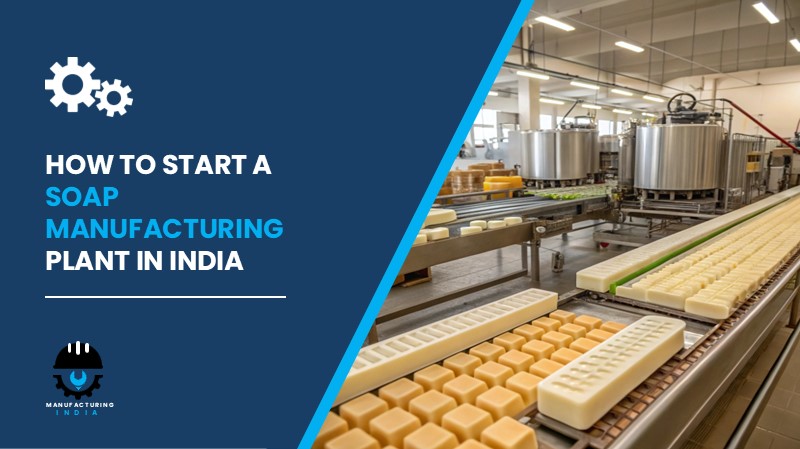
Setting up a soap manufacturing plant in India presents a compelling investment case as the country rapidly emerges as one of the most cost-competitive and high-demand destinations for personal care and hygiene product manufacturing. Driven by rising hygiene awareness, increasing urbanisation, expanding population, growing healthcare infrastructure, and surging demand for personal care products across bar soap, liquid soap, medicated, herbal, and specialty formats, soap has become an indispensable daily-use product across every segment of India’s consumer economy.
“With over 1.4 billion consumers, a rapidly urbanising population, Make in India policy support, and a booming personal care and FMCG sector, India offers one of the most financially attractive environments for soap manufacturing — with gross margins of 25–35% and a break-even window of 3–5 years.”
What is Soap?
Soap is a cleaning and hygiene product obtained through saponification — a chemical reaction between fatty acids derived from oils or fats and an alkali such as sodium or potassium hydroxide. Soap appears in various formats including bar soap, liquid soap, and powder soap, each serving distinct consumer and institutional needs. Soap possesses surfactant characteristics that allow it to emulsify oils, effectively clean skin and surfaces, and significantly reduce microbial contamination. It can be manufactured from natural vegetable oils such as palm, coconut, and olive oil, animal fats such as tallow, synthesised fatty acids, and a range of additives including fragrances, colourants, moisturisers, antibacterial agents, and herbal extracts. Soap is inherently biodegradable and is universally used for personal hygiene, household cleaning, healthcare sanitation, and industrial cleaning applications.
Cost of Setting Up a Soap Manufacturing Plant in India:
The soap manufacturing plant cost in India depends on several parameters including production capacity, technology used, plant location, product mix (bar, liquid, specialty), level of automation, and regulatory compliance requirements. Here is a structured breakdown of all major cost components:
1. Capital Expenditure (CapEx):
The total capital investment in a soap manufacturing plant typically covers the following:
Land and Site Development:
This includes land acquisition, boundary development, land registration charges, and basic site preparation. Cost varies significantly depending on whether the land is in an industrial estate, Special Economic Zone (SEZ), or a privately purchased plot. Proximity to palm oil refining clusters and oleochemical supply chain hubs — such as those in Gujarat, Maharashtra, Andhra Pradesh, and Tamil Nadu — reduces raw material logistics costs, while proximity to FMCG distribution centres and retail markets improves finished goods delivery economics.
Civil Works and Construction:
Building costs cover the main saponification and processing facility, raw material storage tanks and drum storage, soap noodle production area, milling and finishing hall, quality control laboratory, packaging and dispatch area, administrative block, and worker amenities. Construction specifications depend on plant scale, chemical handling safety requirements for caustic soda and hot oil storage, and local regulatory compliance norms applicable to chemical and personal care manufacturing facilities.
Machinery and Equipment:
This is the single largest component of CapEx. Key machinery required for a soap manufacturing plant includes:
- Saponification Reactors and Kettles
- Soap Vacuum Spray Driers (for soap noodle production)
- Mixers and Blenders
- Amalgamators (for fragrance and additive blending)
- Milling Machines (Triple Roll Mills)
- Plodding and Refining Machines
- Soap Cutters
- Slab and Bar Presses
- Stamping and Embossing Units
- Curing Racks and Conveyors
- Liquid Soap Reaction and Filling Lines
- Automated Wrapping and Packaging Machines
- Labelling Units
- Quality Control and Testing Equipment
Machinery costs represent the largest share of overall capital expenditure, reflecting the multi-stage processing from saponification through milling, plodding, and stamping required to produce finished bar soap, as well as the separate liquid filling and packaging lines for liquid soap formats.
Other Capital Costs:
These include pre-operative expenses, commissioning charges, import duties on specialised saponification or continuous soap-making equipment sourced internationally, utilities installation including steam generation systems, fire safety infrastructure, effluent treatment plant setup, and caustic soda storage and handling safety systems.
2. Operational Expenditure (OpEx):
Once the plant is commissioned, the ongoing cost structure is dominated by a few key components:
Raw Material Cost (Palm Oil, Caustic Soda, Additives): 70–80% of Total OpEx:
Palm oil or tallow is the primary fatty acid raw material and accounts for the dominant share of operating expenses. Additional essential raw materials include caustic soda (sodium hydroxide), coconut oil, perfumes and fragrances, colourants, sodium silicate, glycerine, and specialty additives such as antibacterial agents, moisturisers, and herbal extracts. Securing long-term supply contracts with palm oil refiners and oleochemical distributors, and managing palm oil price risk through forward procurement, are critical cost management levers in soap manufacturing.
Utility Cost: 5–10% of Total OpEx:
Utilities include steam (consumed in saponification reactors and spray driers), electricity (used by milling machines, plodders, stamping units, and packaging lines), process water, and compressed air. Steam generation from efficient boiler systems is a key utility infrastructure investment for a soap manufacturing plant, as the saponification and drying operations are heat-intensive.
Other Operating Costs:
The remaining budget covers transportation and logistics, packaging materials including wrappers, cartons, and shrink film, salaries and wages for production chemists and operators, maintenance, fragrance and additive replenishment, depreciation, taxes, BIS certification audit costs, and miscellaneous overhead.
3. Plant Capacity:
The proposed manufacturing facility is designed with an annual production capacity ranging between 30,000 to 60,000 MT. This range allows the plant to achieve economies of scale while maintaining flexibility to serve multiple market segments including mass-market bar soap, premium and herbal bar soap, liquid hand wash, body wash, medicated soap, hotel amenity soap, and private label contract manufacturing for FMCG brands. Smaller setups may start at lower capacity focused on a single product format, with profitability improving as product range is diversified and capacity utilisation increases.
4. Profit Margins and Financial Projections:
- Gross Profit Margin: 25–35%, supported by stable non-discretionary demand across personal care, household, hospitality, and institutional cleaning segments
- Net Profit Margin: 10–15%, improving with higher value-added product mix including herbal, premium, and medicated soap formats and branded retail positioning
- Break-Even Period: 3 to 5 years, depending on production scale, product mix, palm oil cost management, and depth of retail and institutional customer relationships
Financial projections must account for capital investment, operating costs, capacity utilisation rates, palm oil commodity price trends, and demand outlook. A thorough analysis should also include sensitivity analysis, Net Present Value (NPV), Internal Rate of Return (IRR), and Payback Period.
Request a Sample Report for In-Depth Market Insights: https://www.imarcgroup.com/soap-manufacturing-plant-project-report/requestsample
Why Set Up a Soap Plant in India?
India presents a uniquely favourable environment for establishing a soap manufacturing plant:
Surging Domestic Demand from Hygiene Awareness and Population Growth:
India’s soap market was valued at USD 4.13 Billion in 2025 and is projected to reach USD 5.48 Billion by 2034, growing at a CAGR of 3.2%. Rising hygiene consciousness accelerated by public health campaigns, expanding healthcare infrastructure, and growing disposable incomes across semi-urban and rural India are creating sustained and broadening demand for soap products across all price segments and formats — from mass-market bar soap to premium herbal and medicated variants.
Policy and Regulatory Tailwinds:
The Government of India’s Swachh Bharat Mission and emphasis on hygiene, sanitation, and public health have structurally reinforced soap consumption habits across urban and rural India. PLI schemes for FMCG and personal care, MSME manufacturing facilitation, and Make in India support for domestic consumer goods production create a policy-supportive environment for soap manufacturers targeting both domestic retail and institutional supply markets.
Cost-Competitive Manufacturing:
India offers competitive land costs, a large pool of trained chemical engineers and production operators, and a well-established oleochemical and fatty acid supply chain from domestic refiners. India’s large domestic palm oil import infrastructure and established caustic soda production base provide reliable raw material access. These structural advantages, combined with lower labour costs compared to developed market manufacturers, make India one of the most cost-competitive soap manufacturing locations in Asia.
Export Opportunities:
India-based soap manufacturers can tap into growing export demand from Southeast Asia, the Middle East, Africa, and South Asia, where hygiene product markets are expanding rapidly and Indian personal care manufacturing is gaining recognition for quality and competitive pricing. India’s established FMCG export infrastructure, large-scale packaging capability, and competitive freight rates support international market entry across private label and branded soap categories.
Premiumisation and Product Innovation Opportunity:
Growing consumer preference for herbal, Ayurvedic, organic, antibacterial, and specialty soap formulations is creating significant premiumisation opportunities for Indian soap manufacturers. Product innovation in natural ingredients such as neem, turmeric, sandalwood, and charcoal, combined with sustainable packaging, is enabling value-added product development that commands higher retail prices and improved margins compared to standard commodity bar soap.
Manufacturing Process Overview:
The soap manufacturing process primarily uses saponification, milling, and stamping technologies. The complete process flow involves:
- Raw Material Procurement and Quality Inspection — sourcing and IQC of palm oil, tallow, coconut oil, caustic soda, perfumes, colourants, and additives
- Oil and Fat Blending — preparation of the required oil/fat blend based on soap formulation requirements
- Saponification — controlled reaction of the oil/fat blend with caustic soda solution in saponification reactors or kettles to produce soap mass and glycerine
- Glycerine Recovery — separation and recovery of glycerine as a valuable co-product from the soap mass
- Washing and Purification — removal of residual caustic soda, salt, and impurities from the soap mass
- Vacuum Spray Drying — drying of the liquid soap mass to produce soap noodles or pellets at the desired moisture content
- Amalgamation — blending of soap noodles with fragrances, colourants, moisturisers, antibacterial agents, and other additives in amalgamators
- Milling — multiple-pass milling through triple roll mills to achieve uniform mixing, smooth texture, and improved consistency
- Plodding and Refining — extrusion of milled soap through plodding machines to produce a continuous soap log
- Cutting — precision cutting of the soap log into individual bar sizes
- Pressing and Stamping — compression moulding and embossing of bar dimensions, brand name, and surface design
- Curing — resting of finished bars on curing racks to achieve optimal hardness, moisture level, and surface finish
- Quality Inspection — testing of TFM (total fatty matter), moisture content, pH, fragrance retention, and physical dimensions against BIS specifications
- Wrapping, Packaging, and Dispatch — automated wrapping, carton packing, and palletising for retail and institutional distribution
Key Applications of Soap:
Soap manufactured in India serves a wide variety of end-use industries and applications:
- Personal Care and Retail: Bar soap, premium and herbal soap, moisturising soap, and medicated soap for individual consumer use through modern trade, general trade, and e-commerce channels
- Household Cleaning: Laundry bar soaps, dishwashing bars, and multi-surface cleaning soaps for domestic household use
- Hospitality and Institutional: Hotel amenity soap, hospital and healthcare facility soap, restaurant and food service hand soap, and institutional bulk supply
- Cosmetics and Specialty: Luxury bath soaps, Ayurvedic and herbal formulations, cold-process artisanal soaps, and beauty bar formats for premium retail and export
- Industrial and Commercial Cleaning: Heavy-duty hand soaps, workshop cleaning bars, and specialty industrial cleansing formulations for manufacturing and institutional use
Global Market Outlook:
The India soap market was valued at USD 4.13 Billion in 2025 and is projected to reach USD 5.48 Billion by 2034, growing at a CAGR of 3.2% from 2026 to 2034. This sustained growth is driven by rising hygiene awareness, increasing urbanisation, expanding population, growth in healthcare facilities, and growing demand for premium and specialty personal care products across India’s rapidly expanding consumer market.
Leading global players in the soap manufacturing industry include:
- Unilever PLC
- Procter & Gamble Co.
- Reckitt Benckiser Group
- Colgate-Palmolive Company
- Godrej Consumer Products Ltd.
- ITC Limited
- Wipro Consumer Care
- Henkel AG & Co. KGaA
- Church & Dwight Co. Inc.
- Kao Corporation
Timeline to Start a Soap Manufacturing Plant:
Setting up a soap manufacturing plant from ideation to commissioning typically requires 12 to 18 months. This covers:
- Feasibility study and detailed project report (DPR) preparation
- Land acquisition and site development
- Regulatory approvals and environmental clearances
- Factory licence and fire safety compliance
- Machinery procurement, installation, and saponification system commissioning
- Raw material supply chain establishment and fragrance/additive supplier qualification
- Trial production, quality testing, and BIS certification
- Commercial production launch and retail and institutional customer supply commencement
Licenses and Regulatory Requirements:
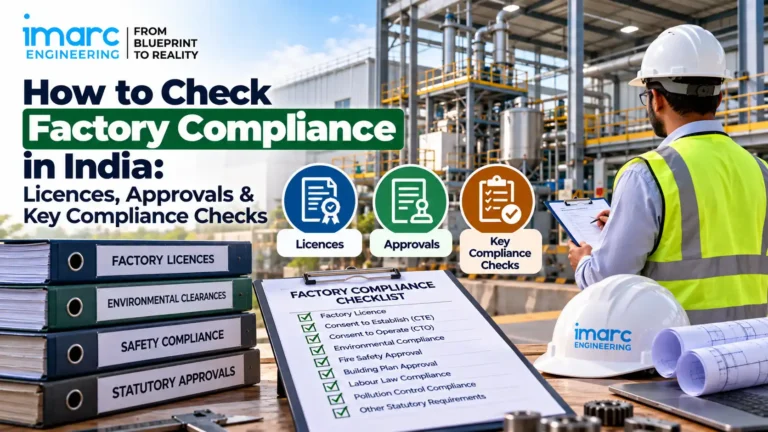
Starting a soap manufacturing unit in India requires several approvals, including:
- Business registration (Proprietorship, LLP, or Private Limited Company)
- Factory Licence under the Factories Act
- Environmental Clearance from the State Pollution Control Board
- Consent to Establish and Consent to Operate under pollution control regulations
- GST Registration
- Fire Safety NOC
- BIS Certification under IS 286 (Toilet Soap) and IS 2342 (Laundry Soap) for products sold under the BIS hallmark scheme
- Drug Licence under the Drugs and Cosmetics Act for medicated soap products making therapeutic claims
- MSME / Udyam Registration (for MSME benefits and government scheme eligibility)
- Hazardous Chemical Licence for caustic soda storage and handling under the Manufacture, Storage and Import of Hazardous Chemical Rules
Key Challenges to Consider:
Before investing, entrepreneurs should be aware of the common challenges in this business:
- Raw Material Price Volatility: Palm oil prices are linked to global vegetable oil markets and can fluctuate significantly, directly impacting soap manufacturing margins. Effective procurement hedging, blending flexibility between palm and alternative oils, and long-term supply contracts are essential cost management tools.
- Intense FMCG Competition: The mass-market soap segment is dominated by large multinational and domestic FMCG players with established distribution networks and strong brand equity, requiring new entrants to differentiate through niche formulations, private label supply, regional distribution, or institutional channel focus.
- Regulatory Compliance: Meeting BIS quality standards for total fatty matter (TFM), Drug and Cosmetics Act requirements for medicated soap, and environmental compliance for saponification effluent treatment requires continuous investment in quality infrastructure and documentation systems.
- Fragrance and Additive Cost Management: Premium fragrances, essential oils, and specialty additives for herbal and luxury soap formats can significantly increase input costs and require careful formulation cost management to maintain competitive retail price positioning.
- Distribution and Retail Penetration: Building distribution reach across modern trade, general trade, and e-commerce channels requires sustained investment in sales infrastructure, trade marketing, and channel partner management — a significant barrier for new entrants competing with established brands.
- Skilled Manpower: Soap formulation expertise, quality control knowledge of TFM and pH specifications, and milling and plodding machine operation experience are specialised skills that require targeted recruitment and training investment.
Frequently Asked Questions:
The following questions are answered in the report:
- How much does it cost to set up a soap manufacturing plant in India?
- Is soap manufacturing profitable in India in 2026?
- What machinery is required for a soap manufacturing plant in India?
- What raw materials are required for soap production?
- What licences and approvals are required to start a soap manufacturing plant in India?
- How long does it take to commission a soap manufacturing plant in India?
- What is the best state or location to set up a soap manufacturing plant in India?
- What government incentives are available for soap manufacturers in India?
- What is the break-even period for a soap manufacturing plant in India?
- What are the BIS and Drugs and Cosmetics Act compliance requirements for soap manufacturing in India?
Key Takeaways for Investors:
The soap manufacturing industry in India represents a strong and scalable investment opportunity backed by India’s massive and growing consumer base, rising hygiene awareness, expanding healthcare infrastructure, and supportive government policies for domestic FMCG and personal care manufacturing. With gross margins of 25–35%, a well-planned soap manufacturing plant cost in India remains competitive and financially viable across plant capacities. Investors who combine BIS-compliant quality systems, efficient palm oil and oleochemical sourcing, a differentiated product portfolio across mass, herbal, and specialty formats, and strong retail or institutional distribution relationships stand to benefit significantly from one of India’s most essential and consistently growing segments of the personal care and consumer goods manufacturing industry.
About the Author