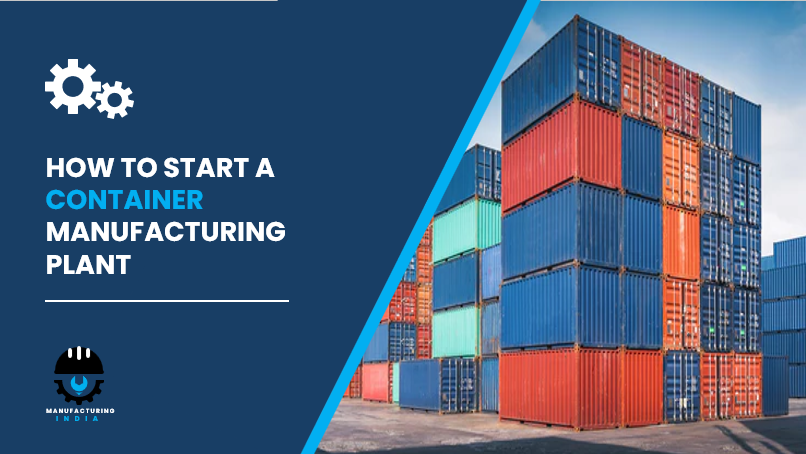
Setting up a container manufacturing plant in India presents a highly compelling investment opportunity as global demand for standardized, durable, and versatile storage and transportation containers continues to surge across food and beverage packaging, pharmaceutical storage, chemical handling, logistics, e-commerce, and industrial manufacturing industries. Containers have become the essential backbone of modern supply chains, enabling efficient material handling, product safety, regulatory compliance, and seamless cross-border trade at every level of global commerce.
“With a rapidly expanding global shipping container market projected to grow at a CAGR of 6.7% through 2034, accelerating demand driven by e-commerce expansion, global trade growth surpassing USD 35 trillion in 2025, and gross margins of 20–30%, container manufacturing offers one of the most financially attractive opportunities in the industrial packaging and logistics infrastructure sector — with a break-even window of 3–6 years.”
What are Containers?
Containers represent standardized storage and transportation units designed to securely hold, safeguard, and move commodities across supply chains — from raw material intake at the factory floor through to last-mile delivery to the end consumer. The industrial production of these standardized units, engineered to maintain product integrity and facilitate efficient logistics across diverse industrial and commercial applications, is known as container manufacturing.
Depending on the specific requirements of the application, containers are manufactured from a wide range of materials including steel, aluminum, high-density polyethylene (HDPE), polypropylene (PP), polyethylene terephthalate (PET), glass, and composite materials. Each material offers distinct performance characteristics — steel and aluminum deliver structural strength, corrosion resistance, and load-bearing capability for heavy industrial and shipping applications, while HDPE and PP provide lightweight, chemical-resistant, food-safe, and cost-effective solutions for packaging, storage, and material handling across consumer and industrial markets.
Containers are engineered to be long-lasting, structurally robust, stackable, tamper-evident, and compliant with applicable industry and regulatory standards including ISO, BIS, FSSAI, and UN regulations for hazardous materials. Manufacturing processes vary by material and application, encompassing injection molding, blow molding, thermoforming, metal forming and welding, extrusion, and surface coating and finishing. Across all formats, containers play an indispensable role in maintaining product integrity, facilitating effective logistics, guaranteeing hygienic conditions, and supporting international trade and industrial operations in a wide variety of sectors.
Cost of Setting Up a Container Manufacturing Plant in India
The container manufacturing plant cost depends on several parameters including production capacity, material type and product mix, technology configuration, plant location, level of automation, raw material sourcing strategy, and regulatory compliance requirements. Here is a structured breakdown of all major cost components:
1. Capital Expenditure (CapEx)
The total capital investment in a container manufacturing plant typically covers the following:
Land and Site Development
This includes land acquisition, boundary development, land registration charges, and basic site preparation. Cost varies significantly depending on whether the land is in a designated industrial zone, logistics and packaging park, Special Economic Zone (SEZ), or a privately purchased plot. Proximity to steel, aluminum, or polymer raw material suppliers — and to key end-use industries including food and beverage processing, pharmaceutical manufacturing, and logistics hubs — is a critical factor in site selection to minimize both inbound raw material and outbound distribution logistics costs.
Request a Sample Report for In-Depth Market Insights: https://www.imarcgroup.com/container-manufacturing-plant-project-report/requestsample
Civil Works and Construction
Building costs cover the main manufacturing facility, raw material storage and staging areas, molding and forming production bays, welding and fabrication sections, surface coating and curing areas, quality control laboratory, finished goods warehouse, administrative block, utility area, and worker amenities. Construction must comply with manufacturing plant safety norms including fire resistance, ventilation systems for coating and welding operations, chemical storage infrastructure, and environmental management standards applicable to multi-material industrial manufacturing facilities.
Machinery and Equipment
This is the single largest component of CapEx. Key machinery required for a container manufacturing plant includes:
- Injection Molding Machines (for plastic containers — HDPE, PP, PET)
- Blow Molding Machines (for hollow plastic containers and drums)
- Thermoforming Machines (for thin-wall and tray-format containers)
- Extrusion Lines (for continuous profile and sheet production)
- Metal Forming Presses and Stamping Equipment (for steel and aluminum containers)
- Welding and Sealing Machines (MIG, TIG, and resistance welding)
- Surface Coating and Curing Systems (powder coating, liquid paint, and epoxy lining)
- Mould Tooling and Tool Room Equipment
- Automated Inspection and Dimensional Testing Systems
- Leak and Pressure Testing Equipment
- Labeling and Marking Systems
- Palletising and Packaging Lines
- Process Control and Automation Systems (PLC/SCADA)
Machinery costs represent the largest share of overall capital expenditure, reflecting the precision engineering, multi-process manufacturing flexibility, and quality control infrastructure required to produce containers across diverse material types, formats, and end-use specifications.
Other Capital Costs
These include pre-operative expenses, commissioning charges, import duties (if specialized molding or forming machinery is sourced internationally), utilities installation, fire safety systems, solvent and VOC emission control infrastructure for coating operations, Effluent Treatment Plant (ETP) setup, and environmental management infrastructure for compliance with industrial manufacturing regulations.
2. Operational Expenditure (OpEx)
Once the plant is commissioned, the ongoing cost structure is dominated by raw material costs — a defining feature of container manufacturing economics across all material categories:
Raw Material Cost (Steel, Aluminum, HDPE, PP, PET): 70–80% of Total OpEx
Raw materials — primarily steel coil and sheet for metal containers, aluminum for lightweight industrial containers, and HDPE, PP, or PET resin pellets for plastic containers — account for the overwhelming share of operating expenses. Steel and aluminum prices are influenced by global commodity markets, energy costs, and trade policy, while polymer resin prices are linked to petrochemical feedstock prices and crude oil market movements. Securing long-term supply agreements with domestic steel mills and polymer compounders is essential for input cost stability and margin protection.
Utility Cost: 10–15% of Total OpEx
Utilities include electricity consumed by injection molding machines, blow molding equipment, forming presses, welding stations, coating curing ovens, and process control systems, as well as compressed air and water for cooling and cleaning operations. Energy-efficient servo-driven molding machines, variable frequency drive systems, and waste heat recovery from curing ovens can meaningfully reduce utility costs and improve long-term plant competitiveness.
Other Operating Costs
The remaining budget covers transportation and distribution logistics, mold maintenance and tooling replacement costs, packaging materials, salaries and wages, maintenance, depreciation, insurance, environmental compliance costs including VOC and effluent management, quality certification expenses, taxes, and miscellaneous overhead.
3. Plant Capacity
The proposed manufacturing facility can be designed across a range of production scales:
- Small-Scale Operations: 30,000–80,000 units annually — suitable for specialty pharmaceutical containers, premium food packaging, custom industrial containers, and regional distribution with flexible multi-material production and rapid mold changeover capability.
- Mid-Scale Plants: 80,000–150,000 units annually — designed for national food and beverage, pharmaceutical, chemical, and logistics markets with semi-continuous multi-line production, moderate automation, and diversified product portfolio spanning plastic, metal, and composite container formats.
- Large-Scale Plants: 150,000–250,000 units annually — built for national and export markets with high-speed continuous molding and forming lines, advanced automation, robotic handling systems, and comprehensive product portfolios serving food processing, pharmaceutical, chemical, e-commerce, and logistics customers.
Profitability significantly improves with higher capacity utilization and product mix optimization toward value-added container formats — including lined containers for aggressive chemicals, pharmaceutical-grade sterile containers, tamper-evident food-grade formats, and UN-certified hazardous goods containers — which command premium pricing and stronger margin profiles compared to standard commodity containers.
4. Profit Margins and Financial Projections
- Gross Profit Margin: 20–30%
- Net Profit Margin: 8–12%
- Break-Even Period: 3 to 6 years, depending on production scale, material mix, market positioning, raw material cost management, product portfolio, and customer acquisition strategy.
Financial projections must account for capital investment, operating costs, capacity utilization rates, pricing trends, and demand outlook. A thorough analysis should also include sensitivity analysis, Net Present Value (NPV), Internal Rate of Return (IRR), and Payback Period. Revenue diversification across material types, container formats, and end-use industries — combined with value-added product positioning such as UN-certified hazardous containers, pharmaceutical-grade compliance, or custom branding and design services — can meaningfully improve overall plant financial performance.
Why Set Up a Container Manufacturing Plant in India?
The global market environment presents a uniquely favorable opportunity for establishing a container manufacturing facility:
Surging Global Trade and Logistics Demand
Global trade surpassed USD 35 trillion for the first time in the second half of 2025, according to UN Trade and Development data — an increase of over USD 2.2 trillion, or nearly 7%, from 2024. Approximately USD 1.5 trillion of that increase was driven by trade in goods, directly propelling demand for standardized containers across shipping, warehousing, and distribution. India’s emergence as a global manufacturing and export hub — anchored by the Atmanirbhar Bharat and Make in India initiatives — is creating powerful domestic and export demand for high-quality industrial containers.
E-Commerce Expansion and Warehouse Automation
The explosive growth of e-commerce across India and global markets has driven significant demand for robust, lightweight, stackable storage and transit containers optimized for automated warehouse systems, last-mile delivery, and returns management. The expansion of fulfillment centers, 3PL logistics networks, and automated storage and retrieval systems (ASRS) is creating sustained high-volume demand for standardized material handling containers across the logistics sector.
Food and Beverage Processing Industry Growth
India’s food processing sector is one of the largest and fastest-growing in the world, projected to reach USD 1,100 billion by FY35. Food and beverage manufacturers require certified, food-grade containers across every stage of production, storage, and distribution — from raw ingredient handling through to finished product packaging and export. Growing consumption of packaged foods, beverages, dairy products, and ready-to-eat meals is creating a consistent and expanding demand base for food-grade plastic and metal containers.
Pharmaceutical and Chemical Industry Requirements
India’s pharmaceutical industry — ranking third globally in production volume — requires large volumes of high-specification containers for raw material storage, intermediate handling, and finished product packaging. The chemical industry similarly demands UN-certified, leak-proof, and corrosion-resistant containers for the safe storage and transportation of hazardous and non-hazardous chemical formulations. Both sectors offer premium pricing for specification-compliant, certified container solutions.
India’s First National Container Shipping Line
In October 2025, India launched the Bharat Container Shipping Line (BCSL) — its first national container carrier — at the Global Maritime CEO Forum during India Maritime Week. BCSL begins operations with a fleet of 51 boxships backed by a USD 6.9 billion investment, initially operating across Asia, West Asia, and the Red Sea. This landmark development signals India’s strategic commitment to building domestic container infrastructure and significantly strengthens the long-term demand outlook for container manufacturing across the country.
Manufacturing Process Overview
The container manufacturing process encompasses multiple distinct production technologies depending on the material type and container format. The key processes employed in a diversified container manufacturing facility are:
- Injection Molding — Polymer resin pellets (HDPE, PP, or PET) are melted and injected under high pressure into precision metal molds to produce rigid plastic containers, lids, crates, bins, and IBC inner bottles with consistent dimensional accuracy and surface finish.
- Blow Molding — Molten polymer parison is extruded or injection-molded and then inflated by compressed air within a closed mold to form hollow containers including drums, jerrycans, bottles, and IBCs. Extrusion blow molding is standard for HDPE drums and containers; injection stretch blow molding is used for PET bottles.
- Thermoforming — Polymer sheets are heated to forming temperature and shaped over or into molds using vacuum or pressure to produce thin-wall containers, trays, clamshells, and covers for food, pharmaceutical, and industrial applications.
- Metal Forming and Stamping — Steel coil or aluminum sheet is cut, pressed, deep-drawn, and shaped using progressive die stamping presses and forming equipment to produce metal containers, canisters, drums, and industrial bins with precise dimensional specifications.
- Welding and Assembly — Metal container components are assembled and joined using MIG, TIG, or resistance welding processes. Seams, joints, and structural reinforcements are welded to achieve leak-proof integrity and structural strength meeting applicable pressure and load specifications.
- Surface Coating and Finishing — Metal containers receive powder coating, liquid epoxy lining, or corrosion-resistant paint finishes using automated spray systems and curing ovens to protect against corrosion, chemical attack, and environmental degradation. Plastic containers may receive flame treatment for improved label adhesion.
- Quality Inspection and Testing — Finished containers undergo automated dimensional inspection, leak testing, pressure testing, drop testing, stack load testing, and visual inspection to verify conformance with applicable customer, regulatory, and ISO standards before release.
- Labeling, Marking, and Packaging — Containers are labeled, marked with regulatory information (including UN hazard certification where applicable), barcoded or RFID-tagged as required, and packaged for dispatch using automated palletising and stretch-wrapping systems.
Key Applications of Containers
Containers serve a wide variety of end-use industries and supply chain applications:
- Food and Beverage Industry: Food-grade plastic crates, bins, IBCs, drums, and metal canisters for packaging liquids, dry foods, frozen products, edible oils, sauces, dairy products, and ready-to-eat items requiring hygiene compliance and extended shelf-life protection.
- Pharmaceutical Industry: UN-certified plastic and metal containers for raw material storage, intermediate product handling, and finished drug packaging requiring contamination control, regulatory compliance, and traceable quality documentation.
- Chemical Industry: Leak-proof, corrosion-resistant steel, HDPE, and composite containers for safe storage and transportation of hazardous and non-hazardous chemicals, solvents, lubricants, and industrial fluids.
- Logistics and Transportation: Standardized ISO and non-ISO shipping containers, pallet boxes, stackable bins, and bulk material containers for efficient warehousing, automated handling, and domestic and international transportation of goods.
- Agriculture Industry: Bulk harvest bins, seed and fertilizer storage containers, and agrochemical handling containers for field, storage, and processing operations requiring durability in outdoor environments.
- Industrial Manufacturing: Racking bins, component trays, knock-down containers, and dunnage systems for in-plant material handling, work-in-progress storage, and sub-assembly management in automotive, electronics, and general manufacturing.
Global Market Outlook
The global shipping container market size was valued at USD 12.70 Billion in 2025. According to IMARC Group estimates, the market is expected to reach USD 22.80 Billion by 2034, exhibiting a CAGR of 6.7% from 2026 to 2034 — the strongest growth trajectory among the industrial packaging and logistics infrastructure sectors. This sustained growth is driven by expanding global trade volumes, e-commerce logistics infrastructure investment, pharmaceutical and food processing sector growth, warehouse automation adoption, and sustainability initiatives promoting recyclable and reusable container solutions.
Asia Pacific dominates the global container manufacturing market, led by China, India, South Korea, Japan, and Southeast Asian nations, driven by strong manufacturing bases, rapidly expanding logistics infrastructure, dominant global shipping industry presence, and robust domestic consumption growth across food, pharmaceutical, and chemical end-use sectors.
Leading global players in this industry include:
- A. P. Moller-Maersk A/S
- MSC Mediterranean Shipping Company S. A.
- CMA CGM
- China COSCO Holdings Company Limited
- Hapag-Lloyd
Timeline to Start a Container Manufacturing Plant
Setting up a container manufacturing plant from ideation to commissioning typically requires 18 to 30 months. This covers:
- Feasibility study and detailed project report (DPR) preparation
- Land acquisition and site development
- Environmental impact assessment and regulatory approvals
- Plant design and engineering
- Machinery procurement, mold tooling fabrication, and installation
- Utility setup and infrastructure commissioning
- Trial production and quality testing
- Customer qualification, certification, and regulatory compliance verification
- Commercial production launch
Licenses and Regulatory Requirements
Starting a container manufacturing unit requires several approvals, which may vary by country and jurisdiction, including:
- Business registration and incorporation
- Factory License under applicable labor and manufacturing laws
- Environmental Clearance from relevant pollution control authorities
- BIS Certification for applicable container categories (steel drums, plastic containers)
- UN Certification for containers used in hazardous goods transportation (UN 31H, UN 1H, etc.)
- FSSAI Approval for food-contact containers
- Fire Safety and Chemical Storage Safety Certification (NOC)
- Hazardous Waste Management Authorization (for coating and solvent operations)
- REACH Compliance (for EU export markets)
- ISO 9001 Quality Management Certification
- ISO 14001 Environmental Management Certification
- Occupational Health and Safety Certifications
Key Challenges to Consider
Before investing, entrepreneurs and investors should be aware of the common challenges in this business:
Raw Material Price Volatility: Steel, aluminum, and polymer resin prices are highly sensitive to global commodity market movements, energy price fluctuations, and trade policy changes. Given raw materials representing 70–80% of total OpEx, even moderate price movements can significantly impact profit margins — making long-term supply agreements, raw material hedging strategies, and supplier diversification essential components of financial risk management.
High Capital Requirements for Multi-Process Facilities: Establishing a diversified container manufacturing facility capable of serving multiple material types and container formats requires significant capital investment across multiple production technologies — injection molding, blow molding, metal forming, welding, and coating — each requiring specialized machinery, tooling, and quality systems.
Tooling and Mold Investment: Precision molds and tooling represent a substantial recurring capital expenditure for plastic container manufacturers, with individual injection molds for complex container designs costing significantly. Managing mold maintenance cycles, anticipating tooling replacement costs, and optimizing mold utilization across product families are critical to controlling capital expenditure over the plant’s operational life.
Regulatory Compliance Complexity: Container manufacturers supplying pharmaceutical, food, chemical, and hazardous goods customers must navigate an extensive and demanding landscape of product certifications, material compliance requirements, and customer qualification processes — including UN certification, BIS standards, FSSAI food contact compliance, and pharmaceutical GMP requirements — each requiring dedicated quality management infrastructure and ongoing maintenance.
Competition and Customer Concentration Risk: The container manufacturing market features a mix of large integrated manufacturers and specialized regional players. New entrants must develop clear product differentiation through material specialization, value-added certification, custom design capability, or application-specific expertise to avoid commoditized price competition and build a sustainable, diversified customer base across multiple end-use industries.
Frequently Asked Questions
The following questions are answered in the report:
- How much does it cost to set up a container manufacturing plant?
- Is container manufacturing a profitable business in 2026?
- What machinery and equipment are required for a container manufacturing plant?
- What licenses and approvals are required to start a container manufacturing facility?
- How long does it take to commission a container manufacturing plant?
- What is the best location to set up a container manufacturing plant in India?
- What government incentives are available for container manufacturers in India?
- What is the break-even period for a container manufacturing plant?
- What are the UN certification and BIS compliance requirements for container manufacturing?
- What are the key raw materials and their sourcing strategies for container manufacturing?
Key Takeaways for Investors
The container manufacturing industry represents a strong and scalable investment opportunity backed by growing global demand across multiple high-value end-use sectors and powerful structural tailwinds reshaping global trade, logistics, and industrial supply chain infrastructure. With gross margins of 20–30% and a break-even window of 3–6 years, a well-planned container manufacturing plant cost remains competitive and financially viable across plant capacities. The convergence of global trade growth surpassing USD 35 trillion, India’s strategic emergence as a global manufacturing and export hub, e-commerce logistics expansion, pharmaceutical and food processing sector growth, and India’s landmark Bharat Container Shipping Line launch in October 2025 creates a robust and diversified revenue base for container manufacturers entering or expanding in this market. Strategic focus on UN-certified and specification-compliant product lines, multi-material manufacturing flexibility, and anchor customer partnerships with pharmaceutical, food processing, and logistics companies will be the key differentiators for maximizing long-term financial returns in this dynamic and essential industry.
About the Author