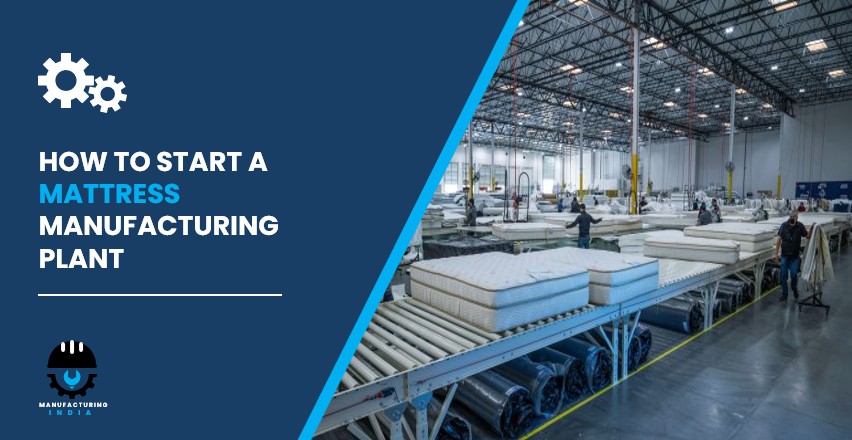
Setting up a mattress manufacturing plant in India presents a highly compelling investment opportunity as global demand for high-quality sleeping solutions continues to surge across residential, hospitality, healthcare, and institutional sectors. Mattresses have become an indispensable household and commercial product, driven by rising urbanization, increasing consumer focus on sleep health, growth in real estate construction, and the expanding hospitality infrastructure worldwide.
“With a rapidly expanding global market projected to grow at a CAGR of 5.48% through 2034, rising consumer spending on premium and orthopedic bedding, booming real estate and hospitality sectors, and gross margins of 35–45%, mattress manufacturing represents one of the most financially rewarding opportunities in the consumer goods manufacturing segment — with a break-even window of 3–5 years.”
What is a Mattress?
A mattress is a rectangular comfort item specifically designed to support the human body during sleep or rest, providing ergonomic alignment, pressure relief, and thermal comfort. Modern mattresses are produced using layered materials including polyurethane foam, memory foam, natural and synthetic latex, pocket-coil springs, and advanced fiber systems, all enclosed in quilted fabric covers.
Mattresses are engineered to evenly distribute body weight, reduce pressure points, and support spinal alignment. Contemporary mattress designs incorporate advanced features such as motion isolation, temperature-regulating gel layers, anti-microbial treatments, and customizable firmness options. Based on their core construction, mattresses are broadly classified into innerspring, foam, latex, hybrid, and air mattresses, each targeting different consumer comfort preferences and orthopedic requirements.
Globally, mattresses are recognized as an essential consumer health and wellness product. Growing awareness of musculoskeletal health and the importance of restorative sleep has driven demand toward premium, orthopedic, and specialty mattress categories. The rapidly expanding e-commerce channel, the mattress-in-a-box format, and direct-to-consumer brands have further transformed product accessibility and consumer purchasing behavior worldwide.
Cost of Setting Up a Mattress Manufacturing Plant in India
The mattress manufacturing plant setup cost depends on several parameters including production capacity, product range, level of automation, plant location, raw material sourcing strategy, and regulatory compliance requirements. Below is a structured breakdown of all major cost components:
1. Capital Expenditure (CapEx)
The total capital investment in a mattress manufacturing plant typically covers the following:
Land and Site Development
This includes land acquisition, site registration charges, boundary development, and basic infrastructure preparation. Cost varies significantly depending on whether the land is located in an industrial zone, export processing zone, or privately purchased plot. Proximity to raw material suppliers, logistics hubs, and target markets is a critical factor in site selection. For a mid-scale operation in India, a minimum of 10,000–20,000 square feet of land is recommended to accommodate production, warehousing, quality control, and administrative functions.
Request a Sample Report for In-Depth Market Insights: https://www.imarcgroup.com/mattress-manufacturing-plant-project-report/requestsample
Civil Works and Construction
Building costs cover the main assembly and production hall, foam cutting and layering area, spring coiling section, fabric and quilting room, raw material warehouse, finished goods storage, quality control laboratory, administrative block, and worker amenities. Construction must comply with fire safety norms, adequate ventilation for foam processing, dust control systems, and environmental management standards applicable under Indian manufacturing regulations.
Machinery and Equipment
Machinery represents the single largest component of CapEx. Key equipment required for a mattress manufacturing plant includes:
- Foam Cutting and Contouring Machines (CNC and automated band saw cutters)
- Pocket Coil Spring Assembly Units (automated coiling and tempering systems)
- Foam Lamination Machines (layer bonding and adhesive application systems)
- Quilting Machines (computerized multi-needle quilting for fabric covers)
- Tape Edge Machines (border stitching and edge finishing)
- Fabric Cutting Tables (automated fabric measuring and cutting systems)
- Compression and Roll-Packing Lines (for mattress-in-a-box formats)
- Quality Testing Equipment (durability, firmness, and flammability testers)
- Adhesive Dispensing Systems (foam and fabric bonding)
- Final Inspection and Packaging Stations (automated or semi-automated)
Machinery costs represent the largest share of overall capital expenditure. A complete medium-scale mattress production line capable of 100–200 units per day typically requires a machinery investment in the range of USD 180,000–300,000, depending on the automation level and machine configurations.
Other Capital Costs
These include pre-operative expenses, engineering and project management fees, import duties (if machinery is sourced internationally), utilities installation (electricity, compressed air, water supply), fire safety systems, effluent treatment and waste management infrastructure, and initial working capital provisions.
2. Operational Expenditure (OpEx)
Once the plant is commissioned, the ongoing cost structure is dominated by a few key components:
Raw Material Cost (Fabric Covers, Foam, Springs, Adhesives): 55–65% of Total OpEx
Raw materials constitute the primary cost driver in mattress manufacturing. The main inputs include polyurethane foam (memory foam and high-resilience grades), pocket coil and Bonnell springs, knit and woven fabric covers, quilting batting and comfort fibers, latex layers, fire-retardant barriers, adhesives, and packaging materials. Cost-efficient procurement of foam and fabric — which together account for the majority of material expenditure — is a key profitability lever. Long-term supply contracts with domestic foam manufacturers and fabric mills can significantly reduce price volatility exposure.
Utility Cost: 10–15% of Total OpEx
Utilities include electricity (consumed by CNC cutting machines, quilting systems, and automated assembly lines), compressed air, water supply, and lighting. Energy-efficient equipment, LED industrial lighting, and demand-side energy management can meaningfully reduce utility costs over the plant’s operating life.
Other Operating Costs
The remaining budget covers transportation and outbound logistics, packaging materials, salaries and wages for production, quality, and administrative staff, equipment maintenance and spare parts, depreciation on fixed assets, insurance, statutory compliance costs, and miscellaneous overhead.
3. Plant Capacity
The proposed manufacturing facility can be designed across a range of production scales:
- Small-Scale Operations: Up to 50,000 units annually — suitable for regional markets, niche product segments (premium, organic, or customized mattresses), and batch production with flexible equipment configurations.
- Mid-Scale Plants: 100,000–300,000 units annually — designed for national distribution with semi-automated production, moderate customization capability, and diversified product portfolio spanning foam, innerspring, and hybrid categories.
- Large-Scale Plants: 500,000+ units annually — built for national and export markets with fully automated production lines, high throughput, comprehensive product range, and direct institutional and retail supply capabilities.
Profitability significantly improves with higher capacity utilization. Larger plants benefit from economies of scale in foam and fabric procurement, machinery depreciation recovery, and outbound logistics efficiency.
4. Profit Margins and Financial Projections
Gross Profit Margin: 35–45%
Net Profit Margin: 15–20%
Break-Even Period: 3 to 5 years, depending on production scale, market positioning, product mix, distribution channels, and branding strategy.
Financial projections must incorporate capital investment schedules, capacity utilization ramp-up, operating cost trajectories, pricing strategies across product tiers, and demand outlook. A comprehensive financial model should also include sensitivity analysis, Net Present Value (NPV), Internal Rate of Return (IRR), and Payback Period calculations to support investor decision-making.
Why Set Up a Mattress Manufacturing Plant in India?
The Indian and global market environment presents a uniquely favorable opportunity for establishing a mattress manufacturing facility:
Surging Residential and Hospitality Demand
India’s real estate sector is undergoing massive expansion, with the government’s Pradhan Mantri Awas Yojana (PMAY) targeting the construction of millions of affordable housing units. New residential construction directly translates into fresh mattress demand. Simultaneously, the rapid expansion of branded hotel chains, resorts, and budget hospitality infrastructure across Tier 1 and Tier 2 cities is generating significant institutional mattress procurement volumes with regular replacement cycles.
Growing Consumer Health and Sleep Awareness
Indian consumers are increasingly investing in sleep quality as awareness of its impact on productivity, mental health, and physical well-being grows. Demand for orthopedic mattresses, memory foam variants, and premium hybrid products is rising sharply, particularly among urban middle-class and upper-middle-class households. This premiumization trend directly improves per-unit revenue and gross margins for manufacturers offering value-added products.
E-Commerce and Direct-to-Consumer Expansion
The rapid penetration of e-commerce platforms including Amazon, Flipkart, and dedicated sleep-tech portals has dramatically expanded mattress market accessibility. The mattress-in-a-box format — involving vacuum-compressed roll-packed mattresses — has transformed logistics economics and created a powerful direct-to-consumer channel, reducing dependence on traditional retail networks and improving manufacturer margins.
Demographic and Urbanization Tailwinds
India’s young demographic profile, expanding urban population, rising nuclear family formations, and growing disposable incomes create a structurally large and growing mattress replacement and new purchase market. According to the UNFPA, more than half the world’s population now lives in urban areas, a trend that is accelerating in India, directly driving furniture and bedding demand.
Make in India and Industrial Policy Support
Government initiatives under Make in India, PLI-linked schemes, and state industrial policies actively support domestic manufacturing. Organized mattress manufacturers can access capital subsidies, concessional utility tariffs, tax exemptions, and preferential credit facilities, significantly improving project economics and reducing effective capital costs.
Manufacturing Process Overview
The mattress manufacturing process is a multi-stage assembly and fabrication operation involving the following key stages:
- Raw Material Receiving and Inspection: Incoming foam slabs, spring coils, fabric rolls, and adhesives are inspected for quality and conformance to specifications before entering production.
- Foam Cutting and Contouring: Large polyurethane or memory foam blocks are precision-cut using CNC band saws or horizontal slitters into layers of specified thickness, size, and profile.
- Spring Core Preparation (for Innerspring/Hybrid): Bonnell or pocket-coil springs are produced on automated coiling machines, tempered for durability, and assembled into innerspring units or individual pocketed coil assemblies.
- Layer Assembly and Lamination: Foam comfort layers, latex components, spring units, and edge support foam encasements are assembled in specified sequence and bonded using industrial adhesives or mechanical fastening.
- Quilting and Cover Preparation: Fabric covers are quilted with batting and fire-retardant barriers on computerized multi-needle quilting machines, then cut to size for each mattress configuration.
- Final Assembly and Tape Edging: The quilted cover is fitted over the assembled core, and the mattress perimeter is sealed using tape edge machines for a clean, durable finish.
- Quality Testing and Inspection: Finished mattresses undergo firmness testing, durability simulation, dimensional verification, and fire-safety testing before clearance for packaging.
- Compression and Packaging: Mattresses destined for e-commerce are vacuum-compressed and roll-packed into compact cartons; others are poly-wrapped and packed in box-board packaging for retail and institutional delivery.
Key Applications of Mattresses
Mattresses serve a broad spectrum of end-use sectors and applications:
- Residential: Twin, full, queen, and king-size mattresses for households across all income segments, covering new purchase, upgrade, and replacement demand.
- Hospitality: Commercial-grade mattresses for hotels, resorts, service apartments, guest houses, and Airbnb properties with regular replacement procurement cycles.
- Healthcare and Institutional: Anti-decubitus (pressure sore prevention) mattresses, hospital-grade foam mattresses, and geriatric care bedding for hospitals, nursing homes, and rehabilitation centers.
- E-Commerce and DTC: Compressed roll-pack mattresses for online retail and direct-to-consumer delivery models, including bed-in-a-box product lines.
- Dormitory and Hostel Segments: Student accommodations, corporate guesthouses, defense establishments, and government institutions represent high-volume institutional procurement channels.
Global Market Outlook
The global mattress market size was valued at USD 43.35 Billion in 2025. According to IMARC Group estimates, the market is expected to reach USD 70.07 Billion by 2034, exhibiting a CAGR of 5.48% from 2026 to 2034. This sustained growth is driven by rising urbanization and residential construction activity, growing consumer investment in sleep health and ergonomic bedding, expansion of the global hospitality sector, increasing adoption of premium and hybrid mattress technologies, and the proliferation of e-commerce and DTC mattress brands worldwide.
Asia Pacific, and particularly India, represents one of the fastest-growing regional markets for mattresses, supported by rapid urbanization, a young and growing middle class, government housing initiatives, and increasing retail and e-commerce penetration.
Leading global players in this industry include:
- Serta Simmons Bedding
- Tempur Sealy International
- Sleep Number Corporation
- Hilding Anders Group
- King Koil
- Spring Air
Timeline to Start a Mattress Manufacturing Plant
Setting up a mattress manufacturing plant from project ideation to commercial production typically requires 12 to 18 months. The key phases include:
- Feasibility study and Detailed Project Report (DPR) preparation
- Land acquisition and site development
- Environmental impact assessment and regulatory approvals
- Plant design, layout optimization, and engineering
- Machinery procurement, importation, and installation
- Utility setup and infrastructure commissioning
- Trial production, quality testing, and calibration
- Staff recruitment, training, and operational readiness review
- Commercial production launch and distribution network activation
Licenses and Regulatory Requirements
Establishing a mattress manufacturing unit in India requires obtaining several regulatory approvals and certifications, which may vary by state and applicable jurisdiction:
- Business registration and company incorporation (MCA)
- Factory License under the Factories Act, 1948
- GST Registration and MSME/Udyam Registration (for eligible enterprises)
- Environmental Clearance from State Pollution Control Board (SPCB) or CPCB
- Fire Safety NOC and Building Use Certificate
- BIS Certification (IS standards for foam and mattress materials where applicable)
- Trade License from local municipal or industrial authority
- Labour Law Compliance (ESI, PF, Contract Labour Act registration)
- Import License for machinery (if sourcing equipment internationally)
- ISO 9001 Quality Management System Certification (recommended for institutional supply)
- OEKO-TEX Certification (for premium and export-oriented products using certified sustainable materials)
Key Challenges to Consider
Before committing capital, entrepreneurs and investors should be fully aware of the common challenges in this business:
Raw Material Price Volatility
Polyurethane foam, the primary raw material, is derived from petrochemical precursors including TDI (toluene diisocyanate) and polyols, making its cost sensitive to crude oil price movements. Spring wire prices are linked to steel market dynamics. Fluctuations in these input costs directly impact production economics, making long-term supply contracts and hedging strategies essential.
Competitive Market Dynamics
The organized mattress industry in India features established national brands such as Sleepwell (Sheela Foam), Kurl-on, Springfit, and Duroflex, alongside a large unorganized sector comprising regional producers. New entrants must develop a clear differentiation strategy through product innovation, superior comfort engineering, brand positioning, distribution efficiency, or niche market targeting (e.g., organic mattresses, hospital-grade products, or customized solutions).
Quality Consistency and Skilled Manpower
Producing consistent mattress quality — particularly in foam layering, quilting uniformity, and spring assembly precision — demands trained machine operators and quality control technicians. Maintaining product durability standards and consumer comfort specifications requires continuous investment in quality assurance systems and workforce development.
Logistics and Last-Mile Distribution
Mattresses are bulky, low-density products that are costly to transport. Building an efficient outbound logistics network, including last-mile delivery capabilities for e-commerce orders and direct-to-consumer deliveries, is a critical operational challenge that significantly impacts customer satisfaction and profitability.
Regulatory Compliance for Export Markets
For manufacturers targeting export to the US, EU, or Middle Eastern markets, compliance with flammability standards (CFR 1633 for the US), REACH regulations (EU), formaldehyde emission standards, and OEKO-TEX material certifications requires continuous investment in product testing, certification maintenance, and process controls.
Frequently Asked Questions
The following questions are answered in the report:
- How much does it cost to set up a mattress manufacturing plant in India?
- Is mattress manufacturing a profitable business in 2026?
- What machinery and equipment are required for a mattress factory?
- What licenses and approvals are required to start a mattress manufacturing unit in India?
- How long does it take to commission a mattress manufacturing plant?
- What is the best location to set up a mattress plant in India?
- What government incentives are available for mattress manufacturers under Make in India?
- What is the break-even period for a mattress manufacturing plant?
- What raw materials are required and what are the best sourcing strategies?
- What are the key quality and safety certifications required for mattress manufacturing?
Key Takeaways for Investors
The mattress manufacturing industry represents a strong, scalable, and consumer-demand-driven investment opportunity backed by structural growth across residential construction, hospitality, healthcare, and e-commerce segments. With gross margins of 35–45% and a break-even window of 3–5 years, a well-planned mattress manufacturing plant cost remains competitive and financially viable across plant capacities from small-scale boutique operations to large-scale automated facilities. The convergence of urbanization-driven housing demand, rising consumer health awareness, government policy support under Make in India, e-commerce channel expansion, and growing institutional procurement creates a robust and diversified revenue base for mattress manufacturers entering or scaling in this market. Investors who combine cost-efficient operations with a differentiated product portfolio — spanning premium foam, hybrid, orthopedic, and eco-friendly mattress lines — are well-positioned to capture significant market share and deliver superior long-term returns.
About the Author