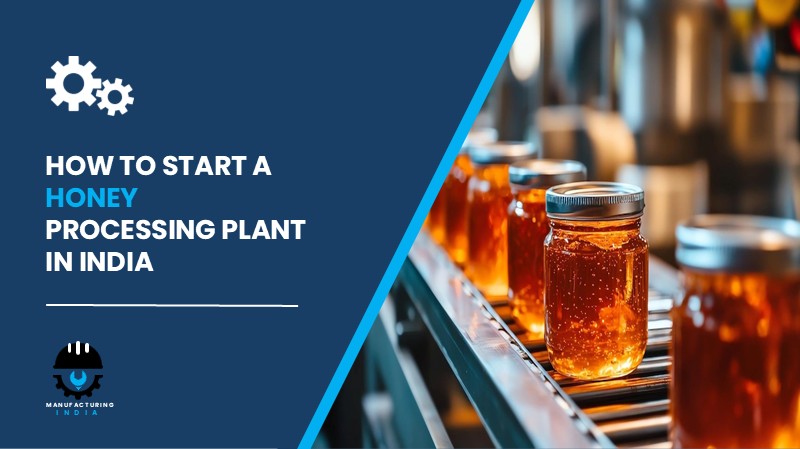
Setting up a honey processing plant in India presents a compelling investment case for entrepreneurs and institutional investors alike. The honey sector is driven by rising consumer demand for natural sweeteners, expanding applications in food and beverage formulations, growing nutraceutical adoption, and increasing uptake across pharmaceutical and cosmetic industries. As health-conscious consumers move away from refined sugar and toward clean-label alternatives, honey has emerged as one of the most versatile and consistently demanded agricultural commodities in the Indian market.
India’s structural advantages a vast agrarian base, an expanding apiculture ecosystem, strong rural entrepreneurship under the Make in India initiative, and the country’s positioning as a cost-competitive agri-processing hub make it strategically sound for honey processing investment. States such as Uttar Pradesh, Maharashtra, Himachal Pradesh, and West Bengal are natural clusters for raw honey supply, offering proximity to beekeeping operations and reducing logistics costs. Combined with organized retail growth and rising e-commerce penetration, the domestic distribution landscape has never been more investor-friendly for a honey processing plant in India.
India’s honey processing sector sits at the intersection of health megatrends, agricultural policy support, and industrial demand from pharma and personal care. A well-capitalized honey processing plant can achieve gross margins of 30–40% and net margins of 15–20%, making it one of the more financially rewarding agri-food investments available to mid-scale operators today.
What is Honey?
Honey is a natural, thick, sweet liquid produced from the nectar of flowering plants by honeybees. It is a combination of two sweet substances fructose and glucose along with traces of enzymes, amino acids, organic acids, vitamins, minerals, and antioxidants. Processed honey removes various impurities such as wax, pollen, and air pockets without compromising its nutritional aspects. Honey possesses antimicrobial, anti-inflammatory, and antioxidant properties, qualifying it as both a source of nutrition and a medicinal ingredient. The nature, colour, taste, and aroma derived from the floral source give rise to various grades of honey.
The honey processing process flow is a multi-step operation involving unit operations, material handling, and quality checks, covering extraction, filtration, heating, and packaging. End-use industries served include food processing, beverages, nutraceuticals, pharmaceutical formulations, personal care, commercial beekeeping, honey harvesting, and agricultural supply.
Cost of Setting Up a Honey Processing Plant in India
The total cost of establishing a honey processing plant depends on capacity, technology selection, geographic location, degree of automation, and regulatory compliance requirements. Investors should evaluate both capital expenditure and operational expenditure carefully before committing funds.
1. Capital Expenditure (CapEx)
Capital investment covers several major cost heads. Land and site development including land registration, boundary development, utility connection charges, and access road construction — forms a substantial part of the total outlay. Investors should evaluate industrial estates, food processing zones, and SEZ locations, which typically offer reduced land costs, pre-built infrastructure, and single-window regulatory clearances.
Civil works and construction costs encompass the main production shed, raw honey receiving area, quality control laboratory, cold storage, finished goods warehouse, and administrative block. Hygienic construction standards are essential for FSSAI compliance, and the layout must segregate raw and processed product flows.
Machinery costs account for the largest portion of total capital expenditure. Key machinery required includes:
- Uncapping machines
- Honey extractors
- Settling tanks
- Filtration systems
- Pasteurizers
- Liquefaction units
- Settling or maturation tanks
- Bottling or packaging lines
Other capital costs include effluent treatment plant (ETP) construction, pre-operative expenses such as feasibility studies and regulatory fees, trial production costs, commissioning charges, and import duties on specialized equipment not manufactured domestically.
Request a Sample Report for In-Depth Market Insights: https://www.imarcgroup.com/honey-processing-plant-project-report/requestsample
2. Operational Expenditure (OpEx)
The operating cost structure of a honey processing plant is primarily driven by raw material consumption. Raw honey is the principal input and accounts for approximately 80–85% of total operating expenses. Securing long-term supplier contracts with beekeepers or aggregators is essential to stabilizing procurement costs and managing price volatility across seasons.
Utility costs electricity for processing equipment, cold storage, and lighting; water for cleaning and processing; and steam for controlled warming systems represent approximately 5–10% of OpEx. Transportation, packaging materials, salaries and wages, maintenance, depreciation, taxes, and other overheads constitute the remaining operating cost structure. By the fifth year of operations, total operational costs are expected to increase substantially due to inflation, market fluctuations, and potential rises in the cost of key materials, along with supply chain disruptions and rising consumer demand.
3. Plant Capacity
The proposed facility is designed with an annual production capacity ranging between 1,000 and 5,000 metric tonnes, enabling economies of scale while maintaining operational flexibility. This capacity band is suitable for mid-scale processors targeting both domestic distribution and export markets. Capacity can be customized per investor requirements, and profitability improves meaningfully with higher capacity utilisation rates as fixed cost absorption increases.
4. Profit Margins and Financial Projections
The honey processing plant demonstrates healthy profitability under normal operating conditions. Gross profit margins typically range between 30–40%, supported by stable demand and value-added applications. Net profit margins average 15–20% over a five-year projection horizon. Financial projections are developed based on capital investment, operating costs, production capacity utilisation, pricing trends, and demand outlook. Key financial metrics evaluated include NPV (Net Present Value), IRR (Internal Rate of Return), payback period, and detailed profit and loss accounts. Break-even for a typical honey processing facility is generally achieved within 2–4 years, depending on capacity, market demand, and operational efficiency.
Why Set Up a Honey Processing Plant in India?
Rising Demand for Natural Sweeteners. Increasing consumer inclination toward clean-label and naturally sourced food products is driving sustained growth in the honey category. Markets for organic, raw, and specialty honey varieties are witnessing strong expansion globally, and India’s urban and semi-urban consumers are increasingly substituting refined sugar with honey in daily consumption and food preparation.
Growth in Functional Foods and Traditional Medicine. Growth in functional foods and traditional medicine systems has expanded honey consumption across both developed and emerging economies. India’s Ayurvedic and natural wellness sector continues to incorporate honey as a core therapeutic ingredient, sustaining steady industrial offtake beyond conventional food use.
Expanding Pharmaceutical and Cosmetic Demand. Rising applications in cosmetics and pharmaceutical formulations have strengthened industrial demand for processed honey. The Indian pharmaceutical market is slated to grow 7–9% in FY26, fuelled by robust domestic demand, new product innovation, and expansion into Europe creating compounding demand for high-purity honey as an excipient and active ingredient.
Policy and Regulatory Tailwinds. Government initiatives supporting beekeeping, apiculture, and rural entrepreneurship indirectly contribute to raw honey availability and support honey processing capacity expansion. Programs supporting organic farming and food safety standards further enhance market opportunities for processors seeking export compliance certifications.
Cost-Competitive Manufacturing. India offers competitive land acquisition costs, a large pool of affordable skilled and semi-skilled labour, and proximity to major beekeeping regions. Selecting plant locations in food processing clusters reduces infrastructure investment and provides access to pre-established logistics networks.
Active Industry Investment. In March 2025, New Water Capital Partners II L.P., a Boca Raton-based private equity investment firm, acquired Dutch Gold Honey a leading U.S. producer of ethically sourced honey along with the related businesses of McLure’s Honey & Maple Products and Gamber Container Company, signalling continued institutional confidence in the honey sector globally.
Manufacturing Process — Step by Step
The honey processing manufacturing process uses a multi-step operational flow involving unit operations, material handling, and quality checks as the primary production method. Each stage must comply with food safety standards to ensure product purity and shelf stability.
- Raw Honey Sourcing: Procurement of raw honey from beekeepers or aggregators, with quality assessment at the point of collection.
- Extraction (Uncapping and Centrifugal Extraction): Honeycomb frames are uncapped using uncapping machines; centrifugal honey extractors then spin honey out of the combs into collection troughs.
- Honey Collection: Extracted honey is transferred to settling tanks where initial separation of wax and coarse debris occurs.
- Filtration and Clarification: Honey passes through strainers and filtration systems to remove wax particles, pollen, and residual impurities, ensuring clarity and purity.
- Heating and Processing: Controlled warming using pasteurizers and liquefaction units reduces viscosity, prevents crystallization, and extends shelf life without degrading nutritional value.
- Settling and Maturation: Processed honey is held in settling or maturation tanks to allow air bubbles and fine particles to rise and be removed before packaging.
- Quality Assurance and Testing: Analytical checks on concentration, purity, moisture content, and stability are performed at this stage to meet FSSAI and export compliance standards.
- Bottling, Packaging, and Dispatch: Bottling or packaging lines fill honey into jars, bottles, pouches, or bulk containers; labelled and packed product is dispatched to food processing companies, retail distributors, pharmaceutical buyers, and export markets.
Key Applications
Processed honey serves a wide range of industries, from food manufacturing to pharmaceutical production. Key applications include:
- Food Processing: Used as a natural sweetener, flavour enhancer, and preservative in bakery products, confectionery, cereals, sauces, and beverages.
- Nutraceuticals: Incorporated into health supplements, functional foods, and immunity-boosting formulations for its antioxidant and antimicrobial properties.
- Pharmaceutical: Used as an excipient in cough syrups, tonics, and topical wound-care preparations due to its antimicrobial and anti-inflammatory properties.
- Personal Care and Cosmetics: Formulated into moisturisers, lip balms, face masks, and hair conditioners for its humectant and skin-conditioning qualities.
- Commercial Beekeeping and Agricultural Supply: Processed and graded honey supports commercial honey harvesting operations, equipment supply chains, and export-grade packaging requirements.
- Packaging: Honey’s viscosity and flow characteristics drive demand for specialised bottling lines, storage tanks, and bulk handling systems within packaging operations.
Leading Manufacturers
The global honey industry is served by several multinational companies with extensive production capacities and diverse application portfolios. Key players in the honey market include:
- Dabur India Limited
- Capilano Honey Ltd
- Comvita
- Barkman Honey
- Beeyond the Hive
Timeline to Start the Plant
- Feasibility study and project report preparation
- Land acquisition and site development
- Regulatory approvals and environmental clearances
- Factory licence and fire safety compliance
- Machinery procurement and installation
- Raw material supplier agreements and supply chain setup
- Trial production and quality testing
- Commercial production launch
Licences and Regulatory Requirements
Starting a honey processing unit in India requires several approvals:
- Business registration (Proprietorship, LLP, or Pvt Ltd)
- Factory Licence under the Factories Act
- Environmental Clearance from State Pollution Control Board
- FSSAI (Food Safety and Standards Authority of India) licence for food processing operations
- GST Registration
- Fire Safety NOC
- Effluent Treatment Plant (ETP) operational clearance
- Occupational Health and Safety compliance
- Export compliance certification (APEDA registration if targeting export markets)
Key Challenges to Consider
High Capital Requirements. Establishing a honey processing plant involves significant upfront investment in land, civil construction, and specialised equipment such as extractors, pasteurizers, and bottling lines. Investors should ensure adequate working capital is maintained alongside fixed asset investment.
Raw Material Price Volatility. Raw honey which constitutes 80–85% of total operating costs is subject to seasonal supply fluctuations driven by flowering cycles, climate variability, and beekeeping productivity. Long-term supplier contracts and diversified sourcing are essential risk mitigation strategies.
Regulatory Compliance. Meeting FSSAI quality standards, export compliance certifications, and environmental clearance requirements demands sustained investment in quality management systems, laboratory infrastructure, and trained compliance personnel.
Technology and Innovation Pressure. Rising consumer demand for organic, raw, and specialty honey varieties requires processors to maintain flexible production setups and invest in certifications that support clean-label and premium product positioning.
Competition. The honey market includes well-established players such as Dabur India Limited, Capilano Honey Ltd, Comvita, Barkman Honey, and Beeyond the Hive. New entrants must differentiate through quality, certifications, and regional supply chain reliability.
Skilled Manpower. Honey processing requires trained technicians for filtration and pasteurization operations, quality control analysts, and food safety officers — a talent profile that can be difficult to source in rural or semi-urban plant locations.
Frequently Asked Questions
1. How much does it cost to set up a honey processing plant in India? The total cost depends on plant capacity, technology, location, and automation level. Cost components include land and site development, civil construction, machinery such as extractors, pasteurizers, and bottling lines, ETP, and pre-operative expenses. A detailed feasibility study is recommended to arrive at project-specific estimates.
2. Is honey processing profitable in India in 2026? Yes. The honey processing plant demonstrates gross profit margins of 30–40% and net margins of 15–20%, making it a financially viable investment at mid-to-large scale with disciplined raw material cost management.
3. What machinery is required for a honey processing plant in India? Key machinery includes uncapping machines, honey extractors, settling tanks, filtration systems, pasteurizers, liquefaction units, settling or maturation tanks, and bottling or packaging lines.
4. What licences and approvals are required to start a honey processing plant in India? Required approvals include business registration, FSSAI licence, Factory Licence, Environmental Clearance, GST registration, Fire Safety NOC, ETP clearance, and Occupational Health and Safety compliance. Export-oriented units additionally require APEDA registration.
5. What raw materials are needed for honey manufacturing? The primary raw material is raw honey sourced from beekeepers and aggregators. Additional materials include beehives, bee colonies, and sometimes sugar syrup for supplemental bee feeding during low nectar seasons.
6. What are the environmental compliance requirements for a honey processing plant in India? Environmental compliance requires securing clearance from the State Pollution Control Board, commissioning and operating an Effluent Treatment Plant, and implementing effluent monitoring systems to meet emission standards.
7. What is the best location to set up a honey processing plant in India? Ideal locations offer proximity to beekeeping clusters such as Uttar Pradesh, West Bengal, Himachal Pradesh, and Maharashtra with access to reliable utilities, transport links, and food processing infrastructure or industrial estates.
8. What is the break-even period for this type of plant in India? Break-even for a honey processing facility is typically achieved within 2–4 years, depending on production capacity, capacity utilisation, market demand, and pricing strategy.
9. What government incentives are available for manufacturers in India? Governments may offer incentives such as capital subsidies, tax exemptions, reduced utility tariffs, export benefits, and interest subsidies to promote manufacturing under national or regional industrial policies. The Make in India initiative and food processing promotion schemes are particularly relevant.
Key Takeaways for Investors
The honey processing plant in India presents a multi-dimensional investment opportunity driven by demand from food processing, nutraceuticals, pharmaceutical, and personal care industries all experiencing sustained growth in the domestic and export markets. The facility demonstrates strong financial viability across the proposed capacity range of 1,000–5,000 MT per annum, with gross margins of 30–40% and net margins of 15–20% under normal operating conditions. The global honey market, valued at USD 10.29 billion in 2025, is projected to reach USD 16.97 billion by 2034, exhibiting a CAGR of 5.72% from 2026 to 2034 underpinning long-term demand sustainability. With rising health consciousness, growing clean-label consumption trends, and supportive apiculture policies, investor demand for well-positioned honey processing capacity in India is expected to remain robust throughout the decade.
About the Author